Free
Support

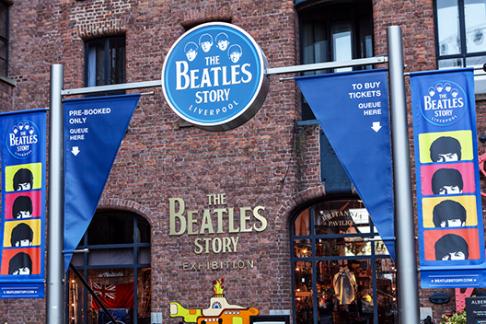
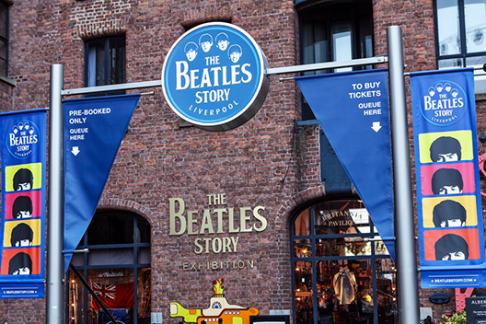
Languages Living History Audio Guide at Beatles Story Albert Dock has been compiled and is narrated by John Lennon's sister Julia and is complimentary. Ten languages: Brazilian Portuguese (new), English, French, German, Italian, Japanese, Mandarin (new) Polish, Russian and Spanish. We also have a family audio guide in English. Accessibility Parking – Albert Dock has a number of car parks on site and has in total eight accessible car parking bays, with three available in car park A, near to the estate’s main entrance and five in car park B opposite The Beatles Story and Premier Inn hotel. Wheelchairs – The exhibition is fully wheelchair accessible. Due to fire evacuation procedures, we can only admit three wheelchairs on site at any one time. We have a standard wheelchair available which can either be booked in advance by telephoning +44 (0) 151 709 1963 or borrowed on the day by asking a member of staff at the main entrance (subject to availability on the day). Lifts – We have two accessible lifts: One situated at our main entrance (accompanied with audio announcements) and one located in our Fab4 Store going down to the Fab4 Cafe. Toilets – Wheelchair-accessible toilets are available within the exhibition and also in the Fab4 Cafe area. Please see a member of staff for assistance. Induction Loops – Induction loops are available to use with our audio guides. Please see a member of staff when picking up your audio guide. Large Print Gallery Books – We have large print transcripts available in all 10 languages offered on our audio guide, which are available at our Admissions desk. Please ask a member of staff for more details. Guide Dogs – Guide dogs are welcome. Sign Language – Should you require sign language assistance, please contact us on +44 (0) 151 709 1963 and we will check staff availability to ensure that help is on hand during your day of visit. Cloakroom – Our cloakroom allows guests to store coats, prams/buggies and suitcases. Fab4 Cafe – The Fab4 Cafe is located on basement level and is accessible via the exhibition and our Fab4 Store. The Fab4 Cafe is partially self-served – however, assistance is available if required.
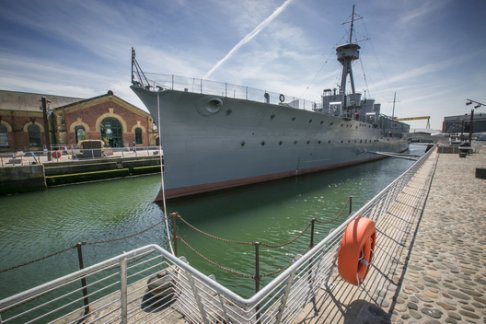
HMS Caroline Duración de la visita: 90 minutos aproximadamente. Dirección: Muelle Alexandra, Queens Rd, Belfast BT3 9DT. Debe canjear los vales en la misma dirección Tenga en cuenta: los tacones más altos que 5 cm no se pueden usar a bordo. Titanic Belfast y SS Nomadic Descubra cómo fue abordar el RMS Titanic en el fatídico viaje inaugural con la visita al Titanic Belfast y al SS Nomadic. El edificio del museo marítimo, Titanic Belfast, fue construido a la misma escala gigantesca que el RMS Titanic. La exhibición del museo es informativa e interactiva, además de divertida, atractiva y accesible para todos. La aventura empieza al entrar en el vestíbulo gigante del edificio, rodeado por las cuatro secciones, en forma de casco naval, que albergan la experiencia. Mientras pasea por el Titanic Belfast, aprenderá aspectos interesantes sobre el Belfast de finales de siglo. Además experimentará un emocionante paseo a través de la reconstrucción de los astilleros y la construcción del Titanic. Descubra las historias de los pasajeros, la tripulación y los héroes del día; reviva el trágico final del viaje inaugural del Titanic y visite el fondo del Atlántico, lugar del naufragio. Disfrute de las impresionantes vistas de las gradas desde donde zarpó el Titanic y relájese en uno de los excelentes restaurantes. El SS Nomadic se encuentra en el muelle seco de Hamilton, adyacente al Titanic Belfast. No solo es famoso por ser el transbordador del RMS Titanic, también sirvió en la Primera y Segunda Guerra Mundial. Los visitantes pueden seguir los pasos de los pasajeros y soldados del Titanic y de celebridades como Charles Chaplin, Elizabeth Taylor, Richard Burton y Marie Curie. Tras una temporada como restaurante y club nocturno, el SS Nomadic recuperó su esplendor original y regresó a su lugar de procedencia, Belfast. Los visitantes ahora pueden experimentar una pieza auténtica y tangible del patrimonio industrial y marítimo de Belfast. Tenga en cuenta que los niños y niñas deben ir acompañados por un adulto durante toda la visita.
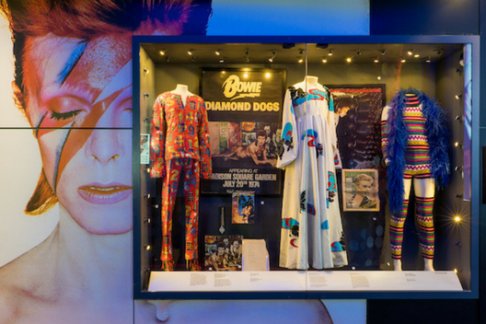
Edge Zones Edge Zone 1 - 1945 - 1962 The Anglo-American special relationship of the Second World War triggered an evolution of musical trends in Britain. Big band music became popular through visiting GIs and the revived sounds of Dixieland and New Orleans trad jazz were introduced into the London scene. The do-it-yourself creed of 1950s skiffle encouraged young musicians to pick up cheap guitars and start their own groups. British pop was transformed by the rock'n'roll craze in the mid 1950s. Edge Zone 2 - 1962 - 1966 In the 1960s, British music went global with the irresistible tide of the 'British Invasion'. The original look and sound of beat groups like The Beatles, R&B bands like The Rolling Stones and female singers like Petula Clark took America by storm and Britain became known as a pop powehouse. Edge Zone 3 - 1966 - 1970 British pop became increasingly involved in cultural exchanges with underground political activity, fashion, art and drugs. Inspired by the 1967 'Summer of Love' in San Francisco, Britain began to stage their own 'love-ins' and 'happenings', with themes of peace and love becoming the inspiration for music in this period. The 12" album toook centre stage and pop evolved into rock as music broke out of the small clubs onto the arena circuit and emerging festival scene. Edge Zone 4 - 1970 - 1975 In contrast to the tough social and economic crisis of 1970s Britain, the charts began to fill with performers singing of escapism, glamour and excitement. A darker vision of 1970s Britain soon appeared through albums like the post-apocalyptic Diamond Dogs by David Bowie and progressive rock flourished. The music industry expanded and audiences sought entertainment, making sell-out arena tours the pinnacle for any successful artist. Edge Zone 5 - 1975 - 1985 This was a period of economic recession in Britain. Pop music reflected this with tougher, more outspoken styles. Punk dramatised Britain's social divisions, while the grassroots Rock Against Racism movement popularised reggae and brought a return to political involvement. Edge Zone 6 - 1985 - 1993 The mid-to-late 1980s was a time of accelerated social, economic, technical and political change. Videos, CDs and satellite broadcasting meant that music was more accessible to the masses. The late 1980s were also a time of regional and musical diversity. Heavy metal was reborn, imported house music reached ecstatic heights with the 'Second Summer of Love' and the 'Madchester' scene was blossoming in the North. Edge Zone 7 - 1993 - 2004 In the mid-1990s, 'Cool Britannia' swept through all areas of British identity. Britpop revived the traditional pop values of the 60s and 70s. The period also saw the rise of manufactured boy bands and The Spice Girls unleashed 'Girl Power' on the world. The rise of Youtube and streaming gave audiences new ways to access music. It presented artists with unchartered waters in the form of new channels emerging to promote their music. Edge Zone 8 - 2004 - Present 2004 saw the launch of X Factor. The manufacturing of pop stars by UK audiences is balanced by the diversity of artists rising to the top of the charts. Rap and R&B stars, indie bands and singer-songwriters take the download chart by storm. The Future It is impossible to predict the future of British music. Who will be the next superstar? how will we listen to music in 2025? Whatever the future, one thing we can be sure of is that the intimate relationship between music and the fan will always continue to transcend any technological, cultural or social barriers. No photography is allowed in the the exhibition.
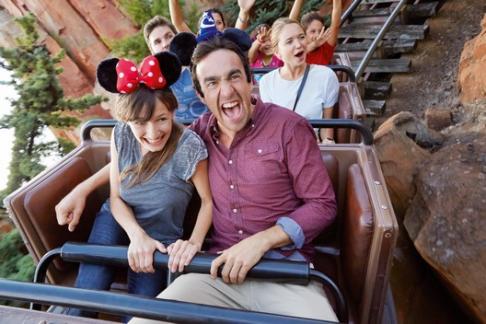
Disneyland® Park In a Magical Kingdom not so far away - somewhere between a place where you wish upon a star and dreams come true - classic Disney heroes and heroines live once upon a time in fairytales that are, happily, never ending. 5 magical lands, endless fun, pick one that's for you... or pick them all! Experience your favourite Disney® Lands just as you remember them in classic Disney stories where fairytales really do come true. Endless attractions and thrills that come in all sizes and shapes. There are big thrills such as Space Mountain Mission 2 that takes you to the edge of the universe. For little ones, they can sail around the world with " it's a small world". Family fun can be found in every corner of the Park, from Pirates of the Caribbean to the Mad Hatter's Tea Cups. Meet Disney® Characters The Park where favourite Disney® Characters live and can't wait to meet you. Alongside Mickey and Minnie, say 'Howdy' to Goofy and 'Hello Honey' to Pooh. Get a hug, an autograph and a photo. Just say 'cheese.' It's party time! Every day's a party at Disneyland® Park. On top of all the wonderful attractions and characters, there are lots of spectacular family parade and shows to enjoy, all year round. Enjoy our wonderful shows and parades every day! Walt Disney Studios® Park Right next door to Disneyland® Park, discover the magical world of cinema and television at Walt Disney Studios Park - 4 cinemagical 'lots', featuring thrilling attractions and spectacular shows with your dreams centre-stage. Explore the scenes on 4 studio lots. Where your "screendreams" come true! It's showbiz, folks! Make your big screen debut at Production Courtyard, Toon Studio, Backlot and Front lot. It's a star studded itinerary, and you never know what star you'll bump into. Blockbuster preview attractions. You ought to be in pictures! It's your day to be discovered while exploring all there is to see at Disney® Studios - The Studio Tram Tour: Behind the Magic, Disney Cinema Parade, Animagique and 'lots' more... Walt Disney Studios® Park, where movie magic abounds. Get behind the scenes with our never seen before Parade and tours. Why not take in a spectacular Show or Parade to round off the day like the Studio Tram Tour: Behind the Magic or our Moteurs...Action! Stunt Show Spectacular? Then you'll know exactly what it's like to be a star.
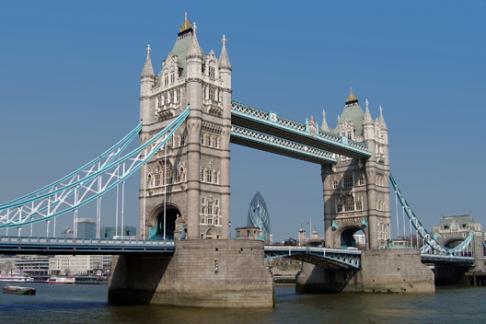
PUENTE DE LA TORRE Hace más de 100 años, los victorianos construyeron un puente que se ha convertido en uno de los monumentos más famosos de Londres. pasarelas de alto nivel se construyeron para permitir a la gente a cruzar el Támesis mientras que el puente fue levantado para que navegan los barcos de altura pasado. Hoy en día estas pasarelas actúan como la visualización de galerías, dando a los visitantes las vistas más espectaculares de un horizonte siempre cambiante Londres. Los visitantes entran exposición del Puente de la Torre a través de la torre norte. Luego son transportados por ascensor hasta la cima de la torre (47 metros sobre el Támesis) donde tienen una oportunidad única de ver el esqueleto de acero del puente desde dentro. Una película corta explica la historia y procedencia del puente y luego está la oportunidad de admirar las espectaculares vistas - de ambas pasarelas cubiertas. En la pasarela al este hay unas vistas fantásticas de la zona portuaria y del occidente Calzada se puede ver el nuevo edificio de GLA, la Torre de Londres, San Pablo, la ciudad, la piscina de Londres y el Big Ben y el London Eye en la distancia. quioscos computarizados interactivos y paneles gráficos explican la importancia de los puntos de vista a los visitantes, además de proporcionar más información sobre la historia y la construcción del puente. El material interactivo y paneles gráficos están escritos en siete lenguas y un bucle de audio para personas con problemas de audición también está en su lugar para el espectáculo de vídeo. Hay otra película para ver en la torre sur, antes de descender para el paseo a las salas de máquinas históricas, incluido en el precio del billete. Salas de Máquinas Victorianas Estos proporcionan una visión fascinante de la ingeniería finales del siglo 19. Instalado para la realización del puente de la torre en 1894, estos enormes, y muy bien cuidados, se utilizaron motores de carbón impulsada para alimentar a los miles de ascensores puente levadizo realizadas hasta 1976. A pesar de que los ascensores están operados por electricidad, las máquinas de vapor originales todavía están en lugar. Las salas de máquinas dan a los visitantes la oportunidad de experimentar con modelos de demostración de la tecnología detrás del puente. También hay algunas fotografías asombrosas del puente a lo largo de su ciclo de vida - incluyendo una imagen reveladora de la estructura de acero pesado del puente como el revestimiento de piedra se instaló sobre ella.
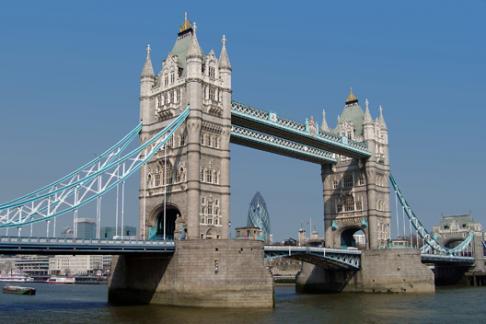
Vor über 120 Jahren bauten die Londoner eine Brücke, die zu einer der berühmtesten Attraktionen Londons wurde. Die Fußgängerstege wurden gebaut, damit Menschen die Themse überqueren können, während die Brücke hochgezogen ist um große Schiffe die Tower Bridge passieren zu lassen. Heute dienen diese Fußgängerstege als Aussichtsgalerie, die den Besuchern die spektakulärsten Blicke auf eine sich stets wandelnde Londoner Skyline ermöglicht. Fußgängerstege & Ausstellung: Besucher betreten die Tower Bridge Ausstellung über den North Tower. Sie werden dann mit dem Aufzug auf die Spitze des Turmes gebracht – 47 Meter über der Themse – Dort können Sie das Stahlgerüst der Brücke von innen bestaunen. Ein kurzer Film erklärt die Geschichte der Brücke und es besteht die Möglichkeit, von den beiden überdachten Fußwegen den Blick über die Dächer Londons wandern zu lassen. Auf dem östlichen Übergang gibt es eine fantastische Sicht auf die Docklands. Vom westlichen Übergang können Sie das neue GLA Gebäude sehen, den Tower of London, St. Paul’s, Big Ben und das London Eye. Interaktive Multimediaangebote (mehrsprachig) und Tafeln geben den Besuchern Informationen zu den jeweiligen Aussichten und zum Bau der Brücke. Im Südturm gibt es einen weiteren Film zu sehen. Besuchen Sie vor dem Abstieg den historischen Maschinenraum. Der Zutritt ist ebenfalls im Ticketpreis inbegriffen. Viktorianische Maschinenräume: Hier erhalten Sie faszinierende Einblicke in das Konstruktionswesen des späten 19. Jahrhunderts. Die großen und guterhaltenen, kohlenbetriebenen Maschinen wurden mit Fertigstellung der Tower Bridge im Jahr 1894 installiert, um bis 1976 Tausende der Brückenhebungen zu ermöglichen. Obwohl die Hebevorrichtungen elektrisch angetrieben werden, sind die originalen Dampfmaschinen immer noch vorhanden. Die Maschinenräume geben Besuchern die Möglichkeit mit Modellen zu experimentieren, welche die Technologie der Brücke veranschaulichen. Es werden sehenswerte Fotografien der Tower Bridge aus den vergangenen Jahrhunderten gezeigt. Ein Highlight ist ein Foto der schweren Stahlstruktur der Brücke, bevor die Steinverkleidung montiert wurde. Klicken Sie hier um die Tower Bridge App herunterzuladen!