Free
Support
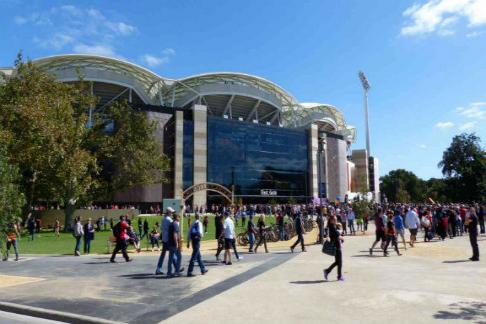
Highlights Haigh’s Chocolates factory tour* St Peter’s Cathedral – a significant landmark in our City (subject to availability) The world famous Adelaide Oval Free time for lunch at a local café or Central Markets (own expense) Take in the magnificent views across the city to the sea from Mt Lofty Summit – the highest peak of the Mt Lofty Ranges Drive past the Bridgewater Mill water wheel and the villages of Crafers, Stirling and Aldgate Afternoon tea or beer tastings at the iconic Hahndorf Inn with its rich history and hospitality Enjoy free time in Hahndorf wandering the main street exploring its many shops and businesses with German origin including art, craft, leather and fabric shops, butchers, bakers, cafés and of course pubs! Ticket Includes Full day coach tour with expert commentary by a local driver/guide Complimentary tea and coffee (except Sundays and SA public holidays) *Haigh’s Chocolates factory tour does not operate on Sundays and SA public holidays and will be replaced with the National Wine Centre of Australia. The National Wine Centre does not open on Good Friday, Christmas Day, Boxing Day or New Years' Day. You will have more time to spend exploring the city on these occassions.
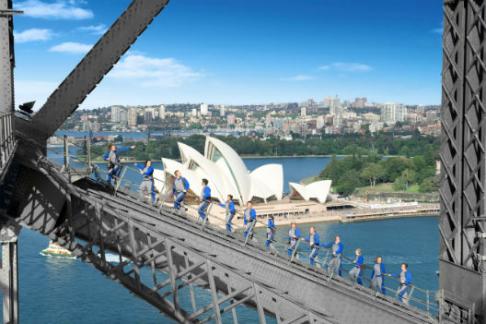
The price can vary according to visit date and time selected. Day The climb departs from morning to late afternoon (after “dawn” and before “twilight”), exposing the hum and buzz of the city in full swing. 5 Things you need to know before your climb Health & Safety Your health and safety is important: If you are pregnant or have any pre-existing health conditions you may need to provide a doctor’s Certificate of Fitness note before you climb. You must have a blood-alcohol reading below 0.05 to climb (the same as if you are driving). You will be asked to complete a BridgeClimb Declaration Form before your Climb. Please be honest about your health so we can ensure your wellbeing is not at risk. All discussions will be confidential. Preparations How should you prepare for your Climb: Ensure that you have eaten before your Climb and you’re well-hydrated – the experience can last up to 3 ½ hours. Wear comfortable, enclosed rubber-soled shoes such as running, sport or hiking shoes and don’t forget your sunglasses. It is recommend to wear comfortable clothing. You will be equipped with everything else you need for your Climb! Ensure you arrive 15 minutes before your scheduled Climb time to allow enough time to check in. Personal Belongings All your personal belongings can be stored in lockers, including cameras: there are FREE secure lockers for you to keep your personal belongings in, including phones, cameras and GoPros. The Climb Leaders will capture photos of you during your Climb. For safety and security reasons, cameras, video technology and mobile devices are prohibited on the Climb. Restrictions You must be 8 years old and 1.2 metres in height, or taller: Children aged 8 to 15 must be accompanied by and are the responsibility of an adult, with a maximum of three children per adult. Weather Conditions Climbs operate in all weather conditions: You will equipped with all the gear you need to keep you dry, but remember to bring your own shoes, which should be enclosed, like running shoes. In case of extreme weather conditions like electrical storms or during times of extremely high wind, Climbs may be postponed.
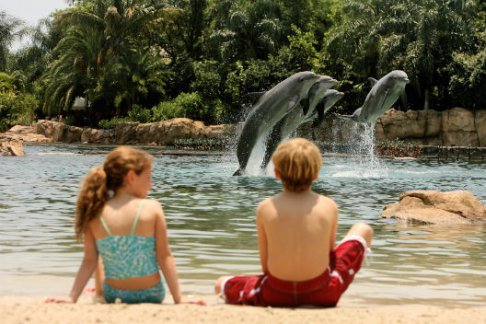
Dolphin Lagoon ™ Das Delfinschwimm-Erlebnis ist das Herzstück Ihres Besuchs.In der Lagune können die Besucher mit Delfinen schwimmen. Sie ist von Sandstränden und tropischer Vegetation umgeben. Nach einer Einführung über die Meeressäuger im flachen Teil der Lagune, können die Teilnehmer in Kleingruppen (nicht mehr als Personen) mit den Delfinen schwimmen und spielen und sich von der Kraft und der Anmut dieser einzigartigen Tiere verzaubern lassen. Kinder müssen mindestens 6 Jahre alt sein, um mit Delfinen zu schwimmen. Kinder im Alter von 6-12 Jahren müssen von einem zahlenden Erwachsenen begleitet werden, der ebenfalls am Delfinschwimmen teilnimmt Das Grand Reef® Ein Hektar großes Areal mit rund 10.000 Meerestieren - darunter 125 verschiedene Arten von Fischen wie Rochen, Muränen und Haien. Die Gäste können dort am weißen Sandstrand liegen, im flachen Wasser waten, im tieferen Wasser schwimmen oder inmitten der tropischen Fische schnorcheln. Explorer's Voliere Das rund 76 Meter lange und bis zu elf Meter hohe Vogelhaus stellt einen natürlichen Lebensraum für etwa 30 Arten tropischer Vögel dar. In drei Bereichen können Sie die Vögel sogar füttern und berühren! Wind-Away-Fluss Das Gewässer schlängelt sich durch fast den ganzen Park, vorbei an Stränden, baumgesäumten Wegen und Lagunen. Wer durch den Fluss schwimmt, trifft auf verschiedene Landschaften: den Strand einer sonnigen Insel, dichten tropischen Regenwald, einen Fluss, der an den Amazonas erinnert, ein tropisches Fischerdorf und eine Unterwasserhöhle. Wer durch den Wasserfall taucht, kommt in ein riesiges Vogelhaus, das etwa 300 farbenprächtige Tiere aus aller Welt beherbergt. Ruhe-Bucht Schneeweiße Strände gesäumt von Palmen, tropischer Vegetation und strohbedeckten Hütten. Jeder Gast findet sein privates Plätzchen auf dem weißen Sand, unter einem Schatten spendenden Sonnenschirm, in einer Hängematte oder auf einem Liegestuhl.
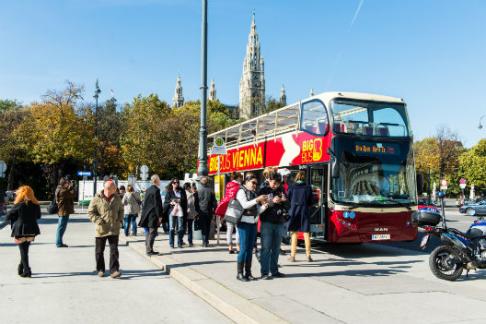
RED ROUTE Big Bus Red Tour leads you to the most important buildings along the Ring Street followed by Prater with its famous ferry wheel, the Augarten where you find the residence of the Vienna’s boys choir, the Blue Danube where you can start the River Cruise and the famous Danube tower with it rotating café. Duration: 1.40 hour / Operates: 9:30am – 04:30pm / Frequency: 20-30 minutes BLUE ROUTE The second route, blue route guides you the Schönbrunn Palace which is not located in the city center of Vienna. Passing by the Aqua terra Zoo, Arsenal and Belvedere Palace you finally reach the Schönbrunn Palace with its beautiful gardens and the Gloriette. Duration: 1.25 hour / Operates: 10:00 – 17:00 / Frequency: 20 - 30 minutes CITY WALK Join the city walk and step back in time to experience the life of the Habsburgs. You will visit the Hofburg Palace, the world - renowned Spanish Riding School, Heldenplatz and the Capuchin’s Crypt, where members of the house of Habsburg are entombed. The guided tour also covers the history of music in the city, including the legendary composers Mozart , Haydn and Beethoven. The tour starts from stop 1 “ Opera” and ends at St . Stephens Cathedral - the most important Gothic church of Austria and lasts around 1 – 1,5h. THEIR COMMITMENT : Great value for money Best bus frequency Hi Resolution digitally audio-system Operates 7 days a week, all year long
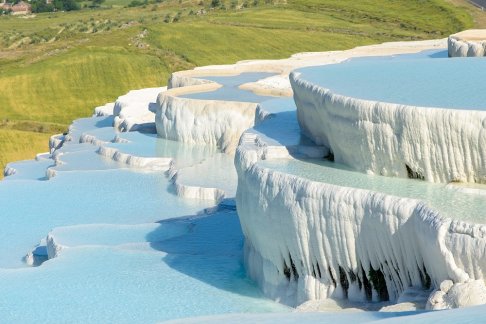
The tour starts early in the morning at 03:30 am with a pick up time for the hotels in Alanya city center. The first stop will be in Korkuteli for the breakfast. If you will not have lunch box from the hotel, you can buy some snacks, tea, coffee there in a cafe. On the way to Pamukkale there are some other stops to make the long journey more easy and comfortable. The closest city to Pamukkale is Denizli, there you will stop to enjoy the beautiful panoramic view. Next in program is an open buffet lunch at a local restaurant in Pamukkale surroundings. From the restaurant it will possible to see the hill with the stunning white terraces. On arrival to Pamukkale first discover the ruins of Hierapolis (amphitheater, city walls, bathhouses, necropolis, etc.) to learn more about the history and culture of this area. Then you can walk on the white travertines enjoying the full beauty of this natural wonder and swim in its natural pools with the hot spring water. Not far from the travertines there is an ancient pool called Cleopatra's pool, swimming there is optional and for an extra charge. Because of the glorious white travertine and historical values of Hierapolis Ancient City Pamukkale was added to the UNESCO World Cultural Heritage (1988). On the way back to you will pass Denizli one more time and stop for some shopping (textile / leather shop and onyx fabric). You will have dinner at a local restaurant and after drive directly till Alanya. There will be the last stop before you come back to your hotel.
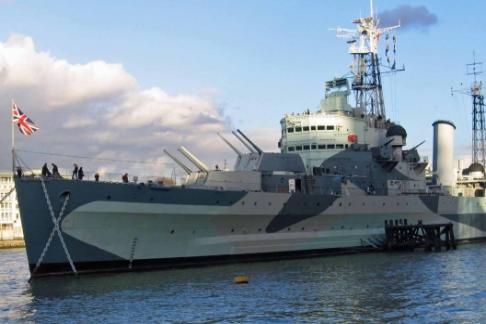
HMS Belfast One of the most powerful large light cruisers ever built, HMS Belfast is now the only surviving vessel of her type to have seen active service during the Second World War. HMS Belfast played a leading part in the destruction of the battle cruiser Scharnhorst, and also the Normandy Landings. In service with the Royal Navy until 1965, she was saved for the nation in 1971 as a unique reminder of Britain’s naval heritage. Launch! Shipbuilding Through the Ages This new family-orientated exhibition will use hands-on and computerised interactive displays and engaging film and footage to demonstrate techniques of shipbuilding, from the ‘age of sail’ to modern prefabrication methods. The exhibition will focus on the science, engineering and social history of shipbuilding in Great Britain, and the interactive elements of the exhibition will allow children of all ages to get involved and experience this history. Explore ‘What shall we give in return for so much?’ One of the most powerful large light cruisers ever built, HMS Belfast is now the only surviving vessel of her type to have seen active service during the Second World War. Serving Britain for 32 years, she played an important role in both the Second World War and the Korean War as well as performing peacekeeping duties throughout the 1950s and 1960s. Saved from destruction in 1971, HMS Belfast is now part of the Imperial War Museum and is the first ship to be preserved for the nation since Nelson’s Victory. Through its team of staff and volunteers – many of whom are veteran crew – the Imperial War Museum is dedicated to making sure that HMS Belfast still has a role to play in reminding visitors of her unique place in Britain’s maritime heritage. History of HMS Belfast The term 'cruiser' goes back to the days of sailing ships when large frigates could be detached from the main fleet to cruise independently. The sailing cruiser, like her twentieth-century counterpart, was sufficiently powerful and fast to attack and destroy enemy commerce raiders. During the nineteenth century when sail gave way to steam and wooden ships were replaced by those built of iron, and later of steel, the cruiser evolved into a powerful warship which was used to patrol the Empire trade routes and protect friendly merchant shipping. After the First World War (1914-1918) a single category of cruiser emerged whose size was indicated by the size of its guns; thus, HMS Belfast is a 6-inch cruiser, designed for the protection of trade, for offensive action, and as a powerful support for amphibious operations. Please note: children under 16 must be accompanied by an adult. Please allow 1½ - 2 hours for your visit. Tower Bridge Exhibition Walkways & Exhibition: Visitors enter Tower Bridge Exhibition via the North Tower. They are then transported by lift to the top of the Tower (47 metres above the Thames) where they have a unique opportunity to see the Bridge’s steel skeleton from within. A short film explains the history and provenance of the Bridge and then there is the chance to admire the spectacular views – from both covered Walkways. On Monday 1st December, Tower Bridge’s East Walkway will reopen with its own GLASS FLOOR, joining the West Walkway to complete our new-look exhibition. Together with far-reaching views of East London, the walkway will be bolstered with a further 20 revered bridges in the extended popular display, ‘Great Bridges of the World’. On the east Walkway there are fantastic views of the Docklands and from the west Walkway you can see the new GLA building, the Tower of London, St Paul’s, the city, the Pool of London and Big Ben and the London Eye in the distance. Interactive computerised kiosks and graphic panels explain the significance of the views to visitors, as well as providing more information on the history and building of the Bridge. The interactive material and graphic panels are written in seven languages and an audio loop for the hard of hearing is also in place for the video show. There is another film to view in the South Tower before descending for the short walk to the historical Engine Rooms, included in your ticket price. Victorian Engine Rooms: These provide a fascinating insight into late 19th century engineering. Installed for the completion of Tower Bridge in 1894, these huge, and beautifully maintained, coal-driven engines were used to power the thousands of bascule Bridge lifts performed until 1976. Although lifts are now operated by electricity, the original steam engines are still in place. The Engine Rooms give visitors a chance to experiment with models demonstrating the technology behind the Bridge. There are also some amazing photographs of Tower BridgeTthroughout its lifetime – including a revealing picture of the heavy steel structure of the Bridge as the stone cladding was installed over it.