Show Times
Please allow at least 4 hours to see all of our shows and exhibits. Show times do vary from day to day and are established each morning. For a given day's show times call 305-361-5705 ext 0 and speak to the "receptionist."
Miami Seaquarium®,South Florida’s premier attraction, boasts a wide variety of marine life, remarkable educational programs and state of the art rescue and rehabilitation efforts. The public relations team at Miami Seaquarium is available to assist working media on a variety of editorial projects. Media visits offer the unique opportunity to explore Miami Seaquarium® and speak with a variety of animal and tourism experts.
Dining
A day of learning, laughs and entertainment can leave you feeling hungry! Within the park, you can find a variety of food options suitable for any diet and appetite, from Pink's Hollywood Hot Dogs to the Organic Selects, a NEW organic-certified menu.
Experiences
Miami Seaquarium® offers a variety of unique interactive and educational experiences, perfect for families seeking fun things to do in Keys Biscayne with kids! From discovering sea turtles, meeting the newest creatures, and learning about our conservation efforts, there is something for everyone
Exhibits
Shark Channel - When Miami Seaquarium® first opened in 1955, one of the main attractions was the Shark Channel. Today, guests are still entranced by these fearsome creatures. At the Shark Presentation, animal care specialists feed 200-pound sharks while explaining the various species of shark that exist worldwide.
Tropical Reef - A favorite among park visitors, the Main Reef Aquarium features a 750,000-gallon saltwater aquarium teeming with reef fishes of every size, color and description. During the Reef Presentation, a diver accompanied by a group of Sea Trekers slowly work their way around the aquarium allowing visitors to watch as he/she hand-feeds the colorful tropical fish, large groupers, cobia, stingrays and moray eels. This presentation is accompanied by an informational narration.
Manatees - At the Manatee Exhibit, guests come face-to-face with Florida's state marine mammal through poolside and underwater viewing areas. The Manatee Presentation provides an opportunity to learn about this fascinating and federally endangered animal and, more importantly, explains ways that guests can help save these gentle creatures of the sea. The manatees featured are part of the rescue and rehabilitation program at Miami Seaquarium®.
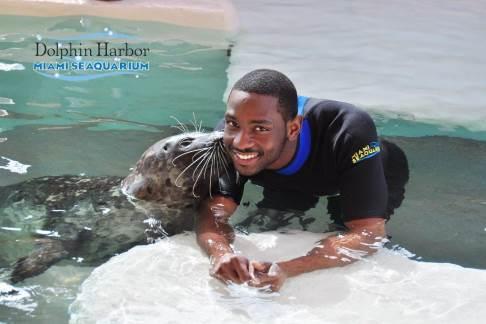
Seal & Sea Lion - The Seal & Sea Lion Feeder Pool is adjacent to the The Golden Dome, a Miami landmark designed by architect Buckminster Fuller. Throughout the day, guests may enjoy the Seal and Sea Lion Exhibit, where they can observe Sea Lions and Seals as they frolic in the South Florida sun. Daily feeding sessions provide the opportunity for guests to feed some of these playful and boisterous mammals.
Discovery Bay - View sea turtles, Florida birds and other wild-life in a natural mangrove forest environment. Explore our sea turtle exhibit to learn more about the 5 endangered sea turtle species that live in Florida waters. The sea turtles featured are part of the rescue and rehabilitation program at Miami Seaquarium®.
Tropical Wings - View a variety of tropical birds, including Cockatiels, Macaws, Flamingos and our resident peacock, Peeps. Listen carefully and one of our parrots may just greet you with a subtle “hello.” Our animal keepers are on hand to answer any questions you may have and tell you more about the birds we have on exhibit. Tropical Wings is also home to our Stingray Touch Pool.
Tropical Fish Aquariums - Explore the stunning variety of tropical marine life that inhabits the aquariums lining the walls of the Top Deck Dolphin area. These aquariums feature an array of interesting fish species with unique characteristics. Explore a number of ocean creatures from Florida Lobsters that live in local reefs to the invasive Red Lion Fish which was recently discovered in Caribbean waters but are originally from the Pacific and Indian oceans.
Crocodile Flats - Crocodylus niloticus, also known as Nile Crocodiles, are the center of attention in their home at Discovery Bay's Upper Island, known as Crocodile Flats. This exhibit is made up of 32 tons of rock, 72 tons of beach sand, coconut and sable palm trees. The crocodiles are 6 ½ to 8 feet long and when fully grown can reach a size of 16 feet and nearly 1,000 pounds. Their main diet consists of chicken, fish, and rabbit.
Stingray Exhibit - Meet the newest creatures to call Miami Seaquarium® their home - Southern and Cownose Stingrays who have taken up residence in a new 10,000 gallon touch pool, located inside the Tropical Wings Exhibit at Miami Seaquarium®. The new interactive exhibit, gives park guests the opportunity to feed and feel the gentle glide of these amazing creatures at their fingertips. Daily feeding sessions provide the opportunity for guests to feed the Stingrays.
Sharky's Sky Trail - Sharky’s Sky Trail is a multi-level aerial obstacle course that provides a challenging and fun experience for the whole family. Park guests will be able to climb three stories in the air to face 18 challenges including rickety bridges, suspended ropes and other balancing obstacles. While safely harnessed in an overhead track, you walk the planks and tiptoe the tightropes 32 feet above Miami Seaquarium®!
Salty's Pirate Playground - Batten down the hatches and walk the plank at Salty’s Pirate Playground, a wet/dry playground area. The attraction consists of a two-level pirate ship, 31 feet by 27 feet, located at the center of a shark filled moat. The pirate ship, featuring water blasters, cargo nets, padded areas and a spiral slide, entertains buccaneers ages two through twelve.
Shows
Top Deck Dolphin - Thrill to the high-flying antics of bottlenose dolphins as they perform breathtaking leaps and rolls. Guests thrill to the acrobatics of these agile marine mammals as they brave “rough waters” during the Rock n’ Roll Cruise. The Top Deck dolphins can be viewed anytime throughout the day from above and below the water. Keep your eyes open you might be able to spot a baby dolphin depending on when you visit.
Golden Dome Sea Lion - Enjoy the hilarious adventures of Salty the Sea Lion and his Reef Rangers. This comedic playlet allows the sea lion and seal stars to show off their athletic and comedic abilities as they explore the reef searching for a littering diver. You, too, can be a Reef Ranger by helping protect our waters from trash and recycling whenever possible.
Flipper Dolphin Show - The new Caribbean themed show, with a new set, music, and behaviors will let everyone know what Flipper has been up to in recent years. While the show demonstrates that Flipper’s surroundings may have changed, his core commitment to helping out when there is a need has not. In addition, a new historic display of images and nostalgia from the original TV show will be on exhibit at the entrance of Flipper's stadium.
Killer Whale & Dolphin - There’s only one place where you’ll find Pacific white-sided dolphins living, playing and performing alongside a killer whale! Be amazed and delighted by Lolita the Killer Whale and her exotic Pacific white-sided dolphin friends as they show off their natural grace, beauty and intelligence through the special relationship between animal and trainer.