Free
Support
Catégorie:Etiquette de Bagage; Que contient la boîte:Etiquette de bagage; Quantité:2pcs; Thème:Monsieur et madame; Matériau:Cuir; Dimensions:10.17.1; Tranche d'Age:Adulte; Fonction:Durable,Accessoire de Bagage,Pratique; Motif:Coussin; Caractéristiques:Unique,Personnalisé,Sur-Mesure; Poids Net:0.03; date d'inscription:03/09/2020; Mode de production:approvisionnement externe
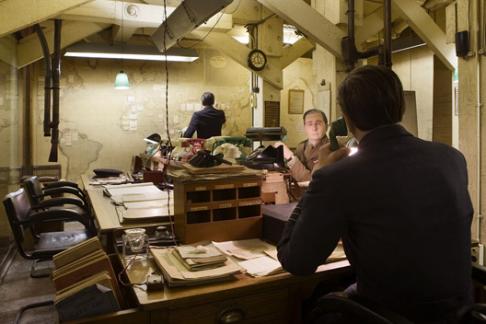
The Map Room The Map Room came into use on the very first day that the Cabinet War Rooms were ready for occupation and remained the heart of the site throughout the war. The room was staffed twenty-four hours of every day, from August 1939 to August 1945. The principal function of the Map Room was to act as a round the clock central point for information about the war. The War Cabinet Room This was the inner sanctum of British Government, the room used for meetings of the Prime Minister, a select few ministers and advisers of his War Cabinet and his Chiefs of Staff. 115 meetings of the War Cabinet took place and momentous decisions were taken in this room. The scratched arms of the seat in which Churchill sat bear witness to the tensions of those crucial meetings at critical moments of the war. Churchill's Room Although his room in the Cabinet War Rooms boasted comforts of a higher standard than anywhere else in the complex, Winston Churchill preferred not to sleep there. He used his room at the Cabinet War Rooms for visits to the Map Room and for business, when forced to meet underground. He also delivered four of this wartime speeches from here, including his 11 September 1940 speech, warning of Hitler's plans to wage a war of terror against the United Kingdom. The Transatlantic Telephone Room The Transatlantic Telephone Room, to which a huge scrambler 'Sigsaly' was connected, created the original hot-line for allowing Churchill and the American President to conduct their vital strategic discussions in complete security. Like all the rooms in the complex, this originally had a more humble purpose - it was once a store for brooms and domestic equipment. It was adapted in mid-1943 to house this particularly secret installation. The Churchill Museum The Churchill Museum is divided into five chapters, spanning all ninety years of Churchill's life. To allow an easy transition from the historical context of the Cabinet War Rooms, the story begins on 10 May 1940 with Churchill's appointment as Prime Minister. The visitor can then explore his later years, his childhood, his early political career and finally the period known most famously as the 'Gathering Storm'. Facilities The Switchroom Café is a great place to relax with a range of hot and cold food freshly prepared on the premises, along with a variety of beverages on offer. Open 7 days a week from 10:00 until 17:00, the café is located halfway through the tour but visits to the café can be taken at any time. The café also houses interesting photographic artefacts from the Second World War to view. All visitors are provided with a free personal Acoustic guide sound guide, available in English (adult, family and visually impaired version), French, German, Italian, Spanish, Hebrew, Dutch and Mandarin. Plus family and kids tours

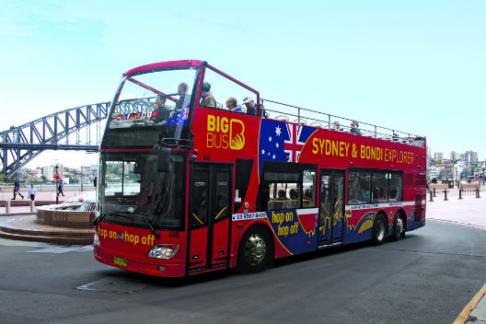
ROUTE As well as Sydney’s glorious harbour and stunning beaches the city of Sydney offers a multi-cultural lifestyle, exuberant festivals and events, a dynamic food scene and a striking cityscape of modern and colonial architecture. Two tours, Sydney & Bondi, each tour is 90 minutes Sydney tour: Departs from and finish at Stop 1 – George St cnr Alfred St (opp DFS Galleria), Circular Quay. First tour starts at 08:30. Frequency 15-20 minutes*. Bondi Tour: Departs from and finish at Stop 12/A –Pitt St, Bus Bay 18, Central Station. First tour starts at 09.30. Frequency: 30 minutes. *Frequency and finishing times vary according to season. *Suitcases (Including carry-on luggage) are not allowed on the bus due to space constraints and passengers safety. Third party luggage storage facilities are available close to major stop SYDNEY BUS STOPS 1. Circular Quay 2. Elizabeth Street 3. Cook & Phillip Park 4. William St 5. Kings Cross 6. El Alamein Fountain 7. Woolloomooloo Bay 8. Sydney Opera House 9. Botanical Garden 10. State Library 11. Hyde Park 12. Central Station 13. Power House Museum 14. Sydney Fish Market 15. The Star 16. Maritime Museum 17. Convention Centre 18. Chinese Gardens 19. Sea Life Sydney Aquarium 20. King St Wharf 21. Barangaroo 22. Dawes Point 23. The Rocks BONDI BUS STOPS A. Central Station B. Sydney Tower Eye C. Cook & Phillip Park D. William Street E. Paddington Town Hall F. Centennial Parklands G. Bondi Beach H. North Bondi I. Rose Bay J. Double Bay
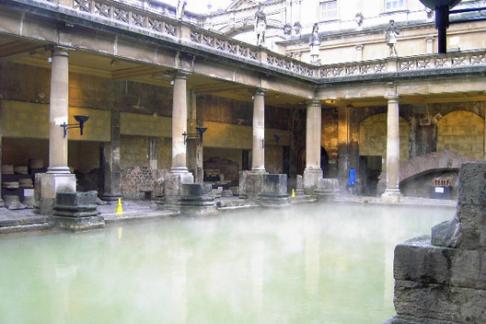
Windsor Castle* The oldest and largest occupied castle in world and home to British kings and queens for over 1,000 years. Visit the magnificent State Apartments, furnished with some of the finest works of art from the Royal Collection and St George’s Chapel; the burial place Henry VIII and Charles I. Stonehenge Clouded in mystery, the ancient stone circle of Stonehenge is an amazing feat of engineering and the most important prehistoric site in England. Take a step inside the Neolithic houses and visit the fascinating exhibition with ancient treasures dating back thousands of years. Bath Enjoy a panoramic coach drive of this beautiful Georgian town, boasting some of the finest architectural sights in Europe, including Bath Abbey, Pulteney Bridge, and The Assembly Rooms, before enjoying a visit to the famous Roman Baths where the naturally warm spring is still in operation after more than 2,000 years. *Viewing at Windsor Castle is restricted on Sundays. On rare occasions, the State Apartments may be closed.