Free
Support
Depart Edinburgh at 09.30 and travel north to South Queensferry. The town is named after the 11th century Queen Margaret who dedicated her life to changing the social welfare of the people, particularly the church, earning her the title 'Saint Margaret of Scotland'. North of Edinburgh there were two very important churches - St Andrews and Dunfermline, but getting from Edinburgh across the wide Firth of Forth was difficult, so Queen Margaret provided a free ferry for pilgrims, hence 'Queen's Ferry'. The ferry remained in existence until the opening of the Forth Road Bridge in 1964 by the present Queen. From Queensferry we drive up and onto the Forth Road Bridge, giving us a great view across to one of Scotland's greatest man-made landmarks - the Forth Rail Bridge. At over a mile and a half (2300m) long, the bridge was completed in 1890, and until recently was the longest Cantilever bridge in the world. It is a true testament of Scottish engineering. Once over the bridge we enter the Kingdom of Fife. Bounded to the south by the wide Firth of Forth, to the north by the Firth of Tay and to the east by the North Sea the area was once a sub-kingdom of the old Pictish realm, a natural peninsula almost cut off from the rest of Scotland, and so remained semi-independent for longer than other parts. Central Fife used to be very poor, until the discovery of coal, while the towns and villages along its coastline were rich from all the trade across the North sea, causing King James VI to describe the area as a 'Beggar's mantle fringed with gold'. The golden fringe he referred to was the East Neuk (or nook, meaning corner), Fife's easternmost stretch of coastline and home to a string of picturesque villages each with its own distinctive character and charm. One of these, Lower Largo, is best known as the birthplace of Alexander Selkirk the real-life Robinson Crusoe and inspiration for Daniel Defoe's novel whilst neighbouring Earlsferry is said to be where MacDuff hid from Shakespeare's Macbeth. We stop in the traditional fishing village of Anstruther (known as 'Enster' locally) where you can check out its old cobbled streets and network of little alleyways and wynds or take a walk along the seafront to the harbour. From Anstruther we continue north to the medieval town of St Andrews. St Andrew is the patron Saint of Scotland, and according to legend his remains were washed up on the Fife coast. The shrine became a place of worship for Christian pilgrims from far and wide and the town developed into the religious capital of Scotland complete with a huge Norman Cathedral, the largest in all of Scotland. Founded in 1160 the Cathedral was devastated first by fire and later by zealous religious reformers but the ruins provide a fascinating insight into what it once must have been like. Today St Andrews attracts another type of pilgrim, being famous world-wide as the home of golf and the Mecca for all golfers - the 'Old Course'. The course, founded in 1754, is in beautiful condition and its emerald green grass contrasts with the golden sands of the beach nearby. St Andrews is also home to the oldest University in Scotland, at nearly 600 years old, and the third oldest in Britain behind Oxford and Cambridge. Also dating from this period is the town's once mighty castle which, perched on a rocky headland overhanging the sea, is a ruin with a violent and murderous past. Every street, every building is surrounded with history and we give you almost 3 hours to explore this amazing town. From St Andrews we take a pleasant drive through the rolling countryside of central Fife, with its small villages and patchwork of farms, to Falkland. Falkland Palace dominates this old village, and was one of the main residences of the old Royal family of Scotland, the Stewarts (Stuarts). Aside from the palace the village is simply one of the most beautiful in Scotland with an array of old cottages and narrow winding streets. You can take time to wander around the picturesque village or enjoy a drink in one of the village’s traditional pubs or tearooms. Leaving Falkland we cross the Lomond hills past Loch Leven, where Mary Queen of Scots was imprisoned by her Protestant nobility. And then it is straight back to Edinburgh.

Along the way, you can learn about the city's history by listening to the entertaining and informative commentary. Commentary Live Guides Live English-speaking guides are featured on our buses. Throughout the Tour you will be kept informed and entertained by an expert English-speaking guide with fascinating facts and stories about the Capital, ranging from the foundation of this great city right up to the events of the present day. Departure Times Our Night Tour runs every evening Hop on at 7:00pm (7:30pm from July 1) Our Night Tour runs every evening Hop on at 7:00pm (7:30pm from July 1) from Stop #20: White House (outside the Willard Hotel) or at 7:30pm from Stop #1: Union Station. The Night Tour takes two hours and is not a hop-on, hop-off tour. Please note that Night Tour timings are subject to change without notice. Please check your ticket on the day of your tour for the most current hours of operation.
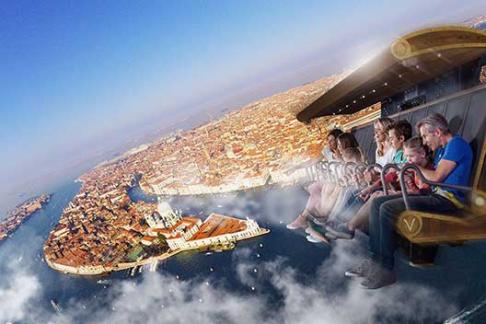
Highlights Enjoy an amazing day out at Germany's largest theme park, with over 100 incredible rides situated within 95 hectares of traditional architecture and multi-award-winning gastronomic delights. Take on the Eurosat Cancan Coaster, Make a splash on Atlantis SuperSplash, or make the dream offlying a reality on the Voletarium – with over 100 rides, there's a ride for everybody! Wonder around 18 themed zones representing different European countries. Ticket Includes Entry to Europa Park during the Summer Season - April 6 - November 3, 2019. Skip-the-line admission to the park 2 Day Tickets are valid for 6 days from the date of the first visit. Ticket Excludes Food & beverages Transport Parking Description Two new attractions The "Eurosat Cancan Coaster" is a dark-ride coaster taking us through an illuminated Paris night. Entrance and waiting Area a a reconstruction of the legendary Paris „Moulin Rouge“. And the new virtual-reality-adventure „Eurosat Coastiality“, an outer space adventure, designed with Luc Bessons, following his famous movie "Valerian and the City of a Thousand Planets“. The dream of flying becomes reality, in Europe’s biggest flying theater Voletarum. In seven chairlift-style flying machines you will glide through the air in a spectacular fashion. The screens are more than 400 square meter big, with a diameter of 21 meters. Be prepared to experience sensational visuals of Europe’s most beloved landscapes and metropolises. The new attraction Voletarum is very popular which may produce long waiting lines, but not for you: Go to the Voletarum, present your 365-ticket and you will get a time slot ticket. With this ticket you can skip the line. Europa-Park as a vast Winter Wonderland Thick snow flakes drift through the air, aromas of baking cookies waft past the nose, and thousands of fairy lights light the way. Europa-Park has spruced up for winter and is awaiting its visitors. From 24 November 2018 until 6 January 2019 (closed 24/25 December), Germany's largest leisure park is becoming a huge, fascinating winter wonderland. Whether muffled up grumpily against the cold or red-cheeked and flinging snowballs, all visitors will be enchanted by the many breath-taking attractions and the top-class show programme. Please note: Valid Photo ID is required for entry with each booking - You may be refused entry if your ID does not match the name you gave us in your booking. For groups of 20 or more, please contact us by email or phone, you will get a discount. Visitors with Disabilities (disability ID required).On presentation of your disability ID we offer the reduced entry to Europa-Park). In this case please book the tickets Senior (60+) and present your disability ID at the entry.
SUNDAY PRIME RIB DINNER MENU Optional Starters (Additional Charge) Chipotle Hummus and Grilled Flatbread - $8.00 Vegan Charcuterie Plate - $10.00 Gluten-Free Lump Crab Cakes with Roasted Red Pepper Aioli - $12.00 Chilled Jumbo Mexican White Prawns with Spicy Cocktail Sauce - $12.00 Gluten-Free Salad Flagship Caesar Wedge – Crisp hearts of romaine, shaved Parmesan cheese, garlic croutons and classic Caesar dressing Locally Baked Fresh Breads from St. Tropez Bakery and creamery butter Vegan Entree (Please select one of the following entrees when making your reservation.) Slow Roasted Creekstone Farms Prime Rib of Beef Stone Smoked Porter au jus, creamy horseradish sauce, farm fresh vegetables, baked potato with traditional accompaniments. Eggplant Parmesan Crispy breaded and baked eggplant with mozzarella and marinara served with linguini and oven roasted seasonal vegetables. Vegan Portobello Steak Fresh Portobello mushroom marinated in red wine, garlic and cracked red pepper then grilled. Served with herb roasted potatoes and seasonal vegetables. Vegan, Gluten Free, Dairy Free Dessert Semi-Traditional Mud Pie Justin Starboard chocolate ganache, Alesmith Nautical Nut Brown caramel sauce. For the Young Sailor (Children 4-12) Hand breaded organic chicken tenders with organic macaroni and cheese. Served with seasonal fresh fruit and chocolate chip cookies.
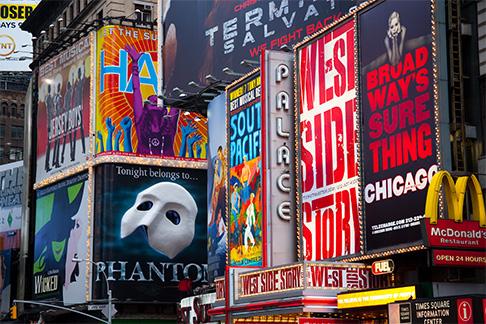
Beneath desire, depravity. Beneath lust, bloodlust. Beneath the veils, everything is laid bare. In King Herod’s lurid fantasies, lust has no boundaries and desire no limits. Even his own stepdaughter tempts him, taunts him: Salome, the virgin seductress, an innocent with a taste for blood. Strauss’ taboo-breaking opera strips back Oscar Wilde’s play to its core: a gripping journey to the outer edges of human behaviour. The music is at once ravishing and repellent. Strauss augments an enormous orchestra with organ, harps and celestas. The effect is a web of exotic melodies, enticing rhythms and intriguing dissonance, famously on display in the ‘Dance of the Seven Veils’. Heard live, it is an unforgettable experience. Lise Lindstrom is riveting as Salome, finding fragility and nuance in a role that demands a powerhouse voice and gifted actress.
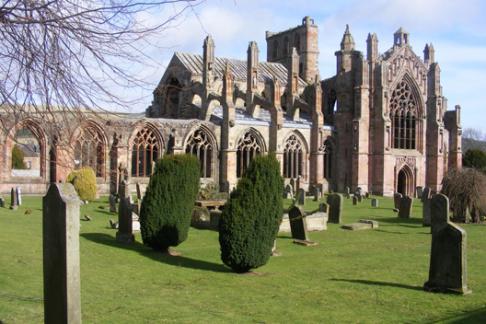
Visit one of the most important spots of Polish history and heritage, the Wawel Royal Cathedral. Located on the Wawel Hill, surrounded by medieval castle walls, this style operating Gothic style church was built in 1142. More than 900 years old, it is the Polish national sanctuary and has traditionally served as coronation site of the Polish monarchs as well as the Cathedral of the Archdiocese of Cracow. The cathedral was destroyed several times, the reconstruction of the current one began in the 14th century and it managed to surpass its former glory. During the self-guided tour with audioguide you will have an opportunity to admire the most important sights of the Cathedral: you will discover the place, which witnessed the most significant events of Polish nation. Right after, you will head to Sigismund Tower- location of one of the largest Polish system of church bells: Sigismund's Bell. It needs 12 bell-ringers to swing a single 30 ton bell. Moreover, from the tower you can appreciate breathtaking sights of Old Town and Vistula River oxbow. Later, you will proceed to the Chapels and burial chambers which has been the mail burial site of Polish leaders and monarchs. Each chapel is a piece of art in itself: sculpted in wood, marble and steel. At the end of the visit you will have chance to spend a while in John Paul II Museum, which is full of exhibits showing connection of Pope John Paul II with the Wawel Cathedral.