The Map Room
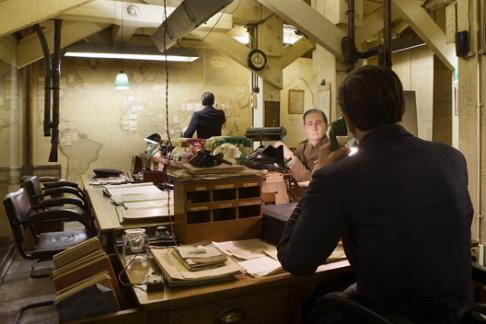
The Map Room came into use on the very first day that the Cabinet War Rooms were ready for occupation and remained the heart of the site throughout the war. The room was staffed twenty-four hours of every day, from August 1939 to August 1945. The principal function of the Map Room was to act as a round the clock central point for information about the war.
The War Cabinet Room
This was the inner sanctum of British Government, the room used for meetings of the Prime Minister, a select few ministers and advisers of his War Cabinet and his Chiefs of Staff. 115 meetings of the War Cabinet took place and momentous decisions were taken in this room. The scratched arms of the seat in which Churchill sat bear witness to the tensions of those crucial meetings at critical moments of the war.
Churchill's Room
Although his room in the Cabinet War Rooms boasted comforts of a higher standard than anywhere else in the complex, Winston Churchill preferred not to sleep there. He used his room at the Cabinet War Rooms for visits to the Map Room and for business, when forced to meet underground. He also delivered four of this wartime speeches from here, including his 11 September 1940 speech, warning of Hitler's plans to wage a war of terror against the United Kingdom.
The Transatlantic Telephone Room
The Transatlantic Telephone Room, to which a huge scrambler 'Sigsaly' was connected, created the original hot-line for allowing Churchill and the American President to conduct their vital strategic discussions in complete security. Like all the rooms in the complex, this originally had a more humble purpose - it was once a store for brooms and domestic equipment. It was adapted in mid-1943 to house this particularly secret installation.
The Churchill Museum
The Churchill Museum is divided into five chapters, spanning all ninety years of Churchill's life. To allow an easy transition from the historical context of the Cabinet War Rooms, the story begins on 10 May 1940 with Churchill's appointment as Prime Minister. The visitor can then explore his later years, his childhood, his early political career and finally the period known most famously as the 'Gathering Storm'.
Facilities
The Switchroom Café is a great place to relax with a range of hot and cold food freshly prepared on the premises, along with a variety of beverages on offer.
Open 7 days a week from 10:00 until 17:00, the café is located halfway through the tour but visits to the café can be taken at any time. The café also houses interesting photographic artefacts from the Second World War to view.
All visitors are provided with a free personal Acoustic guide sound guide, available in English (adult, family and visually impaired version), French, German, Italian, Spanish, Hebrew, Dutch and Mandarin. Plus family and kids tours