Free
Support
Verpassen Sie nicht den Park Güell: Hier ist Staunen garantiert! Dieses architektonische Wunderwerk wurde von Antoni Gaudí inmitten der Natur geschaffen und von Graf Güell in Auftrag gegeben. Dieser wollte in ihm ein elegantes Anwesen mit Einfamilienhäusern errichten. Heute ist es ein öffentlicher Park und gehört zum Erbe der Stadt. Es wurde zum UNESCO-Weltkulturerbe erklärt. Wenn Sie zum Park Güell gehen, sollten Sie die große Treppe betreten, die von einem mit Keramikmosaik verzierten Drachen dominiert wird, dem katalanischen Stil, der als "Trencadís" bekannt ist. Dieser Drache ist eines der charakteristischsten Bilder Barcelonas. Ursprünglich ist der Park um einen großen zentralen Platz herum angeordnet, der von schlanken Bänken begrenzt wird. Unterhalb des Platzes wird das Dach von 86 dorischen Säulen wie Bäumen mit dazwischen liegenden Pfaden und Viadukten auf geneigten Säulen gestützt: Gaudís Arbeit vereint wie keine andere Natur und Architektur.
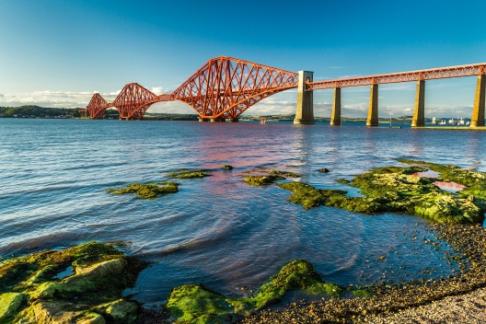
From Edinburgh you will travel north-west, passing Stirling Castle, before making your first stop at Kilmahog. Here there will be a break for some light refreshments and the chance to see some Highland cattle up close. Next you travel onwards through Rob Roy Country of Clans MacGregor and Campbell, then over the dramatic landscape of Rannoch Moor to Glencoe, one of Scotland’s most famous glens, site of the 1692 massacre of the Clan MacDonald. Here you can pause for a photo stop and to soak up the atmosphere in this haunting glen. Continuing via Loch Linnhe, stopping in the Fort William area for lunch, then journey onwards, passing beneath Britain’s highest mountain, Ben Nevis, before we enter the natural beauty of the Great Glen. Travelling on, you can admire the Caledonian Canal and the pretty village of Fort Augustus, enjoying spectacular views of Loch Ness, as you drive along the shoreline to Urquhart Castle. Loch Ness, 24 miles long and over 700 feet deep, is most famous for sightings of the Loch Ness monster, affectionately known as “Nessie”. You will spend 2 hours at Loch Ness, where you can choose to explore the ruins of Urquhart Castle*, learn of its history inside the modern visitor centre, and take an Award Winning Jacobite cruise* across the loch. Passing through Inverness, Capital of the Highlands, you start your return for home, crossing the Grampian Mountains and the woodland scenery of Perthshire, including the Forest of Atholl, before enjoying an evening refreshment stop at the Victorian resort town of Pitlochry, en route back to Edinburgh. *OPTIONAL EXTRA. Daily | ALL YEAR Departs: 08:00 Returns: 20:30

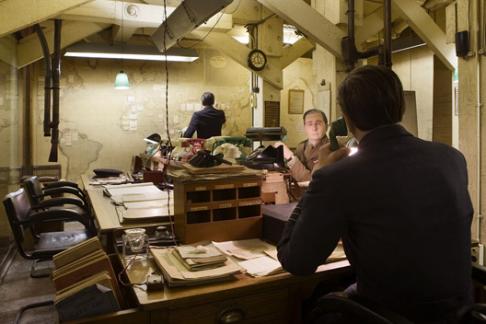
The Map Room The Map Room came into use on the very first day that the Cabinet War Rooms were ready for occupation and remained the heart of the site throughout the war. The room was staffed twenty-four hours of every day, from August 1939 to August 1945. The principal function of the Map Room was to act as a round the clock central point for information about the war. The War Cabinet Room This was the inner sanctum of British Government, the room used for meetings of the Prime Minister, a select few ministers and advisers of his War Cabinet and his Chiefs of Staff. 115 meetings of the War Cabinet took place and momentous decisions were taken in this room. The scratched arms of the seat in which Churchill sat bear witness to the tensions of those crucial meetings at critical moments of the war. Churchill's Room Although his room in the Cabinet War Rooms boasted comforts of a higher standard than anywhere else in the complex, Winston Churchill preferred not to sleep there. He used his room at the Cabinet War Rooms for visits to the Map Room and for business, when forced to meet underground. He also delivered four of this wartime speeches from here, including his 11 September 1940 speech, warning of Hitler's plans to wage a war of terror against the United Kingdom. The Transatlantic Telephone Room The Transatlantic Telephone Room, to which a huge scrambler 'Sigsaly' was connected, created the original hot-line for allowing Churchill and the American President to conduct their vital strategic discussions in complete security. Like all the rooms in the complex, this originally had a more humble purpose - it was once a store for brooms and domestic equipment. It was adapted in mid-1943 to house this particularly secret installation. The Churchill Museum The Churchill Museum is divided into five chapters, spanning all ninety years of Churchill's life. To allow an easy transition from the historical context of the Cabinet War Rooms, the story begins on 10 May 1940 with Churchill's appointment as Prime Minister. The visitor can then explore his later years, his childhood, his early political career and finally the period known most famously as the 'Gathering Storm'. Facilities The Switchroom Café is a great place to relax with a range of hot and cold food freshly prepared on the premises, along with a variety of beverages on offer. Open 7 days a week from 10:00 until 17:00, the café is located halfway through the tour but visits to the café can be taken at any time. The café also houses interesting photographic artefacts from the Second World War to view. All visitors are provided with a free personal Acoustic guide sound guide, available in English (adult, family and visually impaired version), French, German, Italian, Spanish, Hebrew, Dutch and Mandarin. Plus family and kids tours
Porte-passeport Couverture de passeport Étui transparent pour porte-carte d'identité
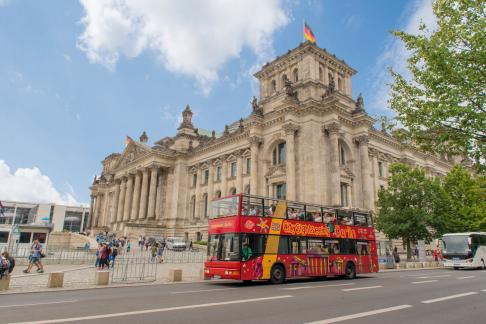
Aspectos destacados Explore y absorba todas las atracciones clásicas de Berlín, como el Palacio de Charlottenburg, la East Side Gallery y el Monumento del Holocausto Disfrute de las vistas panorámicas de la hermosa ciudad de Berlín. Incluye Billete de 24/48h para el autobús con paradas. Acceso a 2 rutas con 24 paradas alrededor de Berlín para personalizar su itinerario. Audioguía multilingüe en 12 idiomas.