Free
Support
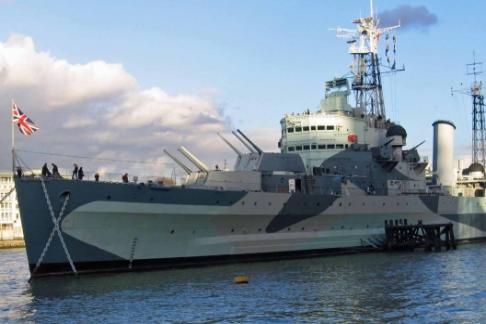
HMS Belfast One of the most powerful large light cruisers ever built, HMS Belfast is now the only surviving vessel of her type to have seen active service during the Second World War. HMS Belfast played a leading part in the destruction of the battle cruiser Scharnhorst, and also the Normandy Landings. In service with the Royal Navy until 1965, she was saved for the nation in 1971 as a unique reminder of Britain’s naval heritage. Launch! Shipbuilding Through the Ages This new family-orientated exhibition will use hands-on and computerised interactive displays and engaging film and footage to demonstrate techniques of shipbuilding, from the ‘age of sail’ to modern prefabrication methods. The exhibition will focus on the science, engineering and social history of shipbuilding in Great Britain, and the interactive elements of the exhibition will allow children of all ages to get involved and experience this history. Explore ‘What shall we give in return for so much?’ One of the most powerful large light cruisers ever built, HMS Belfast is now the only surviving vessel of her type to have seen active service during the Second World War. Serving Britain for 32 years, she played an important role in both the Second World War and the Korean War as well as performing peacekeeping duties throughout the 1950s and 1960s. Saved from destruction in 1971, HMS Belfast is now part of the Imperial War Museum and is the first ship to be preserved for the nation since Nelson’s Victory. Through its team of staff and volunteers – many of whom are veteran crew – the Imperial War Museum is dedicated to making sure that HMS Belfast still has a role to play in reminding visitors of her unique place in Britain’s maritime heritage. History of HMS Belfast The term 'cruiser' goes back to the days of sailing ships when large frigates could be detached from the main fleet to cruise independently. The sailing cruiser, like her twentieth-century counterpart, was sufficiently powerful and fast to attack and destroy enemy commerce raiders. During the nineteenth century when sail gave way to steam and wooden ships were replaced by those built of iron, and later of steel, the cruiser evolved into a powerful warship which was used to patrol the Empire trade routes and protect friendly merchant shipping. After the First World War (1914-1918) a single category of cruiser emerged whose size was indicated by the size of its guns; thus, HMS Belfast is a 6-inch cruiser, designed for the protection of trade, for offensive action, and as a powerful support for amphibious operations. Please note: children under 16 must be accompanied by an adult. Please allow 1½ - 2 hours for your visit. Tower Bridge Exhibition Walkways & Exhibition: Visitors enter Tower Bridge Exhibition via the North Tower. They are then transported by lift to the top of the Tower (47 metres above the Thames) where they have a unique opportunity to see the Bridge’s steel skeleton from within. A short film explains the history and provenance of the Bridge and then there is the chance to admire the spectacular views – from both covered Walkways. On Monday 1st December, Tower Bridge’s East Walkway will reopen with its own GLASS FLOOR, joining the West Walkway to complete our new-look exhibition. Together with far-reaching views of East London, the walkway will be bolstered with a further 20 revered bridges in the extended popular display, ‘Great Bridges of the World’. On the east Walkway there are fantastic views of the Docklands and from the west Walkway you can see the new GLA building, the Tower of London, St Paul’s, the city, the Pool of London and Big Ben and the London Eye in the distance. Interactive computerised kiosks and graphic panels explain the significance of the views to visitors, as well as providing more information on the history and building of the Bridge. The interactive material and graphic panels are written in seven languages and an audio loop for the hard of hearing is also in place for the video show. There is another film to view in the South Tower before descending for the short walk to the historical Engine Rooms, included in your ticket price. Victorian Engine Rooms: These provide a fascinating insight into late 19th century engineering. Installed for the completion of Tower Bridge in 1894, these huge, and beautifully maintained, coal-driven engines were used to power the thousands of bascule Bridge lifts performed until 1976. Although lifts are now operated by electricity, the original steam engines are still in place. The Engine Rooms give visitors a chance to experiment with models demonstrating the technology behind the Bridge. There are also some amazing photographs of Tower BridgeTthroughout its lifetime – including a revealing picture of the heavy steel structure of the Bridge as the stone cladding was installed over it.

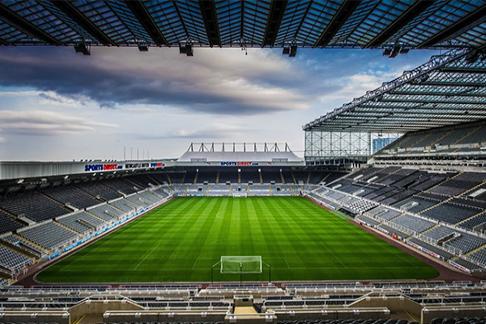
Experience the magic of St. James’ Park Located in the heart of the city, St. James’ Park rises proudly from Newcastle’s iconic skyline. Our brand new Stadium Tour captures the rich history of our magnificent stadium, home of Newcastle United since1892. Opening with an introduction from one of the club’s greatest living legends, the tour packs in plenty of visual and audio effects to enhance your St. James’ Park experience. Our virtual assistant, specially designed location boards and amazing squad of knowledgeable tour guides, all combine to give you deeper understanding of the club and its proud legacy. Enjoy a Magpie’s view of St. James’ Park and beyond, from one the stadium’s highest vantage points Glimpse behind the scenes at the club with a tour of our Media Suite See where the manager delivers his post-match views and player interviews are filmed and beamed all around the worldExperience a walk down the tunnel to the sound of Local Hero Sit in your favourite player’s seat in the Home Dressing Room. **Please Note: In the occasion of a game and match day with an evening kick off prior any tours, the areas restricted will be away team dressing room, match control and TV Studio.**
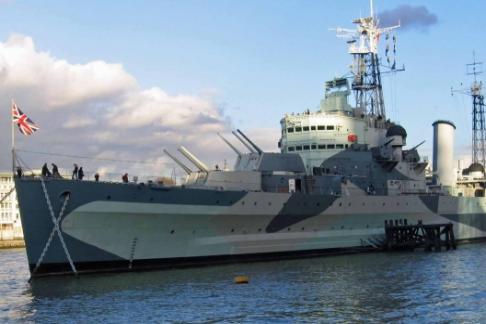
One of the most powerful large light cruisers ever built, HMS Belfast is now the only surviving vessel of her type to have seen active service during the Second World War. HMS Belfast played a leading part in the destruction of the battle cruiser Scharnhorst, and also the Normandy Landings. In service with the Royal Navy until 1965, she was saved for the nation in 1971 as a unique reminder of Britain’s naval heritage. Launch! Shipbuilding Through the Ages This new family-orientated exhibition will use hands-on and computerised interactive displays and engaging film and footage to demonstrate techniques of shipbuilding, from the ‘age of sail’ to modern prefabrication methods. The exhibition will focus on the science, engineering and social history of shipbuilding in Great Britain, and the interactive elements of the exhibition will allow children of all ages to get involved and experience this history. Explore ‘What shall we give in return for so much?’ One of the most powerful large light cruisers ever built, HMS Belfast is now the only surviving vessel of her type to have seen active service during the Second World War. Serving Britain for 32 years, she played an important role in both the Second World War and the Korean War as well as performing peacekeeping duties throughout the 1950s and 1960s. Saved from destruction in 1971, HMS Belfast is now part of the Imperial War Museum and is the first ship to be preserved for the nation since Nelson’s Victory. Through its team of staff and volunteers – many of whom are veteran crew – the Imperial War Museum is dedicated to making sure that HMS Belfast still has a role to play in reminding visitors of her unique place in Britain’s maritime heritage. History of HMS Belfast The term 'cruiser' goes back to the days of sailing ships when large frigates could be detached from the main fleet to cruise independently. The sailing cruiser, like her twentieth-century counterpart, was sufficiently powerful and fast to attack and destroy enemy commerce raiders. During the nineteenth century when sail gave way to steam and wooden ships were replaced by those built of iron, and later of steel, the cruiser evolved into a powerful warship which was used to patrol the Empire trade routes and protect friendly merchant shipping. After the First World War (1914-1918) a single category of cruiser emerged whose size was indicated by the size of its guns; thus, HMS Belfast is a 6-inch cruiser, designed for the protection of trade, for offensive action, and as a powerful support for amphibious operations. Please note: children under 16 must be accompanied by an adult. Please allow 1½ - 2 hours for your visit.
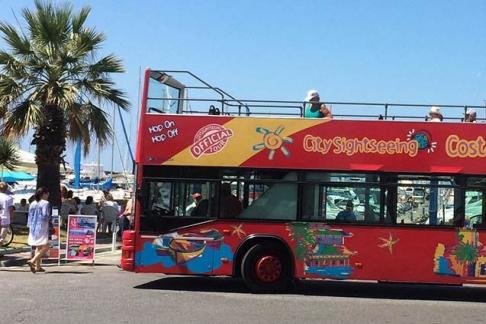
Highlights Explore and absorb all the major classic sights of Benalmadena See Mariposario de Benalmádena, Buddhist Stupa and Museo Benalmádena Ticket Includes 24 hour bus ticket professional tours guide Description Let City Sightseeing Benalmádena highlight all the things to do and see during your stay in this vibrant city. We take you around this popular tourist destination in Spain across 12 conveniently located bus stops for you to hop-on and off at your leisure. Hop off at Bus Stop 8, the Tivoli Cable Railway, and take a cable car to Mount Carramolo, or hop off at Bus Stop 6, at the Parque De La Paloma to take a stroll through an oasis in the bustling, lively town. Younger visitors will be entertained and amazed by the variety of animals and birds wandering freely around. Bus Stop 10 takes you to Bil-Bil Castle, home to leafy gardens with fountains and a stunning view of the beaches. The City Hall owns the building and it is used as a cultural centre, with art exhibitions, conferences and concerts on offer. Visit Puerto Marina at Bus Stop 1, where you can visit the Sea Life Aquarium and an array of delightful boutiques and restaurants. It is also a beautiful region to wander around during warm evenings and pay a visit to a selection of bars. Hop-off at the ruins of Benal-Roma, the remains of a salting factory located on the coast, the site of Torremuelle, and other items found there are preserved in the Museum of Benalmádena. Finish the loop at Bus Stop 12, the Butterfly Park. In this spectacular Thai temple, you can walk amongst more than 1,500 exotic butterflies from around the world, flying freely in a tropical paradise among waterfalls and flowers. Enjoy the view from the open-top exclusive red busses and whenever you spot something you would like to explore further, just hop-off! Get your 24h ticket and start planning your stay today.
3 Course Menu (starter + main course or main course + dessert)*
Starter at choice :
Creamy chestnut soup with cep mushrooms and Grisons dried beef
Chicory and lightly beech-smoked salmon salad with sour creamSoft-boiled egg and creamed leeks with red wine dressing
Duck paté en croûte with thyme, cabbage and apple salad
**
Main course at choice :
Elbow pasta, duck confit cooked with herbs, persillade sauce
Trout fillet à la plancha, stewed green lentils from Brie with vegetables,coriander and smoked soy
Roast chicken breast, mashed potatoes with herbs, Madeira creamy sauce
**
Cheese or dessert at choice :
Comté cheese (unpasteurised) with lamb's lettuce salad
Farmhouse “fromage blanc” served with chestnuts and clementines
Passion fruit cream with mango marmalade
Guanaja chocolate mousse with pralineLemon meringue cream, crumble topping
Seasonal fresh fruit salad
**
Drinks :
1 glass of wine or beer or soft
Coffee
Child Menu (- 12 years old)*
Velouté of Puy green lentils, ravioles de Royans and ricotta with truffle oil
**
Pasta served with tomato sauce, butter or Parmesan cream
**
Guanaja chocolate mousse with a praline crisp
**
Soft drink
* Example of menu, subjet to modification
Included :
River Shuttle on the Seine
Entrance tickets for the first floor of the Eiffel Tower
Food Court' lunch (2 dishes + drinks) at the restaurant "58 Tour Eiffel" on the 1st floor
Guided visit of the Louvre Museum and Notre-Dame Cathedral
Direct Entrance tickets (no queuing) for the Louvre Museum.
Language :
09:30 :
Chinese : Thu
English : Mon, Wed, Thu, Fri, Sat, Sun
Spanish : Thu
10:30 :
English : Mon, Wed, Thu, Fri, Sat, Sun
Spanish : Mon, Wed, Thu, Fri, Sat, Sun
Proseguiremos nuestra ruta en 4×4 atravesando el bosque de la zona norte del espacio natural para más tarde recorrer la aldea del Rocío, su ermita y el observatorio de la SEO. Tras descubrir este lugar nos adentraremos a pie en los palacios y senderos del Parque Nacional de Doñana junto al arroyo de La Rocina. Después de almorzar llegaremos a la playa para conocer el sistema dunar más grande de nuestro país. Al regresar y aprovechando el atardecer recorreremos el pinar de El Abalario una zona donde posiblemente podremos avistar alguno de los grandes mamíferos del Espacio Natural de Doñana. Incluye: traslado en 4×4 y guía.