Free
Support
Royal Albert Hall - Grand Tour Did you know? There are 13,000 “A”s for Albert around Hall The Hall is home to the world's largest single woven carpet design, made of 326,666 sheep fleeces and 49 million tufts getting it into the Guinness World Records The world’s biggest Christmas pudding was made at the Hall and weighed ten tonnes The first ever body-building contest and Sumo wrestling tournament outside Japan took place in the main auditorium The Elgar Room used to be home to the Central School of Speech & Drama, giving a stage to names including Sir Lawrence Olivier and Dame Judy Dench 5,500 bottles of champagne and 1,800 bottles of gin are drunk at the Hall every year Afternoon Tea was introduced to Britain by Queen Victoria. The first tea party was held at the Hall in 1912. The tradition continues today in the Hall's Verdi Restaurant The Royal Albert Hall Grand Tour is fully accessible. Some time slots and/or dates are unavailable due to events taking place in the auditorium. The Royal Albert Hall was built to fulfil the vision of Prince Albert (Queen Victoria's consort) of a 'Central Hall' that would be used to promote understanding and appreciation of the Arts and Sciences and would stand at the heart of the South Kensington estate, surrounded by museums and places of learning. The Hall is a Grade I Listed building; and has been in continuous use since it was opened in March 1871. It was always conceived as a multipurpose building to host not only concerts of music but exhibitions, public meetings, scientific conversations and award ceremonies. It is a registered charity held in trust for the nation and is financially self sufficient, receiving no funding from central or local government. Kensington Palace and the Diana Exhibition Kensington Palace unveils a palace of secret stories and public lives. Visitors arrive through beautiful landscaped gardens evoking a past when Kensington was countryside. From the entrance hall start your journey through the magnificent Kings and Queen’s State Apartments. Filled with stories of two royal courts; the Stuarts and the Hanoverians, learn what you would have worn, how you should behave and how to succeed in the heady atmosphere of the palace state apartments. The Queen's State Apartments Explore these intimate, private rooms created for Queen Mary II, who ruled jointly with her husband, King William III, in the 17th century. The Queen’s rooms The Queen's Staircase, little changed since its construction in 1690, is deliberately plainer than the King's. Mary would have glided down its steps to reach her beloved gardens, created in the Dutch style, through the door at its foot. Diana: Her Fashion Story ‘Diana: Her Fashion Story’ will trace the evolution of the Princess’s style, from the demure, romantic outfits of her first public appearances, to the glamour, elegance and confidence of her later life. From her earliest royal engagements, everything Diana wore was closely scrutinised, and the exhibition will explore how she navigated her unique position in the public eye: learning to use her image to engage and inspire people, and to champion the causes she cared about. Discover exquisite and celebrated outfits from throughout the Princess’s public life. The exhibition will bring together an extraordinary collection of garments, ranging from the glamorous evening gowns worn on engagements in the 1980s, to the chic Catherine Walker suits that made up Diana’s ‘working wardrobe’ in the 1990s. The Princess’s relationship with her favourite designers will be explored through a display of some of their original fashion sketches, created for her during the design process. Exhibition highlights will include the pale pink Emanuel blouse worn for Diana’s engagement portrait by Lord Snowdon in 1981, and Victor Edelstein’s iconic ink blue velvet gown, famously worn at the White House when the Princess danced with John Travolta. A blue tartan Emanuel suit, worn for an official visit to Venice in the 1980s, will go on display in public for the first time. The suit, a rare survival of the Princess’s daywear, was only recently rediscovered and acquired by Historic Royal Palaces – the charity responsible for Kensington Palace - at auction. * Please note, this exhibit is due to be very popular, queues are to be expected.
The price can vary according to visit date and time selected. Day The climb departs from morning to late afternoon (after “dawn” and before “twilight”), exposing the hum and buzz of the city in full swing. 5 Things you need to know before your climb Health & Safety Your health and safety is important: If you are pregnant or have any pre-existing health conditions you may need to provide a doctor’s Certificate of Fitness note before you climb. You must have a blood-alcohol reading below 0.05 to climb (the same as if you are driving). You will be asked to complete a BridgeClimb Declaration Form before your Climb. Please be honest about your health so we can ensure your wellbeing is not at risk. All discussions will be confidential. Preparations How should you prepare for your Climb: Ensure that you have eaten before your Climb and you’re well-hydrated – the experience can last up to 3 ½ hours. Wear comfortable, enclosed rubber-soled shoes such as running, sport or hiking shoes and don’t forget your sunglasses. It is recommend to wear comfortable clothing. You will be equipped with everything else you need for your Climb! Ensure you arrive 15 minutes before your scheduled Climb time to allow enough time to check in. Personal Belongings All your personal belongings can be stored in lockers, including cameras: there are FREE secure lockers for you to keep your personal belongings in, including phones, cameras and GoPros. The Climb Leaders will capture photos of you during your Climb. For safety and security reasons, cameras, video technology and mobile devices are prohibited on the Climb. Restrictions You must be 8 years old and 1.2 metres in height, or taller: Children aged 8 to 15 must be accompanied by and are the responsibility of an adult, with a maximum of three children per adult. Weather Conditions Climbs operate in all weather conditions: You will equipped with all the gear you need to keep you dry, but remember to bring your own shoes, which should be enclosed, like running shoes. In case of extreme weather conditions like electrical storms or during times of extremely high wind, Climbs may be postponed.
How does Share Ride work? If you are going to JFK airport: The driver picks up passengers in order from the destinations furthest from the airport to the closest. Your pick-up time will depend on the relationship between your location and how many other share passengers will be picked up and their respective locations. If you are the furthest away from the airport, you will be picked up relatively early to your flight time and will have to visit other locations to pick up share passengers before arriving at the airport. We guarantee that you will arrive to the airport on time. Please remember to allow for sufficient travel time to JFK Airport. Please take traffic into consideration when booking your reservation. Please keep in mind that they cannot control traffic, flight delays and other unforeseen circumstances that may increase travel time. Go Airlink NYC JFK Airport share-ride shuttles: Up to 11 passengers. Share ride shuttle with other travelers, allows you to meet new people and socialize! Economical, environmentally friendly. 24 hour/ 7 days a week transportation service. Door to door service Baggage allowance: 1 Suitcase per person and 1 small carry-on per person.
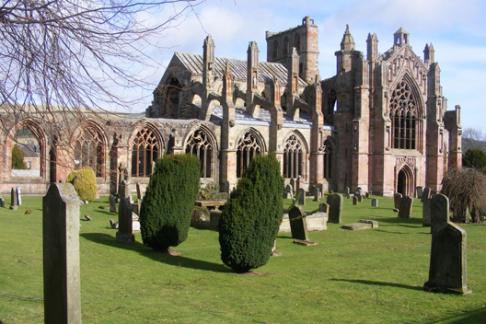
Itinerary Depart Edinburgh at 08:15 and travel west, past Stirling castle to your first stop at Doune Castle. This area of Scotland has certainly seen its fair share of fighting and warfare. Stirling castle was once known as the 'Key to Scotland', and it was here that William Wallace (immortalised by Mel Gibson in the film Braveheart) defeated the English army in 1297. After William Wallace's death it was Robert the Bruce who continued the fight for independence and you will pass the site of his most famous victory in 1314 at the Battle of Bannockburn. Then you arrive at the fantastic medieval stronghold of Doune castle. Built for Robert Stewart, the Duke of Albany, over 600 years ago the castle is still in great condition and you will have time for photos. You might even have seen the castle before, it was made famous by the film 'Monty Python and The Holy Grail', with many scenes filmed here. You then continue a little further on to Callander. After a short coffee stop you cross the Highland boundary fault line leaving the rolling farms for the wild mountains and forests of the Highlands. You will make a short stop at Loch Luibnaig before you continue over the Braes of Balquhidder, the final resting place of Highland outlaw Rob Roy MacGregor. Made famous by Sir Walter Scott, Rob Roy was a sort of Highland Robin Hood, he stole from the rich, but never quite got round to giving it to the poor! From Balquhidder the tour winds its way through the tough knot of mountains known as Breadalbane (meaning the 'high country of Scotland') before we stop for lunch in a small West Highland village. Shortly after lunch you stop for the short walk out to visit Kilchurn Castle, a magnificent ruin situated in the middle of Loch Awe and former home of the Campbells of Breadalbane. You will continue along the banks of Loch Awe through Campbell country to the picturesque town of Inveraray on the shores of Loch Fyne. Here you can visit the 18th-century castle and home of the Duke of Argyll, chief of the Campbell clan. (castle open Easter to mid-October). The town was built at the same time as the castle and has the air of a classic 18th-century planned village with its straight wide streets and dignified Georgian houses. You can take time to explore the town and maybe call at the Old Jail or the maritime museum, the Arctic Penguin. Leaving Inveraray, you take a drive up through the steep-sided mountains known as the Arrochar Alps to the great viewpoint at 'Rest and Be Thankful'. It was given its name in 1753 by the weary soldiers who had just finished building the old military road up through Glen Croe. From here you skirt around Loch Long and down to the Bonnie, Bonnie banks of Loch Lomond. This is Scotland's largest loch and it takes its name from the mountain Ben Lomond on the eastern shore. You make a short stop at the conservation village of Luss, with its quaint houses and stunning views across the loch. At 17.30 you make your way back to Edinburgh, with a short photo stop underneath Stirling Castle. Return time: 18:30 approx
YOU SHOULD BRING: Sunglasses Hats Warm clothes during winter periods
Royal Albert Hall Did you know? There are 13,000 “A”s for Albert around Hall The Hall is home to the world's largest single woven carpet design, made of 326,666 sheep fleeces and 49 million tufts getting it into the Guinness World Records The world’s biggest Christmas pudding was made at the Hall and weighed ten tonnes The first ever body-building contest and Sumo wrestling tournament outside Japan took place in the main auditorium The Elgar Room used to be home to the Central School of Speech & Drama, giving a stage to names including Sir Lawrence Olivier and Dame Judy Dench 5,500 bottles of champagne and 1,800 bottles of gin are drunk at the Hall every year Afternoon Tea was introduced to Britain by Queen Victoria. The first tea party was held at the Hall in 1912. The tradition continues today in the Hall's Verdi Restaurant The Royal Albert Hall Grand Tour is fully accessible. Some time slots and/or dates are unavailable due to events taking place in the auditorium. The Royal Albert Hall was built to fulfil the vision of Prince Albert (Queen Victoria's consort) of a 'Central Hall' that would be used to promote understanding and appreciation of the Arts and Sciences and would stand at the heart of the South Kensington estate, surrounded by museums and places of learning. The Hall is a Grade I Listed building; and has been in continuous use since it was opened in March 1871. It was always conceived as a multipurpose building to host not only concerts of music but exhibitions, public meetings, scientific conversations and award ceremonies. It is a registered charity held in trust for the nation and is financially self sufficient, receiving no funding from central or local government. Thames River Red Rover Hopper Pass With the River Red Rover ticket you travel in luxury on a fleet of river liners and may hop on or off at any of the piers as often as you like throughout the day. As the River Thames weaves its way through the heart of London there is history around every bend and there is no better way to see and experience the sights and splendour of this great city than from one of City Cruises modern, wheelchair-friendly RiverLiners™. Enjoy unsurpassed views of some of London's most famous landmarks from the vantage point of our open upper decks and spacious lower saloons with panoramic windows. Take advantage of two bars providing light refreshments and snacks . Cruises depart frequently from Westminster Pier, Waterloo (London Eye) Pier, Tower Pier and Greenwich Pier every day of the year except Christmas Day (25th December). Our shortest trips between piers last about 20-30 minutes while the full round trip takes about two-and-a-half leisurely hours.