Free
Support
National World War II Museum:
This museum is ranked by Trip Adviser as the #1 Attraction in New Orleans, placed #2 in America and the World. The National WWII Museum features a multitude of artifacts that portray America's WWII past. Explore the American experience in the war that changed the world. From D-Day galleries to the soaring US Freedom Pavilion: The Boeing Center to the groundbreaking Campaigns of Courage, this world-renowned history museum was created to inspire visitors of all ages educating them on the heroism, tragedy and liberation of WWII.
Come experience these unique and amazing Exhibits:
The Arsenal Of Democracy - Telling the story of how the war was won is at the heart of The National WWII Museum’s mission, and The Arsenal of Democracy: The Herman and George R. Brown Salute to the Home Front—the Museum's newest permanent exhibit, located on the second level of the Louisiana Memorial Pavilion, the Museum’s original building—literally brings that story home.
Road To Tokyo - Richard C. Adkerson & Freeport-McMoRan Foundation Road to Tokyo: Pacific Theater Galleries retraces the grueling trail that led from Pearl Harbor to Tokyo Bay by way of New Guinea and Southeast Asia, the Himalayas, Burma, the islands of the Pacific, China, India, and Alaska.
Road To Berlin -The Duchossois Family Road to Berlin: European Theater Galleries brings to life the drama, sacrifices, personal stories, and strategies of America’s campaign to defeat the Axis powers and preserve freedom.
Beyond All Boundaries - Beyond All Boundaries, showing exclusively in The National WWII Museum’s Solomon Victory Theater, is a 4D journey through the war that changed the world.-Not included with ticket
The D-Day Invasion Of Normandy - The Museum's original exhibit, located on the third floor of Louisiana Memorial Pavilion, helps you understand what the Allies faced in Normandy, from the comprehensive preparations beforehand to the daunting challenges once troops landed on Normandy beaches.
US Merchant Marine Gallery - Situated at the end of the Horatio Alger Association American Spirit Bridge, this gallery honors the civilian merchant mariners who risked their lives transporting weapons, men, and material to US troops overseas.
Final Mission: USS Tang Submarine Experience - places visitors aboard the most successful submarine in World War II for its fifth and final war patrol on October 25, 1944.-Not included with ticket
Manufacturing Victory - Follow the industrial journey that took the United States from a nation perilously unprepared for war to a global superpower that led the Allies to victory in World War II.
Special Exhibit Gallery - The Joe W. and Dorothy D. Brown Foundation Special Exhibit Gallery features rotating exhibits that draw on the Museum’s own collections, as well as relevant traveling exhibits from leading institutions around the world.
City Sightseeing New Orleans:
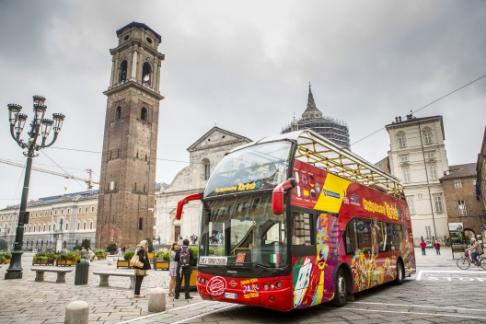
Hop-On Hop-Off Unlimited Tickets Valid for 24 Hours of Sightseeing
Tour at Your Own Pace - Enjoy unlimited hop-on hop-off privileges! Spend as much time as you desire at each stop.
Live Guide Narration - Local Tour Guides on each bus offer colorful entertaining historic commentary..
Every 30 Minutes! Buses Visit each Stop! - Stay as long as YOU like at each location. You can always catch the next bus!
7 Days a Week - 09:30 - 17:30 - Continuous Loop tour so YOU can decide what time your tour begins and ends. Tour Loop is 2 hours.
Restaurant and Attraction Deals along the Way - Hop-Off and present your ticket to receive deals and discounts at various attractions, restaurants, and gift shops all along the route!
Cemetery Walking Tour - Self guided tour of Lafayette Cemetery #1 included for all.
Garden District - Escorted Walking Tour- Enjoy the splendor and elegance of New Orleans' most sophisticated neighborhood.
French Quarter - Escorted Walking Tour - Marvel at the history and architecture of America's most historic neighborhood.
There’s a lot in life to celebrate. So welcome aboard! Whatever the occasion, you’ll enjoy gentle bay breezes, glittering waves, and the dramatic San Francisco skyline. Whether it’s your birthday, anniversary, or you finally found a great babysitter, join us for gracious hospitality and stunning views. Set against twinkling city lights and legendary vistas, experience includes an elegant four-course dinner, live music and dancing around the San Francisco Bay. DINNER MENU FIRST COURSE California Hornblower Wedge Salad maytag blue cheese dressing, smoked bacon, chopped eggs, tomatoes, scallions SECOND COURSE Fisherman’s Wharf Clam Chowder potatoes, celery, onions, fresh thyme, smoked bacon APPETIZER ENHANCEMENTS Charcuterie Plate - $18.00 chef’s selection of cured meat, house made terrine, flat bread crisps, cornichons, whole grain mustard Cowgirl Creamery Cheese Display - $16.00 assorted local cheeses, rustic flat breads, dried apricots, figs Seared Ahi Tuna - $18.00 wasabi aioli, wakame seaweed salad, crispy wonton chips ENTRÉE OPTIONS Grilled Salmon Filet soy ginger glaze, barley risotto roasted vegetables Mary’s Organic Pan Roasted Breast of Chicken roasted red bell pepper coulis, cannellini bean ragout bloomfield spinach Porcini Crusted Petit Filet Mignon porcini sauce, parmesan truffle mashed potatoes watsonville late harvest vegetables Balsamic Infused Portobello Mushroom asiago parmesan polenta cake grilled vegetables DESSERT OPTIONS Fresh Fruit Tart shortbread tart shell, vanilla pastry cream, apricot glaze Chocolate Truffle Cake raspberry sauce, fresh berries Chef de Cuisine Willie Fuentes Due to the seasonality of local fresh ingredients, all menus are subject to change.
The Queen's Gallery was built in the shell of the former Holyrood Free Church and Duchess of Gordon’s School at the entrance to the Palace of Holyroodhouse. The buildings were constructed in the 1840s with funds from the Duchess of Gordon, but fell into disuse in the late 19th century. Benjamin Tindall Architects were appointed project architects for the new Queen’s Gallery in October 1999. Their central visual theme was a celebration of The Queen’s Golden Jubilee, expressed through a series of arches and screens that lead visitors from the Gallery entrance to the exhibition spaces beyond. Their design complements the original 19th-century architecture, elements of which were incorporated into the new spaces. Unsympathetic later internal alterations were removed, and a new exposed steel and concrete floor inserted to reflect the original ‘gallery’ of the Church. A new stone arched entrance was created at the centre of the Horse Wynd frontage, opposite the new Scottish Parliament building. The use of a stone archway, with a courtyard beyond, is a traditional entrance device in Scottish architecture. The main walling is of Catcastle stone, the dressed work and lettering is of Stainton stone and the base is of Kenmay granite. ‘THE QUEEN’S GALLERY’ lettering above the entrance is the work of John Neilson, a calligrapher and carver. The letters were cut from single pieces of stone. Above sits Scotland’s heraldic lion, designed by Jill Watson. The lion sedant is based on a small red lion that sits at the feet of Mary, Queen of Scots on her tomb in Westminster Abbey. (The Palace of Holyroodhouse was once home to Mary, Queen of Scots.) The monumental entrance doors of oak have gilded bronze hinges by Jill Watson. Continuing the heraldic theme, the main hinges are decorated with the Scottish lion and unicorn. The beasts are set against the adjacent urban scene of Edinburgh’s Royal Mile and the rural scene of Arthur’s Seat and Salisbury Crags. The upper hinges are made as golden boughs of flowering native trees – chestnut and laburnum, oak, rowan and hawthorn. The stone archway is decorated with a carved and gilded garland of Scottish flowers, including daisies and thistles, created by Graciela Ainsworth, an Edinburgh-based sculptor, carver and conservator. Over the old entrance to the former church is a stained-glass window by Christian Shaw. The design shows a perspective drawing of the interior of a gallery. At night, the shape of the archway is reflected by the glass lights by Keiko Mukaide set into the paving. The artist has given the tiles a water flow pattern, mirroring the stream of visitors walking in and out of the Gallery. Inside, the reception desk by Hamid van Koten is made from curved pieces of Scottish elm with kilned glass and patinated copper. The pendant lights were designed and made in Edinburgh by Ingrid Phillips. Dividing the reception from the main Gallery area is a patterned glass screen by Jacqueline Poncelet. The screen’s bronze handles by Jill Watson incorporate figures looking at art in a gallery. The dramatic central stair of native timber leads to the Gallery spaces above. The complex shape was designed by the architects with Charles Taylor Woodwork, who were responsible for the construction. Lights set into the first floor illuminate the curved balustrading. The Queen’s Gallery was opened by Her Majesty The Queen on 29 November 2002, as part of the Golden Jubilee celebrations. It hosts a programme of changing exhibitions from the Royal Collection.
Buckingham Palace serves as both the office and London residence of Her Majesty The Queen, as well as the administrative headquarters of the Royal Household. It is one of the few working royal palaces remaining in the world today. Today the Buckingham Palace State Rooms are used extensively by Her Majesty The Queen and Members of the Royal Family to receive and entertain their guests on State, ceremonial and official occasions. During August and September when The Queen makes her annual visit to Scotland, the Palace's nineteen state rooms are open to visitors. What there is to see? The Buckingham Palace State Rooms form the heart of the working palace and are lavishly furnished with some of the greatest treasures from the Royal Collection - paintings by Rembrandt, Rubens, Poussin and Canaletto; sculpture by Canova; exquisite examples of Sèvres porcelain; and some of the finest English and French furniture. In celebration of The Queen's 90th birthday, a special exhibition will be staged across each of Her Majesty's official residences during 2016. Fashioning a Reign: 90 Years of Style from The Queen's Wardrobe (23 July – 2 October 2016) The Garden Described as a 'walled oasis in the middle of London', the Palace's garden is home to thirty different species of bird and more than 350 different wild flowers, some extremely rare. Visitors end their tour with a walk along the south side of the garden, with splendid views of the west front of the Palace and the famous lake. Audio Guide An audio guide is included in the ticket price and is available in English, French, German, Spanish, Italian, and Japanese, Russian and Mandarin. There is also a family audio guide (in English only) and accompanying activity trail, suitable for children 7-11 years. Changing of the Guard The Changing of the Guard ceremony takes place at 11:30 daily from April until the end of July and on alternate days for the rest of the year, weather permitting. The new guards arrive at the forecourt of the Palace at 11:30 from Wellington Barracks. The journey takes about 5 minutes and the soldiers are accompanied by a band. The ceremony is conducted on the Palace forecourt and takes approximately forty minutes to complete. [The Army have not yet released the schedule for July, August or September.] Wheelchair Access If you require wheelchair access or the use of the lift, you should not book with 365 Tickets.com and should pre-book tickets directly with Buckingham Palace. Access booking line: 020 7766 7324 www.royalcollection.org.uk or email [email protected] Windsor Castle, the largest and oldest occupied castle in the world, is one of the official residences of Her Majesty The Queen. The Castle's dramatic site encapsulates 900 years of British history. It covers an area of 26 acres and contains, as well as a royal palace, a magnificent chapel and the homes and workplaces of a large number of people. Kew Gardens Kew Gardens, is a World Heritage Site located in 121 hectares of stunning vistas with six magnificent glasshouses set in a beautiful landscape beside the River Thames between Richmond and KEW in south-west London. Kew Gardens represents more than 250 years of historical gardens. It is home to a remarkable collection of over 30,000 types of plants from all over the world that range from the decorative to the peculiar. Kew Gardens provide opportunities for public enjoyment and enrichment and the behind-the-scenes scientific work helps ensure a sustainable future for plants and people. In the summer of 2004, Kew's determination to make serious botany great fun for children was demonstrated with the opening of 'Climbers and Creepers'. Bringing a new use to an old cycad house by White Peaks, Climbers and Creepers engages children from around 3-9 years in the pleasures of learning more about plants and their relationships with animals and people. Apart from the sheer beauty and tranquillity of the garden's landscapes Kew offers a wonderful day out for all, whether horticulturally, historically or botanically inclined. Botanical Highlights The dates below are approximate, and flowering can vary by three to four weeks, depending on the weather. Image Credits: Image 1: Photographer: Derry Moore, Royal Collection Trust / © Her Majesty Queen Elizabeth II 2013 Image 2 : Photographer: Peter Smith, Royal Collection Trust / © Her Majesty Queen Elizabeth II 2013 Image 3 : Photographer: Andrew Holt, Royal Collection Trust / © Her Majesty Queen Elizabeth II 2013 Image 4: Photographer: Derry Moore, Royal Collection Trust / © Her Majesty Queen Elizabeth II 2013
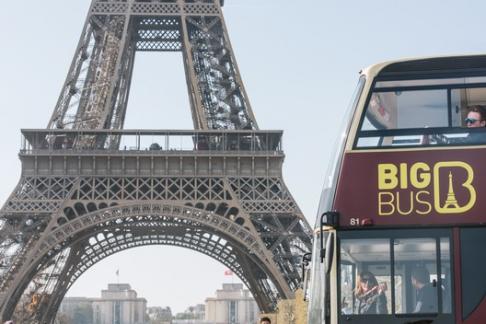
New Itinerary : Opéra - Place Vendôme - Concorde Square - Champs-Elysées Avenue - Arch of Triumph - Eiffel Tower - Invalides - Orsay Museum - The Grand Louvre Museum - Notre-Dame Cathedral - Sorbonne - Pantheon Church - Saint-Germain-des-Prés - Place des Pyramides (bus terminal). Departures: Tour departs daily at 09:00, 10:30, 12:00 and 14:45 Duration: 1 Hours 45 Minutes approx. Pick Up/Drop Off Paris Vision, 214 rue de Rivoli, 75001, Paris Includes: Tour in a luxury, air-conditioned coach Recorded commentary with individual headphones Information: 4 departures a day 11 available languages Suited to clients (first time, return and short stay) looking for an overall glimpse or orientation Suitable to families. No stop during the tour.
Historic setting: The Household Cavalry Museum sits within Horse Guards in Whitehall, central London, one of the city’s most historic buildings. Dating from 1750, it is still the headquarters of the Household Division, in which the Household Cavalry has performed the Queen’s Life Guard in a daily ceremony that has remained broadly unchanged for over 350 years. The Household Cavalry: The Household Cavalry was formed in 1661 under the direct order of King Charles II and now consists of the two senior regiments of the British Army – The Life Guards and the Blues and Royals. We have two roles: as a mounted regiment (on horseback), we guard Her Majesty The Queen on ceremonial occasions in London and across the UK and are a key part of the Royal pageantry; as an operational regiment we serve around the world in armoured fighting vehicles. We currently have units deployed on active service in Iraq and Afghanistan. Our fighting capacity is matched by our strategic role in international peace keeping and humanitarian operations. Collections: Over the centuries we have amassed an outstanding collection of rare and unique treasures from ceremonial uniforms, royal standards and gallantry awards to musical instruments, horse furniture and silverware by Fabergé. Each exhibit has its own compelling story to tell and many are on display for the very first time. You can see two silver kettledrums given to the regiment in 1831 by William IV; the pistol ball that wounded Sir Robert Hill at Waterloo and the cork leg which belonged to the first Marquess of Anglesy, who, as the Earl of Uxbridge, lost his real one at Waterloo. Modern additions to the collection include Jacky Charlton’s football cap – he did his national service with the regiment and Sefton’s bridle – the horse that was injured in the 1982 Hyde Park bombings. Much of the collection has resulted from the close association that has existed between the Household Cavalry and Royalty. We have, after all, protected successive kings and queens from rebels, rioters and assassins for nearly 350 years. Working Stable Block: Visitors can gain a unique behind-the-scenes look at our working stable block. All the horses here are on duty and at different times of the day you will see something going on - you might see the horses being brought in, groomed, fed and watered, their hooves oiled and shoes checked, their saddles adjusted ready to go on guard or just see the stables themselves being cleaned. Both our horses and riders go through a rigorous and demanding training. In the Museum's many interactive and multimedia presentations, you will hear first hand accounts of what this training is like and the techniques our soldiers use to master their horses and complete the gruelling preparations for regimental inspections.