PICK ANY OF THESE TOURS AND ACTIVITIES:
California Academy of Sciences
Visit the museum - Planetarium, Aquarium, Rainforest and much more under one roof. Great fun for all ages!
San Francisco Bay Cruise
The San Francisco Bay Cruise is our most popular water tour in San Francisco. You'll get close to Alcatraz and the Golden Gate Bridge for some amazing sights and photo opportunities.
Official City Tour
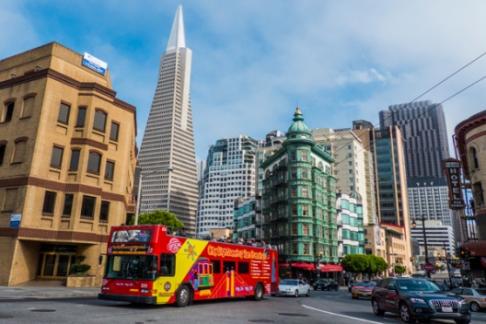
San Francisco Double Decker Bus Tour, with live commentary. Hop On Hop Off for 24 hours in San Francisco, including Chinatown, North Beach, Fisherman's Wharf, Union Square, Civic Center, Financial District and more. HopOn & HopOff the open-top bus at your own pace.
Sausalito Hop-On Hop-Off Tour
This 60 minute fully narrated Hop On Hop Off tour includes crossing the Golden Gate Bridge on an open-top bus and the picturesque town of Sausalito overlooking San Francisco Bay.
Muir Woods Tour (from Sausalito)
The Hop On Hop Off Muir Woods Tour by bus takes you across the Golden Gate Bridge and into the picturesque coastal town of Sausalito, and on to the famous redwoods of Muir Woods National Monument Park.
Aquarium of the Bay
Discover what lies beneath the waves of San Francisco Bay. Journey through crystal clear tunnels filled with 20,000 aquatic animals. Touch sharks, rays and sea stars. Learn how to support conservation of the bay and marine environments.
San Francisco Night Tour
This double decker bus tour provides the best of San Francisco by night with live narration. The tour includes spectacular views of downtown San Francisco from the top of Nob Hill, Chinatown, North Beach, the Embarcadero and the lustrous Bay Bridge with 2 brief walking tours for even more photo opportunities.
Rocket Boat
The Ultimate High-Speed Thrill Ride. This exciting ride pauses occasionally to allow passengers to catch their breath and capture unique sightseeing and photo opportunities unavailable on other tours. RocketBoat, it’s an extreme adventure not to be missed!
30 minute GoCar Tour
Go Car Tour - 2 vouchers required per car for 1 Hour
3hr Bike Rental
Bike Rental in San Francisco - Self guided tour across the Golden Gate bridge and down to Sausalito.
Angel Island Ferry or Tiburon Ferry
There is no guided commentary that accompanies the ferry rides to Tiburon, or Angel Island. However, they do offer great views.
USS Pampanito Submarine
This World War II submarine has officially retired to the San Francisco Bay, where it is docked for visitors to enjoy. Commissioned in 1943, the Balao class Fleet submarine has a storied history that includes the sinking of six Japanese ships while patrolling the Pacific. It now operates as a floating museum and attracts thousands of visitors at San Francisco's Fisherman's Wharf
Walt Disney Family Museum
The Walt Disney Family Museum shares the remarkable life and legacy of Walt Disney.
SF Giants AT&T Park Tour
AT&T Park tour - See in San Francisco Giants Stadium
SF MOMA
Come visit the museum that the NY Times described as “changing the face of museums going forward.”
San Francisco Dungeon
The San Francisco Dungeon is an exciting theatrical attraction. We bring to life the stories of old San Francisco with a full theatrical actor cast, special effects, gripping storytelling. Being scared has never been so much fun!
Madame Tussauds
Roll out the red carpet! We’re bringing our unique blend of glitz and glamour to San Francisco! Get ready to photograph and pose with your favorite A-listers, challenge sports legends, hop on stage with international pop icons.
de Young Museum
Rebuilt in 2005, the de Young museum features American, African and Oceanic art from the 17th through the 21st centuries. Originally founded in Golden Gate park in 1895, the re-opening showcases integration of architecture, art and natural landscape within the museum grounds.
Legion of Honor
The Legion of Honor is home groundbreaking exhibitions, including a retrospective for folk-art visionary Howard Finster and crowd-pleasing shows. Also on display are sculptures by world renowned sculptor Rodin.
7D Experience
A 3D interactive virtual roller coaster and laser-blasting thrill ride. With state-of-the-art effects, you will compete against fellow Riders for the highest score.
Exploratorium
Is there a science to skateboarding, do robots have feelings, too, and do toilets really flush counter-clockwise in Australia? Head to the Exploratorium to get fascinating scientific answers to all those questions you always wanted to ask in science class.
Sausalito Ferry
The city of Sausalito offers the charm of a quaint Mediterranean seaside village tucked amongst the hills of Marin County. Meander the narrow streets, browse through art galleries and shops, and dine at some of the best restaurants in the Bay Area, all the while enjoying stunning views of San Francisco.
Escape from the Rock
Blue & Gold Fleet’s 90-minute Escape from the Rock cruise takes you under the Golden Gate Bridge and around Alcatraz Island to see every angle of this mysterious island.
Airport Shuttle (outbound)