Free
Support

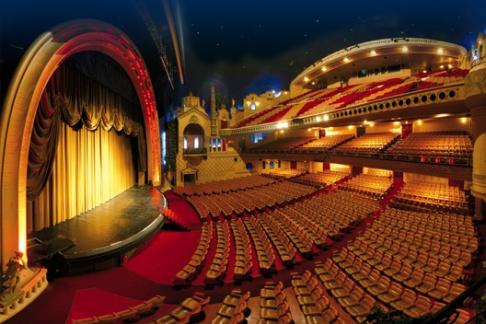
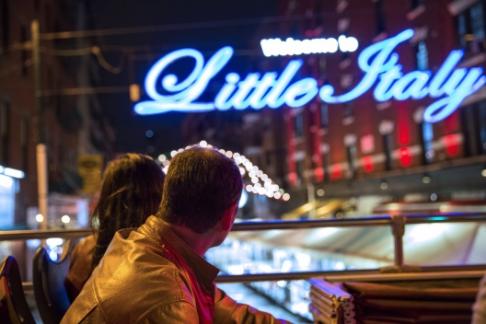
THE DOWNTOWN LOOP The Downtown Loop is the best way to explore Lower Manhattan including popular neighborhoods such as the Flatiron District, Union Square, Little Italy, Chinatown, Soho & NoHo, Greenwich Village & the East Village, Chelsea and the Financial District. Wander around Wall St. to see the infamous Stock Exchange and charging bull, eat your way through Little Italy and Chinatown then shop till you drop at all the high end or boutique stores SoHo is famous for! You’ll also find the Brooklyn Bridge and access to our Brooklyn Loopand sightseeing cruise on the Downtown Loop. Duration: 2.5 Hours Operates: Summer Hours 08:00 –18:00 (8:00am –6:00pm) Winter Hours until 17:00 (5:00pm) Frequency: every 15-20 minutes THE UPTOWN LOOP The Uptown Loop takes you fromMidtown, up around Central Park and through cultural Harlem. Home to some of New York’s most popular Museums, the Upper East & West Side are where you can go to get lostin history and the arts exploring the American Museum of Natural History, the Museum of the City of New York, the Guggenheim and the Metropolitan Museum of Art. Take in a Jazz or Gospel performance up in Harlem and discover the largest Anglican Church in the world, the Cathedral of St. John the Divine. Duration: 2 Hours Operates: Summer Hours 09:00 –18:00 (9:00am –6:00pm) Winter Hours until 17:00 (5:00pm) Frequency: every 20-25minutes THE BROOKLYN TOUR Brooklyn is the most populated borough of New York, featuring 350 years of history and an incredible collection of celebrities, artists, landmarks and culture. Discover Brooklyn as you make your way across the historic Manhattan Bridge while taking in spectacular views of downtown Manhattan and the Brooklyn Bridge.Enjoy the sights of downtown Brooklyn as you pass by the Barclay Center and the Grand Army Plaza. Duration: 1.5 Hours Operates: 10:00 –15:00 Frequency: every hour PANORAMIC NIGHT TOUR Enjoy a panoramic view of the city the never sleeps! See its beautiful lights as you tour through Times Square and catch a breathtaking view of lower Manhattan as you cross over the Manhattan Bridge. Finish the tour with views of the famous Radio City Music Hall, home to the Christmas Spectacular Rockettes. Duration: 1.5 Hours Operates: Summer Hours 19:00 –21:00 (7:00pm - 9:00pm) Winter Hours 18:00-20:00 (6:00pm - 8:00pm) Frequency: every 30 minutes *Summer Hours: April 1st–Nov 1st/ Winter Hours: Nov 1st–March 31st

City Sightseeing Amsterdam - discover all the things to do in this cultural city Discover the city with City Sightseeing's 9 Hop On Hop Off stops, located about the city. Marvel at the original works of the famous Dutch artist in the renowned Van Gogh Museum and Contemplate the heart-rending history of the Jewish community with a visit to the home of the diarist Anne Frank. There are plenty of museums to explore including the Amsterdam's Historisch Museum, Rembrandt House Museum, Madame Tussauds, the Diamond Museum and the Jewish Historical Museum. Other must-see attractions include the Amsterdam Dungeon, the Royal Palace, and Madame Tussauds. You won't be short of things to do in Amsterdam Stake a bet at the Casino, relax in the Hard Rock Café, meander through the Red Light District or encounter the Heineken Experience. If you're looking for souvenirs and gifts, take a stroll around the many shops and boutiques and also discover the multi-ethnic spirit of Amsterdam at the Flower Market and Flea Market. Amsterdam Ice Bar Your combination ticket also includes Amsterdam's Xtracold Icebar. By far the coolest attraction in town, fashioned completely from ice – with frozen furniture, walls and even glasses! You’ll be given special thermal clothing and gloves to wear before you step into the frosty bar with a temperature of 14 degrees Fahrenheit (negative 10 degrees Celsius)! Once inside, spend 30 minutes relaxing at leisure, enjoying either a Smirnoff cocktail or Heineken beer; or take part in a 3D ride experience over icebergs and along steep cliffs in a frozen landscape.
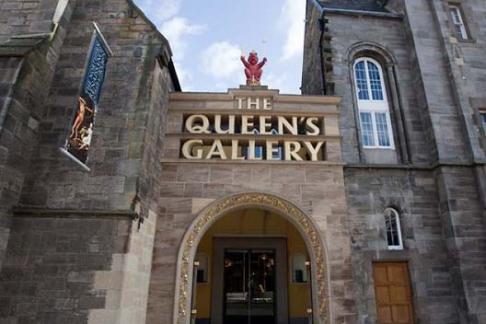
The Queen's Gallery was built in the shell of the former Holyrood Free Church and Duchess of Gordon’s School at the entrance to the Palace of Holyroodhouse. The buildings were constructed in the 1840s with funds from the Duchess of Gordon, but fell into disuse in the late 19th century. Benjamin Tindall Architects were appointed project architects for the new Queen’s Gallery in October 1999. Their central visual theme was a celebration of The Queen’s Golden Jubilee, expressed through a series of arches and screens that lead visitors from the Gallery entrance to the exhibition spaces beyond. Their design complements the original 19th-century architecture, elements of which were incorporated into the new spaces. Unsympathetic later internal alterations were removed, and a new exposed steel and concrete floor inserted to reflect the original ‘gallery’ of the Church. A new stone arched entrance was created at the centre of the Horse Wynd frontage, opposite the new Scottish Parliament building. The use of a stone archway, with a courtyard beyond, is a traditional entrance device in Scottish architecture. The main walling is of Catcastle stone, the dressed work and lettering is of Stainton stone and the base is of Kenmay granite. ‘THE QUEEN’S GALLERY’ lettering above the entrance is the work of John Neilson, a calligrapher and carver. The letters were cut from single pieces of stone. Above sits Scotland’s heraldic lion, designed by Jill Watson. The lion sedant is based on a small red lion that sits at the feet of Mary, Queen of Scots on her tomb in Westminster Abbey. (The Palace of Holyroodhouse was once home to Mary, Queen of Scots.) The monumental entrance doors of oak have gilded bronze hinges by Jill Watson. Continuing the heraldic theme, the main hinges are decorated with the Scottish lion and unicorn. The beasts are set against the adjacent urban scene of Edinburgh’s Royal Mile and the rural scene of Arthur’s Seat and Salisbury Crags. The upper hinges are made as golden boughs of flowering native trees – chestnut and laburnum, oak, rowan and hawthorn. The stone archway is decorated with a carved and gilded garland of Scottish flowers, including daisies and thistles, created by Graciela Ainsworth, an Edinburgh-based sculptor, carver and conservator. Over the old entrance to the former church is a stained-glass window by Christian Shaw. The design shows a perspective drawing of the interior of a gallery. At night, the shape of the archway is reflected by the glass lights by Keiko Mukaide set into the paving. The artist has given the tiles a water flow pattern, mirroring the stream of visitors walking in and out of the Gallery. Inside, the reception desk by Hamid van Koten is made from curved pieces of Scottish elm with kilned glass and patinated copper. The pendant lights were designed and made in Edinburgh by Ingrid Phillips. Dividing the reception from the main Gallery area is a patterned glass screen by Jacqueline Poncelet. The screen’s bronze handles by Jill Watson incorporate figures looking at art in a gallery. The dramatic central stair of native timber leads to the Gallery spaces above. The complex shape was designed by the architects with Charles Taylor Woodwork, who were responsible for the construction. Lights set into the first floor illuminate the curved balustrading.
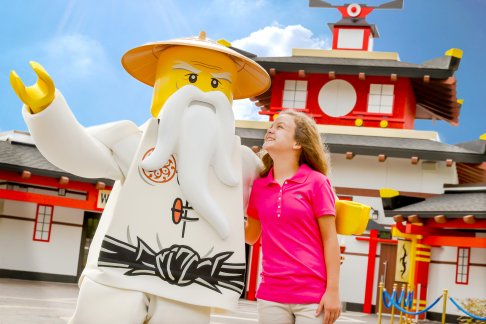
Calendario Recuerde que LEGOLAND Florida y LEGOLAND Water Park no están abiertos los 365 días del año. Haga clic AQUÍ para conocer los HORARIOS y el MAPA del parque. Transporte gratuito desde Orlando: Saliendo desde la I-Drive 360, 8350 Universal Studios, Orlando, FL 32819. Puede añadir un vale de transporte gratuito a su pedido aquí. Tarjeta VIP Dine 4 Less - GRATIS Cada Tarjeta VIP Dine 4 Less para hasta 4 huéspedes. Si el grupo está formado por más de 4 personas, deberá comprar más tarjetas. No podrá combinar la tarjeta con otros descuentos o promociones. Alcohol, bebidas, impuestos y propina no están sujetos a descuentos. Cada tarjeta debe ser firmada y marcada con la fecha del primer uso con el fin de ser activada y puede estar sujeta a verificación de identificación. Cada tarjeta será válida durante 30 días consecutivos desde la fecha del primer uso. APP Móvil Descargue la APP para Móvil VIP Dine4Less A destacar: Tarjeta iCard: los huéspedes pueden registrarse y convertir la tarjeta en una tarjeta digital que se guarda en la App. Entonces, solo con mostrarla al camarero o cajero ya es suficiente. ¿Varias tarjetas? No hay problema: Todas nuestras aplicaciones periten acceder facilmente a los lugares con varias tarjetas. Acceso en tiempo real: tecnología GPS que permite al cliente saber dónde están los lugares más cercanos a él. Mapa y direcciones GPS: tecnologia Google Maps integrada Social Media: cada huésped puede comparir sus experiencias en tiempo real Calculadora de ahorro: los huéspedes pueden hacer un registro de sus ahorros

Millions and millions of people have flocked through the doors of Madame Tussauds Amsterdam since they first opened over 45 years ago and it remains just as popular as it ever was. There are many reasons for this enduring success, but at the heart of it all is good old-fashioned curiosity. Today’s visitors are sent on a unique, emotionally-charged journey through the realms of the powerful and famous. The museum-style ropes and poles have gone so guests can truly get up, close and personal with A-list celebrities, sporting legends, political heavyweights and historical icons, reliving the times, events and moments that made the world talk about them…. So … who do you want to meet?
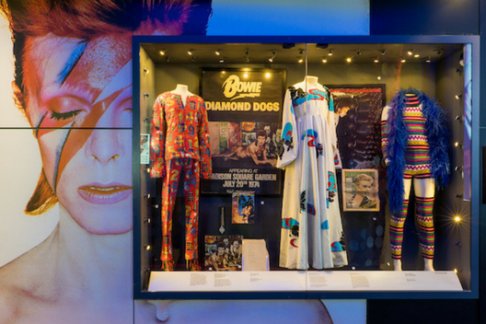
Edge Zones Edge Zone 1 - 1945 - 1962 The Anglo-American special relationship of the Second World War triggered an evolution of musical trends in Britain. Big band music became popular through visiting GIs and the revived sounds of Dixieland and New Orleans trad jazz were introduced into the London scene. The do-it-yourself creed of 1950s skiffle encouraged young musicians to pick up cheap guitars and start their own groups. British pop was transformed by the rock'n'roll craze in the mid 1950s. Edge Zone 2 - 1962 - 1966 In the 1960s, British music went global with the irresistible tide of the 'British Invasion'. The original look and sound of beat groups like The Beatles, R&B bands like The Rolling Stones and female singers like Petula Clark took America by storm and Britain became known as a pop powehouse. Edge Zone 3 - 1966 - 1970 British pop became increasingly involved in cultural exchanges with underground political activity, fashion, art and drugs. Inspired by the 1967 'Summer of Love' in San Francisco, Britain began to stage their own 'love-ins' and 'happenings', with themes of peace and love becoming the inspiration for music in this period. The 12" album toook centre stage and pop evolved into rock as music broke out of the small clubs onto the arena circuit and emerging festival scene. Edge Zone 4 - 1970 - 1975 In contrast to the tough social and economic crisis of 1970s Britain, the charts began to fill with performers singing of escapism, glamour and excitement. A darker vision of 1970s Britain soon appeared through albums like the post-apocalyptic Diamond Dogs by David Bowie and progressive rock flourished. The music industry expanded and audiences sought entertainment, making sell-out arena tours the pinnacle for any successful artist. Edge Zone 5 - 1975 - 1985 This was a period of economic recession in Britain. Pop music reflected this with tougher, more outspoken styles. Punk dramatised Britain's social divisions, while the grassroots Rock Against Racism movement popularised reggae and brought a return to political involvement. Edge Zone 6 - 1985 - 1993 The mid-to-late 1980s was a time of accelerated social, economic, technical and political change. Videos, CDs and satellite broadcasting meant that music was more accessible to the masses. The late 1980s were also a time of regional and musical diversity. Heavy metal was reborn, imported house music reached ecstatic heights with the 'Second Summer of Love' and the 'Madchester' scene was blossoming in the North. Edge Zone 7 - 1993 - 2004 In the mid-1990s, 'Cool Britannia' swept through all areas of British identity. Britpop revived the traditional pop values of the 60s and 70s. The period also saw the rise of manufactured boy bands and The Spice Girls unleashed 'Girl Power' on the world. The rise of Youtube and streaming gave audiences new ways to access music. It presented artists with unchartered waters in the form of new channels emerging to promote their music. Edge Zone 8 - 2004 - Present 2004 saw the launch of X Factor. The manufacturing of pop stars by UK audiences is balanced by the diversity of artists rising to the top of the charts. Rap and R&B stars, indie bands and singer-songwriters take the download chart by storm. The Future It is impossible to predict the future of British music. Who will be the next superstar? how will we listen to music in 2025? Whatever the future, one thing we can be sure of is that the intimate relationship between music and the fan will always continue to transcend any technological, cultural or social barriers. No photography is allowed in the the exhibition.