Free
Support
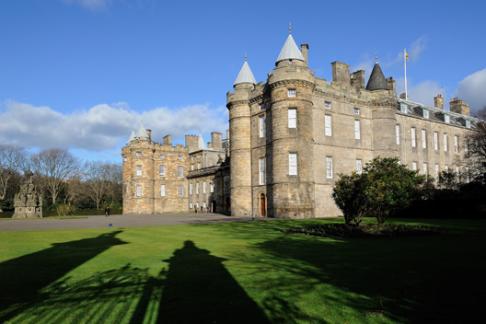
The Palace is perhaps best known as the home of Mary, Queen of Scots, and as the setting for many of the dramatic episodes in her turbulent reign. Mary was married at Holyroodhouse and witnessed the brutal killing of her secretary Rizzio by her jealous second husband, Lord Darnley, in her private apartments. The Palace briefly served as the headquarters of Bonnie Prince Charlie during the 1745 uprising. Today the State Apartments are used regularly by The Queen and other members of the Royal Family for State ceremonies and official entertaining. What there is to see: The State Apartments reflect the changing tastes of successive monarchs and are renowned for their fine plasterwork ceilings and magnificent furnishings, particularly the unrivalled collection of Brussels tapestries. One of the most famous rooms in the Palace is the Great Gallery, hung with Jacob de Wet's portraits of the real and legendary kings of Scotland. Included on the visit, a display focuses on the Order of the Thistle, the highest honour in Scotland. The Order honours Scottish men and women who have held public office or who have contributed in a particular way to national life. Shown alongside historic insignia is an example of the mantle worn at the Thistle ceremony at St Giles’ Cathedral in Edinburgh, which The Queen attends during her visit to the Palace in July. From 1 April to 31 October the gardens, which are today used for garden parties, can be included as part of a visit to the Palace of Holyroodhouse. Visitors to the gardens must keep to the paths, which are about 400 yards long. The Queen's Gallery at the Palace of Holyroodhouse in Edinburgh hosts a programme of changing exhibitions from the Royal Collection. Book here. Image Credits: 1.Royal Collection Trust / © Her Majesty Queen Elizabeth II 2018 2.Photographer: Peter Smith. Royal Collection Trust / © Her Majesty Queen Elizabeth II 2018
Duration is 1 hr and 30 mins. If you have any dietary requirements please contact us at [email protected] as soon as you make your booking.
London Eye -Standard Experience At 450ft high, the London Eye is the world's highest observation wheel. 32 Capsules, each carrying 25 guests, take you on a 30 minute journey through the most spectacular views of, over and around London spanning 25 miles in all directions. Combine your experience with the London Eye River Cruise Experience, a 40-minute sightseeing circular cruise on the River Thames, passing the Houses of Parliament, Tower of London and St Paul's Cathedral. London Eye 4D Experience The London Eye 4D Experience is a groundbreaking 3D film with in theatre effects, such as wind, bubbles and mist, to make the 4D. The film itself is a touching story of a little girl in London with her father. Her view of famous London landmarks is obscured by people and traffic, but a seagull draws her attention to the London Eye and her father takes her for an experience; finally she has an amazing view of the city. Colourful parties inside the capsule, time lapse of the London Eye day and night and a spectacular firework display all add up to an emotional and entertaining experience; the perfect prelude to an experience on he London Eye itself. Please remember that the boarding procedure for the London Eye takes around 30 minutes Our price is the same as you would pay buying on the London Eye website or telephone booking lines and there are no constraints on last minute bookings. For a different perspective visit at sunset and see the city lights come on and the skyline awash with vibrant colours. Unaccompanied children are not permitted to board the London Eye. Any booking made for an unaccompanied child will be taken as confirmation that the child will be joining a party under the supervision of an adult aged 18 years or older. 365 Tickets will not be held responsible if a child is turned away at the London Eye, nor will the ticket be refundable! Safety and security is our number one priority. For your safety and convenience, please read the following information on what items can and can not be taken on to the London Eye. Please be aware that all guests are subject to a security search when boarding the London Eye. Please note that the following items CAN be taken on board the London Eye: • briefcases • laptops • small day size rucksacks and bags (maximum size 18" x 13" x 8" or 46cm x 33cm x 20cm) • baby bags The following items CANNOT be taken on board the London Eye; • large bags/suitcases or rucksacks • motorcycle helmets • skateboards and rollerblades • tripods (unless agreed in advance with the London Eye) • baby buggies* • prohibited items** If you are unsure . * Baby buggies can be left at our 'Buggy' area facility in the ticket hall, although only for the duration of the experience. ** Prohibited items include sharp objects or anything which may be considered a security risk including penknives, scissors, metal nail files, toy or replica guns. If such objects are found or declared they will be checked in and returned to you after your experience providing the item is legal in the UK. Terms and Conditions 1. Confiscated objects are left entirely at the owner's risk at all times. 2. London Eye Company (LEC) accepts no responsibility for the loss of or damage to any objects left with LEC. 3. LEC is entitled to refuse to store any visitor's objects at its sole discretion whether for public safety reasons or any other reason.
Discover the city as you pedal along on one of our comfortable bikes with our friendly guide who will tell you about the historic details, the fascinating experiences of everyday life in the city and its iconic landmarks and sights on this easy-going route. Go on a relaxing cycle tour of Barcelona and visit unique cultural sights such as the Museu d’Art Contemporani, in the Raval neighbourhood, which has its own Rambla with its own unique inhabitant, Botero’s ‘Cat’. The guide will tell you some curious anecdotes about the neighbourhood and will then take you to the plaça Reial, the plaça Sant Jaume, the charming plaça de San Felipe Neri, the majestic Cathedral, the Roman walls and the plaça del Rei, among many other landmark sights. Next, you’ll head down to the seafront and beaches where you’ll be able to stop, time permitting. You’ll visit the old harbour, the Port Vell, the Barceloneta district, the Olympic Marina and, on the way back, you’ll cycle through the Parc de la Ciutadella and stop at the Sagrada Família. And during the hot summer nights you’ll also be able to go on one of our night-time tours! Exploring the city by bike is a wonderful way to experience Barcelona day or night.
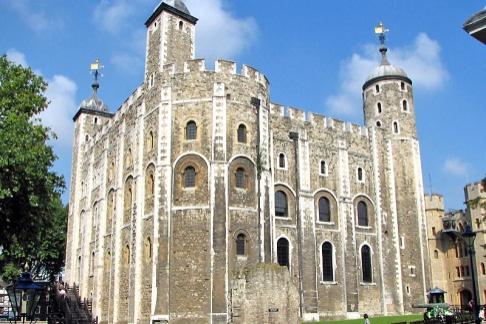
One of the most famous buildings in the world, the Tower of London was constructed in the 11th century - almost a 1,000 years ago and has been witness to countless significant events in the development of Britain's now democratic monarchy. During your tour of the Tower of London you will meet the magnificent Yeoman Warders or 'Beefeaters', clad as they were in Tudor times, hear the legend of the ravens and spine chilling tales from the Tower's long history. See the infamous Bloody Tower where the Princes were murdered, Beauchamp Tower where visitors can read carved inscriptions of past prisoners and Traitors Gate where those unlucky enough not to survive imprisonment had their heads impaled - and much more. We sell at less than the gate price, which gives you access to all the Towers and Attractions, as well as the unique Gift Shops, the historic New Armouries Restaurant, Tower Cafe and Kiosk. Your Tower ticket also includes entry to the Crown Jewels. Westminster Abbey Glorious Architecture This magnificent gothic construct is a sight to behold and the incredible stained glass is some of the most impressive in the UK. Coronation Chair Created for King Edward I in 1296, the chair has been the seat for the crowning of every monarch since 1308, including Queen Victoria and our current reigning Queen, HRH Elizabeth II. It is the oldest piece of furniture in the UK that is still used for its original intention. Poets’ Corner The literary corner of the Abbey is named due to the large amount of poets and writers buried there, including Geoffrey Chaucer, Charles Dickens, Rudyard Kipling and Thomas Hardy, as well as many memorial stones and busts dedicated to the likes of Shakespeare and loved Scottish poet Robert Burns. Kings and Queens Westminster Abbey has been the coronation church since 1066 and seventeen monarchs are buried there. The Abbey was also the place where William and Kate tied the knot in 2011.
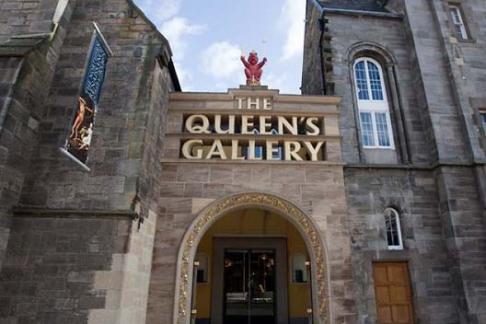
The Queen's Gallery was built in the shell of the former Holyrood Free Church and Duchess of Gordon’s School at the entrance to the Palace of Holyroodhouse. The buildings were constructed in the 1840s with funds from the Duchess of Gordon, but fell into disuse in the late 19th century. Benjamin Tindall Architects were appointed project architects for the new Queen’s Gallery in October 1999. Their central visual theme was a celebration of The Queen’s Golden Jubilee, expressed through a series of arches and screens that lead visitors from the Gallery entrance to the exhibition spaces beyond. Their design complements the original 19th-century architecture, elements of which were incorporated into the new spaces. Unsympathetic later internal alterations were removed, and a new exposed steel and concrete floor inserted to reflect the original ‘gallery’ of the Church. A new stone arched entrance was created at the centre of the Horse Wynd frontage, opposite the new Scottish Parliament building. The use of a stone archway, with a courtyard beyond, is a traditional entrance device in Scottish architecture. The main walling is of Catcastle stone, the dressed work and lettering is of Stainton stone and the base is of Kenmay granite. ‘THE QUEEN’S GALLERY’ lettering above the entrance is the work of John Neilson, a calligrapher and carver. The letters were cut from single pieces of stone. Above sits Scotland’s heraldic lion, designed by Jill Watson. The lion sedant is based on a small red lion that sits at the feet of Mary, Queen of Scots on her tomb in Westminster Abbey. (The Palace of Holyroodhouse was once home to Mary, Queen of Scots.) The monumental entrance doors of oak have gilded bronze hinges by Jill Watson. Continuing the heraldic theme, the main hinges are decorated with the Scottish lion and unicorn. The beasts are set against the adjacent urban scene of Edinburgh’s Royal Mile and the rural scene of Arthur’s Seat and Salisbury Crags. The upper hinges are made as golden boughs of flowering native trees – chestnut and laburnum, oak, rowan and hawthorn. The stone archway is decorated with a carved and gilded garland of Scottish flowers, including daisies and thistles, created by Graciela Ainsworth, an Edinburgh-based sculptor, carver and conservator. Over the old entrance to the former church is a stained-glass window by Christian Shaw. The design shows a perspective drawing of the interior of a gallery. At night, the shape of the archway is reflected by the glass lights by Keiko Mukaide set into the paving. The artist has given the tiles a water flow pattern, mirroring the stream of visitors walking in and out of the Gallery. Inside, the reception desk by Hamid van Koten is made from curved pieces of Scottish elm with kilned glass and patinated copper. The pendant lights were designed and made in Edinburgh by Ingrid Phillips. Dividing the reception from the main Gallery area is a patterned glass screen by Jacqueline Poncelet. The screen’s bronze handles by Jill Watson incorporate figures looking at art in a gallery. The dramatic central stair of native timber leads to the Gallery spaces above. The complex shape was designed by the architects with Charles Taylor Woodwork, who were responsible for the construction. Lights set into the first floor illuminate the curved balustrading.