Free
Support
Rideaux à œillets d'intimité bloquant le soleil pour rideaux d'extérieur et d'intérieur à 1 panneau
A relaxing stay for two at this 4* modern day retreat
Big Bus Paris - 1 Day Tour
NEW :
Half covered Open-top bus to enjoy Paris even if it is raining
FREE Paris Map
FREE Headsets
FREE Ponchos
FREE Reward Voucher Booklet
Quai Branly Museum - Combined Ticket
The opening of the musée du quai Branly, in June 2006, helped legiti mize long misunderstood cultures and finally made them accessible to a wider public. 300,000 works and objects from Africa, Asia, Oceania and the Americas make up the collection of the museum, whose mission is to conserve, document and enrich.
As a resource of messages and potential connections between world cultures, the collection is a point of departure from which the museum has shaped its identity: that of a museum for the 21st Century with innovative architecture and museography, all in the heart of a major international capital.
The musée du quai Branly is a museum that does not claim to teach from a position of authority; rather, it sets out to create bridges between cultures, while encouraging curiosity and attracting visitors from different backgrounds with varied interests.
Within the museum, diverse skills and perspectives create the ideal context for the collection, giving rise to cultural, artistic and scientific proposals, from different levels of interpretation and approaches, be it via temporary exhibitions, performing arts, lectures or conferences.
The quality and renewal of this myriad of offerings depend upon the public making the museum their own and upon their desire to keep coming back. The dynamics of mediation between visitors and the collec tions, taking into account the vision of a given society at a given moment, opens up the dialogue to the key issues of our day: globalisation, our relationship towards “otherness” and the natural world.
NOTE : The combined ticket include tickets for the permanent collection and the temporary exhibition
First Cruise Classic Caesar - Freshly cut romaine hearts, herb croutons and shaved Parmesan Reggiano cheese, finished with our house Caesar dressing Lobster Bisque - Fresh Maine lobster simmered in sweet cream butter and sherry, topped with our homemade herbed crouton Hazelnut Duck - A savory duck confit with wild mushrooms layered with baby spinach, finished with a brandy cream sauce and topped with a hazelnut gremolata Main Course Roasted Chicken - Pan-roasted chicken breast infused with our traditional Moroccan chermoula seasonings, topped with our Chef’s inspired harissa sauce and served with a citrus couscous and bok choy Grilled Salmon - Fresh grilled salmon topped with a ragoût of braised cherry tomatoes and black olives, served with sautéed spinach Seafood Ravioli - Gratinée jumbo ravioli filled with imported ricotta, Parmesan Reggiano and Fontina cheeses, topped with a seared jumbo sea scallop and gulf shrimp atop a rustic pomodoro sauce Short Ribs - Grilled and slow-cooked boneless short ribs with smoked Gouda mashed potatoes and glazed baby carrots, finished with a cabernet wine demi-glace Vegetable Napoleon Layered portobello mushroom, roasted red peppers, zucchini, eggplant, summer squash and tofu grilled atop tomato coulis Desserts Chef’s selection of Cakes and Mini Pastries Menu subject to change. Before placing your order, please inform your server if anyone in your party has a food allergy.
Please note On Saturdays and Mondays, this itinerary changes : The Château de Chambord is replaced by the château d’Amboise. Lunch will take place at Amboise instead of Chambord For wine tastings, the Chambord wine tasting area is replaced by the Cave des Dômes wine cellar in Chenonceau without pieces of toast In Summer (April 1 to October 31) lunch is not included. In winter (November 1 to March 31), lunch is included at the St Hubert Hotel Restaurant in Cour-Cheverny (five minutes from Cheverny). On the menu is homemade salmon terrine with lemon sauce, eggs with mixed vegetables; roast turkey with green beans, provençal tomatoes and sautéed potatoes; and warm apple tart (1/4 Bottle of wine, water, coffee or tea). Summer 2018 : Chinese : Mon, Thu, Sat English : Everyday French : Mon, Wed, Sun Japanese : Tue Portuguese : Tue, Wed, Sat Spanish : Everyday Winter 2018-2019 : Chinese : Thu, Sat English : Tue, Thu, Sat French : Sat Spanish : Tue, Thu, Sat
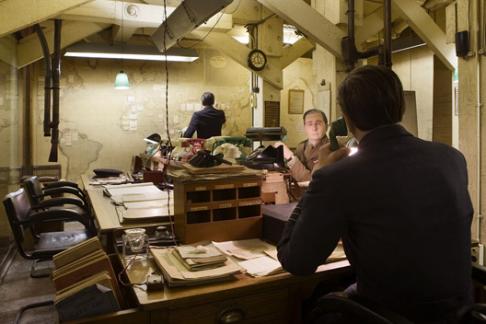
The Map Room The Map Room came into use on the very first day that the Cabinet War Rooms were ready for occupation and remained the heart of the site throughout the war. The room was staffed twenty-four hours of every day, from August 1939 to August 1945. The principal function of the Map Room was to act as a round the clock central point for information about the war. The War Cabinet Room This was the inner sanctum of British Government, the room used for meetings of the Prime Minister, a select few ministers and advisers of his War Cabinet and his Chiefs of Staff. 115 meetings of the War Cabinet took place and momentous decisions were taken in this room. The scratched arms of the seat in which Churchill sat bear witness to the tensions of those crucial meetings at critical moments of the war. Churchill's Room Although his room in the Cabinet War Rooms boasted comforts of a higher standard than anywhere else in the complex, Winston Churchill preferred not to sleep there. He used his room at the Cabinet War Rooms for visits to the Map Room and for business, when forced to meet underground. He also delivered four of this wartime speeches from here, including his 11 September 1940 speech, warning of Hitler's plans to wage a war of terror against the United Kingdom. The Transatlantic Telephone Room The Transatlantic Telephone Room, to which a huge scrambler 'Sigsaly' was connected, created the original hot-line for allowing Churchill and the American President to conduct their vital strategic discussions in complete security. Like all the rooms in the complex, this originally had a more humble purpose - it was once a store for brooms and domestic equipment. It was adapted in mid-1943 to house this particularly secret installation. The Churchill Museum The Churchill Museum is divided into five chapters, spanning all ninety years of Churchill's life. To allow an easy transition from the historical context of the Cabinet War Rooms, the story begins on 10 May 1940 with Churchill's appointment as Prime Minister. The visitor can then explore his later years, his childhood, his early political career and finally the period known most famously as the 'Gathering Storm'. Facilities The Switchroom Café is a great place to relax with a range of hot and cold food freshly prepared on the premises, along with a variety of beverages on offer. Open 7 days a week from 10:00 until 17:00, the café is located halfway through the tour but visits to the café can be taken at any time. The café also houses interesting photographic artefacts from the Second World War to view. All visitors are provided with a free personal Acoustic guide sound guide, available in English (adult, family and visually impaired version), French, German, Italian, Spanish, Hebrew, Dutch and Mandarin. Plus family and kids tours