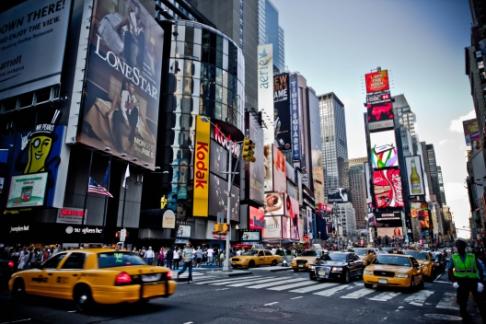
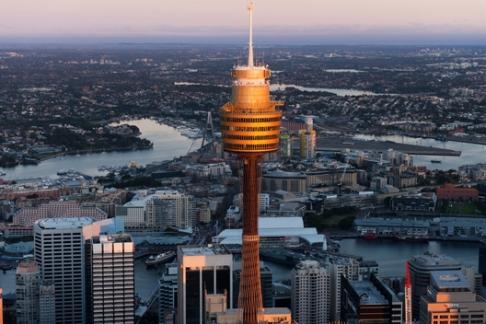
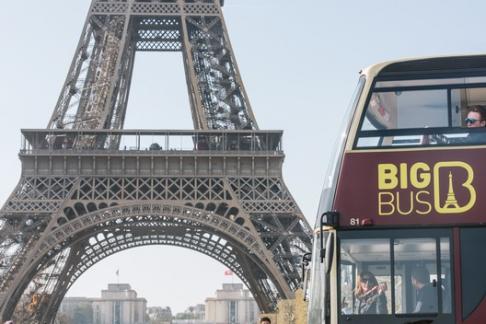
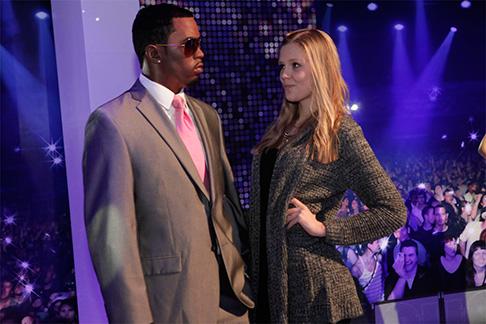
There’s so much to see and do at Madame Tussauds New York! Get up close and personal with over 200 life-like wax figures of the biggest stars and icons in entertainment, sports, history and more. Mingle with movie stars in your own A-list party before getting on stage with your favorite pop star. Address the world alongside famous leaders and then challenge legendary athletes on the court. Don’t miss the Marvel Super Heroes 4D Experience, a short film with thrilling special effects that make you ‘feel” like part of the action. Located in the heart of Times Square, no visit to NYC is complete until you’ve experienced the world famous Madame Tussauds. From Marilyn to Madonna to Gaga, there is a star for every generation.
GHOSTBUSTERS EXPERIENCE
The experience includes four unique rooms, true to the 2016 film.
Visitors to the Ghostbusters Experience will enter the experience via a subway entrance that descends to a platform and onto subway tracks. While walking the tracks the guest will experience their first apparition on a moving train, hurtling toward them. The environment is set with smoke, ambient noise of the subway and 3D elements such as subway tiling, ticket turnstiles and figures of a station guard and police officer.
Stepping off the tracks, visitors enter the basement of a haunted mansion. Proceeding from the basement through the house, the fun continues with moving eyes in portraits, scuttling rats, the sound of ghosts and morphing of portraits. The scene is set with an array of 4D effects: creaking floorboards, feet ticklers, moving props in the bookshelf, green crackle light and dry ice creating an eerie effect.
Having survived the paranormal, the guest now arrives at Ghostbusters Headquarters. This is the guests’ first encounter with the figures. One welcomes them to the space while another is seen working on a proton pack at one of the booths. Visitors to Headquarters will have the opportunity to learn and experiment with spirit hunting props from the film. Screens throughout the room provide insider tips and tricks. The scene is set with ambient New York street noise, and ringing phones.
Well-equipped and savvy, guests move into the epic finale where they experience their first paranormal hunt. The guest sees additional figures of the spirit-hunter crew featured mid-pose, shooting their proton packs at paranormal villains. Guests can top of the epic finale by capturing their own ghost and taking a ride on Ecto-2. Effects show spiraling apparitions who are eventually trapped by guests, ambient Times Square noise, smoke, ghosts’ footsteps, the sounds and lights of proton packs shooting and more.
TOP OF THE ROCK
AT THE TOP
Take your time and take it all in. It's a dramatic view of New York City you just can't get anywhere else. Day or night, three floors of indoor and outdoor decks offer stunning panoramas of the city's energy, wonder, and beauty.
RADIANCE WALL
Created by Swarovski, "Radiance" is the first of its kind, a breathtaking wall of glass panels, mouth-blown glass, crystal clusters, and fiber-optic lighting. Look closely - is something looking back at you?
BREEZEWAY
Step into a room with a mind of its own. You'll be assigned a color and lights of that color will follow your every move. It's great fun for young and old alike.
INDOOR SPACE
On the 67th floor, relax in comfortable seating and enjoy views in any weather through the floor-to-ceiling windows. You'll find a Gift Shop here as well as on the 69th floor.
OUTDOOR VIEWING
Use the binoculars to explore the unobstructed views through glass panels on the 67th and 69th floors, and in the open air on the 70th floor. On all three levels, you can have your picture taken by a Kodak pro. Retrieve it as you exit and share it on topoftherocknyc.com
SHOP & SHARE
Pick up a souvenir of your time at the Top, or a gift for those back home. Mementos of this extraordinary destination are available to fit any budget and elight any age. Gift shops are found on the 67th and 69th floors, in addition to the main Gift Shop in the Concourse as you exit.
GIFT SHOPS
Pick up a souvenir of your time at the Top, or a gift for those back home. Mementos of this extraordinary destination are available to fit any budget and delight any age. Gift shoppes are found on the 67th and 69th floors, in addition to the main Gift Shop in the Concourse as you exit.
FAQ
How long can visitors stay on the observation deck?
There is no time limit as to how long guests can stay on the observation decks during operating hours. The average length of stay is about 45 minutes to an hour. Top of the Rock is a three level observation deck that consists of the 67th, 69th, and 70th floors of 30 Rockefeller Plaza. Total surface area of all the decks together is approximately 55,000 square-feet (5,110 m2). The upper deck is 850 feet (260 m) above street level.
Are there restrooms located at Top of the Rock?
Yes, restrooms can be accessed once inside the attraction.
Can I visit the mezzanine level exhibit after I visit the observation decks?
Due to crowd flow purposes, the pre-show exhibit can only be viewed before visiting the observation decks.
Is there an outdoor viewing area?
The 67th and 69th floors include outdoor terraces which feature fully transparent, safety glass. The 70th floor, the uppermost level, provides a completely open air, unobstructed 360-degree view of New York City and beyond.
Is Top of the Rock weather dependent?
Top of the Rock is open 7 days a week, 365 days a year, despite weather conditions. In the case of inclement weather, portions of the deck may be closed for safety reasons. Guests will be advised about weather conditions and visibility prior to entry. Top of the Rock will not refund tickets in the case of inclement weather, however we will reissue your ticket for a future time and date.
Is the Rockefeller Center Christmas Tree and/or Skating Rink visible from the Top of the Rock?
Unfortunately, no. However, both are easily accessible from the Concourse retail shop where guests exit the elevators after their visit.
Is Top of the Rock wheelchair accessible?
Top of the Rock is in full compliance with the Americans with Disabilities Act. This includes full wheelchair accessibility.
Are strollers allowed?
Strollers are permitted, however they must be collapsible.
Can I bring tripods? What about professional video cameras?
We do not allow tripods or professional video cameras on the observation deck.
Are specific items prohibited from entering the building and/or observation deck?
Items that present a danger to the safety of visitors and employees will not be permitted in the building or on the observation decks. These items include, but are not limited to, weapons, lighters, glass bottles and flammable substances. For more information, please contact 212-698-2000.
Can I bring food and beverage to Top of the Rock?
We do not allow food or beverages on the observation decks.
Do you offer any special treatment for marriage proposals?
Thank you for considering Top of the Rock as the location for your proposal. While we wish you the best of luck, we do not make special arrangements for proposals.