Free
Support
YOU SHOULD BRING: Sunglasses Hats Warm clothes during winter periods
Depart Edinburgh 09.15 and travel northwest through the historic area of Linlithgowshire, close to the historic palace. The tragic Mary Queen of Scots was born at Linlithgow palace, and became Queen when she was only 6 days old. According to legend her father James V died of a broken heart when he discovered his wife had given birth to a daughter and not the son he was hoping for! Your route along the Forth Valley is one which has been used for thousands of years by invading armies, it was the northernmost frontier of the Roman empire and was later used by the English King Edward I as he marched proudly towards Stirling (only to be sent homewards to think again!). Nowadays it’s at the centre of one of Scotland’s most important industries with huge oil refineries dominating the area. As you approach Stirling the magnificent castle dominates your view and you make your way up towards the high volcanic rock where it imposes itself upon the surrounding land. Known as the ‘Key to Scotland’, for centuries this was the most important castle in Scotland and the views from the top make it easy to see why. To the north is the 220ft high tower of the National Wallace Monument commemorating Scotland’s great hero William Wallace, played by Mel Gibson in the Oscar-winning movie Braveheart. From the castle you can look down over the scene of Wallace’s greatest triumph, the battle of Stirling Bridge, where he defeated the English army in 1297. To the south is Bannockburn where, in 1314, the great Scottish warrior-king Robert the Bruce defeated the English army of Edward II. The battle was fought for possession of Stirling Castle but eventually led to a far greater prize for Scotland – the restoration of independence. It’s an area alive with history and you stop at the castle to give you time to soak up the history and heritage of this great site. From Stirling you head into the Highlands and an area known as the Trossachs. Known as ‘The Highlands in Miniature’, it marks the point where the Lowlands meet the Highlands and entering this beautifully picturesque area feels like going into a different country. With its shimmering lochs, rugged mountain tops and forest-filled glens it’s easy to forget that this was once thought of as a dangerous frontier fought over by the fiercely territorial Highland clans. You stop here for lunch in the village of Aberfoyle, made popular in Victorian times due to its great location. After lunch you ‘take the high road’ or back-road to Loch Lomond, Scotland’s largest lochs at over 22 miles long, passing Lochs Ard, Chon and Arklet along the way as you travel through the protected lands of Scotland’s first National Park. The route you take was described by the famous Scots comedian Billy Connolly as his favourite road in Scotland, and you can discover why – it’s stunning!! You stop at Inversnaid on the secluded north-east of the loch, making it the perfect place to enjoy a walk along the ‘bonny banks’, up to a viewpoint for a fantastic view of the loch and the mountain it’s named after, Ben Lomond. This tranquil setting was once the home of Scotland’s famous highland folk hero, Rob Roy MacGregor. Made popular by many books and films Rob Roy lived an incredible life as a soldier, businessman, cattle-rustler and outlaw. By spending time on the trails by the loch you will undoubtedly be walking in the footsteps of one of Scotland’s great legends. There is also an alternative option to take a boat cruise around the north of the loch (Summer only) or merely enjoy a drink at the local hotel and sample the views. Leaving Loch Lomond you return to Edinburgh passing Scotland’s only lake – the Lake of Mentieth (although we have around 3000 freshwater lochs!). The legend states that after William Wallace was betrayed by his great friend the Earl of Mentieth and executed in London the name was changed from the Loch of Mentieth to the Lake of Mentieth so that nobody would ever forget the traitorous part the Earl played in his death.
HMS Belfast One of the most powerful large light cruisers ever built, HMS Belfast is now the only surviving vessel of her type to have seen active service during the Second World War. HMS Belfast played a leading part in the destruction of the battle cruiser Scharnhorst, and also the Normandy Landings. In service with the Royal Navy until 1965, she was saved for the nation in 1971 as a unique reminder of Britain’s naval heritage. Launch! Shipbuilding Through the Ages This new family-orientated exhibition will use hands-on and computerised interactive displays and engaging film and footage to demonstrate techniques of shipbuilding, from the ‘age of sail’ to modern prefabrication methods. The exhibition will focus on the science, engineering and social history of shipbuilding in Great Britain, and the interactive elements of the exhibition will allow children of all ages to get involved and experience this history. Explore ‘What shall we give in return for so much?’ One of the most powerful large light cruisers ever built, HMS Belfast is now the only surviving vessel of her type to have seen active service during the Second World War. Serving Britain for 32 years, she played an important role in both the Second World War and the Korean War as well as performing peacekeeping duties throughout the 1950s and 1960s. Saved from destruction in 1971, HMS Belfast is now part of the Imperial War Museum and is the first ship to be preserved for the nation since Nelson’s Victory. Through its team of staff and volunteers – many of whom are veteran crew – the Imperial War Museum is dedicated to making sure that HMS Belfast still has a role to play in reminding visitors of her unique place in Britain’s maritime heritage. History of HMS Belfast The term 'cruiser' goes back to the days of sailing ships when large frigates could be detached from the main fleet to cruise independently. The sailing cruiser, like her twentieth-century counterpart, was sufficiently powerful and fast to attack and destroy enemy commerce raiders. During the nineteenth century when sail gave way to steam and wooden ships were replaced by those built of iron, and later of steel, the cruiser evolved into a powerful warship which was used to patrol the Empire trade routes and protect friendly merchant shipping. After the First World War (1914-1918) a single category of cruiser emerged whose size was indicated by the size of its guns; thus, HMS Belfast is a 6-inch cruiser, designed for the protection of trade, for offensive action, and as a powerful support for amphibious operations. Please note: children under 16 must be accompanied by an adult. Please allow 1½ - 2 hours for your visit. Tower Bridge Exhibition Walkways & Exhibition: Visitors enter Tower Bridge Exhibition via the North Tower. They are then transported by lift to the top of the Tower (47 metres above the Thames) where they have a unique opportunity to see the Bridge’s steel skeleton from within. A short film explains the history and provenance of the Bridge and then there is the chance to admire the spectacular views – from both covered Walkways. On Monday 1st December, Tower Bridge’s East Walkway will reopen with its own GLASS FLOOR, joining the West Walkway to complete our new-look exhibition. Together with far-reaching views of East London, the walkway will be bolstered with a further 20 revered bridges in the extended popular display, ‘Great Bridges of the World’. On the east Walkway there are fantastic views of the Docklands and from the west Walkway you can see the new GLA building, the Tower of London, St Paul’s, the city, the Pool of London and Big Ben and the London Eye in the distance. Interactive computerised kiosks and graphic panels explain the significance of the views to visitors, as well as providing more information on the history and building of the Bridge. The interactive material and graphic panels are written in seven languages and an audio loop for the hard of hearing is also in place for the video show. There is another film to view in the South Tower before descending for the short walk to the historical Engine Rooms, included in your ticket price. Victorian Engine Rooms: These provide a fascinating insight into late 19th century engineering. Installed for the completion of Tower Bridge in 1894, these huge, and beautifully maintained, coal-driven engines were used to power the thousands of bascule Bridge lifts performed until 1976. Although lifts are now operated by electricity, the original steam engines are still in place. The Engine Rooms give visitors a chance to experiment with models demonstrating the technology behind the Bridge. There are also some amazing photographs of Tower BridgeTthroughout its lifetime – including a revealing picture of the heavy steel structure of the Bridge as the stone cladding was installed over it.
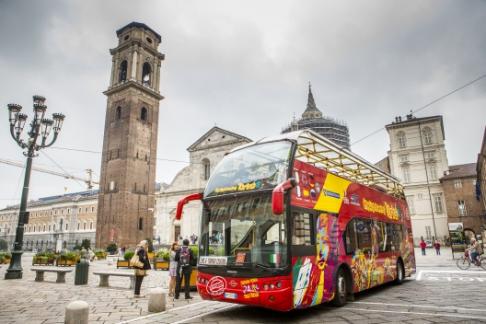
Tour Stops: With over 70 tour stops across 6 routes, there’s plenty to explore! Passengers can hop-on and hop-off at any of the tour stops during the time-period covered by their chosen ticket. Some of the many notable tour stops include: RockWalk The Comedy Store Beverly Centre Paramount Studios Santa Monica Pier Beverly Hills Universal Studios & City Walk Warner Brothers Studios Central Piazza Chinatown Santa Monica Boulevard Disney Hollywood Studios Hollywood Rockwalk Ritz-Carlton Venice Beach Washington Blvd Lincoln Blvd Fashion District Upon arrival, you will receive a map with a full list of the tour stops covered across each route. If you’d prefer, stay on the tour for a full loop: 90 – 155 minutes per route Additional Information: Vouchers must be printed to be exchanged for a City Sightseeing bus ticket in location. The audio commentary is available in the following languages: English, Spanish, German, Italian, French, Portuguese, Chinese (Mandarin), Japanese, Korean Buses are wheelchair accessible
The Courtroom This is a classic Dungeon's show and a massive crowd pleaser. We're all guilty... the only question is 'what of?' From witchcraft to inebriation, from being from Dundee to having a mono-brow. BOO the criminals Witch Hunt Our brand new show is our most up-close-and-personal yet. Get right in amongst the Witch Pricker’s interrogation chamber, but protect yourself from accusations of sinister sorcery or be burned alive! The Torturer This show is consistently one of our highlights - delighting and repulsing in equal measure. Just remember, like any artist The Torturer has his sensitive side. The Boat Ride Hear what happened when a man and woman were returning from market and happened across savages on the road. The King's Men are out to capture the savages and YOU have been enlisted to help. Venture into the Caves of Galloway by boat in search of legendary cannibal Sawney Bean and his incestuous clan. Sawney Bean You've found the Bean Family. Unfortunately, it's been a while since they last ate and you look delicious. Find yourself creeping through the clan’s foul smelling lair and discover the leftovers of lost travelers as the hunters become the hunted. The Anatomy Theatre Step into Dr Knox's Anatomy Theatre as 19th Century medical students and witness the autopsy of another of Burke and Hare's victims. Burke and Hare Edge your way through the darkness and tombstones of the murky burial ground and find yourself in the very gravest of situations. Street Of Sorrows Welcome to 17th Century Edinburgh where the streets are filthy and the plague is rife. Meet the Foul Clenger as he tells you the true story of Edinburgh’s underground plague close. The Green Lady A tale of betrayal, revenge and death and known as Edinburgh’s greatest ghost story, this tale is rich in haunting drama and spine tingling intrigue. Prepare yourself as the capital’s dark and deadly story is brought to life with this brutal crime of passion – get ready to meet The Green Lady! Maggie Dickson Welcome to St Margaret's Chapel, the oldest building in Edinburgh. Meet Half-hangit Maggie; she's known for "hanging" around in the Grassmarket. She'll prepare you for your last drop, and unfortunately it's not Whisky. Drop Dead: Drop Ride You've made it to the Grassmarket and a crowd has gathered to see you pay for your sins. Lucky you! You had better put on a good show/death for the awaiting crowds. Your executioner will show you the 'ropes'. Minimum height: 1.4m Labyrinth Welcome to the Afterlife! You'll quickly realise that a lot of the characters look familiar… Try not to bump into anyone, yourself included.
Amongst the most famous historic attractions in our care are:
Mysterious Stonehenge and Hadrian’s Wall - both World Heritage Sites.
The Home of Charles Darwin, Down House, just south of London.
1066 Battle of Hastings Abbey and Battlefield, East Sussex
Dover Castle, Kent
Tintagel Castle, Cornwall - legendary birthplace of King Arthur.
Audley End House & Gardens, near Cambridge - a superb Jacobean mansion set in beautiful gardens.
Apsley House - also known as Number 1 London
Magnificent Osborne House, Queen Victoria’s beloved seaside retreat.
Customer Benefits:
Savings
Save money with this great value pass by visiting as few as THREE attractions. So even if it is used for a weekend break - it can still save money! The more the pass is used - the greater the savings.
What is an Overseas Visitor Pass?
The Overseas Visitor Pass is a one-price entrance ticket to all English Heritage properties valid for either 9 or 16 consecutive days.
What is included?
FREE entry to over 100 stately homes, castles, abbeys, Roman and prehistoric remains. You can visit all attractions directly managed by English Heritage free of charge. Find out more about our historic attractions.
FREE or reduced price entry to hundreds of action-packed events.
FREE overseas visitor guidebook.
I can’t possibly visit 100 attractions in 9 days. Why should I buy an Overseas Visitor Pass?
We don’t expect you to visit that many attractions. The Overseas Visitor Pass is incredible value for money and you can start making savings from as few as two or three visits!
How much will I save?
You will realise what great value the pass is as soon as you make your first visit. For example, the price of the guidebook plus the combined normal adult admission price to Dover Castle; 1066 Battle of Hastings, Abbey and Battlefield; Walmer Castle & Gardens; and the Home of Charles Darwin, Down House - just four attractions in the South East - is £54.65. With your 9 day Overseas Visitor Pass you save £29.65.
Remember, you can visit as many attractions as you like. The more you visit, the more you save!
If I stay for less than 9 days, does it still make sense to buy the Pass?
Yes, the Pass pays for itself after approximately three visits so you can enjoy savings from the first or second day of your stay!
Who can buy the Pass?
The Pass is available for overseas visitors only. Visitors may be asked for proof of overseas residency when visiting a property.
The Pass is available to groups and individuals. Groups should contact the first property they are planning to visit with a list of names of the group's members, so that we can prepare the passcards and make sure we have enough guidebooks on site.
Do children need their own Pass?
The family pass is valid for two adults and up to four other family members under the age of 19 living at the same address. Other than the family pass, there is no reduced child pass. Children under the age of five are admitted free of charge to our attractions, and children up to the age of 15 qualify for reduced entrance fees.
For how long is the Overseas Visitor Pass valid?
The English Heritage Overseas Visitor Pass is valid for a period of either 9 or 16 consecutive days.
How is my Overseas Visitor Pass activated?
The Pass will be validated at the first property you visit and it can then be used for the following consecutive 9 or 16 days.
When are English Heritage properties open?
Many properties open daily from 10.00 in summer. Nearly all are closed 24-26 December and 1 January. All sites have reduced opening times during the winter months (October to March).
The exact opening times are listed on our website as well as in the Members’ and Visitors’ Handbook, which is included free of charge with the Pass.
What documents do I need to take with me to collect the Overseas Visitor Pass?
You need to print out your booking confirmation (voucher), and take this with the credit card used to make the booking.
You must also have proof of identity with you in the form of a passport, identity card or driver’s license to authenticate that you are the rightful owner of the voucher and as proof of overseas residency. This can be a photocopy.
What happens if my Pass is lost or stolen?
The Pass is not transferable, refundable or replaceable when lost or stolen.