Free
Support

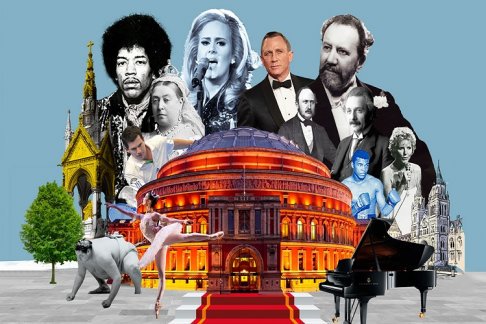
Royal Albert Hall Did you know? There are 13,000 “A”s for Albert around Hall The Hall is home to the world's largest single woven carpet design, made of 326,666 sheep fleeces and 49 million tufts getting it into the Guinness World Records The world’s biggest Christmas pudding was made at the Hall and weighed ten tonnes The first ever body-building contest and Sumo wrestling tournament outside Japan took place in the main auditorium The Elgar Room used to be home to the Central School of Speech & Drama, giving a stage to names including Sir Lawrence Olivier and Dame Judy Dench 5,500 bottles of champagne and 1,800 bottles of gin are drunk at the Hall every year Afternoon Tea was introduced to Britain by Queen Victoria. The first tea party was held at the Hall in 1912. The tradition continues today in the Hall's Verdi Restaurant The Royal Albert Hall Grand Tour is fully accessible. Some time slots and/or dates are unavailable due to events taking place in the auditorium. The Royal Albert Hall was built to fulfil the vision of Prince Albert (Queen Victoria's consort) of a 'Central Hall' that would be used to promote understanding and appreciation of the Arts and Sciences and would stand at the heart of the South Kensington estate, surrounded by museums and places of learning. The Hall is a Grade I Listed building; and has been in continuous use since it was opened in March 1871. It was always conceived as a multipurpose building to host not only concerts of music but exhibitions, public meetings, scientific conversations and award ceremonies. It is a registered charity held in trust for the nation and is financially self sufficient, receiving no funding from central or local government. Thames River Red Rover Hopper Pass With the River Red Rover ticket you travel in luxury on a fleet of river liners and may hop on or off at any of the piers as often as you like throughout the day. As the River Thames weaves its way through the heart of London there is history around every bend and there is no better way to see and experience the sights and splendour of this great city than from one of City Cruises modern, wheelchair-friendly RiverLiners™. Enjoy unsurpassed views of some of London's most famous landmarks from the vantage point of our open upper decks and spacious lower saloons with panoramic windows. Take advantage of two bars providing light refreshments and snacks . Cruises depart frequently from Westminster Pier, Waterloo (London Eye) Pier, Tower Pier and Greenwich Pier every day of the year except Christmas Day (25th December). Our shortest trips between piers last about 20-30 minutes while the full round trip takes about two-and-a-half leisurely hours.
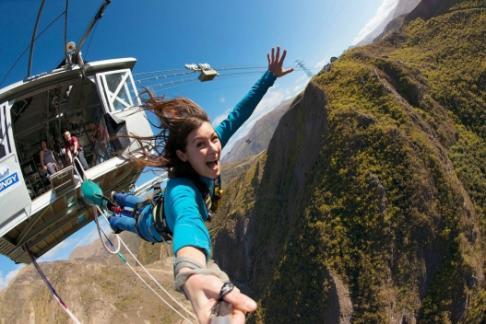
YOU SHOULD BRING: Swim wear Towel Closed and secure shoes for the Bungy Warm clothes during winter periods
TERMS OF SALES : Tickets must imperatively be kept throughout their period of validity Spot checks can be performed on vehicles Lost or stolen tickets will not be replaced Tickets are not refundable Any resale or reuse ticket constitutes fraud and, as such, is subject to prosecution A place on the top floor can not be guaranteed The organizer can not guarantee the return of personal effects and luggage left behind or forgotten in vehicles, and it can not be held responsible for their failure to return The organizer reserves the right to cancel or modify certain tours without notice if the comfort or safety of travelers demanded it, and in case of strike or demonstration Prices, times and duration of the tour may change

After meeting up with your local guide, we will make our way over to the River North Art District (RiNo) using a Denver-only rideshare company. RiNo is an achingly hip, up-and-coming neighborhood that boasts a serious number of creative businesses and fun start-ups, without a chain store in site. Our first stop will be one of Denver’s newest and most popular distilleries. Serving an impressive array of flavored seasonal gins and exceptional vodka amongst other ‘spirited’ drinks, no detail is overlooked by this family-run establishment. We will enjoy the bar and terrace area (weather permitting) as we sip superb liquors made from top quality local grains and fruit. Next up it’s time to experience what Denver is famed for: its unbelievably good craft beer scene. We’ll make our way to our absolute favorite local brewery to sample a flight of beers. The large tanks inside may look ultra serious but don’t be fooled — this establishment may well be the most fun place in Denver to hang out on a summer evening and you’ll get to see why the locals love it so much. After boozing on liquor and beer, we think it’s time to get some food into you! And not just any food will do — we are going to take you to a place that has become a magnet for foodies all over Denver, where we’ll enjoy some locally sourced gastro delights that will show you why Denver is gaining a strong reputation as a fabulous foodie hot spot. But wait, we’re not done yet! A short walk after dinner will take us to a beloved local cidery, to try a uniquely dry style of cider. You will love the rare flavor profiles and interesting variations that this joint specialises in, so prepare to be wowed! As we finish our rounds, you may find that you want to stay out and play and we wouldn’t blame you one bit, as RiNo is awesome! We can leave you to marinate longer and find your own way home (we’re always happy to advise on the best way to do so) or, if you decide to stick with us, we’ll drop you in an area where there’s plenty more to see, do and drink during the rest of your dynamite Denver night out. Cheers!

Please note: a minimum of 6 people is required to operate the tour
This tour includes fees for 3 wine tastings. (approx. value of $40.00)
Children are permitted on wine tasting tours, but you must be 21 or older to sample and drink wine
This tour includes hotel pick up.
Lunch and breakfast are not included.
Customers must reconfirm the tour with City Sightseeing by calling +1.415.440.8687 no later than 24 hours prior to departure of the reserved tour in order to receive exact pickup time and further details.
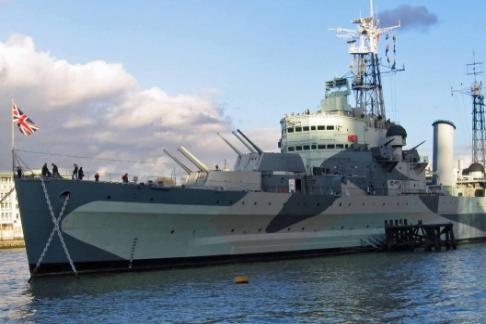
HMS Belfast One of the most powerful large light cruisers ever built, HMS Belfast is now the only surviving vessel of her type to have seen active service during the Second World War. HMS Belfast played a leading part in the destruction of the battle cruiser Scharnhorst, and also the Normandy Landings. In service with the Royal Navy until 1965, she was saved for the nation in 1971 as a unique reminder of Britain’s naval heritage. Launch! Shipbuilding Through the Ages This new family-orientated exhibition will use hands-on and computerised interactive displays and engaging film and footage to demonstrate techniques of shipbuilding, from the ‘age of sail’ to modern prefabrication methods. The exhibition will focus on the science, engineering and social history of shipbuilding in Great Britain, and the interactive elements of the exhibition will allow children of all ages to get involved and experience this history. Explore ‘What shall we give in return for so much?’ One of the most powerful large light cruisers ever built, HMS Belfast is now the only surviving vessel of her type to have seen active service during the Second World War. Serving Britain for 32 years, she played an important role in both the Second World War and the Korean War as well as performing peacekeeping duties throughout the 1950s and 1960s. Saved from destruction in 1971, HMS Belfast is now part of the Imperial War Museum and is the first ship to be preserved for the nation since Nelson’s Victory. Through its team of staff and volunteers – many of whom are veteran crew – the Imperial War Museum is dedicated to making sure that HMS Belfast still has a role to play in reminding visitors of her unique place in Britain’s maritime heritage. History of HMS Belfast The term 'cruiser' goes back to the days of sailing ships when large frigates could be detached from the main fleet to cruise independently. The sailing cruiser, like her twentieth-century counterpart, was sufficiently powerful and fast to attack and destroy enemy commerce raiders. During the nineteenth century when sail gave way to steam and wooden ships were replaced by those built of iron, and later of steel, the cruiser evolved into a powerful warship which was used to patrol the Empire trade routes and protect friendly merchant shipping. After the First World War (1914-1918) a single category of cruiser emerged whose size was indicated by the size of its guns; thus, HMS Belfast is a 6-inch cruiser, designed for the protection of trade, for offensive action, and as a powerful support for amphibious operations. Please note: children under 16 must be accompanied by an adult. Please allow 1½ - 2 hours for your visit. Tower Bridge Exhibition Walkways & Exhibition: Visitors enter Tower Bridge Exhibition via the North Tower. They are then transported by lift to the top of the Tower (47 metres above the Thames) where they have a unique opportunity to see the Bridge’s steel skeleton from within. A short film explains the history and provenance of the Bridge and then there is the chance to admire the spectacular views – from both covered Walkways. On Monday 1st December, Tower Bridge’s East Walkway will reopen with its own GLASS FLOOR, joining the West Walkway to complete our new-look exhibition. Together with far-reaching views of East London, the walkway will be bolstered with a further 20 revered bridges in the extended popular display, ‘Great Bridges of the World’. On the east Walkway there are fantastic views of the Docklands and from the west Walkway you can see the new GLA building, the Tower of London, St Paul’s, the city, the Pool of London and Big Ben and the London Eye in the distance. Interactive computerised kiosks and graphic panels explain the significance of the views to visitors, as well as providing more information on the history and building of the Bridge. The interactive material and graphic panels are written in seven languages and an audio loop for the hard of hearing is also in place for the video show. There is another film to view in the South Tower before descending for the short walk to the historical Engine Rooms, included in your ticket price. Victorian Engine Rooms: These provide a fascinating insight into late 19th century engineering. Installed for the completion of Tower Bridge in 1894, these huge, and beautifully maintained, coal-driven engines were used to power the thousands of bascule Bridge lifts performed until 1976. Although lifts are now operated by electricity, the original steam engines are still in place. The Engine Rooms give visitors a chance to experiment with models demonstrating the technology behind the Bridge. There are also some amazing photographs of Tower BridgeTthroughout its lifetime – including a revealing picture of the heavy steel structure of the Bridge as the stone cladding was installed over it.