Free
Support
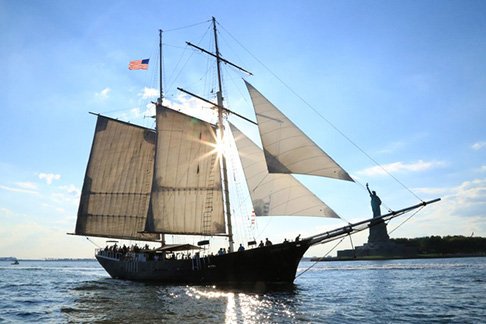
Here are just some of the many amazing sights you will see: The Statue of Liberty The famed gift from France that served as the symbol of America to millions of immigrants and citizens alike was erected in New York Harbor in 1886. The Brooklyn Bridge Completed in 1883, the iconic Brooklyn Bridge is one of the oldest suspension bridges in the United States, and the view from underneath is unlike anything you’ve ever seen. One World Trade Center The tallest building in the Western Hemisphere - 1,776 feet tall! The Empire State Building Built during the American Great Depression in 1930, this astounding building has 102 floors and 6,500 windows, and is considered one of the Seven Wonders of the Modern World by the American Society of Civil Engineers.
Raise your glass and bring in the New Year. Includes full open bar, hors d'oeuvres, a champagne toast, live DJ, dancing, party favors and unobstructed views of the fireworks show. Age restrictions: 18 years old to sail, 21 years old to drink. CRUISE HIGHLIGHTS Statue of Liberty USS Intrepid Pier Hoboken Pier Pier 54 (Titanic Pier) Jacob K. Javits Convention Center Batter Park Ellis Island Wall Street South Street Seaport Brooklyn Bridge Chrysler Building Empire State Building World Financial Center United Nations New Year's Eve Fireworks Display RULES AND REGULATIONS All School & Camp Groups MUST be accompanied by at least 1 adult chaperone (18 years of age or older) for every 10 students/children. Running is not permitted anywhere in the attraction. Food and beverage can be purchased on site. Outside food and beverages are strictly prohibited with the exception of special dietary needs. Security and First Aid may be obtained by contacting any staff personnel. Buses are not allowed to park and wait by the entrance once the group has been dropped off. (Please see bus parking information below.) Circle Line Sightseeing Cruises reserves the right to remove any individual or group that does not comply to these guidelines
Please note : Depending on the season, this excursion could be partly operated by daylight Moulin Rouge : Children are accepted from 6 years old The show starts at 23.00 pm and ends at 1.00 am Formal dress required. Gentlemen are required to wear tie and jacket. Dinne cruise information : Boarding from : 18.15 Departure : 18.45 Return : 20.00 Individual table guaranteed Menu "Decouverte"* Starters Assortment: Mozarella and basil cream, parmesan crisps, small fresh tomatoes Duck foie gras with salt crystals, mango-pineapple compote Verrine of quinoa, yuzu flavoured butterfly shrimp Crusty bread with black tapenade, fillet of red mullet, vegetable sprouts ** Main course at choice: Poultry leg, baby roast potatoes, mini new vegetables Steamed hake steak, artichoke cream and slow-cooked yellow carrots Rump steak, pan-fried mixed vegetables, potato rosette (+7€) ** Desserts Assortment: Banana-salted butter caramel tart Vanilla custard and candied apricot Dark chocolate macaroon, crisp mikado Variety of strawberries, whipped cream and mini marshmallows ** Drinks: One glass of wine (16 cl) at choice : Touraine AOC Sauvignon Luc Poulain (blanc) or Touraine AOC Domaine des Echardières (rosé) or Bordeaux AOC les Mercadières (rouge) OR A glass of soft (water or cola cola ou fruit juice). Vegetarian Menu: Tomato gaspacho with basil and pine kernels, tender shoots in balsamic vinegar ** Baby roast potatoes, pan-fried mixed vegetables, artichoke cream ** Seasonal tutti frutti, pear purée, dark chocolate biscuit Child Menu: Seasonal starter ** Menu choice of main course ** Chocolate mud cake ** Orange juice; Coca-Cola or water * Example of menu, subject to modification
Take your camera or smartphone and join our walking tours and motor coach tours to remember Madrid in a different way! Madrid shows the multiple contrasts inherited through the History. Elegant squares such as Plaza de Oriente, Plaza de España, Parque del Oeste, Príncipe Pío, el Puente del Rey, la Ermita de la Virgen del Puerto, ending at Segovia’s Bridge - Puente de Segovia, one of the best viewpoints of the Royal Palace and the Cathedral of Almudena. We will continue to Puerta de Toledo, Plaza de la Villa, Plaza Mayor, Puerta del Sol, Las Cortes, Plaza de Neptuno, Atocha, Paseo del Prado, Puerta de Alcalá, Alcalá street, the Retiro’s Park and Las Ventas Bullring, plenty of cheers and colors in the afternoons of bullfight. We will return to the city center through Plaza de Colón. And we will continue towards the new Madrid, with its modern buildings, gardens, the great avenue Paseo de la Castellana, until Plaza de Castilla (Europe’s Gate) and we’ll go down towards Santiago Bernabéu Stadium, Plaza de Cibeles, Gran Via and Plaza del Callao, to end at Plaza de Isabel II (in front of Royal Opera House). We will make convenient stops for walking and taking pictures at Plaza Mayor, Templo de Debod and Las Ventas Bullring, if the weather permits and always accompanied by our guide. Free drink by courtesy of our partnership Hard Rock Cafe. The building that today houses the national museum del Prado was designed by architect Juan de Villanueva in 1785. It was constructed to house the Natural History Cabinet, by orders of King Charles III. However, the building's final purpose - as the new Royal Museum of Paintings and Sculptures - was the decision of the monarch's grandson, King Ferdinand VII, encouraged by his wife Queen Maria Isabel de Braganza. The national museum del Prado, opened to the public for the first time in November 1819. The Museum's first catalogue, published in 1819, included 311 paintings, although at that time its collection comprised just over 1,510 pictures from the various Reales Sitios (Royal Residences). The exceptionally important royal collection, which represents the foundation of the Museum's collection as we know it today, started to increase significantly in the 16th century during the time of Charles V and continued to thrive under the succeeding Habsburg and Bourbon Monarchs. It is down to them than nowadays we can contemplate in the Museum as greatest masterpieces as The Garden of Earthly Delights by Bosch, The Nobleman with his hand on his Chest by El Greco, Las Meninas by Velázquez and The Family of Carlos IV by Goya. The visit will take place in chronological order, starting with the exhibit hall where the masterpieces of J. Bosch (El Bosco) (1450-1516): The Table of the 7 Deadly Sins, The Hay Wain, The temptations of San Antonio, The Stone of Madness and The Garden of Delights, to continue with the rooms devoted to the Greco (1540-1614): The gentleman's hand on his chest, The Trinity, Christ embraced the cross and The Annunciation. Velázquez (1599-1660): The Worship, Drunkards, Equestrian Portraits, the Forge of Vulcan, The Christ, The spinners, Spears and Las Meninas, ending with Goya (1746-1828): The family of Carlos IV Pictures, The Shootings of May 2, Pestles and Black Paintings.
FUN AND EXCLUSIVE EXPERIENCES TO DISCOVER FRENCH WINE The French Wine Experience was created by people who think wine culture needs to be fun and relaxed. They transformed an 18th century Royal wine cellar into a maze of rooms that will surprise, enchant and stimulate you. The French Wine Experience is truly unique and possibly a little crazy. NEW IN PARIS – 1 mn walk from the Louvre Museum DISCOVER EVERYTHING ABOUT FRENCH WINE SENSORIAL EXPERIENCE IN AN HISTORICAL VENUE GUIDED VISIT including GAMES, QUIZZES, VIDEOS etc... FRENCH WINE TASTING WITH A SOMMELIER at the end of the visit TERROIRS ROOM The idea here is to start at the beginning. Visitors will discover the most sought after slices of earth in all of France, and learn how this soil nourishes the vine, which in turn, gives the grapes their unique taste... This room is about discovering the very genesis of wine, where the grape-grower works the soil and the vine in effort to produce magnificent grapes. AROMAS ROOM Wine is a sensory adventure and here, they would like to propose that you stimulate a sense often overlooked: the sense of smell. Take the wood cork and bring it to your nose. The game begins: can you name the aromas in each cork? Do you have the stuto be a great taster? Do you enjoy discovering the great families of wine aromas (fruity, mineral, empyreumatic...) as well as identifying the classic defects in wine ?? Off to the corks ! THE LABORATORY In this new, majestic room, the adventure continues and this time, it is taste we are going to stimulate. Can you name the primary types of taste (salty, sweet, bitter, acidic... and also umami) ? In order to progress in wine, take the opportunity to taste the solutions marked withterms such as 'woody', 'round' or 'fresh'. SOUNDS OF WINE Sounds in the world of wine The pop of a cork as the bottle opens, the cling of glasses being toasted, the soft murmur of Champagne bubbles...Can you recognize the different elements in the soundtrack of this room? The sounds of wine invite us to learn about different types of bottles and corks. LABELS ROOM This magnificent room is dedicated to sight. Sight is the initial contact with a wine: the color of a wine itself colors a new story for us each time. But it's also the label, sometimes legendary, sometimes complicated, and sometimes amusing. Learn here how to better interpret wine labels! CHEERS! Well, that's it! Your five senses have been stimulated - who knew learning could be so fun! You are now ready for the grand finale: the tasting! Our jolly and joyful sommelier is at your service not only to serve you, but also to answer any questions! While tasting, continue to learn and to have fun and above all, do not forget to take a detour into the photobooth inside the big barrel...
This is a wonderful alternative to an airboat ride … quiet, peaceful and surreal. Enjoy a leisurely paddle with a naturalist guide in a very unique part of the Everglades. Throughout the Mangrove forest are brackish "lakes" whose waters are a mix of "sweet" fresh water and salt water. They are nursery grounds for herons, egrets, stilts, ducks, wood storks, spoonbills, alligators, otters and a gamut of fishes. Interconnecting these lakes are narrow, flowing tidal creeks. The mangrove forest grows to the very edge and over the tops of these creeks forming a canopy or a tunnel. The dense canopy regulates moisture and humidity allowing orchids and bromeliads to thrive. The sunlight (or moonlight) shimmering through the canopy, the stillness of the forest vegetation and the sounds of the forest itself, make for a surreal experience in the tunnels. We use single and two person kayaks and you do not need previous kayaking experience.