Free
Support

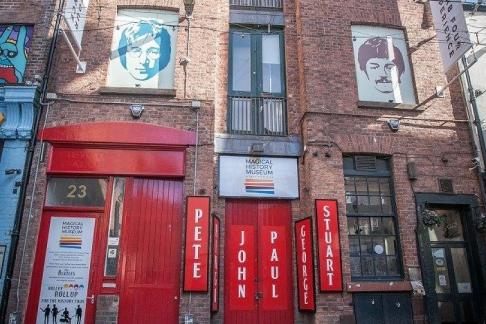
Magical Beatles Museum + Liverpool FC Stadium Tour & Museum - special offer! Tickets Included: Entry to the Magical Beatles Museum in Liverpool Liverpool FC Anfield Stadium Tour & Museum Visit these two top Liverpool attractions for less with 365 Tickets. The attractions can be visited on the same day or different days. simply select your prefered date(s) above. Magical Beatles Museum Highlights: Beatles stories, memories and music from 1959 through to 1970 a 300-strong collection of never before seen items once personally belonging to the Beatles and their team The instruments they played, the clothes they wore and the music they created the earliest ever colour footage of the Beatles playing live Letters, telegrams, posters & flyers Liverpool Football Club Stadium Tour & Museum Highlights: Tour of Anfield Stadium with a multimedia handsets* Souvenir LFC earphones The LFC Story Museum Steven Gerrard Collection exhibition, including football jerseys, winners medals and more *Multimedia Handsets available in: English, Spanish, German, French, Italian, Mandarin, Thai, Indonesian, Arabic and British Sign Language. During the LFC Stadium Tour, you can: Enjoy a specially recorded video introduction to the stadium from the Manager Take in unbeatable views of the pitch and city from the Main Stand's top level Visit the new state-of-the-art Home and Away Team dressing rooms Practice your interview technique in the new Press Room Touch the famous 'This Is Anfield' sign Enjoy a spine-tingled walk down the new Players' Tunnel Use your interactive multimedia handset for additional information and clips on players and managers past and present Please Note: Stadium Tours are daily, excluding home match days, starting from 10.00 No access to the Dressing Rooms the day before a home match day. Your ticket can either be printed or shown on your mobile phone. From Sunday to Friday during term time, guided tours are available in English only. Saturdays and during school holidays, tours are all self-guided using audio guides available in 9 languages. Occasionally Sundays will be self-guided using the audio guides. While you are in Liverpool, why not also take a ride on one of the city's iconic Mersey Ferries?
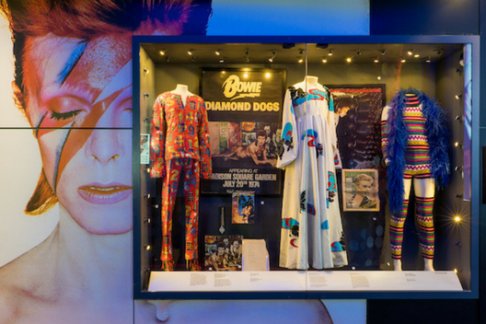
Edge Zones Edge Zone 1 - 1945 - 1962 The Anglo-American special relationship of the Second World War triggered an evolution of musical trends in Britain. Big band music became popular through visiting GIs and the revived sounds of Dixieland and New Orleans trad jazz were introduced into the London scene. The do-it-yourself creed of 1950s skiffle encouraged young musicians to pick up cheap guitars and start their own groups. British pop was transformed by the rock'n'roll craze in the mid 1950s. Edge Zone 2 - 1962 - 1966 In the 1960s, British music went global with the irresistible tide of the 'British Invasion'. The original look and sound of beat groups like The Beatles, R&B bands like The Rolling Stones and female singers like Petula Clark took America by storm and Britain became known as a pop powehouse. Edge Zone 3 - 1966 - 1970 British pop became increasingly involved in cultural exchanges with underground political activity, fashion, art and drugs. Inspired by the 1967 'Summer of Love' in San Francisco, Britain began to stage their own 'love-ins' and 'happenings', with themes of peace and love becoming the inspiration for music in this period. The 12" album toook centre stage and pop evolved into rock as music broke out of the small clubs onto the arena circuit and emerging festival scene. Edge Zone 4 - 1970 - 1975 In contrast to the tough social and economic crisis of 1970s Britain, the charts began to fill with performers singing of escapism, glamour and excitement. A darker vision of 1970s Britain soon appeared through albums like the post-apocalyptic Diamond Dogs by David Bowie and progressive rock flourished. The music industry expanded and audiences sought entertainment, making sell-out arena tours the pinnacle for any successful artist. Edge Zone 5 - 1975 - 1985 This was a period of economic recession in Britain. Pop music reflected this with tougher, more outspoken styles. Punk dramatised Britain's social divisions, while the grassroots Rock Against Racism movement popularised reggae and brought a return to political involvement. Edge Zone 6 - 1985 - 1993 The mid-to-late 1980s was a time of accelerated social, economic, technical and political change. Videos, CDs and satellite broadcasting meant that music was more accessible to the masses. The late 1980s were also a time of regional and musical diversity. Heavy metal was reborn, imported house music reached ecstatic heights with the 'Second Summer of Love' and the 'Madchester' scene was blossoming in the North. Edge Zone 7 - 1993 - 2004 In the mid-1990s, 'Cool Britannia' swept through all areas of British identity. Britpop revived the traditional pop values of the 60s and 70s. The period also saw the rise of manufactured boy bands and The Spice Girls unleashed 'Girl Power' on the world. The rise of Youtube and streaming gave audiences new ways to access music. It presented artists with unchartered waters in the form of new channels emerging to promote their music. Edge Zone 8 - 2004 - Present 2004 saw the launch of X Factor. The manufacturing of pop stars by UK audiences is balanced by the diversity of artists rising to the top of the charts. Rap and R&B stars, indie bands and singer-songwriters take the download chart by storm. The Future It is impossible to predict the future of British music. Who will be the next superstar? how will we listen to music in 2025? Whatever the future, one thing we can be sure of is that the intimate relationship between music and the fan will always continue to transcend any technological, cultural or social barriers. No photography is allowed in the the exhibition.
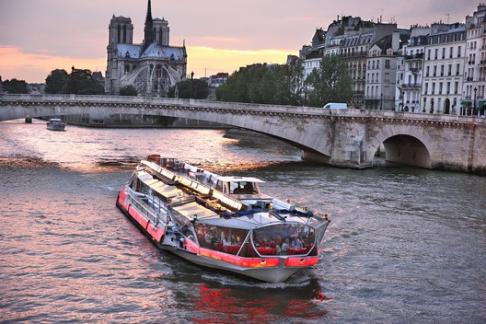
All the tables are situated next to the picture windows to allow everyone to enjoy Paris with all modern conveniences. All their boats have an open deck, which affords a magical, all-round view of the City of Light. Cruise commented in up to 10 languages* Free itinerary translated in 25 languages Boats with an open upper deck 1h10 mns cruise * Languages: French, English, Spanish, Italian, german, russian, chinese, japonese, corean. Bus Tour Pass for 1 4 lines, 50 stops and more than 100 sights Hop-on, hop-off as you wish Audio guide available in 10 languages* Stories and tales of Paris for children (in french, english and espagnol) Free Wifi Click here to view The Map and The Timetable
How to Use the Brussels Card? Your Brussels Card is valid for 24, 48 or 72 hours from when it's first used in a museum You must use your Brussels Card for the first time within a year of its purchase date. How to Use the Brussels Card at the Museum? For as long as your card is valid, you can visit the same museum as many times as you like. You won’t have to pay anything. Simply present your Brussels Card at the ticket desk and it will be electronically validated. Your Brussels Card will be automatically activated the first time you use it. The Brussels Card gives you free access to all permanent collections of the museums. Most of the temporary exhibitions are also included, except for the Old Masters Museum, the Natural Sciences Museum and the Cinquantenaire Museum where you pay the normal entrance fee if you want to visit the temporary exhibitions. How do Discounts work? The discounts for the various attractions, tours, shops, restaurants and bars provided in this guide are for single use only! The discounts remain valid, even after your Brussels Card has expired. To obtain your discount, simply present your Brussels Card and hand over the corresponding voucher you find at the back of the guide. Free Entry to 40 Museums * Participating Museums are updated every February Art et Marges Musée - Museum Autoworld Belgian Brewers museum Belgian Chocolate Village BELvue museum Villa Empain - Boghossian Foundation Botanique Centre for Fine Arts - BOZAR Choco Story Art & History Museum Museum of the City of Brussels Charlier Museum Museum of Fashion & Lace (Museums of the City of Brussels) Erasmus House Musée Fin-de-Siècle Museum Freemasonry museum Halle Gate – RMAH MIM - Musical Instruments Museum (MRAH) La Fonderie - Brussels museum of work and industry The René Magritte House Museum Magritte Museum (Royal museums of Fine Arts) Musée de la Médecine (ULB) Royal Museum of Army and Military History MIMA the Millennium Iconoclast Museum of Art Museum MOOF - Museum Of Original Figurines CENTRALE for contemporary art Planetarium of Brussels Natural Sciences Museum Autrique House Sewers museum Musée Oldmasters Museum experience.brussels Wiels - Contemporary Art Centre The Belgian Comic Strip Center Coudenberg Palace Jardin botanique Meise Jews in Belgium museum Train World Kanal - Centre Pompidou
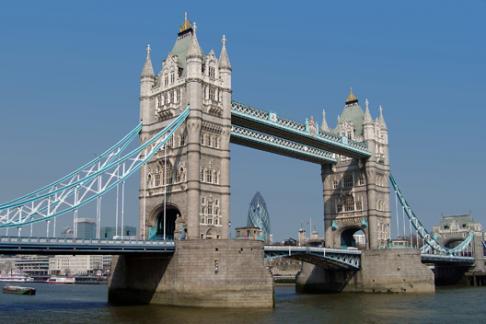
Vor über 120 Jahren bauten die Londoner eine Brücke, die zu einer der berühmtesten Attraktionen Londons wurde. Die Fußgängerstege wurden gebaut, damit Menschen die Themse überqueren können, während die Brücke hochgezogen ist um große Schiffe die Tower Bridge passieren zu lassen. Heute dienen diese Fußgängerstege als Aussichtsgalerie, die den Besuchern die spektakulärsten Blicke auf eine sich stets wandelnde Londoner Skyline ermöglicht. Fußgängerstege & Ausstellung: Besucher betreten die Tower Bridge Ausstellung über den North Tower. Sie werden dann mit dem Aufzug auf die Spitze des Turmes gebracht – 47 Meter über der Themse – Dort können Sie das Stahlgerüst der Brücke von innen bestaunen. Ein kurzer Film erklärt die Geschichte der Brücke und es besteht die Möglichkeit, von den beiden überdachten Fußwegen den Blick über die Dächer Londons wandern zu lassen. Auf dem östlichen Übergang gibt es eine fantastische Sicht auf die Docklands. Vom westlichen Übergang können Sie das neue GLA Gebäude sehen, den Tower of London, St. Paul’s, Big Ben und das London Eye. Interaktive Multimediaangebote (mehrsprachig) und Tafeln geben den Besuchern Informationen zu den jeweiligen Aussichten und zum Bau der Brücke. Im Südturm gibt es einen weiteren Film zu sehen. Besuchen Sie vor dem Abstieg den historischen Maschinenraum. Der Zutritt ist ebenfalls im Ticketpreis inbegriffen. Viktorianische Maschinenräume: Hier erhalten Sie faszinierende Einblicke in das Konstruktionswesen des späten 19. Jahrhunderts. Die großen und guterhaltenen, kohlenbetriebenen Maschinen wurden mit Fertigstellung der Tower Bridge im Jahr 1894 installiert, um bis 1976 Tausende der Brückenhebungen zu ermöglichen. Obwohl die Hebevorrichtungen elektrisch angetrieben werden, sind die originalen Dampfmaschinen immer noch vorhanden. Die Maschinenräume geben Besuchern die Möglichkeit mit Modellen zu experimentieren, welche die Technologie der Brücke veranschaulichen. Es werden sehenswerte Fotografien der Tower Bridge aus den vergangenen Jahrhunderten gezeigt. Ein Highlight ist ein Foto der schweren Stahlstruktur der Brücke, bevor die Steinverkleidung montiert wurde. Klicken Sie hier um die Tower Bridge App herunterzuladen!
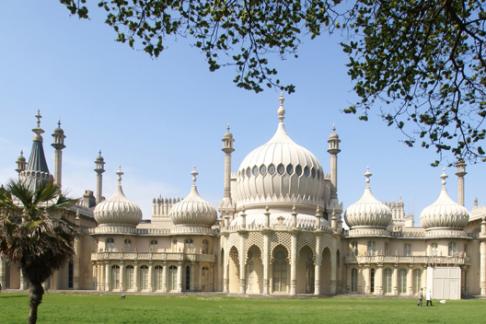
The Royal Pavilion started as a modest 18th century lodging house. Architect Henry Holland helped George, Prince of Wales, transform his humble seaside retreat into a handsome neo-classical villa – known as the Marine Pavilion. In 1815 George, by now Prince Regent, hired the eminent architect John Nash, to redesign the building in the Indian style. The work was completed in 1823 by which time George had become King. It is this building, an instantly recognisable symbol of Brighton, which we see today. Why visit the Royal Pavilion? We're a former Royal Palace right in the city centre, surrounded by the beautiful Royal Pavilion Gardens. We have audio guides in many languages, a fabulous Tearoom and well stocked gift shop. There's loads to do nearby and we're only a 5 min walk from the beach, so why not make a day of it?