Free
Support



RUTA ROJA Recorrido oficial de la Explanada Nacional, autorizado por el Servicio del Parque Nacional, la Explanada Nacional y Memorial Parks. Visite todos lo equivalente a la capital de la nación: la Casa Blanca, US Capitol, Museo Air and Space, el Monumento de Washington, el memorial de Jeffersin, el memorial FDR y el memorial de Lincon. Comentarios explicativos en directo + selección de comentarios grabados en 8 idiomas diferentes. RUTA AZUL Este tour pasa por los lugares y monumentos en honor a los héroes americanos. Viaje por el río Potomac saliendo de Washington, dejando DC atrás y llegando a Virginia. Los elementos a destacar del tour son los siguientes: Arlington National Cemetery, the Pentagon, the Pentagon City Fashion Center y US Marine Corps War Memorial (Iwo Jima Statue.) También hay que destacar el memorial de guerra de los veteranos de Vietnam, el memorial de la Segunda Guerra y el memorial Air Force. Tour disponible con comentarios explicativos. RUTA AMARILLA Viaje por el centro histórico pasando por la Casa Blanca y Dupont Cicle antes de descubrir Adams Morgan, el Zoo Nacional y el encantador barrio de Georgetown. Comentarios informativos grabados en 8 idiomas diferentes: francés, alemán, italiano, español, chino, japonés, portugués e inglés.

Red Route: 1 13 Upper O'Connell Street 2 Nassau Street 3 Leinster Street 4 National Art Gallery 5 Merrion Square 6 Stephen's Green 7 College Green 8 Dame Street / Temple Bar 9 Dame Street / Dublin Castle 10 Christ Church Cathedral 11 St. Patrick's Cathedral 12 High Street 13 Guinness Storehouse 14 Pearse Lyons 15 Royal Hospital Kilmainham / IMMA 16 Kilmainham Gaol 17 Memorial Gardens 18 Heuston Station 19 Parkgate Street West 20 Phoenix Park 21 Parkgate Street East 22 National Museum of Decorative Arts & History 23 Arran Quay 24 Smithfield Square 25 Bachelor's Walk 26 Parnell Square North Blue Route: 1 13 Upper O'Connell Street 4 National Art Gallery 5 Merrion Square 6 Stephen's Green 7 College Green 8 Dame Street / Temple Bar 9 Dame Street / Dublin Castle 10 Christ Church Cathedral 11 St. Patrick's Cathedral 13 Guinness Storehouse 14 Pearse Lyons 15 Royal Hospital Kilmainham / IMMA 16 Kilmainham Gaol 17 Memorial Gardens 18 Heuston Station 22 National Museum of Decorative Arts & History 23 Arran Quay 27 Abbey Street 28 Abbey Street / Abbey Theatre 29 CHQ Dublin 30 Samuel Beckett Bridge 31 Cardiff Lane 32 Teelings Whiskey Distillery 33 St Michan's Church 34 Brian Boru Pub 35 Glasnevin Cemetery 36 Croke Park 37 Mountjoy Square

What is Included 1 x light breakfast (Day 2) Accommodation at The Island Accommodation in Phillip Island. All park entrance fees including 3 PARKS PASS Friendly & informative tour guide Two day wildlife adventure of the Gippsland region will bring you back to nature’s wonders. On the first day you will meet some of Australia’s most famous native animals at Moonlit Sanctuary Wildlife Park such where you learn about the conservation of these loveable native animals. Discover native animals in their natural habitat including Kangaroos, wallabies, koalas, brilliantly coloured birds and rare and endangered species. From there travel to the Nobbies and take a stroll along the clifftop boardwalk offering breathtaking views of Phillip island's wild south coast. The witness Victoria's largest colony of little penguins in the nightly Penguin Parade. As dusk falls, hundreds of little penguins splash out of the water on to the beach, making their way to their burrows. They feed at sea, and return to their burrow to mate, care for their young and moult. Drop off at The Island Accommodation (Budget Style Accommodation) for your overnight stay. On the second day you are transferred to the meeting point where you will travel towards the most southerly region of mainland Australia, Wilsons Promontory or “the Prom”. This National Park is one of Victoria’s most loved and cherished natural attractions and is home to many marsupials,such as kangaroos and wombats, native birds and other native animals. With a little luck you are able to see up close. The best way to explore the Prom is on foot so you will no doubt enjoy our hike along some spectacular tracks. YOU SHOULD BRING (ADVISABLE) Good shoes / boots for walking Appropriate clothing for warm and cold conditions Towel & toiletries Sunscreen, hat, water bottle Bathers for swimming (time permitted)
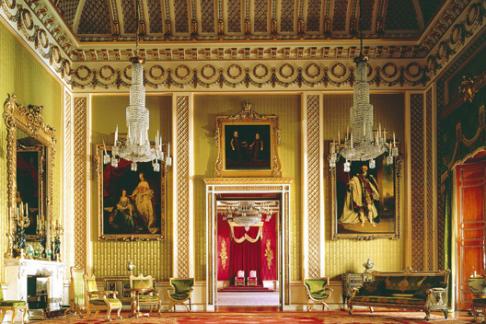
Buckingham Palace State Rooms Buckingham Palace serves as both the office and London residence of Her Majesty The Queen, as well as the administrative headquarters of the Royal Household. It is one of the few working royal palaces remaining in the world today. Today the Buckingham Palace State Rooms are used extensively by Her Majesty The Queen and Members of the Royal Family to receive and entertain their guests on State, ceremonial and official occasions. During August and September when The Queen makes her annual visit to Scotland, the Palace's nineteen state rooms are open to visitors. What there is to see? The Buckingham Palace State Rooms form the heart of the working palace and are lavishly furnished with some of the greatest treasures from the Royal Collection - paintings by Rembrandt, Rubens, Poussin and Canaletto; sculpture by Canova; exquisite examples of Sèvres porcelain; and some of the finest English and French furniture. Prince & Patron: To mark the 70th birthday of His Royal Highness The Prince of Wales this year, visitors to the Summer Opening of the State Rooms at Buckingham Palace will enjoy a special display featuring a number of works of art personally selected by His Royal Highness The Garden Described as a 'walled oasis in the middle of London', the Palace's garden is home to thirty different species of bird and more than 350 different wild flowers, some extremely rare. Visitors end their tour with a walk along the south side of the garden, with splendid views of the west front of the Palace and the famous lake. Multimedia Guide An Multimedia guide is included in the ticket price and is available in English, French, German, Spanish, Italian, and Japanese, Russian and Mandarin. There is also a family Multimedia guide (in English only) and accompanying activity trail, suitable for children 7-11 years. Changing of the Guard The Changing of the Guard ceremony takes place at 11:30 daily from April until the end of July and on alternate days for the rest of the year, weather permitting. The new guards arrive at the forecourt of the Palace at 11:30 from Wellington Barracks. The journey takes about 5 minutes and the soldiers are accompanied by a band. The ceremony is conducted on the Palace forecourt and takes approximately forty minutes to complete. [The Army have not yet released the schedule for July, August or September.] Wheelchair Access If you require wheelchair access or the use of the lift, you should not book with 365 Tickets.com and should pre-book tickets directly with Buckingham Palace. Access booking line: 0303 123 7324 www.royalcollection.org.uk or email [email protected] The Royal Mews What there is to see? One of the finest working stables in existence, the Royal Mews at Buckingham Palace provides a unique insight into the department of the Royal Household that provides transport by road for The Queen and other members of the Royal Family. The Carriage Horses During your visit to the Mews, you will see some of The Queen’s horses that draw the coaches and carriages in the Mews. The Cleveland Bays are used to escort newly appointed High Commissioners and Ambassadors to their audience with The Queen, when they present their formal credentials from their country’s Head of State. You may also see the famous Windsor Greys, so called because they were kept at Windsor during the reign of Queen Victoria and drew the private carriages of the royal family. They are at least 16.1 hands (1.65 metres) high and are chosen for their steady temperament and stamina. Coaches & Livery The Royal Mews houses the royal collection of historic carriages and coaches, which you may see in use during your visit. Among the vehicles on display are the Irish State Coach, in which The Queen travels to the State Opening of Parliament, and the Australian State Coach, which combines traditional craftsmanship with 20th-century technology to provide heating and remote-controlled windows. The most dazzling vehicle of all is the Gold State Coach, which was built for George III in 1762. Weighing almost four tonnes and requiring eight horses to pull it, it has carried every monarch to their coronation since 1821. Visitors to the Royal Mews can also see some of the fine livery worn by The Queen’s coachmen. Apart from a few small details, it remains much the same as it was in Victorian times. Remarkably, some of the tailors used for production of liveries today are the same companies employed during the reign of George III in the 18th century. Multimedia guide is included in the admission price and is available in the following languages:English, French, German, Spanish, Italian, Japanese, Chinese, Russian
Depart Edinburgh 09.15 and travel northwest through the historic area of Linlithgowshire, close to the historic palace. The tragic Mary Queen of Scots was born at Linlithgow palace, and became Queen when she was only 6 days old. According to legend her father James V died of a broken heart when he discovered his wife had given birth to a daughter and not the son he was hoping for! Your route along the Forth Valley is one which has been used for thousands of years by invading armies, it was the northernmost frontier of the Roman empire and was later used by the English King Edward I as he marched proudly towards Stirling (only to be sent homewards to think again!). Nowadays it’s at the centre of one of Scotland’s most important industries with huge oil refineries dominating the area. As you approach Stirling the magnificent castle dominates your view and you make your way up towards the high volcanic rock where it imposes itself upon the surrounding land. Known as the ‘Key to Scotland’, for centuries this was the most important castle in Scotland and the views from the top make it easy to see why. To the north is the 220ft high tower of the National Wallace Monument commemorating Scotland’s great hero William Wallace, played by Mel Gibson in the Oscar-winning movie Braveheart. From the castle you can look down over the scene of Wallace’s greatest triumph, the battle of Stirling Bridge, where he defeated the English army in 1297. To the south is Bannockburn where, in 1314, the great Scottish warrior-king Robert the Bruce defeated the English army of Edward II. The battle was fought for possession of Stirling Castle but eventually led to a far greater prize for Scotland – the restoration of independence. It’s an area alive with history and you stop at the castle to give you time to soak up the history and heritage of this great site. From Stirling you head into the Highlands and an area known as the Trossachs. Known as ‘The Highlands in Miniature’, it marks the point where the Lowlands meet the Highlands and entering this beautifully picturesque area feels like going into a different country. With its shimmering lochs, rugged mountain tops and forest-filled glens it’s easy to forget that this was once thought of as a dangerous frontier fought over by the fiercely territorial Highland clans. You stop here for lunch in the village of Aberfoyle, made popular in Victorian times due to its great location. After lunch you ‘take the high road’ or back-road to Loch Lomond, Scotland’s largest lochs at over 22 miles long, passing Lochs Ard, Chon and Arklet along the way as you travel through the protected lands of Scotland’s first National Park. The route you take was described by the famous Scots comedian Billy Connolly as his favourite road in Scotland, and you can discover why – it’s stunning!! You stop at Inversnaid on the secluded north-east of the loch, making it the perfect place to enjoy a walk along the ‘bonny banks’, up to a viewpoint for a fantastic view of the loch and the mountain it’s named after, Ben Lomond. This tranquil setting was once the home of Scotland’s famous highland folk hero, Rob Roy MacGregor. Made popular by many books and films Rob Roy lived an incredible life as a soldier, businessman, cattle-rustler and outlaw. By spending time on the trails by the loch you will undoubtedly be walking in the footsteps of one of Scotland’s great legends. There is also an alternative option to take a boat cruise around the north of the loch (Summer only) or merely enjoy a drink at the local hotel and sample the views. Leaving Loch Lomond you return to Edinburgh passing Scotland’s only lake – the Lake of Mentieth (although we have around 3000 freshwater lochs!). The legend states that after William Wallace was betrayed by his great friend the Earl of Mentieth and executed in London the name was changed from the Loch of Mentieth to the Lake of Mentieth so that nobody would ever forget the traitorous part the Earl played in his death.

Batobus takes you to the heart of Paris, to reach the various quarters of the capital. With 8 stops on the route, Batobus shows you a different view of Paris and is an original way of getting about in Paris. Hop-on hop-off points • Tour Eiffel: Port de la Bourdonnais.At the foot of the 1,710 steps of a great Parisian landmark. • Musée d'Orsay: Quai de Solférino. Next to the museum, a stop leading to the world of the Impressionists. • St-Germain-des-Prés: Quai Malaquais. Near the Institut de France, the Paris of artists and intellectuals. • Notre-Dame: Quai de Montebello. The architectural harmony of the cathedral and the carefree student atmosphere of the Latin Quarter. • Jardin des Plantes / Cité de la Mode: station was moved to the foot of the Cité de la Mode, just 10 minutes walk from its original location. • Hotel de Ville: Close to Pont d'Arcole. The City Hall stop leads to the richness and contrasts of the Marais district and the Pompidou Centre. • Louvre: Between Pont Royal and Pont du Carrousel. Reveals a quarter where history and history of art are one. • Champs-Elysées: Close to Pont Alexandre III. Mythical Paris-the Grand Palais, the Petit Palais and Avenue Montaigne.