Free
Support
Set off for a full day excursion to Normandy from Paris with an official guide. Set off from your Paris accommodation at 06:30 for our central Paris agency. Relax during the journey by luxury air-conditioned coach before arriving at the Caen Memorial Museum at around 10:15. The Caen Memorial Museum retraces the various stages of the conflict that took place during the Second World War. Your guided tour will give you the chance to see everyday objects from life during occupation, maps, and models of military vehicles, as well as film screenings that recreate the emotions of D-Day and the Battle for Normandy. The visit continues with an included lunch at the restaurant in the Caen Memorial Museum. Menu* Starter Buffet: Légumes crus de saison et leur vinaigrette(tomates, concombres, carottes) Salades composées Charcuterie *** Table served hot dish Fondant de poulet farci aux cèpes Galette de pommes de terre / Julienne de légumes *** Chesse and Dessert Buffet: Fromages normands (Pont l’Evêque et Camembert) Tarte normande Salade de fruits Tarte au chocolat Teurgoule ** Pain de campagne (farmhouse bread) *** Drinks: Bordeaux wine (1 bottle for 4) Eau de source Coffee * Example of menu, subject to modification without any notice In the afternoon, your tour will continue to several of the iconic landmarks that played a part in the landings. Your first stop will be at the Pointe du Hoc, overlooking the hundred-foot-high cliffs. Stormed by the American Rangers on D-Day, it was one of the key German fortified sites along the Normandy coast and was equipped, at that time, with a number of heavy artillery posts. You will then visit the famous American Cemetery at Saint Laurent, located just above Omaha Beach. This 170-acre site is home to 9,387 perfectly aligned white marble headstones, a memorial, chapel, and the Garden of the Missing. It pays tribute to all the American soldiers who died during the Second World War. A small trail leads down the hill to Omaha Beach, giving you the opportunity to walk across the sand. You will have one hour to spend here. Following this visit, you will stop at Arromanches, a historic town known for its artificial port, which was built as part of the Normandy landings. The harbour saw the unloading of almost 10,000 tons of equipment. You can still make out the floating reinforced concrete "Phoenix" constructions in the water. Finally, you will make a short photo-stop near Juno Beach and its cemetery, one of the key D-Day landing beaches for Canadian troops. Return to your Paris accommodation is scheduled for around 21:30.
National World War II Museum:
This museum is ranked by Trip Adviser as the #1 Attraction in New Orleans, placed #2 in America and the World. The National WWII Museum features a multitude of artifacts that portray America's WWII past. Explore the American experience in the war that changed the world. From D-Day galleries to the soaring US Freedom Pavilion: The Boeing Center to the groundbreaking Campaigns of Courage, this world-renowned history museum was created to inspire visitors of all ages educating them on the heroism, tragedy and liberation of WWII.
Come experience these unique and amazing Exhibits:
The Arsenal Of Democracy - Telling the story of how the war was won is at the heart of The National WWII Museum’s mission, and The Arsenal of Democracy: The Herman and George R. Brown Salute to the Home Front—the Museum's newest permanent exhibit, located on the second level of the Louisiana Memorial Pavilion, the Museum’s original building—literally brings that story home.
Road To Tokyo - Richard C. Adkerson & Freeport-McMoRan Foundation Road to Tokyo: Pacific Theater Galleries retraces the grueling trail that led from Pearl Harbor to Tokyo Bay by way of New Guinea and Southeast Asia, the Himalayas, Burma, the islands of the Pacific, China, India, and Alaska.
Road To Berlin -The Duchossois Family Road to Berlin: European Theater Galleries brings to life the drama, sacrifices, personal stories, and strategies of America’s campaign to defeat the Axis powers and preserve freedom.
Beyond All Boundaries - Beyond All Boundaries, showing exclusively in The National WWII Museum’s Solomon Victory Theater, is a 4D journey through the war that changed the world.-Not included with ticket
The D-Day Invasion Of Normandy - The Museum's original exhibit, located on the third floor of Louisiana Memorial Pavilion, helps you understand what the Allies faced in Normandy, from the comprehensive preparations beforehand to the daunting challenges once troops landed on Normandy beaches.
US Merchant Marine Gallery - Situated at the end of the Horatio Alger Association American Spirit Bridge, this gallery honors the civilian merchant mariners who risked their lives transporting weapons, men, and material to US troops overseas.
Final Mission: USS Tang Submarine Experience - places visitors aboard the most successful submarine in World War II for its fifth and final war patrol on October 25, 1944.-Not included with ticket
Manufacturing Victory - Follow the industrial journey that took the United States from a nation perilously unprepared for war to a global superpower that led the Allies to victory in World War II.
Special Exhibit Gallery - The Joe W. and Dorothy D. Brown Foundation Special Exhibit Gallery features rotating exhibits that draw on the Museum’s own collections, as well as relevant traveling exhibits from leading institutions around the world.
City Sightseeing New Orleans:
Hop-On Hop-Off Unlimited Tickets Valid for 24 Hours of Sightseeing
Tour at Your Own Pace - Enjoy unlimited hop-on hop-off privileges! Spend as much time as you desire at each stop.
Live Guide Narration - Local Tour Guides on each bus offer colorful entertaining historic commentary..
Every 30 Minutes! Buses Visit each Stop! - Stay as long as YOU like at each location. You can always catch the next bus!
7 Days a Week - 09:30 - 17:30 - Continuous Loop tour so YOU can decide what time your tour begins and ends. Tour Loop is 2 hours.
Restaurant and Attraction Deals along the Way - Hop-Off and present your ticket to receive deals and discounts at various attractions, restaurants, and gift shops all along the route!
Cemetery Walking Tour - Self guided tour of Lafayette Cemetery #1 included for all.
Discover the city as you pedal along on one of our comfortable bikes with our friendly guide who will tell you about the historic details, the fascinating experiences of everyday life in the city and its iconic landmarks and sights on this easy-going route. Go on a relaxing cycle tour of Barcelona and visit unique cultural sights such as the Museu d’Art Contemporani, in the Raval neighbourhood, which has its own Rambla with its own unique inhabitant, Botero’s ‘Cat’. The guide will tell you some curious anecdotes about the neighbourhood and will then take you to the plaça Reial, the plaça Sant Jaume, the charming plaça de San Felipe Neri, the majestic Cathedral, the Roman walls and the plaça del Rei, among many other landmark sights. Next, you’ll head down to the seafront and beaches where you’ll be able to stop, time permitting. You’ll visit the old harbour, the Port Vell, the Barceloneta district, the Olympic Marina and, on the way back, you’ll cycle through the Parc de la Ciutadella and stop at the Sagrada Família. And during the hot summer nights you’ll also be able to go on one of our night-time tours! Exploring the city by bike is a wonderful way to experience Barcelona day or night.
Historic setting: The Household Cavalry Museum sits within Horse Guards in Whitehall, central London, one of the city’s most historic buildings. Dating from 1750, it is still the headquarters of the Household Division, in which the Household Cavalry has performed the Queen’s Life Guard in a daily ceremony that has remained broadly unchanged for over 350 years. The Household Cavalry: The Household Cavalry was formed in 1661 under the direct order of King Charles II and now consists of the two senior regiments of the British Army – The Life Guards and the Blues and Royals. We have two roles: as a mounted regiment (on horseback), we guard Her Majesty The Queen on ceremonial occasions in London and across the UK and are a key part of the Royal pageantry; as an operational regiment we serve around the world in armoured fighting vehicles. We currently have units deployed on active service in Iraq and Afghanistan. Our fighting capacity is matched by our strategic role in international peace keeping and humanitarian operations. Collections: Over the centuries we have amassed an outstanding collection of rare and unique treasures from ceremonial uniforms, royal standards and gallantry awards to musical instruments, horse furniture and silverware by Fabergé. Each exhibit has its own compelling story to tell and many are on display for the very first time. You can see two silver kettledrums given to the regiment in 1831 by William IV; the pistol ball that wounded Sir Robert Hill at Waterloo and the cork leg which belonged to the first Marquess of Anglesy, who, as the Earl of Uxbridge, lost his real one at Waterloo. Modern additions to the collection include Jacky Charlton’s football cap – he did his national service with the regiment and Sefton’s bridle – the horse that was injured in the 1982 Hyde Park bombings. Much of the collection has resulted from the close association that has existed between the Household Cavalry and Royalty. We have, after all, protected successive kings and queens from rebels, rioters and assassins for nearly 350 years. Working Stable Block: Visitors can gain a unique behind-the-scenes look at our working stable block. All the horses here are on duty and at different times of the day you will see something going on - you might see the horses being brought in, groomed, fed and watered, their hooves oiled and shoes checked, their saddles adjusted ready to go on guard or just see the stables themselves being cleaned. Both our horses and riders go through a rigorous and demanding training. In the Museum's many interactive and multimedia presentations, you will hear first hand accounts of what this training is like and the techniques our soldiers use to master their horses and complete the gruelling preparations for regimental inspections.
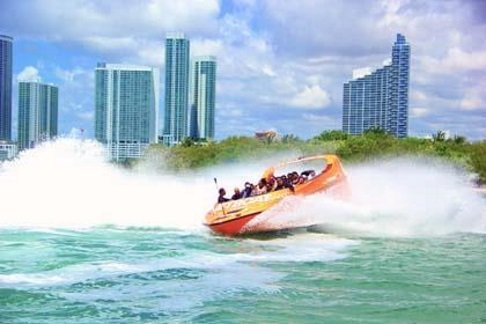
Choose 3, 4, 5 or 7 attractions from the following list: Sydney Attractions: Taronga Zoo Hop-On Hop-Off Big Bus Sydney and Bondi: 1-Day Classic Tour Sydney Jet - Thrill Ride The Sydney Opera House Tour WILD LIFE Sydney Zoo BlueBananas Electric Bike Tours: The Mini Banana - Bike the Bridge Tour Magistic Cruisemart 2-Hour Harbour Sightseeing Cruise Australian National Maritime Museum – Big Ticket Meal at Harbour Bar and Kitchen Blue Mountains Explorer Bus: Hop-On Hop-Off Tour Sydney with Conviction Walking Tour The Sydney Tower Eye with 4D Cinema Experience Eco Hopper 24-Hour Hop-On Hop-Off Pass SEA LIFE Sydney Aquarium Discover Bondi Coastal Walking Tour Café Mezze and Champagne Cruise by Magistic Madame Tussauds Sydney Bondi Surf: 2-Hour Surfboard & Wetsuit Rental Illawarra Fly Treetop Adventures Kings Cross Crime & Passion Walking Tour
The Queen's Gallery was built in the shell of the former Holyrood Free Church and Duchess of Gordon’s School at the entrance to the Palace of Holyroodhouse. The buildings were constructed in the 1840s with funds from the Duchess of Gordon, but fell into disuse in the late 19th century. Benjamin Tindall Architects were appointed project architects for the new Queen’s Gallery in October 1999. Their central visual theme was a celebration of The Queen’s Golden Jubilee, expressed through a series of arches and screens that lead visitors from the Gallery entrance to the exhibition spaces beyond. Their design complements the original 19th-century architecture, elements of which were incorporated into the new spaces. Unsympathetic later internal alterations were removed, and a new exposed steel and concrete floor inserted to reflect the original ‘gallery’ of the Church. A new stone arched entrance was created at the centre of the Horse Wynd frontage, opposite the new Scottish Parliament building. The use of a stone archway, with a courtyard beyond, is a traditional entrance device in Scottish architecture. The main walling is of Catcastle stone, the dressed work and lettering is of Stainton stone and the base is of Kenmay granite. ‘THE QUEEN’S GALLERY’ lettering above the entrance is the work of John Neilson, a calligrapher and carver. The letters were cut from single pieces of stone. Above sits Scotland’s heraldic lion, designed by Jill Watson. The lion sedant is based on a small red lion that sits at the feet of Mary, Queen of Scots on her tomb in Westminster Abbey. (The Palace of Holyroodhouse was once home to Mary, Queen of Scots.) The monumental entrance doors of oak have gilded bronze hinges by Jill Watson. Continuing the heraldic theme, the main hinges are decorated with the Scottish lion and unicorn. The beasts are set against the adjacent urban scene of Edinburgh’s Royal Mile and the rural scene of Arthur’s Seat and Salisbury Crags. The upper hinges are made as golden boughs of flowering native trees – chestnut and laburnum, oak, rowan and hawthorn. The stone archway is decorated with a carved and gilded garland of Scottish flowers, including daisies and thistles, created by Graciela Ainsworth, an Edinburgh-based sculptor, carver and conservator. Over the old entrance to the former church is a stained-glass window by Christian Shaw. The design shows a perspective drawing of the interior of a gallery. At night, the shape of the archway is reflected by the glass lights by Keiko Mukaide set into the paving. The artist has given the tiles a water flow pattern, mirroring the stream of visitors walking in and out of the Gallery. Inside, the reception desk by Hamid van Koten is made from curved pieces of Scottish elm with kilned glass and patinated copper. The pendant lights were designed and made in Edinburgh by Ingrid Phillips. Dividing the reception from the main Gallery area is a patterned glass screen by Jacqueline Poncelet. The screen’s bronze handles by Jill Watson incorporate figures looking at art in a gallery. The dramatic central stair of native timber leads to the Gallery spaces above. The complex shape was designed by the architects with Charles Taylor Woodwork, who were responsible for the construction. Lights set into the first floor illuminate the curved balustrading. The Queen’s Gallery was opened by Her Majesty The Queen on 29 November 2002, as part of the Golden Jubilee celebrations. It hosts a programme of changing exhibitions from the Royal Collection.