Libre
Soutien


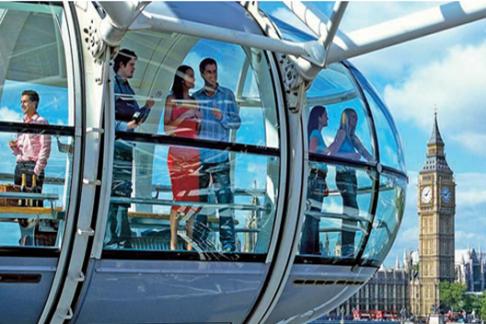
HISTORIC BUILDINGS Tower Bridge Exhibition - £9.00 Royal Mews - £9.00 Royal Albert Hall - guided tour - £12.25 Royal Observatory - £7.70 Monument - £4.00 Banqueting House - £6.00 Jewel Tower - £4.20 Wellington Arch - £4.30 Apsley House - £8.30 Benjamin Franklin House - £7.00 Eltham Palace - £13.00 The Wernher Collection at Ranger's house - £7.20 MUSEUMS Imperial War Museum - £5.00 The London Transport Museum - £16.00 Household Cavalry Museum - £7.00 Charles Dickens Museum - £8.00 London Motor Museum - £30.00 Guards Museum - £6.00 Cartoon Museum - £7.00 Foundling Museum - £7.50 Science Museum - IMAX Theatre - £11.00 Handel House Museum - £6.50 London Canal Museum - £4.00 Royal Air Force Museum - £3.00 Museum of Brands, Packaging and Advertising - £7.50 Old Operating Theatre, Museum and Herb Garret - £6.50 Fan Museum - £4.00 Firepower Royal Artillery Museum - £5.30 Florence Nightingale Museum - £7.00 The Garden Museum - £6.75 The Jewish Museum - £6.50 Pollock's Toy Museum - £6.00 Design Museum - £12.40 V & A Museum - Cream tea package - £6.65 Keats Museum - £5.00 Museum of Comedy - £5.50 PLACES OF INTEREST HMS Belfast - £14.50 Kew Gardens - £15.00 Cutty Sark - £12.15 ArcelorMittal Orbit - £15.00 Chelsea Physic Garden - £9.00 London Wetland Centre - £11.23 Chislehurst Caves - £6.00 GALLERIES The Queen's Gallery at Buckingham Palace - £10.00 Courtauld Gallery - £6.00 Estorick Collection of Modern Italian Art - £5.00 TOURS AND CRUISES Wembley Stadium Tour - £19.00 Beefeater Gin Distillery Tour - £12.00 Arsenal Stadium Tour - £20.00 Chelsea FC Stadium Tour - £20.00 Wimbledon Tour Experience & Museum - £24.00 Twickenham Stadium Tours & Museum of Rugby - £20.00 Lord's Cricket Ground Tour - £18.00 The Sherlock Holmes Tour - £10.00 London Bicycle Tour Company Bicycle Tour - £23.95 Jason's Canal Boat Trip - £9.00 Rock 'n' Roll Walk - £9.00 Royal London Walking Tour - £10.00 National Theatre Backstage Tours - £8.50 LEISURE Curzon Cinemas (Chelsea, Mayfair, Soho and Bloomsbury) - £14.00 - £15.00 The London Brass Rubbing Centre - £4.50 Namco Funscape - £3.00 Queens Ice and Bowl - £7.50 - £13.50 Save on up to £420 worth of entrance fees that's the aggregate price of all Adult entrances to Attractions contained within the 6 day Pass. Other Special Offers along with the Guidebook, we will provide you with access to other great offers available to visitors to London, including discounted prices on West End theatre tickets, restaurant discounts and much more! You can visit as many attractions as you want - even more with the time saved with fast track entry. You don't need to carry too much cash and the London Pass keeps control on your spending. How Does The London Pass Work? The London Pass is a smart card - like a credit card with a computer chip inside - which allows you completely cash free entry to your choice of 56 London tourist attractions. It's a bit like an all you can eat buffet - once you've bought your London Pass you don't have to pay to get into any of the attractions covered by the pass and the more sights you see, the more money you save. Simply show the attendant at a London Pass attraction your card, they will swipe it through a special machine and you will be allowed entry. For the full list of London attractions where you can get in free with the London Pass. Activating The London Pass: The smart card records when and where you first use your London Pass, as well as how long the pass will remain valid for. This means that regardless of what start date you give when you buy the pass, your London Pass is activated the moment that you first use it at an attraction or service. Your London Pass is then valid for the number of days that you purchased - be it 1, 2, 3 or 6 days and is subject to the purse value of maximum gate prices related to the number of days. It is important to note that the day is based on a calendar day, so should you first use your pass at 4pm on Monday, Monday is counted as day one of your pass usage. You will need to present your voucher at the exchange point to receive your London Sightseeing Pass(es) as well as comprehensive details concerning all the attractions that may be visited. Your London Sightseeing Pass(es) will be activated at the first time of use. 6 day pass Save on up to a pound on £420 worth of entrance fees that's the aggregate price of all Adult entrances to Attractions contained within the 6 day Pass. All customers collecting Passes must provide the following documentation to the house security staff: - Photo Identification (Passport or Driving License). - Credit Card used to purchase the Pass(es). Under no circumstances will any Passes be issued without the above documentation. *Exchange point: 11a Charing Cross Road, London, WC2H 0EP. Please note that the Centre is a redemption point only and any queries regarding your purchase must be referred to 365 Tickets on 0203 540 7707. London Eye At 450ft high, the London Eye is the world's highest observation wheel. 32 Capsules, each carrying 25 guests, take you on a 30 minute journey through the most spectacular views of, over and around London spanning 25 miles in all directions. Combine your experience with the London Eye River Cruise Experience, a 40-minute sightseeing circular cruise on the River Thames, passing the Houses of Parliament, Tower of London and St Paul's Cathedral. London Eye 4D Experience The London Eye 4D Experience is a groundbreaking 3D film with in theatre effects, such as wind, bubbles and mist, to make the 4D. The film itself is a touching story of a little girl in London with her father. Her view of famous London landmarks is obscured by people and traffic, but a seagull draws her attention to the London Eye and her father takes her for an experience; finally she has an amazing view of the city. Colourful parties inside the capsule, time lapse of the London Eye day and night and a spectacular firework display all add up to an emotional and entertaining experience; the perfect prelude to an experience on he London Eye itself. Please remember that the boarding procedure for the London Eye takes around 30 minutes Our price is the same as you would pay buying on the London Eye website or telephone booking lines and there are no constraints on last minute bookings. For a different perspective visit at sunset and see the city lights come on and the skyline awash with vibrant colours. Unaccompanied children are not permitted to board the London Eye. Any booking made for an unaccompanied child will be taken as confirmation that the child will be joining a party under the supervision of an adult aged 18 years or older. 365 Tickets will not be held responsible if a child is turned away at the London Eye, nor will the ticket be refundable! Safety and security is our number one priority. For your safety and convenience, please read the following information on what items can and can not be taken on to the London Eye. Please be aware that all guests are subject to a security search when boarding the London Eye. Please note that the following items CAN be taken on board the London Eye: • briefcases • laptops • small day size rucksacks and bags (maximum size 18" x 13" x 8" or 46cm x 33cm x 20cm) • baby bags The following items CANNOT be taken on board the London Eye; • large bags/suitcases or rucksacks • motorcycle helmets • skateboards and rollerblades • tripods (unless agreed in advance with the London Eye) • baby buggies* • prohibited items** If you are unsure . * Baby buggies can be left at our 'Buggy' area facility in the ticket hall, although only for the duration of the experience. ** Prohibited items include sharp objects or anything which may be considered a security risk including penknives, scissors, metal nail files, toy or replica guns. If such objects are found or declared they will be checked in and returned to you after your experience providing the item is legal in the UK. Terms and conditions 1. Confiscated objects are left entirely at the owner's risk at all times. 2. London Eye Company (LEC) accepts no responsibility for the loss of or damage to any objects left with LEC. 3. LEC is entitled to refuse to store any visitor's objects at its sole discretion whether for public safety reasons or any other reason.

Included Free hotel pick up at 09.30 or 14.00 Professional tour guide (during the city tour) Air-conditioned vehicle 1 drink of your choice (during the boat tour) Audio guide in 30 languages (on the boat) Not included Hotel drop-off Transfer to the pier Entrance fees Tips

The Go Orlando® Card is the best choice for maximum savings and flexibility. Save up to 55% off retail prices on admission to over 27 top attractions and activities including LEGOLAND Florida Resort, Kennedy Space Center, Coca-Cola Orlando Eye, alligator and swamp tours, dinner shows, Everglades tours, and more for one low price. Enjoy the flexibility to choose attractions as you go and do as much as you want each day. Save Money! Pay one low price and save up to 55% off combined admission prices. Delivered via E-mail - Printable and Smartphone Versions Nothing to Redeem! Go right to first attraction you want to visit and start using your Go Los Angeles Card Save Time & Hassle - Pay nothing at the gate and skip the line at select attractions. Flexibility Create your own itinerary from over 30 attraction choices. Freedom No limitations. Do as much as you want each day. Insider Info Free guidebook and map. Click here for a complete list of current attractions included with the Go Orlando® Card Frequently Asked Questions What do you mean by "calendar days over 2 weeks"? "Calendar days" are days on a calendar, not 24-hour periods. For example, if you activate a 3-Day Go Orlando Card on a Monday evening, it is valid for the remainder of Monday (1st calendar day) and any 2 additional calendar days within two weeks of activation.Tip: to get the most out of your pass, plan to visit attractions early in the day. Is this just a discount card? Will I still need to buy tickets? No. Passes include admission to each attraction; no need to pay anything at the gate. Some attractions may offer upgrades or special exhibits for an additional fee. Do I need to choose my attractions in advance? Nope, you can choose from the included attractions as you go. What is the age cut off for child cards? Child cards are for children ages 3-12. Most attractions do not charge for children under 3 years old. However, there are some exceptions (especially children's museums and attractions geared toward very young travelers). If you have a child under 3 years old, please check with the attraction directly in advance. You may be charged at the gate. How will I get my pass? When your order is complete you will receive an email with printable and Smartphone version of your Go Orlando® Card. There is nothing to Redeem, you can go right to first attraction you want to visit and start using your card immediately. How do I "activate" my card? Simply visit your first attraction! Is my card valid all day? Yes. You can enter attractions any time with the Go Orlando Card. How many days should I buy? Most travelers visit between 2 and 3 attractions each day depending on individual preference. Our most popular card is the 3-Day card. Does a Go Orlando Card expire? Yes. You have one year from the date of purchase to begin using your pass. After one year, it will expire. How much will I save? Compare the price of the pass to the gate prices of the attractions you want to visit to see how much you can save. We give you the flexibility to create your own itinerary and choose the attractions you want to visit depending on your interests. How many attractions can I visit in one day? On a Go Orlando Card, you can visit as many attractions as you want in a day. Can I visit an attraction more than once? In most cases, you can visit each attraction once per day. Some attractions are valid only once during the life of the pass. Please reference your guidebook for specific information on each attraction. Do I need to make reservations to visit the attractions? Attractions that require a reservation will display a symbol on the guidebook page. Some attractions require a credit card to hold a reservation. In these cases, your credit card will not be charged unless you do not show up for your reservation. What’s the catch? There’s no catch. Go Orlando Card has a partnership with all of the participating attractions to make your visit to Orlando as memorable as possible and to help you save time and money. Can I share my pass with a friend or sell it? No. The Go Orlando Card is non-transferrable and may not be re-sold. What happens if an attraction is closed or a tour is cancelled due to weather or other problem? While we do our best to ensure that all attractions are available, events happen that are out of our control. The great thing about a Go Orlando Card is that there are so many attractions to choose from. If an attraction is closed, or cannot be visited for some reason, we know you'll find a fun alternative in your guidebook!

Free leaflets available in English, French, German, Spanish, Italian, Dutch and Polish. DINING / REFRESHMENTS Irish tea room offering tea, coffee, homemade scones and wonderful porter cake. SHOPPING Gift shop selling souvenirs, books and craft items. PARKING Free car and coach parking on-site. WHEELCHAIR ACCESS Partially wheelchair accessible but assistance would be required on rough paths and terrain and at exhibits. Accessible toilet available.
Highlights
You will enjoy a unique view of Piazza del Popolo, St. Peter, Colosseum and much more ...
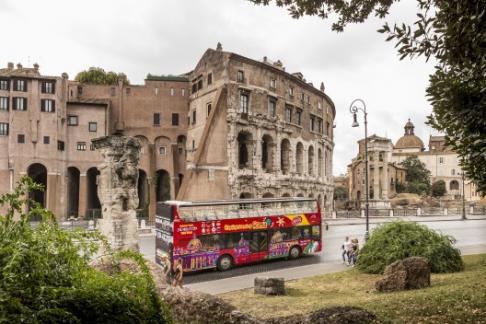
Romantic Rome - Night Touron board of a open top minibus
Ticket Includes
Panoramic tour of Rome by night aboard a bus with telescopic sliding glass roof
Welcome drink and appetizer at "Officine Italia" (Piazza della Repubblica, 41) which includes: welcome drink, Pizza, stuffed focaccia, snacks, water
Complimentary booklet "Roma"
Buffet dinner at the restaurant "Zodiac" with a view of the city that includes:
A mix of cured meats and cheeses
Fettuccine (pasta) with ragù
Small mixed salad
Cake of the day
A glass of wine or soft drink + water.
Description
You can admire the most romantic locations in Rome during the evening, from the Spanish Steps, the stage of the beginning of the love story between the two protagonists of the famous "Vacanze Romane" movie up to Zodiac. The tour takes place entirely on board of a open top minibus; during winter evenings the minibus is closed with a completely glass roof that will allow you to admire the beauty of Rome in total comfort
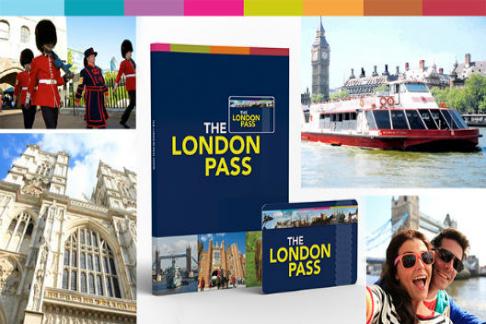
Save on Sightseeing in London with The London Pass!
With a wealth of history, culture and exciting attractions, London always has plenty to offer the visitor. However, sightseeing in London can sometimes not be the easiest or cheapest experience! We at London Pass have spent years understanding the needs of our customers and have ensured that the Pass provides the value and convenience that visitors to our great city demand! The award winning London Pass has been delighting our customers for over 10 years. It's simply the best way to see all that London has to offer while saving both money and time!
How You Benefit from The London Pass:
Free entry to your choice of over 80 Attractions; including the The View from The Shard, Tower of London, Windsor Castle, HMS Belfast and many more. A free 128 page Guidebook; available in 7 different languages containing a wealth of detailed information including maps and directions as well as great tips on how to make the most of the city. Skip the Queue at Top London Attractions, save Time and make the most out of your sightseeing trip by skipping the long queues at Tower of London, London Zoo, Windsor Castle, Kensington Palace and Hampton Court Palace. Added Travel Option add a London Travelcard to your Pass which enables you to use all public buses, the London Underground and trams ensuring that you make the most efficient use of your time
Save up to a pound on £420 worth of entrance fees that's the aggregate price of all Adult entrances to Attractions contained within the 6 day Pass.
Other Special Offers along with the Guidebook, we will provide you with access to other great offers available to visitors to London, including discounted prices on West End theatre tickets, restaurant discounts and much more! You can visit as many attractions as you want - even more with the time saved with fast track entry. You don't need to carry too much cash and the London Pass keeps control on your spending.
How Does The London Pass Work?
The London Pass is a smart card - like a credit card with a computer chip inside - which allows you completely cash free entry to your choice of 56 London tourist attractions. It's a bit like an all you can eat buffet - once you've bought your London Pass you don't have to pay to get into any of the attractions covered by the pass and the more sights you see, the more money you save. Simply show the attendant at a London Pass attraction your card, they will swipe it through a special machine and you will be allowed entry. For the full list of London attractions where you can get in free with the London Pass.
Activating The London Pass:
The smart card records when and where you first use your London Pass, as well as how long the pass will remain valid for. This means that regardless of what start date you give when you buy the pass, your London Pass is activated the moment that you first use it at an attraction or service. Your London Pass is then valid for the number of days that you purchased - be it 1, 2, 3 or 6 days and is subject to the purse value of maximum gate prices related to the number of days. It is important to note that any day is based on a calendar day, so should you first use your pass at 4pm on Monday, Monday is counted as day one of your pass usage.
You will need to present your voucher at the exchange point to receive your London Sightseeing Pass(es) as well as comprehensive details concerning all the attractions that may be visited. Your London Sightseeing Pass(es) will be activated at the first time of use. All customers collecting Passes must provide the following documentation to the house security staff:
- Photo Identification (Passport or Driving License).
- Credit Card used to purchase the Pass(es).
Under no circumstances will any Passes be issued without the above documentation.
*Exchange point:
11a Charing Cross Road, London, WC2H 0EP.
Please note that the Centre is a redemption point only and any queries regarding your purchase must be referred to 365 Tickets on 0203 540 7707.
INCLUDES TRAVELCARD:
Travelling in and around London can be fun with transport services that take you to London Sightseeing Pass attraction. When you choose your London Sightseeing Pass with transport, all of your journeys within Zones 1-6 are paid for. You can get to all of The London Sightseeing Pass attractions using the Travelcard, even Windsor Castle, with First Great Western Link Trains. To use your travel, The London Sightseeing Pass and Travelcard must be valid, signed and ready to travel. Purchasers of a 6 day London Sightseeing Pass including travel receive a 7th day of travel FREE!
What you get with your Travelcard:
Unlimited travel on London's Buses, Underground Trains, Overground Trains, Docklands Light Rail and Tramlink, for the dates and duration you require. Additional travel to Windsor Castle on First Great Western Link Trains with a valid Zones 1-6 Travelcard and a valid London Sightseeing Pass. 1/3 discounton Riverboat services.
Travelcard Restrictions.
One Day Travel Card: The One day Travelcard (off-peak) can only be used after 9:30am Monday-Fridays (from 00:01 Saturdays, Sundays and public holidays) on the day of validity and for any journey that starts before 04.30 on the following day.
Multi-day travelcards incur no restrictions and are valid for use on consecutive calendar days.
The following validity rules apply:
1 day Travelcards (off-peak) can be used from 9.30am Mondays to Fridays, all day Saturdays, Sundays and public holidays, on each day of validity and for any journey that starts before 4.30am on the day following the expiry date.
2 and 3 day Travelcards (off-peak) have the same rules as 1 day Travelcard and can only be used on consecutive days.
7 day Travelcards can be used at any time during the period of validity and for any journey that starts before 4.30am on the day following the expiry date.
Children under 11 years of age may travel free of charge on the tube, buses, DLR and London Overground if accompanied by an adult holding a valid travelcard. Children travelling on National Rail services are required to pay extra.
Please note: Delivered Visitor Travel Cards are date stamped on issue. Please ensure you have selected the correct start date when ordering as your Travel Card will have the date you selected.
The transport network is closed on Christmas Day and limited services may be running around this time.
Travelcard and London Pass days are still consecutive and days cannot be carried over even if the Travelcard or London Pass are unable to be used. This is also the case during transport strikes.