Libre
Soutien
TOWER BRIDGE Over 100 years ago, the Victorians built a bridge that has become one of London's most famous landmarks. High level walkways were built to allow people to cross the Thames whilst the Bridge was lifted to let tall ships sail past. Today these Walkways act as viewing galleries, giving visitors the most spectacular views across an ever changing London skyline. Visitors enter Tower Bridge Exhibition via the North Tower. They are then transported by lift to the top of the Tower (47 metres above the Thames) where they have a unique opportunity to see the Bridge’s steel skeleton from within. A short film explains the history and provenance of the Bridge and then there is the chance to admire the spectacular views – from both covered Walkways. On the east Walkway there are fantastic views of the Docklands and from the west Walkway you can see the new GLA building, the Tower of London, St Paul’s, the city, the Pool of London and Big Ben and the London Eye in the distance. Interactive computerised kiosks and graphic panels explain the significance of the views to visitors, as well as providing more information on the history and building of the Bridge. The interactive material and graphic panels are written in seven languages and an audio loop for the hard of hearing is also in place for the video show. There is another film to view in the South Tower before descending for the short walk to the historical Engine Rooms, included in your ticket price. Victorian Engine Rooms These provide a fascinating insight into late 19th century engineering. Installed for the completion of Tower Bridge in 1894, these huge, and beautifully maintained, coal-driven engines were used to power the thousands of bascule Bridge lifts performed until 1976. Although lifts are now operated by electricity, the original steam engines are still in place. The Engine Rooms give visitors a chance to experiment with models demonstrating the technology behind the Bridge. There are also some amazing photographs of the Bridge throughout its lifetime – including a revealing picture of the heavy steel structure of the Bridge as the stone cladding was installed over it.
National World War II Museum:
This museum is ranked by Trip Adviser as the #1 Attraction in New Orleans, placed #2 in America and the World. The National WWII Museum features a multitude of artifacts that portray America's WWII past. Explore the American experience in the war that changed the world. From D-Day galleries to the soaring US Freedom Pavilion: The Boeing Center to the groundbreaking Campaigns of Courage, this world-renowned history museum was created to inspire visitors of all ages educating them on the heroism, tragedy and liberation of WWII.
Come experience these unique and amazing Exhibits:
The Arsenal Of Democracy - Telling the story of how the war was won is at the heart of The National WWII Museum’s mission, and The Arsenal of Democracy: The Herman and George R. Brown Salute to the Home Front—the Museum's newest permanent exhibit, located on the second level of the Louisiana Memorial Pavilion, the Museum’s original building—literally brings that story home.
Road To Tokyo - Richard C. Adkerson & Freeport-McMoRan Foundation Road to Tokyo: Pacific Theater Galleries retraces the grueling trail that led from Pearl Harbor to Tokyo Bay by way of New Guinea and Southeast Asia, the Himalayas, Burma, the islands of the Pacific, China, India, and Alaska.
Road To Berlin -The Duchossois Family Road to Berlin: European Theater Galleries brings to life the drama, sacrifices, personal stories, and strategies of America’s campaign to defeat the Axis powers and preserve freedom.
Beyond All Boundaries - Beyond All Boundaries, showing exclusively in The National WWII Museum’s Solomon Victory Theater, is a 4D journey through the war that changed the world.-Not included with ticket
The D-Day Invasion Of Normandy - The Museum's original exhibit, located on the third floor of Louisiana Memorial Pavilion, helps you understand what the Allies faced in Normandy, from the comprehensive preparations beforehand to the daunting challenges once troops landed on Normandy beaches.
US Merchant Marine Gallery - Situated at the end of the Horatio Alger Association American Spirit Bridge, this gallery honors the civilian merchant mariners who risked their lives transporting weapons, men, and material to US troops overseas.
Final Mission: USS Tang Submarine Experience - places visitors aboard the most successful submarine in World War II for its fifth and final war patrol on October 25, 1944.-Not included with ticket
Manufacturing Victory - Follow the industrial journey that took the United States from a nation perilously unprepared for war to a global superpower that led the Allies to victory in World War II.
Special Exhibit Gallery - The Joe W. and Dorothy D. Brown Foundation Special Exhibit Gallery features rotating exhibits that draw on the Museum’s own collections, as well as relevant traveling exhibits from leading institutions around the world.
City Sightseeing New Orleans:
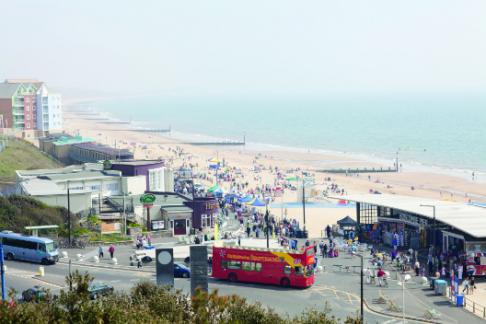
Hop-On Hop-Off Unlimited Tickets Valid for 24 Hours of Sightseeing
Tour at Your Own Pace - Enjoy unlimited hop-on hop-off privileges! Spend as much time as you desire at each stop.
Live Guide Narration - Local Tour Guides on each bus offer colorful entertaining historic commentary..
Every 30 Minutes! Buses Visit each Stop! - Stay as long as YOU like at each location. You can always catch the next bus!
7 Days a Week - 09:30 - 17:30 - Continuous Loop tour so YOU can decide what time your tour begins and ends. Tour Loop is 2 hours.
Restaurant and Attraction Deals along the Way - Hop-Off and present your ticket to receive deals and discounts at various attractions, restaurants, and gift shops all along the route!
Cemetery Walking Tour - Self guided tour of Lafayette Cemetery #1 included for all.
Maximum per group is 27. Tours depart every 15- 20 minutes depending on the season.
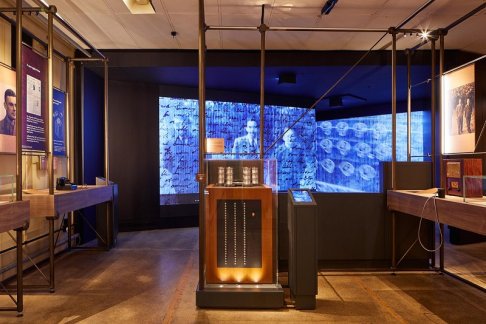
Historic setting: The Household Cavalry Museum sits within Horse Guards in Whitehall, central London, one of the city’s most historic buildings. Dating from 1750, it is still the headquarters of the Household Division, in which the Household Cavalry has performed the Queen’s Life Guard in a daily ceremony that has remained broadly unchanged for over 350 years. The Household Cavalry: The Household Cavalry was formed in 1661 under the direct order of King Charles II and now consists of the two senior regiments of the British Army – The Life Guards and the Blues and Royals. We have two roles: as a mounted regiment (on horseback), we guard Her Majesty The Queen on ceremonial occasions in London and across the UK and are a key part of the Royal pageantry; as an operational regiment we serve around the world in armoured fighting vehicles. We currently have units deployed on active service in Iraq and Afghanistan. Our fighting capacity is matched by our strategic role in international peace keeping and humanitarian operations. Collections: Over the centuries we have amassed an outstanding collection of rare and unique treasures from ceremonial uniforms, royal standards and gallantry awards to musical instruments, horse furniture and silverware by Fabergé. Each exhibit has its own compelling story to tell and many are on display for the very first time. You can see two silver kettledrums given to the regiment in 1831 by William IV; the pistol ball that wounded Sir Robert Hill at Waterloo and the cork leg which belonged to the first Marquess of Anglesy, who, as the Earl of Uxbridge, lost his real one at Waterloo. Modern additions to the collection include Jacky Charlton’s football cap – he did his national service with the regiment and Sefton’s bridle – the horse that was injured in the 1982 Hyde Park bombings. Much of the collection has resulted from the close association that has existed between the Household Cavalry and Royalty. We have, after all, protected successive kings and queens from rebels, rioters and assassins for nearly 350 years. Working Stable Block: Visitors can gain a unique behind-the-scenes look at our working stable block. All the horses here are on duty and at different times of the day you will see something going on - you might see the horses being brought in, groomed, fed and watered, their hooves oiled and shoes checked, their saddles adjusted ready to go on guard or just see the stables themselves being cleaned. Both our horses and riders go through a rigorous and demanding training. In the Museum's many interactive and multimedia presentations, you will hear first hand accounts of what this training is like and the techniques our soldiers use to master their horses and complete the gruelling preparations for regimental inspections.
Your next stop will be at the village of Prades and here you will have 1 hour 15 minutes to stroll around the village and take a break for lunch. You can bring your own packed lunch and have a picnic or you can buy a menu of 3 courses and a drink for just 12 euros, 2 euros less than the normal price. You will notice you are surrounded by the red colour of the sharp stones used to build the walls, the church and many of the houses. In the Plaza Mayor, you will see the Spherical renaissance fountain, where once a year it is filled with cava and the locals spend the day and night drinking from it. You can also see the Gothic Church of Santa Maria. Then onto another picturesque village, Siurana, where you will be taken back in time as you walk on the cobbled streets and pass the old stone houses. Here there is a small shop where you can but local produce, ice creams and postcards. There are spectacular views of the mountains and surrounding landscapes and you can look down to the lake of Siurana which will be your next stop. This really is one of the most beautiful villages you could hope to visit. Your last stop will be to the water for another dip or swim and a good chance to cool off. Then, after a great day out you will be taken back to your hotel and you will be given a present of a bottle of wine to take back with the rest of the lovely memories you will have.
Little Train of Paris Montmartre
The Circuit:
Place Blanche
Place du Tertre
Place Constantin Pecqueur
Moulin Rouge
Espace Dali
La Halle et le Marché Saint-Pierre
Basilique du Sacré Coeur
Musée Montmartre
Anvers
Amphithéâtre / Arènes
Le Lapin Agile
Retour Place Blanche
Église Saint-Pierre
Cimetière Saint-Vincent