Libre
Soutien
The building that today houses the Museo Nacional del Prado was designed by architect Juan de Villanueva in 1785. It was constructed to house the Natural History Cabinet, by orders of King Charles III. However, the building's final purpose - as the new Royal Museum of Paintings and Sculptures - was the decision of the monarch's grandson, King Ferdinand VII, encouraged by his wife Queen Maria Isabel de Braganza. The Museo Nacional del Prado, opened to the public for the first time in November 1819. The Museum's first catalogue, published in 1819, included 311 paintings, although at that time its collection comprised just over 1,510 pictures from the various Reales Sitios (Royal Residences). The exceptionally important royal collection, which represents the foundation of the Museum's collection as we know it today, started to increase significantly in the 16th century during the time of Charles V and continued to thrive under the succeeding Habsburg and Bourbon Monarchs. It is down to them than nowadays we can contemplate in the Museum as greatest masterpieces as The Garden of Earthly Delights by Bosch, The Nobleman with his hand on his Chest by El Greco, Las Meninas by Velázquez and The Family of Carlos IV by Goya. The visit will take place in chronological order, starting with the exhibit hall where the masterpieces of J. Bosch (El Bosco) (1450-1516): The Table of the 7 Deadly Sins, The Hay Wain, The temptations of San Antonio, The Stone of Madness and The Garden of Delights, to continue with the rooms devoted to the Greco (1540-1614): The gentleman's hand on his chest, The Trinity, Christ embraced the cross and The Annunciation. Velázquez (1599-1660): The Worship, Drunkards, Equestrian Portraits, the Forge of Vulcan, The Christ, The spinners, Spears and Las Meninas, ending with Goya (1746-1828): The family of Carlos IV Pictures, The Shootings of May 2nd, Pestles and Black Paintings.
¡Está invitado a hacer lo que hacen las celebridades! Madame Tussauds Las Vegas sumerge a los visitantes en experiencias únicas e interactivas que crean recuerdos personales con algunos de los iconos más grandes del mundo. ¡Golpee la bola en el hoyo con Tiger Woods! No se pierda la oportunidad de meter el hoyo 18 en el último torneo Pro-Am como lo hace Arnold Palmer. ¡Haga un swing los palos de golf de Tiger! Experimente la euforia de formar parte de Blue Man, el grupo le invita a jugar con los instrumentos de PVC. El legendario “Intimidator” de NASCAR, y siete veces campeón de la Copa Winston, Dale Earnhardt te invita al Círculo de Ganadores con Dale Earnhardt Jr. y Jeff Gordon, así como el rey Richard Pretty. Vístase como su equipo favorito de carreras, agite la bandera a cuadros y tomase una foto mientras experimenta la carrera en la línea de la victoria. ¡Coja un coctel, ponte unas orejas de conejo y un pijama de seda y festeja con Hugh Hefner! ¡Cante con el Rey! Experimente el auténtico ambiente de concierto con un escenario deslumbrante, iluminación de última generación, asientos en primera fila y un letrero distintivo de Elvis Presley. Todas las celebridades en figuras de cera. Puede haber cambios en la exposición de celebridades, además sujetas a cambio sin previo aviso. Algunos de los superhéroes de Marvel han cobrado vida en la nueva e increíble sala Marvel Super Heroes 4D. Experiencia cinematográfica animada en 4D de 360º, con efectos especiales de alto impacto de agua, viento y temblores ¡haciéndote “sentir” como parte de la acción! La historia une al equipo de superhéroes Hulk e Iron Man en una batalla contra uno de los villanos más notorios de Marvel. Esta nueva experiencia se incluye en la entrada de acceso total.
New Itinerary : Opéra - Place Vendôme - Concorde Square - Champs-Elysées Avenue - Arch of Triumph - Eiffel Tower - Invalides - Orsay Museum - The Grand Louvre Museum - Notre-Dame Cathedral - Sorbonne - Pantheon Church - Saint-Germain-des-Prés - Place des Pyramides (bus terminal). Departures: Tour departs daily at 09:00, 10:30, 12:00 and 14:45 Duration: 1 Hours 45 Minutes approx. Pick Up/Drop Off Paris Vision, 214 rue de Rivoli, 75001, Paris Includes: Tour in a luxury, air-conditioned coach Recorded commentary with individual headphones Information: 4 departures a day 11 available languages Suited to clients (first time, return and short stay) looking for an overall glimpse or orientation Suitable to families. No stop during the tour.
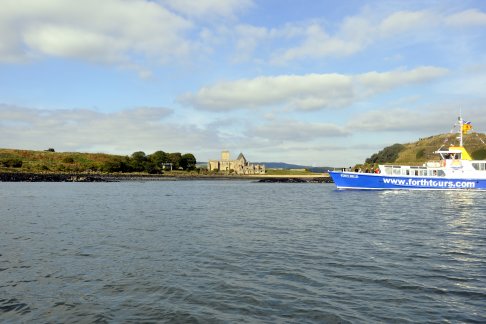
Depart Edinburgh at 09.30 and travel north to South Queensferry. The town is named after the 11th century Queen Margaret who dedicated her life to changing the social welfare of the people, particularly the church, earning her the title 'Saint Margaret of Scotland'. North of Edinburgh there were two very important churches - St Andrews and Dunfermline, but getting from Edinburgh across the wide Firth of Forth was difficult, so Queen Margaret provided a free ferry for pilgrims, hence 'Queen's Ferry'. The ferry remained in existence until the opening of the Forth Road Bridge in 1964 by the present Queen. From Queensferry we drive up and onto the Forth Road Bridge, giving us a great view across to one of Scotland's greatest man-made landmarks - the Forth Rail Bridge. At over a mile and a half (2300m) long, the bridge was completed in 1890, and until recently was the longest Cantilever bridge in the world. It is a true testament of Scottish engineering. Once over the bridge we enter the Kingdom of Fife. Bounded to the south by the wide Firth of Forth, to the north by the Firth of Tay and to the east by the North Sea the area was once a sub-kingdom of the old Pictish realm, a natural peninsula almost cut off from the rest of Scotland, and so remained semi-independent for longer than other parts. Central Fife used to be very poor, until the discovery of coal, while the towns and villages along its coastline were rich from all the trade across the North sea, causing King James VI to describe the area as a 'Beggar's mantle fringed with gold'. The golden fringe he referred to was the East Neuk (or nook, meaning corner), Fife's easternmost stretch of coastline and home to a string of picturesque villages each with its own distinctive character and charm. One of these, Lower Largo, is best known as the birthplace of Alexander Selkirk the real-life Robinson Crusoe and inspiration for Daniel Defoe's novel whilst neighbouring Earlsferry is said to be where MacDuff hid from Shakespeare's Macbeth. We stop in the traditional fishing village of Anstruther (known as 'Enster' locally) where you can check out its old cobbled streets and network of little alleyways and wynds or take a walk along the seafront to the harbour. From Anstruther we continue north to the medieval town of St Andrews. St Andrew is the patron Saint of Scotland, and according to legend his remains were washed up on the Fife coast. The shrine became a place of worship for Christian pilgrims from far and wide and the town developed into the religious capital of Scotland complete with a huge Norman Cathedral, the largest in all of Scotland. Founded in 1160 the Cathedral was devastated first by fire and later by zealous religious reformers but the ruins provide a fascinating insight into what it once must have been like. Today St Andrews attracts another type of pilgrim, being famous world-wide as the home of golf and the Mecca for all golfers - the 'Old Course'. The course, founded in 1754, is in beautiful condition and its emerald green grass contrasts with the golden sands of the beach nearby. St Andrews is also home to the oldest University in Scotland, at nearly 600 years old, and the third oldest in Britain behind Oxford and Cambridge. Also dating from this period is the town's once mighty castle which, perched on a rocky headland overhanging the sea, is a ruin with a violent and murderous past. Every street, every building is surrounded with history and we give you almost 3 hours to explore this amazing town. From St Andrews we take a pleasant drive through the rolling countryside of central Fife, with its small villages and patchwork of farms, to Falkland. Falkland Palace dominates this old village, and was one of the main residences of the old Royal family of Scotland, the Stewarts (Stuarts). Aside from the palace the village is simply one of the most beautiful in Scotland with an array of old cottages and narrow winding streets. You can take time to wander around the picturesque village or enjoy a drink in one of the village’s traditional pubs or tearooms. Leaving Falkland we cross the Lomond hills past Loch Leven, where Mary Queen of Scots was imprisoned by her Protestant nobility. And then it is straight back to Edinburgh.
Take in the impressive views and explore the facilities and attractions before heading up the chairlift to the start zone of the Skyline Luge. The Queenstown Luge is a unique wheeled gravity ride that provides riders full control over their descent on two purpose built tracks, scenic or advanced. Enjoy five Luge rides at your own pace before riding the Gondola back down to earth. YOU SHOULD BRING: Sunglasses Hats Warm clothes during winter periods
SF City Sites Tour Our 20-minute basic flight will take you over the splendor of the greatest city in the U.S. – San Francisco! On this flight you will take off from our seabase in the lovely bayside village of Sausalito just across the Golden Gate Bridge. We will fly along the shoreline of the quaint bayside village of Sausalito, then right over the legendary Golden Gate Bridge herself! We continue to Crissy Field, Downtown San Francisco, AT&T Park – Home of the San Francisco Giants, then on over the infamous island prison of Alcatraz. Finally your flight will be completed with a pass by the historic Angel Island, and back for a smooth landing back in Sausalito’s Richardson Bay. Aircraft depart from our Seaplane Base in Sausalito/Mill Valley.