Libre
Soutien

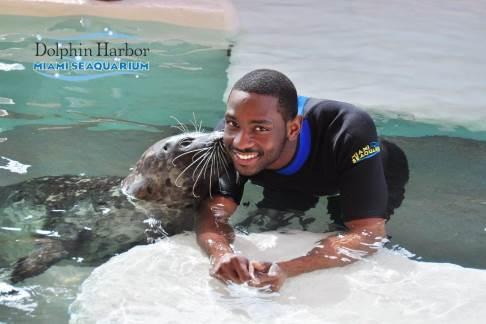
Tanto como participante de el Encuentro con Delfines o como observador, tendrá derecho a asistir a todos los espectáculos y exposiciones del día seleccionado. Exposiciones Shark Channel – Cuando Miami Seaquarium® abrió por primera vez en 1955, una de las principales atracciones fue el túnel de los tiburones. Hoy en día, los visitantes aún quedan sorprendidos por estas temibles criaturas. En la actividad, los cuidadores de los animales les alimentan mientras explican las diferentes variedades de tiburones que existen en el mundo. Arrecife Tropical – Uno de los favoritos entre los visitantes del parque, el arrecife principal del acuario cuenta con 2.839 m³ llenos de peces de todos los tamaños y colores. Durante la presentación del arrecife, un grupo de participantes del Sea Trek irá acompañado por un buzo y realizarán una visita por al acuario que permitirá que los participantes alimenten los peces tropicales, los meros, las rayas y las morenas. Presentación acompañada de una narración informativa. Manatíes – En la exposición de los manatíes, los clientes podrán encontrarse cara a cara con los mamíferos del estado de Florida a través de piscinas y zonas submarinas. Durante la presentación tendrá la oportunidad de aprender obre estos fascinantes animales en peligro de extinción, y conocerá de qué maneras puede ayudar a salvar estas criaturas marinas. Los manatíes de las instalaciones forman parte del programa de rescate y rehabilitación de Miami Seaquarium®. Foca & Leones Marinos - La piscina para alimentar a los animales se encuentra adyacente a The Golden Dome, un lugar de referencia en Miami diseñado por el arquitecto Buckminster Fuller. A lo largo del día, los visitantes podrán disfrutar de las exposiciones donde podrán observar como los leones marinos y las focas se divierten bajo el sol del sur de Florida. Las sesiones para su alimentación se realizan a diario y ofrecen la oportunidad de alimentar a alguna criatura marina. Discovery Bay – Vea tortugas marinas, aves de Florida y otra vida salvaje en el manglar natural. Explore nuestra exposición de tortugas marinas para aprender sobre las 5 especies que están en peligro de extinción que habitan en las aguas de Florida. Las tortugas de las instalaciones forman parte del programa de rescate y rehabilitación de Miami Seaquarium®. Tropical Wings – Contemple una gran variedad de aves tropicales, incluyendo las cacatúas, los guacamayos, los flamencos y el conocido pavo real llamado Peeps. Escuche con atención a uno de los loros que le dará la bienvenida. Los cuidadores de los animales estarán a su disposición para responder a cualquier pregunta que pueda tener y le contarán todas las curiosidades sobre todas las aves de la exposición. Tropical Wings es el hogar de nuestra piscina interactiva de rayas. Acuario de peces tropicales – Explore la increíble variedad de vida marina tropical que habita en los acuarios de la zona Top Deck Dolphin. Estos acuarios cuentan con una gran variedad de especies de peces con características únicas: explore un gran número de criaturas marinas desde la langosta de Florida que habita en arrecifes de la zona hasta el pez león colorado que fue descubierto recientemente en las aguas del Caribe y que proceden del Pacífico y del Índico. Crocodile Flats – Crocodylus niloticus, también conocido como el cocodrilo del Nilo, es el centro de atención en la isla de Discovery Bay's Upper, conocida como Crocodile Flats. Está exposición está compuesta por 32 toneladas de piedras, 72 toneladas de arena de la playa, cocos y palmeras. Los cocodrilos miden aproximadamente de 1 a 3 metros, y cuando acaban de crecer, pueden llegar a los 5 metros y pesar 500 kg. Su principal dieta está formada por pollo, pescado y conejo. Stingray Exhibit – Conozca a las últimas criaturas que han llegado a Miami Seaquarium®, rayas del sur y rayas nariz de vaca que han establecido como su nueva residencia la nueva piscina de 38 m³ situada en la zona de Tropical Wings. Allí tendrá la posibilidad de alimentar a los animales. Las sesiones para su alimentación se realizan a diario y ofrecen la oportunidad de alimentar a alguna criatura marina. Sharky's Sky Trail - Sharky’s Sky Trail es una carrera de obstáculos con varios niveles que proporcionan una experiencia desafiante y divertida para toda la familia. Los visitantes tendrán la posibilidad de escalar 3 pisos para hacer frente a los retos que incluyen 18 puentes y puentes suspendidos, y otros obstáculos. Salty's Pirate Playground – Cierre las escotillas y camine por la zona de juegos piratas. La atracción consiste en un barco pirata de dos plantas situado en el centro de una fosa llena de tiburones. El barco pirata, con pistolas de agua, redes, zonas acolchadas y un tobogán en espiral…. Entretiene a bucaneros de 1 a 12 años. Espectáculos Top Deck Dolphin – Vea las travesuras que realizan estos delfines de nariz botella, con impresionantes saltos y vueltas. Este espectáculo puede ser visto a cualquier hora durante el día. Mantenga sus ojos bien abiertos ya que tendrá la oportunidad de ver a algún delfín bebé dependiendo de la fecha de su visita. Golden Dome Sea Lion – Disfrute de las aventuras de los leones marinos. Este pequeño espectáculo cómico de leones marinos y focas muestra sus habilidades atléticas. Flipper Dolphin Show – El Nuevo espectáculo temático del Caribe, inspirado en el delfín Flipper. También se mostrará un seguido de imágenes sobre la película original al entrar al estadio. Orcas & Delfines – Solo existe un lugar en el que encontrará delfines blancos jugando y haciendo exhibiciones junto a una orca.
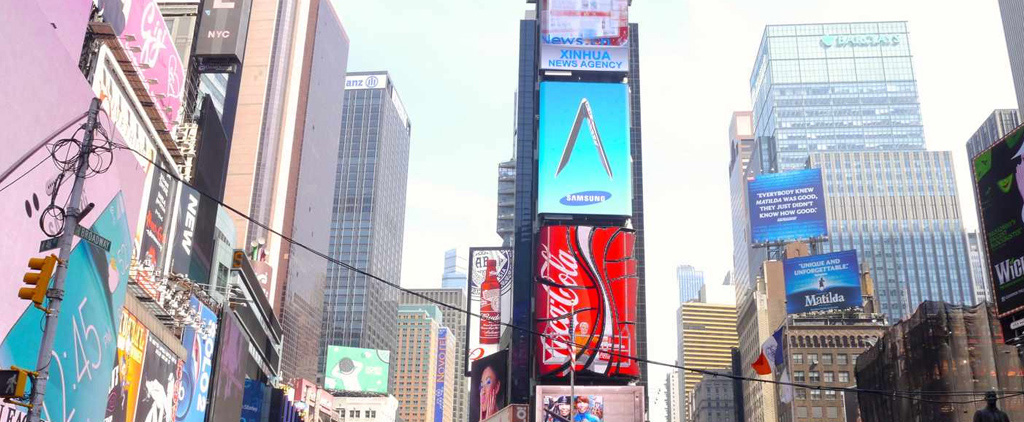
Explore Midtown like never before with the Midtown Sites and Bites Tour. ShowTickets.com has your discount tour tickets to experience the center of NYC
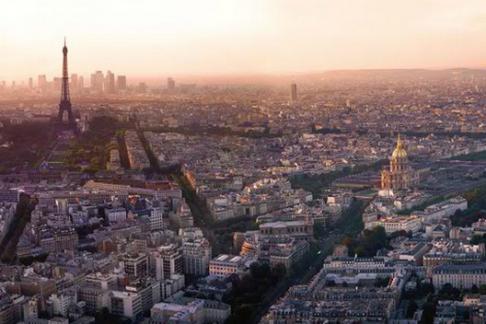
Disfrute de las mejores vistas de la Torre Eiffel y de todo lo que París tiene para ofrecer en el piso 56 de la increíble Torre Montparnasse 56 (esto también le evitará las largas colas en la Torre Eiffel). ¡Si usted hace una sola visita cuando esté en París, esta tiene que ser! Celebre una ocasión especial o simplemente el hecho de que esté en la ciudad más bella del mundo (probablemente). Usted podrá disfrutar de las mejores vistas a la Torre Eiffel. Hay disponibles un gran número de equipamientos visuales e interactivos, como el 360 Degree Cafe que cuenta con una amplia variedad de bebidas, aperitivos y comidas ligeras.
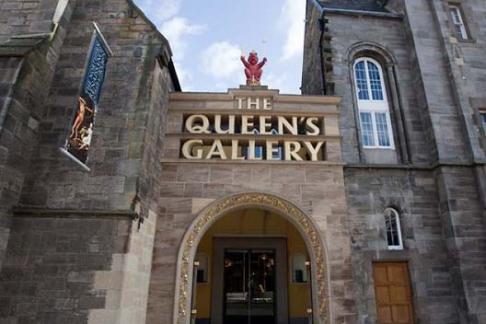
The Queen's Gallery was built in the shell of the former Holyrood Free Church and Duchess of Gordon’s School at the entrance to the Palace of Holyroodhouse. The buildings were constructed in the 1840s with funds from the Duchess of Gordon, but fell into disuse in the late 19th century. Benjamin Tindall Architects were appointed project architects for the new Queen’s Gallery in October 1999. Their central visual theme was a celebration of The Queen’s Golden Jubilee, expressed through a series of arches and screens that lead visitors from the Gallery entrance to the exhibition spaces beyond. Their design complements the original 19th-century architecture, elements of which were incorporated into the new spaces. Unsympathetic later internal alterations were removed, and a new exposed steel and concrete floor inserted to reflect the original ‘gallery’ of the Church. A new stone arched entrance was created at the centre of the Horse Wynd frontage, opposite the new Scottish Parliament building. The use of a stone archway, with a courtyard beyond, is a traditional entrance device in Scottish architecture. The main walling is of Catcastle stone, the dressed work and lettering is of Stainton stone and the base is of Kenmay granite. ‘THE QUEEN’S GALLERY’ lettering above the entrance is the work of John Neilson, a calligrapher and carver. The letters were cut from single pieces of stone. Above sits Scotland’s heraldic lion, designed by Jill Watson. The lion sedant is based on a small red lion that sits at the feet of Mary, Queen of Scots on her tomb in Westminster Abbey. (The Palace of Holyroodhouse was once home to Mary, Queen of Scots.) The monumental entrance doors of oak have gilded bronze hinges by Jill Watson. Continuing the heraldic theme, the main hinges are decorated with the Scottish lion and unicorn. The beasts are set against the adjacent urban scene of Edinburgh’s Royal Mile and the rural scene of Arthur’s Seat and Salisbury Crags. The upper hinges are made as golden boughs of flowering native trees – chestnut and laburnum, oak, rowan and hawthorn. The stone archway is decorated with a carved and gilded garland of Scottish flowers, including daisies and thistles, created by Graciela Ainsworth, an Edinburgh-based sculptor, carver and conservator. Over the old entrance to the former church is a stained-glass window by Christian Shaw. The design shows a perspective drawing of the interior of a gallery. At night, the shape of the archway is reflected by the glass lights by Keiko Mukaide set into the paving. The artist has given the tiles a water flow pattern, mirroring the stream of visitors walking in and out of the Gallery. Inside, the reception desk by Hamid van Koten is made from curved pieces of Scottish elm with kilned glass and patinated copper. The pendant lights were designed and made in Edinburgh by Ingrid Phillips. Dividing the reception from the main Gallery area is a patterned glass screen by Jacqueline Poncelet. The screen’s bronze handles by Jill Watson incorporate figures looking at art in a gallery. The dramatic central stair of native timber leads to the Gallery spaces above. The complex shape was designed by the architects with Charles Taylor Woodwork, who were responsible for the construction. Lights set into the first floor illuminate the curved balustrading.

Comedian actor director and all-around entertainment superstar Marlon Wayans is coming to the Mirage in Las Vegas for a laugh out loud stand-up show.
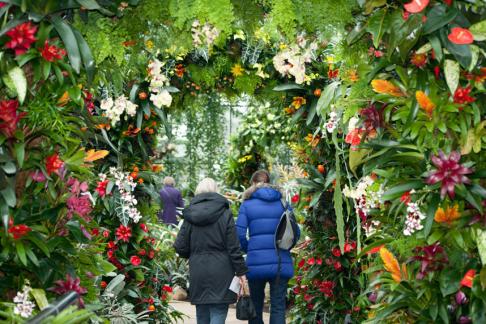
Kew Gardens, is a World Heritage Site located in 121 hectares of stunning vistas with six magnificent glasshouses set in a beautiful landscape beside the River Thames between Richmond and KEW in south-west London. Kew Gardens represents more than 250 years of historical gardens. It is home to a remarkable collection of over 30,000 types of plants from all over the world that range from the decorative to the peculiar. Kew Gardens provide opportunities for public enjoyment and enrichment and the behind-the-scenes scientific work helps ensure a sustainable future for plants and people. In the summer of 2004, Kew's determination to make serious botany great fun for children was demonstrated with the opening of 'Climbers and Creepers'. Bringing a new use to an old cycad house by White Peaks, Climbers and Creepers engages children from around 3-9 years in the pleasures of learning more about plants and their relationships with animals and people. Apart from the sheer beauty and tranquillity of the garden's landscapes Kew offers a wonderful day out for all, whether horticulturally, historically or botanically inclined. Botanical Highlights The dates below are approximate, and flowering can vary by three to four weeks, depending on the weather. Spring: Mid-February - early March: A million-and-a-half crocuses below the Temple of Bellona between Victoria Gate and King William's Temple - one of Kew's most spectacular displays (typically late Feb - early March). Camellias between Victoria Gate and the Shirley Sherwood Gallery of Botanic Art. Spring bedding and spring flowers in the open woodland around the Azalea Garden. Daffodils, forsythia and cherry blossom. Orchids, bromeliads and anthuriums in Kew’s Tropical Extravaganza, an annual display of exotic blooms in the Princess of Wales Conservatory. April - May: Lilacs near Kew Palace and White Peaks. Spring bedding in front of the Palm House. Scillas in the Woodland Garden. Flowering cherries, crab apples, magnolias and tulips throughout the gardens. May - June: Bluebells in the Queen's Cottage Grounds. Lilacs, azaleas, rhododendrons and magnolias, Brentford Gate area. The tiny but beautiful alpine flowers in the Davies Alpine House and the Rock Garden. Himalayan blue poppies and rhododendrons in the Woodland Garden. Native plants in long grass areas. Horse chestnut blossom. Summer: June - July: Summer flowers in the walled Duke's Garden and in the Woodland Garden. Giant water lilies growing rapidly in the Princess of Wales Conservatory and the Waterlily House. The Mediterranean Garden near King William's Temple. The Rose Pergola, the Rose Garden and the Order Beds. The Rock Garden. Tulip trees, opposite the Palm House, Philadelphus near the Pagoda. July - September: Themed summer bedding in front of the Palm House. The Order Beds. Giant water lilies flowering in the Princess of Wales Conservatory. Water lilies flowering in the Aquatic Garden and Waterlily House. The herbasceous borders of the Duke's Garden, fascinating medincinal herbs in the Queen's Garden, Grass Garden, Rose Garden. Hibiscus, hydrangeas and Indian bean trees. Autumn: September - October: Autumn crocus in September in the Woodland Glade - Kew's first burst of autumn colour. Belladonna lilies. Trees in autumn colour. October - November: Last of the autumn colours. Grass Garden. Autumn-flowering crocuses, colchicums and hardy cyclamen. Strawberry trees west of King William's Temple and between the Princess of Wales Conservatory and Rock Garden. Winter: November - December: Fruiting trees and shrubs, winter bark. Winter-flowering cherry. January - February: Snowdrops in the Rock Garden and Conservation Area, crocuses along the Princess Walk. Witch hazels by King William's Temple. Cornelian cherry in the winter border in the Duke's Garden. Duchess border along wall outside the Duke's Garden. Camellias between Victoria Gate and the Shirley Sherwood Gallery of Botanic Art. Clematis cirrhosa on the Rock Garden Wall. Rhododendrons in the Rhododendron Dell and, if the winter is mild, the carmine blooms of Magnolia campbellii might appear early. Shrubs in the Winter Border near the Ice House. The Davies Alpine House. Heathers, hellebores, viburnums and cornelian cherry.