Gratis
Apoyo
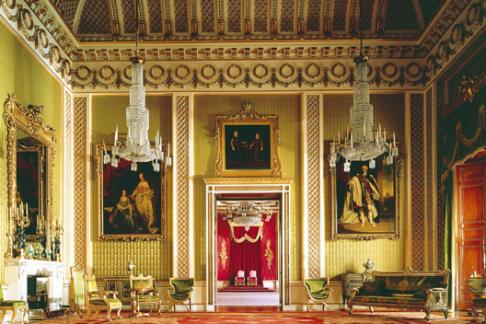
The Palace is perhaps best known as the home of Mary, Queen of Scots, and as the setting for many of the dramatic episodes in her turbulent reign. Mary was married at Holyroodhouse and witnessed the brutal killing of her secretary Rizzio by her jealous second husband, Lord Darnley, in her private apartments. The Palace briefly served as the headquarters of Bonnie Prince Charlie during the 1745 uprising. Today the State Apartments are used regularly by The Queen and other members of the Royal Family for State ceremonies and official entertaining. What there is to see: The State Apartments reflect the changing tastes of successive monarchs and are renowned for their fine plasterwork ceilings and magnificent furnishings, particularly the unrivalled collection of Brussels tapestries. One of the most famous rooms in the Palace is the Great Gallery, hung with Jacob de Wet's portraits of the real and legendary kings of Scotland. Included on the visit, a display focuses on the Order of the Thistle, the highest honour in Scotland. The Order honours Scottish men and women who have held public office or who have contributed in a particular way to national life. Shown alongside historic insignia is an example of the mantle worn at the Thistle ceremony at St Giles’ Cathedral in Edinburgh, which The Queen attends during her visit to the Palace in July. From 1 April to 31 October the gardens, which are today used for garden parties, can be included as part of a visit to the Palace of Holyroodhouse. Visitors to the gardens must keep to the paths, which are about 400 yards long. The Queen's Gallery at the Palace of Holyroodhouse in Edinburgh hosts a programme of changing exhibitions from the Royal Collection. Book here. Image Credits: 1.Royal Collection Trust / © Her Majesty Queen Elizabeth II 2018 2.Photographer: Peter Smith. Royal Collection Trust / © Her Majesty Queen Elizabeth II 2018
The Queen's Gallery was built in the shell of the former Holyrood Free Church and Duchess of Gordon’s School at the entrance to the Palace of Holyroodhouse. The buildings were constructed in the 1840s with funds from the Duchess of Gordon, but fell into disuse in the late 19th century. Benjamin Tindall Architects were appointed project architects for the new Queen’s Gallery in October 1999. Their central visual theme was a celebration of The Queen’s Golden Jubilee, expressed through a series of arches and screens that lead visitors from the Gallery entrance to the exhibition spaces beyond. Their design complements the original 19th-century architecture, elements of which were incorporated into the new spaces. Unsympathetic later internal alterations were removed, and a new exposed steel and concrete floor inserted to reflect the original ‘gallery’ of the Church. A new stone arched entrance was created at the centre of the Horse Wynd frontage, opposite the new Scottish Parliament building. The use of a stone archway, with a courtyard beyond, is a traditional entrance device in Scottish architecture. The main walling is of Catcastle stone, the dressed work and lettering is of Stainton stone and the base is of Kenmay granite. ‘THE QUEEN’S GALLERY’ lettering above the entrance is the work of John Neilson, a calligrapher and carver. The letters were cut from single pieces of stone. Above sits Scotland’s heraldic lion, designed by Jill Watson. The lion sedant is based on a small red lion that sits at the feet of Mary, Queen of Scots on her tomb in Westminster Abbey. (The Palace of Holyroodhouse was once home to Mary, Queen of Scots.) The monumental entrance doors of oak have gilded bronze hinges by Jill Watson. Continuing the heraldic theme, the main hinges are decorated with the Scottish lion and unicorn. The beasts are set against the adjacent urban scene of Edinburgh’s Royal Mile and the rural scene of Arthur’s Seat and Salisbury Crags. The upper hinges are made as golden boughs of flowering native trees – chestnut and laburnum, oak, rowan and hawthorn. The stone archway is decorated with a carved and gilded garland of Scottish flowers, including daisies and thistles, created by Graciela Ainsworth, an Edinburgh-based sculptor, carver and conservator. Over the old entrance to the former church is a stained-glass window by Christian Shaw. The design shows a perspective drawing of the interior of a gallery. At night, the shape of the archway is reflected by the glass lights by Keiko Mukaide set into the paving. The artist has given the tiles a water flow pattern, mirroring the stream of visitors walking in and out of the Gallery. Inside, the reception desk by Hamid van Koten is made from curved pieces of Scottish elm with kilned glass and patinated copper. The pendant lights were designed and made in Edinburgh by Ingrid Phillips. Dividing the reception from the main Gallery area is a patterned glass screen by Jacqueline Poncelet. The screen’s bronze handles by Jill Watson incorporate figures looking at art in a gallery. The dramatic central stair of native timber leads to the Gallery spaces above. The complex shape was designed by the architects with Charles Taylor Woodwork, who were responsible for the construction. Lights set into the first floor illuminate the curved balustrading. The Queen’s Gallery was opened by Her Majesty The Queen on 29 November 2002, as part of the Golden Jubilee celebrations. It hosts a programme of changing exhibitions from the Royal Collection.
National World War II Museum:
This museum is ranked by Trip Adviser as the #1 Attraction in New Orleans, placed #2 in America and the World. The National WWII Museum features a multitude of artifacts that portray America's WWII past. Explore the American experience in the war that changed the world. From D-Day galleries to the soaring US Freedom Pavilion: The Boeing Center to the groundbreaking Campaigns of Courage, this world-renowned history museum was created to inspire visitors of all ages educating them on the heroism, tragedy and liberation of WWII.
Come experience these unique and amazing Exhibits:
The Arsenal Of Democracy - Telling the story of how the war was won is at the heart of The National WWII Museum’s mission, and The Arsenal of Democracy: The Herman and George R. Brown Salute to the Home Front—the Museum's newest permanent exhibit, located on the second level of the Louisiana Memorial Pavilion, the Museum’s original building—literally brings that story home.
Road To Tokyo - Richard C. Adkerson & Freeport-McMoRan Foundation Road to Tokyo: Pacific Theater Galleries retraces the grueling trail that led from Pearl Harbor to Tokyo Bay by way of New Guinea and Southeast Asia, the Himalayas, Burma, the islands of the Pacific, China, India, and Alaska.
Road To Berlin -The Duchossois Family Road to Berlin: European Theater Galleries brings to life the drama, sacrifices, personal stories, and strategies of America’s campaign to defeat the Axis powers and preserve freedom.
Beyond All Boundaries - Beyond All Boundaries, showing exclusively in The National WWII Museum’s Solomon Victory Theater, is a 4D journey through the war that changed the world.-Not included with ticket
The D-Day Invasion Of Normandy - The Museum's original exhibit, located on the third floor of Louisiana Memorial Pavilion, helps you understand what the Allies faced in Normandy, from the comprehensive preparations beforehand to the daunting challenges once troops landed on Normandy beaches.
US Merchant Marine Gallery - Situated at the end of the Horatio Alger Association American Spirit Bridge, this gallery honors the civilian merchant mariners who risked their lives transporting weapons, men, and material to US troops overseas.
Final Mission: USS Tang Submarine Experience - places visitors aboard the most successful submarine in World War II for its fifth and final war patrol on October 25, 1944.-Not included with ticket
Manufacturing Victory - Follow the industrial journey that took the United States from a nation perilously unprepared for war to a global superpower that led the Allies to victory in World War II.
Special Exhibit Gallery - The Joe W. and Dorothy D. Brown Foundation Special Exhibit Gallery features rotating exhibits that draw on the Museum’s own collections, as well as relevant traveling exhibits from leading institutions around the world.
City Sightseeing New Orleans:
Hop-On Hop-Off Unlimited Tickets Valid for 24 Hours of Sightseeing
Tour at Your Own Pace - Enjoy unlimited hop-on hop-off privileges! Spend as much time as you desire at each stop.
Live Guide Narration - Local Tour Guides on each bus offer colorful entertaining historic commentary..
Every 30 Minutes! Buses Visit each Stop! - Stay as long as YOU like at each location. You can always catch the next bus!
7 Days a Week - 09:30 - 17:30 - Continuous Loop tour so YOU can decide what time your tour begins and ends. Tour Loop is 2 hours.
Restaurant and Attraction Deals along the Way - Hop-Off and present your ticket to receive deals and discounts at various attractions, restaurants, and gift shops all along the route!
Cemetery Walking Tour - Self guided tour of Lafayette Cemetery #1 included for all.
Garden District - Escorted Walking Tour- Enjoy the splendor and elegance of New Orleans' most sophisticated neighborhood.
French Quarter - Escorted Walking Tour - Marvel at the history and architecture of America's most historic neighborhood.
Pablo Picasso, Joan Miró, Antoni Tàpies, Romanesque, Gothic, Renaissance, modern and contemporary art. Painting, sculpture, silver and goldsmithing, photography, drawings, prints, posters, coins, exhibitions and audiovisuals. Enjoy six Barcelona museums with a single ticket: the Articket. The Museu Picasso brings you permanent and temporary exhibitions featuring works by Picasso, focusing on his formative years and relationship with Barcelona. The Fundació Joan Miró houses the finest and most comprehensive collection of Miró's works and also stages exhibitions of paintings and sculpture. The Fundació Antoni Tàpies is housed in a modernista building and hosts a wide range of exhibitions, lectures and cultural events. The Museu Nacional d'Art de Catalunya takes you on a journey through 1,000 years of Catalan art (modernisme, Romanesque...). And the Museu de Art Contemporani de Barcelona (MACBA), designed by Richard Meier, brings together an important collection of art from the last 50 years.
Windsor Castle, the largest and oldest occupied castle in the world, is one of the official residences of Her Majesty The Queen. The Castle's dramatic site encapsulates 900 years of British history. It covers an area of 26 acres and contains, as well as a royal palace, a magnificent chapel and the homes and workplaces of a large number of people. What there is to see: The magnificent State Apartments are furnished with some of the finest works of art from the Royal Collection, including paintings by Rembrandt, Rubens, Canaletto, Gainsborough and the famous triple portrait of Charles I by Sir Anthony van Dyck. In 1992 fire destroyed or damaged more than 100 rooms at the Castle. By good fortune the rooms worst affected were empty at the time, and as a result, few of the Castle's artistic treasures were destroyed. The highly acclaimed restoration work, completed in 1997, is a testament to the extraordinary skills of some of the finest craftsmen in Europe. From October to March visitors can also enjoy George IV's private apartments (the Semi-State Rooms), among the most richly decorated interiors in the Castle. St George's Chapel is one of the finest examples of Gothic architecture in England. It is the spiritual home of the Order of the Garter, the senior order of British Chivalry established in 1348 by Edward III. Within the chapel are the tombs of ten sovereigns, including Henry VIII and his third wife Jane Seymour, and Charles I. Among the highlights of a visit to Windsor is Queen Mary's Dolls' House, the most famous dolls' house in the world. The Drawings Gallery shows changing exhibitions of material from the Royal Library at Windsor Castle. The special display below is shown alongside a selection of treasures from the Royal Library. Current/Forthcoming exhibitions: The Queen: Portraits of a Monarch Friday, 23 November 2012 to Sunday, 09 June 2013 Queen Elizabeth II is one of the most depicted women in the world. She has sat to numerous artists, from Cecil Beaton and Pietro Annigoni to Lucian Freud. Her portrait likeness, so widely circulated, has also inspired artists such as Andy Warhol, whose screenprint portraits of Her Majesty have been recently acquired for the Royal Collection and are displayed for the first time at Windsor Castle. Portraits of The Queen are made for a number of official purposes, ranging from photographs distributed at the time of a State Visit, to those that mark a particular anniversary. Portraits bearing a clear and recognisable image of the sovereign are required for use on coins, banknotes and stamps. Many of the works on display were created with one of these purposes in mind. This exhibition presents a selection of official, commissioned and formal portraits of The Queen, gathered here from the different Royal residences.
Maximum per group is 27. Tours depart every 15- 20 minutes depending on the season.