Gratis
Apoyo

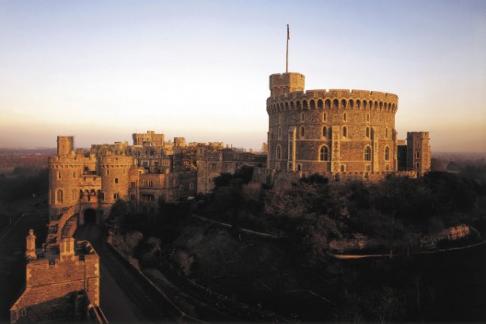
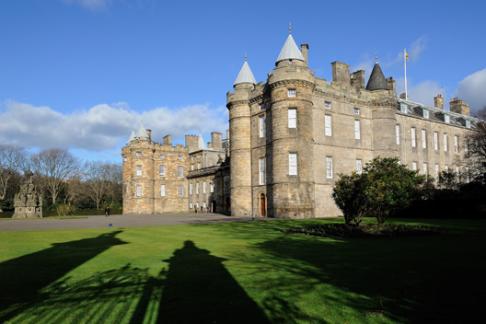
The Palace is perhaps best known as the home of Mary, Queen of Scots, and as the setting for many of the dramatic episodes in her turbulent reign. Mary was married at Holyroodhouse and witnessed the brutal killing of her secretary Rizzio by her jealous second husband, Lord Darnley, in her private apartments. The Palace briefly served as the headquarters of Bonnie Prince Charlie during the 1745 uprising. Today the State Apartments are used regularly by The Queen and other members of the Royal Family for State ceremonies and official entertaining. What there is to see: The State Apartments reflect the changing tastes of successive monarchs and are renowned for their fine plasterwork ceilings and magnificent furnishings, particularly the unrivalled collection of Brussels tapestries. One of the most famous rooms in the Palace is the Great Gallery, hung with Jacob de Wet's portraits of the real and legendary kings of Scotland. Included on the visit, a display focuses on the Order of the Thistle, the highest honour in Scotland. The Order honours Scottish men and women who have held public office or who have contributed in a particular way to national life. Shown alongside historic insignia is an example of the mantle worn at the Thistle ceremony at St Giles’ Cathedral in Edinburgh, which The Queen attends during her visit to the Palace in July. From 1 April to 31 October the gardens, which are today used for garden parties, can be included as part of a visit to the Palace of Holyroodhouse. Visitors to the gardens must keep to the paths, which are about 400 yards long. The Queen's Gallery at the Palace of Holyroodhouse in Edinburgh hosts a programme of changing exhibitions from the Royal Collection. Book here. Image Credits: 1.Royal Collection Trust / © Her Majesty Queen Elizabeth II 2018 2.Photographer: Peter Smith. Royal Collection Trust / © Her Majesty Queen Elizabeth II 2018
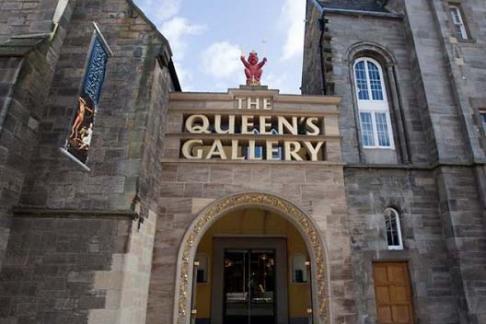
The Queen's Gallery was built in the shell of the former Holyrood Free Church and Duchess of Gordon’s School at the entrance to the Palace of Holyroodhouse. The buildings were constructed in the 1840s with funds from the Duchess of Gordon, but fell into disuse in the late 19th century. Benjamin Tindall Architects were appointed project architects for the new Queen’s Gallery in October 1999. Their central visual theme was a celebration of The Queen’s Golden Jubilee, expressed through a series of arches and screens that lead visitors from the Gallery entrance to the exhibition spaces beyond. Their design complements the original 19th-century architecture, elements of which were incorporated into the new spaces. Unsympathetic later internal alterations were removed, and a new exposed steel and concrete floor inserted to reflect the original ‘gallery’ of the Church. A new stone arched entrance was created at the centre of the Horse Wynd frontage, opposite the new Scottish Parliament building. The use of a stone archway, with a courtyard beyond, is a traditional entrance device in Scottish architecture. The main walling is of Catcastle stone, the dressed work and lettering is of Stainton stone and the base is of Kenmay granite. ‘THE QUEEN’S GALLERY’ lettering above the entrance is the work of John Neilson, a calligrapher and carver. The letters were cut from single pieces of stone. Above sits Scotland’s heraldic lion, designed by Jill Watson. The lion sedant is based on a small red lion that sits at the feet of Mary, Queen of Scots on her tomb in Westminster Abbey. (The Palace of Holyroodhouse was once home to Mary, Queen of Scots.) The monumental entrance doors of oak have gilded bronze hinges by Jill Watson. Continuing the heraldic theme, the main hinges are decorated with the Scottish lion and unicorn. The beasts are set against the adjacent urban scene of Edinburgh’s Royal Mile and the rural scene of Arthur’s Seat and Salisbury Crags. The upper hinges are made as golden boughs of flowering native trees – chestnut and laburnum, oak, rowan and hawthorn. The stone archway is decorated with a carved and gilded garland of Scottish flowers, including daisies and thistles, created by Graciela Ainsworth, an Edinburgh-based sculptor, carver and conservator. Over the old entrance to the former church is a stained-glass window by Christian Shaw. The design shows a perspective drawing of the interior of a gallery. At night, the shape of the archway is reflected by the glass lights by Keiko Mukaide set into the paving. The artist has given the tiles a water flow pattern, mirroring the stream of visitors walking in and out of the Gallery. Inside, the reception desk by Hamid van Koten is made from curved pieces of Scottish elm with kilned glass and patinated copper. The pendant lights were designed and made in Edinburgh by Ingrid Phillips. Dividing the reception from the main Gallery area is a patterned glass screen by Jacqueline Poncelet. The screen’s bronze handles by Jill Watson incorporate figures looking at art in a gallery. The dramatic central stair of native timber leads to the Gallery spaces above. The complex shape was designed by the architects with Charles Taylor Woodwork, who were responsible for the construction. Lights set into the first floor illuminate the curved balustrading.
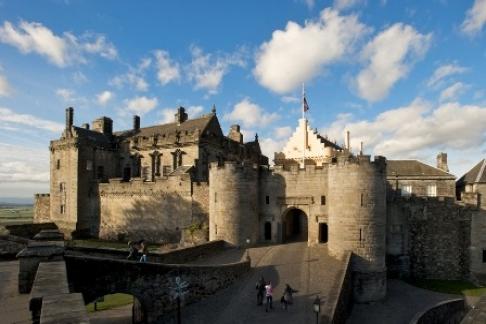
Stirling Castle is a great symbol of Scottish independence & a source of national pride. The Castle's long, turbulent history is associated with great figures from Scotland’s past such as William Wallace & Mary Queen of Scots. The Royal Palace The Palace at Stirling Castle allows visitors to step into the astonishing richness of royal life in the 1500s. James V’s Palace at Stirling is one of the finest and best-preserved Renaissance buildings in Great Britain. Following a major programme of research and re-presentation, it can now be seen by visitors much as it may have looked on completion around 1545. The decoration of the Palace’s six main rooms is overwhelmingly colourful, rich and elaborate. James and his French wife Mary of Guise aimed to present themselves as wealthy, learned and sophisticated. The decorative style belongs to the Renaissance – a great flowering in arts, literature and philosophy that revolutionised Europe in the 1400s and 1500s. Bright colours, expensive fabics and ornate patterns were essential elements. But this was not flamboyance for its own sake. The decorative scheme was filled with messages about power, prosperity and plenty. It was not limited to the interior chambers but also extended to the exterior walls, embellished with hundreds of statues and other stone-carvings. Why not combine your visit to Stirling Castle with other famous attractions and activities in Central, Tayside & Fife such as Discovery Point & RRS Discovery or Loch Lomond Aquarium
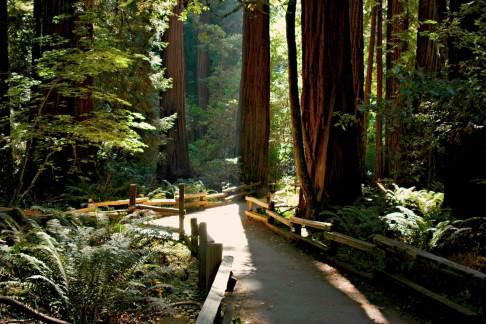
The tour begins with a pick-up from your hotel. After a quick stop to pick up picnic supplies for lunch (price not included; pre-order options available) from a local organic deli and market, you’ll head north across the Golden Gate Bridge. You will be immediately rewarded with sweeping views of the San Francisco Bay: Alcatraz Island, the city skyline, and the vast expanse of the Pacific Ocean are just a few of the picturesque vistas from this remarkable bridge. Next, we’ll wind our way through the coastal mountains of the Marin Headlands and past Mt. Tamalpais (the highest point in the North Bay region), leaving the rush of the city behind and setting the pace for a relaxing day out in the country. Once in Sonoma County, dairy farms and vineyards provide an inspiring introduction to the rolling hills and beautiful valleys that have supplied the world with fantastic wines for over 60 years. Your professional guide will give you details about the region, wine, and the day's itinerary so that you can truly appreciate your experience. The first stop will be the Benziger Family Winery & Biodynamic Vineyard, where you will enjoy a close-up look at the vineyards, fermentation facility, and crush pad on a comfortable tram tour. You’ll also have a chance to walk through their barrel caves! The tour is approximately 45 minutes long, and includes a special tasting of Benziger's biodynamic and other award-winning wines. After your tasting, enjoy your picnic lunch (included: see menu for pre-order options) in a quiet spot at one of the local wineries, surrounded by views of the beautiful countryside and vineyards. In the afternoon, you will head over to famed Napa County for more wine tasting in Oakville, Yountville, or in the town of Napa. The landscape of rolling hills laced with rows of wine grapes is impressive and will provide a romantic backdrop for memorable photographs. On the return trip, you’ll make one more photo stop above the Golden Gate Bridge - a must-do if you've never witnessed the awe-inspiring view of San Francisco from the Marin Headlands! At the end of the tour you will return to your San Francisco accommodations (around 6pm). **note: To best suit the needs of our partner wineries and our guests, it is sometimes necessary to slightly alter the itinerary of the tour. In the wintertime there is less daylight and some tasting rooms may have shorter open-hours. Your group may also make a detour to Muir Woods National Monument. If this is not an original item in your itinerary, please be aware that your entrance fee will be covered and you are welcome to enjoy the cafe and have a delicious warm breakfast or a cup of coffee in lieu of exploring the woods. Highlights: Golden Gate Bridge Marin Headlands 45 min Benziger Winery Tram Tour Napa AND Sonoma Counties Lunch INCLUDED! Excellent wine varietals for all tastes and preferences Inclusions: Hotel pick-up and drop-off Narrated guided tour Benziger Winery Tram Tour ($20 retail value) Organic, local picnic lunch (choice of turkey, ham, roast beef, or vegetarian sandwich) Wine tasting at 4-5 unique wineries (some tasting fees may apply; proper ID required for tasting) Lunch Options: Turkey with whole wheat bread, mayo, mustard, tomato, lettuce, pickle, onion comes with: pasta salad, piece of fruit, & cookie or brownie Roast Beef with whole wheat bread, mayo, mustard, tomato, lettuce, pickle, onion comes with: potato salad, piece of fruit, & cookie or brownie Ham with whole wheat bread, mayo, mustard, tomato, lettuce, pickle, onio n comes with: potato salad, piece of fruit, & cookie or brownie Vegetarian with whole wheat bread, mayo, mustard, tomato, lettuce, pickle, onion, olives, sprouts, pepperoncini, cucumber comes with: coleslaw, piece of fruit, & cookie or brownie
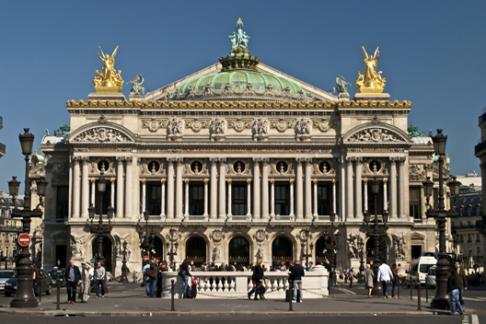
Set off for a full day excursion to Normandy from Paris with an official guide. Set off from your Paris accommodation at 06:30 for our central Paris agency. Relax during the journey by luxury air-conditioned coach before arriving at the Caen Memorial Museum at around 10:15. The Caen Memorial Museum retraces the various stages of the conflict that took place during the Second World War. Your guided tour will give you the chance to see everyday objects from life during occupation, maps, and models of military vehicles, as well as film screenings that recreate the emotions of D-Day and the Battle for Normandy. The visit continues with an included lunch at the restaurant in the Caen Memorial Museum. Menu* Starter Buffet: Légumes crus de saison et leur vinaigrette(tomates, concombres, carottes) Salades composées Charcuterie *** Table served hot dish Fondant de poulet farci aux cèpes Galette de pommes de terre / Julienne de légumes *** Chesse and Dessert Buffet: Fromages normands (Pont l’Evêque et Camembert) Tarte normande Salade de fruits Tarte au chocolat Teurgoule ** Pain de campagne (farmhouse bread) *** Drinks: Bordeaux wine (1 bottle for 4) Eau de source Coffee * Example of menu, subject to modification without any notice In the afternoon, your tour will continue to several of the iconic landmarks that played a part in the landings. Your first stop will be at the Pointe du Hoc, overlooking the hundred-foot-high cliffs. Stormed by the American Rangers on D-Day, it was one of the key German fortified sites along the Normandy coast and was equipped, at that time, with a number of heavy artillery posts. You will then visit the famous American Cemetery at Saint Laurent, located just above Omaha Beach. This 170-acre site is home to 9,387 perfectly aligned white marble headstones, a memorial, chapel, and the Garden of the Missing. It pays tribute to all the American soldiers who died during the Second World War. A small trail leads down the hill to Omaha Beach, giving you the opportunity to walk across the sand. You will have one hour to spend here. Following this visit, you will stop at Arromanches, a historic town known for its artificial port, which was built as part of the Normandy landings. The harbour saw the unloading of almost 10,000 tons of equipment. You can still make out the floating reinforced concrete "Phoenix" constructions in the water. Finally, you will make a short photo-stop near Juno Beach and its cemetery, one of the key D-Day landing beaches for Canadian troops. Return to your Paris accommodation is scheduled for around 21:30.
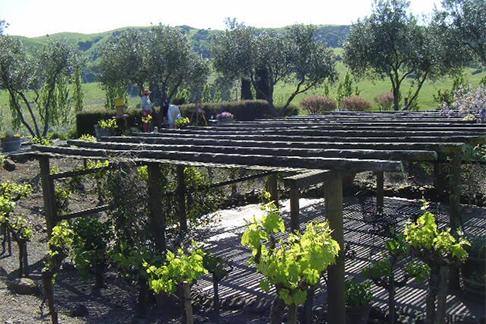
NOTES Please note: a minimum of 6 people is required to operate the wine tour Wine tasting fees are included for 1 winery; 2 nd winery is at own cost (approx. $15 per person) Children are permitted on wine tasting tours, but you must be 21 or older to sample and drink wine Hotel pickup available for the Half Day Wine Tour in the Downtown (Union Square, Financial District, Nob Hill, Lombard Street, Embarcadero and SOMA) but need to be booked with reservation or at least 48hrs in advance via [email protected] Customers must reconfirm the tour with City Sightseeing by calling +1.415.440.8687 no later than 24 hours prior to departure of the reserved tour in order to receive exact pickup time and further details.