Kostenlos
Unterstützung

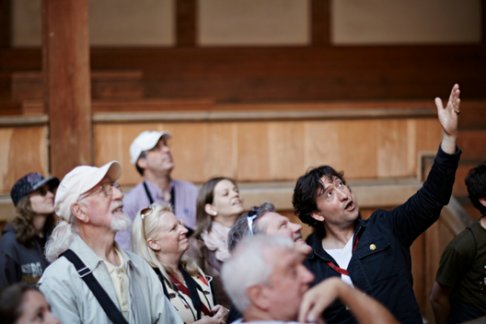
Shakespeare's Globe Exhibition is the world's largest exhibition devoted to Shakespeare and the London in which he lived and worked. Housed beneath the reconstructed Globe Theatre on London's Bankside, the exhibition explores the remarkable story of the Globe, and brings Shakespeare's world to life using a range of interactive displays and live demonstrations. Visitors to the exhibition can discover how shows were produced in the theatres of Shakespeare's time, from writing and rehearsals to music, dance and performance. There are opportunities to learn about the traditional crafts and techniques used during the process of rebuilding the Globe; to find out how special effects were produced in Shakespeare's time, to listen to recordings from some of the most memorable Shakespearean performances ever, or join the cast and add your own voice to a scene recorded by Globe actors; to create your own Shakespearean phrases in the word jungle; to watch a sword-fighting display and browse the costume collection, where you can learn about the extraordinary methods used in creating clothes 400 years ago. A visit to the Exhibition includes a guided tour of the theatre where expert guide-storytellers provide fascinating half hour tours of the auditorium, taking visitors on a journey through time back to Elizabethan London as well as the reconstruction process of the 1980's-90's and how the wooden 'o' works today as an imaginative and experimental theatrical space. An exhibition visit and theatre tour lasts about one and a half hours. Information sheets are available in English, large print, German, French, Dutch, Spanish, Portuguese, Italian, Russian, Polish, Romanian, Chinese and Japanese. NB: There is no access to the theatre during matinee performances. Visitors will be taken to the nearby archaeological site of the Rose Theatre, Bankside's first playhouse. Tower Bridge Exhibition Over 100 years ago, the Victorians built a bridge that has become one of London's most famous landmarks. High level walkways were built to allow people to cross the Thames whilst the Bridge was lifted to let tall ships sail past - Tower Bridge Today these Walkways act as viewing galleries, giving visitors the most spectacular views across an ever changing London skyline. Walkways & Exhibition: Visitors enter Tower Bridge Exhibition via the North Tower. They are then transported by lift to the top of the Tower (47 metres above the Thames) where they have a unique opportunity to see the Bridge’s steel skeleton from within. A short film explains the history and provenance of the Bridge and then there is the chance to admire the spectacular views – from both covered Walkways. Together with far-reaching views of East London, the walkway will be bolstered with a further 20 revered bridges in the extended popular display, ‘Great Bridges of the World’. On the east Walkway there are fantastic views of the Docklands and from the west Walkway you can see the new GLA building, the Tower of London, St Paul’s, the city, the Pool of London and Big Ben and the London Eye in the distance. Interactive computerised kiosks and graphic panels explain the significance of the views to visitors, as well as providing more information on the history and building of the Bridge. The interactive material and graphic panels are written in seven languages and an audio loop for the hard of hearing is also in place for the video show. There is another film to view in the South Tower before descending for the short walk to the historical Engine Rooms, included in your ticket price. Victorian Engine Rooms: These provide a fascinating insight into late 19th century engineering. Installed for the completion of Tower Bridge in 1894, these huge, and beautifully maintained, coal-driven engines were used to power the thousands of bascule Bridge lifts performed until 1976. Although lifts are now operated by electricity, the original steam engines are still in place. The Engine Rooms give visitors a chance to experiment with models demonstrating the technology behind the Bridge. There are also some amazing photographs of Tower BridgeTthroughout its lifetime – including a revealing picture of the heavy steel structure of the Bridge as the stone cladding was installed over it.
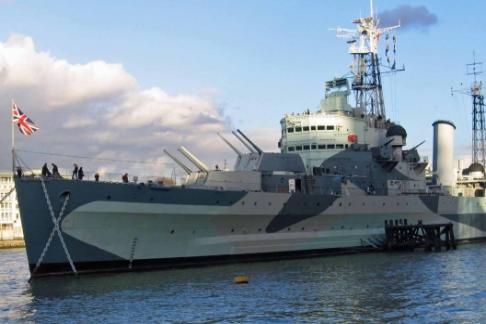
HMS Belfast One of the most powerful large light cruisers ever built, HMS Belfast is now the only surviving vessel of her type to have seen active service during the Second World War. HMS Belfast played a leading part in the destruction of the battle cruiser Scharnhorst, and also the Normandy Landings. In service with the Royal Navy until 1965, she was saved for the nation in 1971 as a unique reminder of Britain’s naval heritage. Launch! Shipbuilding Through the Ages This new family-orientated exhibition will use hands-on and computerised interactive displays and engaging film and footage to demonstrate techniques of shipbuilding, from the ‘age of sail’ to modern prefabrication methods. The exhibition will focus on the science, engineering and social history of shipbuilding in Great Britain, and the interactive elements of the exhibition will allow children of all ages to get involved and experience this history. Explore ‘What shall we give in return for so much?’ One of the most powerful large light cruisers ever built, HMS Belfast is now the only surviving vessel of her type to have seen active service during the Second World War. Serving Britain for 32 years, she played an important role in both the Second World War and the Korean War as well as performing peacekeeping duties throughout the 1950s and 1960s. Saved from destruction in 1971, HMS Belfast is now part of the Imperial War Museum and is the first ship to be preserved for the nation since Nelson’s Victory. Through its team of staff and volunteers – many of whom are veteran crew – the Imperial War Museum is dedicated to making sure that HMS Belfast still has a role to play in reminding visitors of her unique place in Britain’s maritime heritage. History of HMS Belfast The term 'cruiser' goes back to the days of sailing ships when large frigates could be detached from the main fleet to cruise independently. The sailing cruiser, like her twentieth-century counterpart, was sufficiently powerful and fast to attack and destroy enemy commerce raiders. During the nineteenth century when sail gave way to steam and wooden ships were replaced by those built of iron, and later of steel, the cruiser evolved into a powerful warship which was used to patrol the Empire trade routes and protect friendly merchant shipping. After the First World War (1914-1918) a single category of cruiser emerged whose size was indicated by the size of its guns; thus, HMS Belfast is a 6-inch cruiser, designed for the protection of trade, for offensive action, and as a powerful support for amphibious operations. Please note: children under 16 must be accompanied by an adult. Please allow 1½ - 2 hours for your visit. Tower Bridge Exhibition Walkways & Exhibition: Visitors enter Tower Bridge Exhibition via the North Tower. They are then transported by lift to the top of the Tower (47 metres above the Thames) where they have a unique opportunity to see the Bridge’s steel skeleton from within. A short film explains the history and provenance of the Bridge and then there is the chance to admire the spectacular views – from both covered Walkways. On Monday 1st December, Tower Bridge’s East Walkway will reopen with its own GLASS FLOOR, joining the West Walkway to complete our new-look exhibition. Together with far-reaching views of East London, the walkway will be bolstered with a further 20 revered bridges in the extended popular display, ‘Great Bridges of the World’. On the east Walkway there are fantastic views of the Docklands and from the west Walkway you can see the new GLA building, the Tower of London, St Paul’s, the city, the Pool of London and Big Ben and the London Eye in the distance. Interactive computerised kiosks and graphic panels explain the significance of the views to visitors, as well as providing more information on the history and building of the Bridge. The interactive material and graphic panels are written in seven languages and an audio loop for the hard of hearing is also in place for the video show. There is another film to view in the South Tower before descending for the short walk to the historical Engine Rooms, included in your ticket price. Victorian Engine Rooms: These provide a fascinating insight into late 19th century engineering. Installed for the completion of Tower Bridge in 1894, these huge, and beautifully maintained, coal-driven engines were used to power the thousands of bascule Bridge lifts performed until 1976. Although lifts are now operated by electricity, the original steam engines are still in place. The Engine Rooms give visitors a chance to experiment with models demonstrating the technology behind the Bridge. There are also some amazing photographs of Tower BridgeTthroughout its lifetime – including a revealing picture of the heavy steel structure of the Bridge as the stone cladding was installed over it.
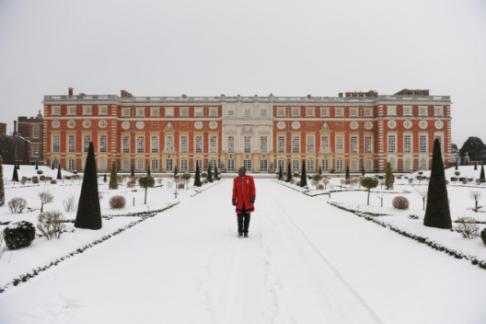
Hampton Court Palace has provided a luxurious retreat for many of Britain's most famous Kings and Queens. Henry VIII was so inspired by it that he spent three of his honeymoons here. And visitors continue to escape to Britain's greatest palace to experience its history, splendour and stunning scale. Discover what it was really like to live and work at Hampton Court Palace. Take a fascinating journey through 500 years of royal history. Marvel at the impressive architecture and opulent interiors of the State Apartments and see the vast Tudor Kitchens in full swing. Enjoy the breathtaking Great Hall and Chapel Royal, and see how Sir Christopher Wren transformed the palace to rival Versailles. Take time to appreciate one of the finest collections of Renaissance paintings in Europe, and listen to tales of intrigue at the royal court from expert guides dressed in full historical costume. Or enjoy an audio tour, available in 9 languages: English, French, German, Spanish, Italian, Dutch, Russian, Korean and Japanese. They can be collected from the Information Centre in Clock Court. And that's before you've even begun to explore the stunning riverside gardens where you'll find the famous Maze and one of the world's oldest vines. ‘Top Ten’ things to see and do at Hampton Court. These sights are 'unmissable' Access to these sights is included in your admission ticket, unless otherwise stated. Henry VIII's Great Hall The Great Hall is England’s greatest medieval hall and one of Britain’s oldest theatres. William Shakespeare’s company performed there in 1603-4. Young Henry VIII exhibition Meet the 'pin-up' prince, before he became fat old Henry VIII, at our Young Henry VIII exhibition (included in your admission ticket). The exhibition includes paintings and interactive displays. The world famous Maze Test yourself and get enjoyably lost in 'the most famous Maze in the history of the world'. Entry is included in your ‘All Palace and Gardens’ admission ticket. A 'Maze only' entry is also available. Tudor kitchens and live Tudor cookery Built to feed the Court of Henry VIII, the kitchens were expected to provide meals for 600 people twice a day. See the kitchens today and experience the sights and smells of a real Tudor kitchen! Beautiful gardens Wander through over 60 acres of beautifully maintained and internationally celebrated gardens at Hampton Court Palace. Entry is included in your ‘All Palace and Gardens’ admission ticket. Henry VIII: Heads and Hearts Join Henry for his wedding celebrations and see surprising portraits and personal objects of his wives. Family fun activities We have a wide range of activities and tours to entertain families. Choose from family trails, our world-famous maze, costumed guided tours, live Tudor cookery and much much more. The Chapel Royal This beautiful chapel has been in continuous use for over 450 years. Visitors are welcome to attend religious services at The Chapel Royal. Tiltyard café - kids' meal deal! History makes you hungry! At the Tiltyard café, choose from any kid's hot meal with lemonade or milk and a fairy cake for just Deliciously great value.
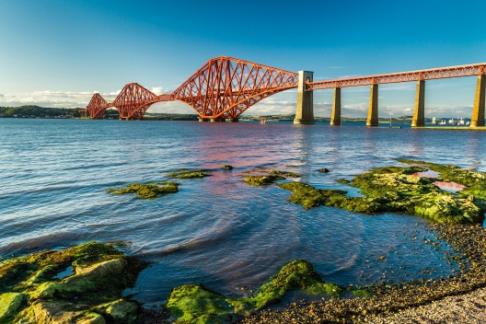
Desde Edimburgo, viajará al noroeste, pasando por el castillo de Stirling, antes de hacer su primera parada en Kilmahog. Aquí habrá un descanso para tomar un refresco y la oportunidad de ver el ganado de cerca. A continuación, viajará hasta Rob Roy Country of Clans MacGregor y Campbell. Seguirá por los paisajes de Rannoch Moor hasta Glen Coe, una de las cañadas más famosos de Escocia, lugar de la Masacre de Glencoe en 1692. Allí se hará una pausa para tomar fotos y disfrutar de la atmósfera inquietante en este valle. El viaje seguirá por Loch Linnhe, deteniéndose en el área de Fort William para comer, y a continuación seguir el viaje por montaña más alta de la Gran Bretaña, Ben Nevis, antes de adentrarse en la belleza natural de Great Glen. Podrá contemplar el canal de Caledonia y el bonito pueblo de Fort Augustus, con vistas espectaculares del lago Ness, a medida que circula a lo largo de la costa del castillo de Urquhart. El lago Ness, con aproximadamente 40 km de largo y con 215 m de profundidad, es el lugar más famoso para ver al monstruo del lago Ness, conocido cariñosamente como "Nessie". Pasará 2 horas en el lago Ness, donde podrá optar por explorar las ruinas del castillo de Urquhart *, aprender de su historia en el centro de visitantes, y realizar un crucero a través del lago que ha ganado premios. Pasando a través de Inverness, capital de las Highlands, empezará el viaje de regreso a casa, cruzando las montañas Grampian y el paisaje arbolado de Perthshire, incluyendo el Bosque de Atholl, antes de disfrutar de una parada para tomar un refresco en la ciudad turística de estilo victoriano de Pitlochry, en el camino de vuelta a Edimburgo. *OPCIÓN EXTRA.
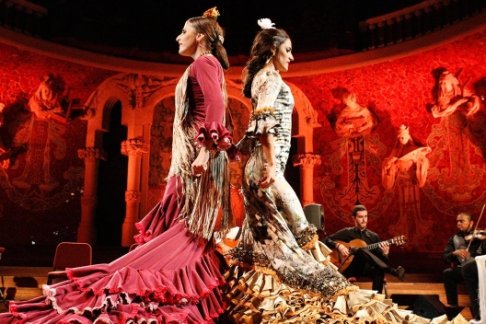
Poliorama Theatre
The Teatre Poliorama was inaugurated in 1906, it was built inside the building of “Real Academia de Ciencias y Artes” of Barcelona. Located in the heart of the Ramblas of Barcelona, one of the most famous and visited streets in the world, the Teatre Poliorama has always played a prominent role in the catalan cultural life.
During the Spanish Civil War, seized by the CNT-FAI, was the scene of shootings carried out by members of the POUM and CNT that George Orwell described in his work “Homage to Catalonia”. A personal story of the writer about his participation in the conflict between the years of 1937 and 1938.
The Teatre Poliorama is considered a classic of Las Ramblas and one of the main points of diffusion of culture in Barcelona.
Program:
Córdoba (Isaac Albéniz)
La vida breve (Manuel de Falla)
Zyriab (Paco de Lucía)
Recuerdo de Alhambra (Narciso Yepes)
Asturias (Isaac Albéniz)
Entre dos aguas (Paco de Lucía)
Ojos verdes (Rafael de León)
Penita Pena (Rafael de León)
La Danza del Fuego Fatuo (Manuel de Falla)
La bien paga (Juan Mostazo, Ramón Perelló)
Cast:
Percusión: Jacobo Sánchez
Guitarra: Luis Miguel Gómez
Guitarra: Juan Carlos Gómez
Bailaora: Vanesa Gálvez “La Lírio”
Cantaora: Mónica “La Chicuela”

Highlights Soar in the heart of the Miami Skyline Choose from 3 different length flights No previous experience needed Ticket Includes Flying suit, helmet, goggles and ear plugs. Warm-up and stretches pre-flight Flight stunts by the instructor Ticket Excludes Transportation Food & Beverages Parking SuperFlight is an outdoor vertical wind tunnel that simulates skydiving to create a unique experience in a safe environment, without having to jump out of an airplane. This is a safe way to fulfill humanity’s oldest dream – to fly! SuperFlight's vertical wind tunnel generates winds over 120 miles per hour so you can float and fly like a bird up to 10 feet high, with the guidance of an instructor. This is bucket list free-flight experience that sends you soaring at the heart of the Miami skyline. Anyone can fly! No previous experience needed, and you can start as young as 3 years old. What to Expect: Check-in: You will be greeted by our friendly staff who will help you to book flights and answer any questions. You will then be asked to fill out a waiver and will be introduced to your flight instructor. Briefing/Training: The flight instructor will instruct you about the process of the flight, as well as the rules and safety standards. You will be shown flying postures to acquire during the flight. A quick video will be played to first time flyers in addition to the training from the instructor. Gear Up: The flight instructor will give the you all the flying gear necessary and show you how to properly use it. Flight: At the beginning, the flight instructor will help you to get adjusted to the wind flow. When you are accustomed to it, the instructor will help you safely fly in the wind stream. If you can fly well, the instructor will rise with you in the air up to 10 feet in height. Flight Options • Taste of Flight: 1 flight – Equivalent to 3-12,000 skydives • Jungle Adventure: 2 flights – Equivalent to 6-12,000 skydives • Great Jungle Adventure: 3 flights – Equivalent to 9-12,000 skydives RESTRICTIONS & SAFETY You can fly if you are at least 3 years old, max. weight 285 lbs., shorter than 6’8”. Previous preparation and experience are not required. All flight equipment will be provided. Customer must follow instructor’s rules and guidance. Both the wind tunnel security features and the flight instructor will keep you safe. You cannot fly if you have severe joint injuries or fractures, have injuries restricting the movement of your back or other places, are pregnant, have epilepsy, are under the influence of alcohol and / or drugs. Rain, snow, or wind will not interfere with the flights. Flights will only be cancelled during a thunderstorm