Kostenlos
Unterstützung


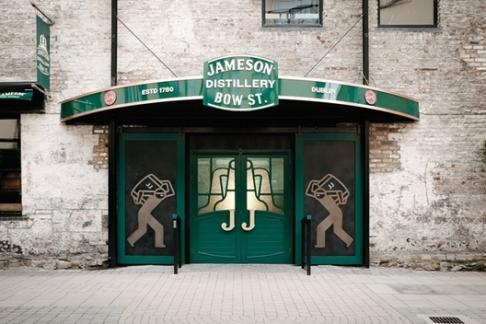
Dublin's Hop up Hop off Tour stops include: Abbey Street - Lower O'Connell St Trinity College Dublin - College Green Nassau Street - Nassau Street National Gallery. - Merrion Square West Government Buildings - Merrion Sq West St. Stephen's Green - Grafton Street. Tourism Centre - Suffolk Street Temple Bar - Dame Street. Dublin Castle - Cork Hill Christchurch / Dublinia - Christ Church Place. St Patrick's Cathedral - Patrick Street. Guinness Storehouse - St James's Gate Museum of Modern Art - Royal Hospital Kilmainham. Kilmainham Gaol - Old Kilmainham Heuston Rail Station - St. John's Road Dublin Zoo - Phoenix Park Ryan's Victorian Bar - Parkgate Street National Museum - Collin's Barracks Jameson Distillery, Bow St. - Smithfield - Hop off here! The Four Courts - Ormond Quay Liffey River Cruise - Bachelors Walk Dublin Bus HQ Upper O'Connell Writers Museum Parnell Square North Tours operate daily from 09:00. You can redeem your ticket with the tour driver on any of the buses, or, alternatively, go to Dublin Bus Head Office, 59 Upper O'Connell Street.
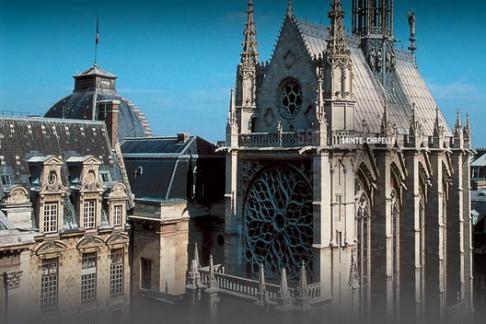
The Sainte-Chapelle Be dazzled by the 1,113 stained glass windows at this jewel of the Rayonnant Gothic period. The first of the Holy Chapels to be decorated with exceptional stained-glass windows. Known for having housed Christ’s Crown of Thorns, it has spectacular stained-glass windows. Veritable walls of light that make the Sainte-Chapelle the jewel of French Gothic. The Conciergerie Discover this Medieval royal palace that became a revolutionary tribunal and Marie-Antoinette’s prison. Discover on the Île de la Cité, the exceptional Gothic rooms of the first royal palace of Paris and the reproduction of the prison cells of the revolutionary tribunal. At the end of the 17th century, numerous people were imprisoned in the prison of the Conciergerie, including Marie-Antoinette. The Conciergerie is also listed as a historical building by the Unesco. Pantheon On Montagne Sainte-Geneviève in Paris, visit the Panthéon, masterpiece of the architect Soufflot. Come and learn all about the Pantheon, this incredible building by Soufflot who's ambition was to outdo the churches of St. Peter's in Rome and St. Paul’s in London. Observe the style of this building, inspired by the Pantheon commissioned by Agrippa in Rome. From 1874 onwards, the sanctuary was decorated with paintings on canvas illustrating the life of Saint Geneviève and the epic story of the beginnings of both Christianity and the monarchy in France. Make the most of the Pantheon with a visit into the Crypt, get to see the tombs of the eminent personalities who shaped France's national identity. A permanent exhibition gives details about the lives and works of those who are buried here, from Voltaire and Rousseau to Alexandre Dumas. You'll also have the chance to see the Foucault’s pendulum*, first installed in 1851 and removed then reinstalled in 1995, this device demonstrated the Earth's rotation.
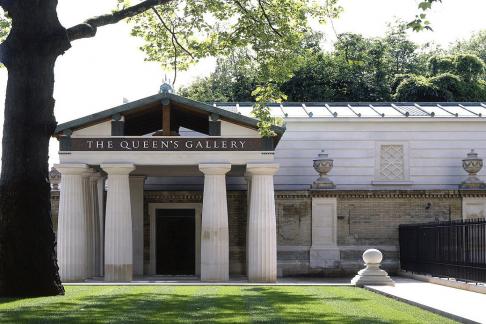
The Queen’s Gallery at Buckingham Palace is a permanent space dedicated to changing exhibitions* of items from the Royal Collection, the wide-ranging collection of art and treasures held in trust by The Queen for the Nation. Ticket Includes: Entry tickets to The Queen’s Gallery, London Complimentary multimedia tour Entry to current special exhibition* (see below for details) *Special Exhibition Dates: 9 Nov 2018 - 28 April 2019: Russia, Royalty & the Romanovs and 'Roger Fenton’s Photographs of the Crimean War, 1855' 24 May - 13 Oct 2019: Leonardo da Vinci: A Life in Drawing. To commemorate the 500th anniversary of the death da Vinci, this exhibition will include 200 of his drawings. 15 Nov 2019 - 4 May 2020: George IV: Art & Spectacle Please Note: The Queen's Gallery will be closed between these special exhibitions
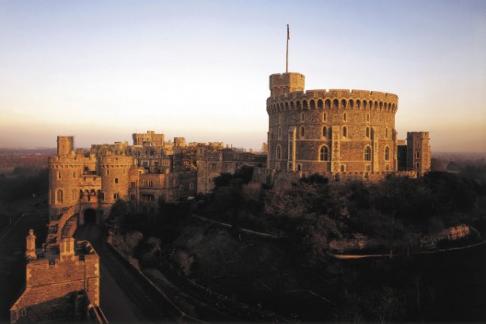
Windsor Castle, the largest and oldest occupied castle in the world, is one of the official residences of Her Majesty The Queen. The Castle's dramatic site encapsulates 900 years of British history. It covers an area of 26 acres and contains, as well as a royal palace, a magnificent chapel and the homes and workplaces of a large number of people. What there is to see: The magnificent State Apartments are furnished with some of the finest works of art from the Royal Collection, including paintings by Rembrandt, Rubens, Canaletto, Gainsborough and the famous triple portrait of Charles I by Sir Anthony van Dyck. In 1992 fire destroyed or damaged more than 100 rooms at the Castle. By good fortune the rooms worst affected were empty at the time, and as a result, few of the Castle's artistic treasures were destroyed. The highly acclaimed restoration work, completed in 1997, is a testament to the extraordinary skills of some of the finest craftsmen in Europe. From October to March visitors can also enjoy George IV's private apartments (the Semi-State Rooms), among the most richly decorated interiors in the Castle. St George's Chapel is one of the finest examples of Gothic architecture in England. It is the spiritual home of the Order of the Garter, the senior order of British Chivalry established in 1348 by Edward III. Within the chapel are the tombs of ten sovereigns, including Henry VIII and his third wife Jane Seymour, and Charles I. Among the highlights of a visit to Windsor is Queen Mary's Dolls' House, the most famous dolls' house in the world. The Drawings Gallery shows changing exhibitions of material from the Royal Library at Windsor Castle. The special display below is shown alongside a selection of treasures from the Royal Library. Photographer Credits: Image 1: Photographer: Mark Fiennes, Royal Collection Trust / © Her Majesty Queen Elizabeth II 2013 Image 2: Photographer: Dennis Gilbert, Royal Collection Trust / © Her Majesty Queen Elizabeth II 2013 Image 3: Photographer: Ian Jones, Royal Collection Trust / © Her Majesty Queen Elizabeth II 2013 Image 4: Photographer: John Freeman, Royal Collection Trust / © Her Majesty Queen Elizabeth II 2013 Hampton Court Palace Hampton Court Palace has provided a luxurious retreat for many of Britain's most famous Kings and Queens. Henry VIII was so inspired by it that he spent three of his honeymoons here. And visitors continue to escape to Britain's greatest palace to experience its history, splendour and stunning scale. Discover what it was really like to live and work at Hampton Court Palace. Take a fascinating journey through 500 years of royal history. Marvel at the impressive architecture and opulent interiors of the State Apartments and see the vast Tudor Kitchens in full swing. Enjoy the breathtaking Great Hall and Chapel Royal, and see how Sir Christopher Wren transformed the palace to rival Versailles. Take time to appreciate one of the finest collections of Renaissance paintings in Europe, and listen to tales of intrigue at the royal court from expert guides dressed in full historical costume. Or enjoy an audio tour, available in 9 languages: English, French, German, Spanish, Italian, Dutch, Russian, Korean and Japanese. They can be collected from the Information Centre in Clock Court. And that's before you've even begun to explore the stunning riverside gardens where you'll find the famous Maze and one of the world's oldest vines. ‘Top Ten’ things to see and do at Hampton Court. These sights are 'unmissable' Access to these sights is included in your admission ticket, unless otherwise stated. Henry VIII's Great Hall The Great Hall is England’s greatest medieval hall and one of Britain’s oldest theatres. William Shakespeare’s company performed there in 1603-4. Young Henry VIII exhibition Meet the 'pin-up' prince, before he became fat old Henry VIII, at our Young Henry VIII exhibition (included in your admission ticket). The exhibition includes paintings and interactive displays. The world famous Maze Test yourself and get enjoyably lost in 'the most famous Maze in the history of the world'. Entry is included in your ‘All Palace and Gardens’ admission ticket. A 'Maze only' entry is also available. Tudor kitchens Built to feed the Court of Henry VIII, the kitchens were expected to provide meals for 600 people twice a day. See the kitchens today and experience the sights and smells of a real Tudor kitchen! Beautiful gardens Wander through over 60 acres of beautifully maintained and internationally celebrated gardens at Hampton Court Palace. Entry is included in your ‘All Palace and Gardens’ admission ticket. Henry VIII: Heads and Hearts Join Henry for his wedding celebrations and see surprising portraits and personal objects of his wives. Family fun activities We have a wide range of activities and tours to entertain families. Choose from family trails, our world-famous maze, costumed guided tours, live Tudor cookery and much much more. The Chapel Royal This beautiful chapel has been in continuous use for over 450 years. Visitors are welcome to attend religious services at The Chapel Royal. Tiltyard café - kids' meal deal! History makes you hungry! At the Tiltyard café, choose from any kid's hot meal with lemonade or milk and a fairy cake for just £3.95. Deliciously great value.
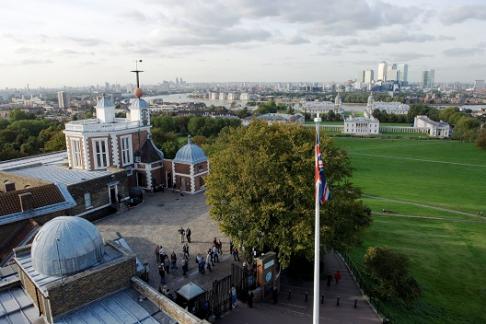
London Eye - Standard Experience Please remember that the boarding procedure for the London Eye takes around 30 minutes Our price is the same as you would pay buying on the London Eye website or telephone booking lines and there are no constraints on last minute bookings. For a different perspective visit at sunset and see the city lights come on and the skyline awash with vibrant colours. Unaccompanied children are not permitted to board the London Eye. Any booking made for an unaccompanied child will be taken as confirmation that the child will be joining a party under the supervision of an adult aged 18 years or older. 365 Tickets will not be held responsible if a child is turned away at the London Eye, nor will the ticket be refundable! Safety and security is our number one priority. For your safety and convenience, please read the following information on what items can and can not be taken on to the London Eye. Please be aware that all guests are subject to a security search when boarding the London Eye. Please note that the following items CAN be taken on board the London Eye: • briefcases • laptops • small day size rucksacks and bags (maximum size 18" x 13" x 8" or 46cm x 33cm x 20cm) • baby bags The following items CANNOT be taken on board the London Eye; • large bags/suitcases or rucksacks • motorcycle helmets • skateboards and rollerblades • tripods (unless agreed in advance with the London Eye) • baby buggies* • prohibited items** If you are unsure . * Baby buggies can be left at our 'Buggy' area facility in the ticket hall, although only for the duration of the experience. ** Prohibited items include sharp objects or anything which may be considered a security risk including penknives, scissors, metal nail files, toy or replica guns. If such objects are found or declared they will be checked in and returned to you after your experience providing the item is legal in the UK. Terms and Conditions 1. Confiscated objects are left entirely at the owner's risk at all times. 2. London Eye Company (LEC) accepts no responsibility for the loss of or damage to any objects left with LEC. 3. LEC is entitled to refuse to store any visitor's objects at its sole discretion whether for public safety reasons or any other reason.
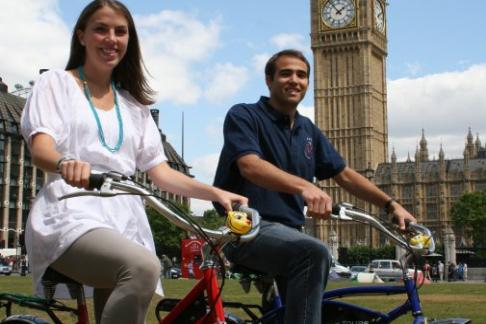
This is the text for the Frequently Asked Questions that applies to this specific tour. (Q) Do tours run all year round? (A) Yes, from November to March we will run tours on a reduced schedule at 11am from Thursdays to Mondays, inclusive. Please see the tour page for full details. (Q) Where is the meeting point for the tour? (A) Directly outside Queensway tube station, which is on the central line (the red line cutting across the map from east to west). 15 minutes before the start of the tour, one of our guides will be standing by the red phone boxes holding a Fat Tyre sign. (Q) Is the tour difficult? (A) No. Most of the time is spent on bike lanes within the Royal Parks. There is a bit of road riding and a few crossings so a basic level of cycling proficiency is required. (Q) What happens if it rains? (A) We run tours rain or shine and have plenty of rain ponchos. We find tours in the rain to be a different kind of fun and an even more fun memory! If you have a reservation and the weather is really bad, you are welcome to reschedule the tour for any other day for up to year. (Q) Do we stop for lunch? (A) Yes. We usually stop near Trafalgar Square where there are plenty of options for lunch including to join your guide at a traditional English pub. Otherwise, we may stop in St James park next to a cafe. (Q) Where does the tour end? (A) Both tours finish at the same place they start. (Q) Do we go inside the sites? (A) No, the bike tours are an overview of the sites and more about getting a feel for the city. However, on private tours you can arrange to take extra time at the sites if you'd like to go inside. (Q) Will we be able to take photos? (A) Yes. There will be a chance to take many photos at the designated stops. (Q)Is there a space to store bags or luggage? (A)Yes. You are welcome to leave bags, luggage or unwanted family members in our garages. Someone is usually in the office and it will be locked up if they have to leave. While we have never had a single case of theft or loss of items, you do leave them at your own risk. (Q) Do you provide the bikes? (A) Absolutely. (Q) Can I supply my own bike? (A) You are welcome to bring your own bicycle. Our insurance only covers the theft of our own bicycles, so please do bring your own lock for the lunch stop. (Q) Can an adult ride on the tandem? (A) No. Our tandems are known as tag-alongs which attach to adult bikes and are designed for children up to about the age of five years old.. (Q) Are helmets provided? (A) Yes. You are not compelled by law to wear helmets in the UK, but we have more than enough for everyone so the choice is entirely yours.