Libre
Soutien


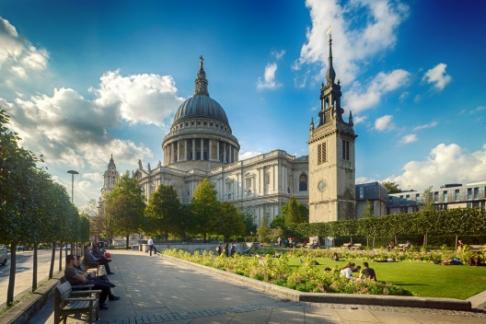
St Paul’s Cathedral, whose dome dominates London’s skyline, is England’s architectural masterpiece and place of national celebration. The cathedral was designed by the famed architect Sir Christopher Wren, after the Great Fire of London in 1666 destroyed its predecessor. The cathedral took 35 years to build from 1675 – 1710, spanning the lives of five monarchs and was the first cathedral to have been built and completed in its architect’s lifetime. St Paul’s Cathedral is where people and events of overwhelming national significance have been celebrated, mourned or commemorated. From state funerals for British heroes such as Sir Winston Churchill, to the Royal Wedding of Prince Charles to Lady Diana Spencer, and National Services of Thanksgiving to celebrate the Silver, Golden and Diamond Jubilee’s of Her Majesty the Queen. Touch-screen multimedia guides in nine languages are included for sightseers, offering up to 90 minutes of audio commentary, videos and imagery for a self guided tour. Tours led by cathedral guides are also offered, usually starting at 10.00, 11.00, 13.00 & 14.00 and last for 90 minutes; visitors should register to join a tour once inside the cathedral. Explore the cathedral floor then visit the Whispering Gallery to test the unique acoustics. Climb further to the Stone and Golden Galleries, which afford breathtaking panoramic views across the city. Descend to the crypt which houses tombs and memorials to famous Britons such as Admiral Lord Nelson, The Duke of Wellington and Wren himself.
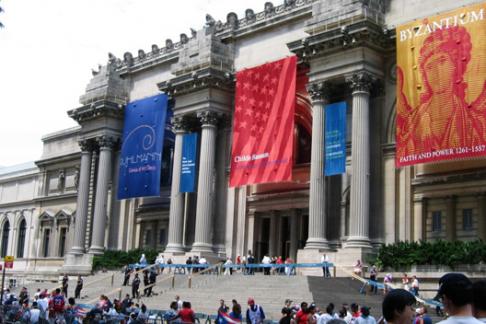
New York CityPASS®: See New York's six best attractions at one great price. Skip most ticket lines and save over $82.00. The New York CityPASS® program packs six of New York’s best attractions into a prepaid ticket book that saves over 42% off regular combined admission — and allows users to skip most main-entrance ticket lines. CityPASS New York tickets are valid for 9 days from start of use, give priority entry to many attractions and come with an informative pocket-sized booklet. With your CityPASS you can see breathtaking views of New York from the 86th floor Observation Deck of the Empire State Building or enjoy free entry to the American Natural History Museum and the Metropolitan Museum of Art. You can also choose between Top of the Rock Observation Deck at the Rockefeller Centre or the ultra-modern Guggenheim Museum and a vast array of iconic attractions. The CityPASS New York also offers a choice of two river cruises for more relaxed sightseeing. New York CityPASS® ticket books include: • Empire State Building Experience (day/night entry to the 86th-floor Observatory • American Museum of Natural History • The Metropolitan Museum of Art (same-week admission to The Cloisters museum and gardens after visiting the Met) • Top of the Rock® Observatory OR Guggenheim Museum • Statue of Liberty & Ellis Island OR Circle Line Sightseeing Cruises • 9/11 Memorial & Museum OR the Intrepid, Sea, Air & Space Museum Option Tickets — You choose which of the two attractions you prefer to visit, but you do not need to decide this at the time of purchase. We have done all the work so you can save time and money. Each ticket booklet is packed with useful information, such as hours of operation, transportation information, contact information and insiders’ tips so you can use each moment of your vacation to its fullest - yet it is so compact, it will fit into your back pocket. It’s all you need to see the best of the city that never sleeps - New York City! Why not combine this ticket with an 2 Day Hop-on/Hop-off Double Decker Bus Tour?
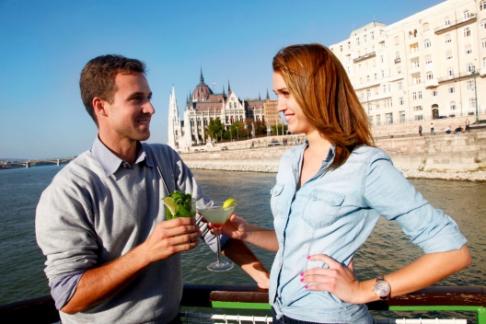
Included Free hotel pick up at 09.30 or 14.00 Professional tour guide (during the city tour) Air-conditioned vehicle 1 drink of your choice (during the boat tour) Audio guide in 30 languages (on the boat) Not included Hotel drop-off Transfer to the pier Entrance fees Tips
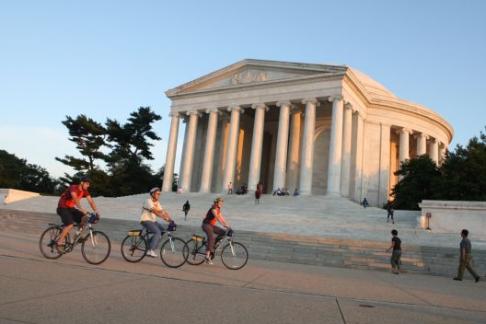
Explore the National Mall and experience the joy and freedom of riding the most unique vehicle created.
After learning how to ride your Segway, you’ll roll right up the center of Pennsylvania Avenue, glide to the monuments and memorials on the National Mall, and visit some fun off-the-mall spots along the way.
On this tour, you will see: US Capital Building, Library of Congress, Supreme Court, Smithsonian Castle and several Smithsonian museums, Washington Monument, WWII Memorial, Korean War Veterans Memorial, Vietnam Veterans Memorial, and the Lincoln Memorial, the White House and more.
Inclusions: Guided tour includes Segway, helmet, snack, and bottled water
NOT included: Gratuities
Participants must be 16 years or old. Weight minimum is 100lbs, maximum 260 lbs.
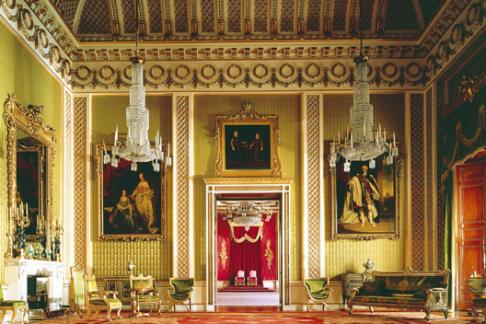
Buckingham Palace serves as both the office and London residence of Her Majesty The Queen, as well as the administrative headquarters of the Royal Household. It is one of the few working royal palaces remaining in the world today. Today the Buckingham Palace State Rooms are used extensively by Her Majesty The Queen and Members of the Royal Family to receive and entertain their guests on State, ceremonial and official occasions. During August and September when The Queen makes her annual visit to Scotland, the Palace's nineteen state rooms are open to visitors. What there is to see? The Buckingham Palace State Rooms form the heart of the working palace and are lavishly furnished with some of the greatest treasures from the Royal Collection - paintings by Rembrandt, Rubens, Poussin and Canaletto; sculpture by Canova; exquisite examples of Sèvres porcelain; and some of the finest English and French furniture. In celebration of The Queen's 90th birthday, a special exhibition will be staged across each of Her Majesty's official residences during 2016. Fashioning a Reign: 90 Years of Style from The Queen's Wardrobe (23 July – 2 October 2016) The Garden Described as a 'walled oasis in the middle of London', the Palace's garden is home to thirty different species of bird and more than 350 different wild flowers, some extremely rare. Visitors end their tour with a walk along the south side of the garden, with splendid views of the west front of the Palace and the famous lake. Audio Guide An audio guide is included in the ticket price and is available in English, French, German, Spanish, Italian, and Japanese, Russian and Mandarin. There is also a family audio guide (in English only) and accompanying activity trail, suitable for children 7-11 years. Changing of the Guard The Changing of the Guard ceremony takes place at 11:30 daily from April until the end of July and on alternate days for the rest of the year, weather permitting. The new guards arrive at the forecourt of the Palace at 11:30 from Wellington Barracks. The journey takes about 5 minutes and the soldiers are accompanied by a band. The ceremony is conducted on the Palace forecourt and takes approximately forty minutes to complete. [The Army have not yet released the schedule for July, August or September.] Wheelchair Access If you require wheelchair access or the use of the lift, you should not book with 365 Tickets.com and should pre-book tickets directly with Buckingham Palace. Access booking line: 020 7766 7324 www.royalcollection.org.uk or email [email protected] Windsor Castle, the largest and oldest occupied castle in the world, is one of the official residences of Her Majesty The Queen. The Castle's dramatic site encapsulates 900 years of British history. It covers an area of 26 acres and contains, as well as a royal palace, a magnificent chapel and the homes and workplaces of a large number of people. Kew Gardens Kew Gardens, is a World Heritage Site located in 121 hectares of stunning vistas with six magnificent glasshouses set in a beautiful landscape beside the River Thames between Richmond and KEW in south-west London. Kew Gardens represents more than 250 years of historical gardens. It is home to a remarkable collection of over 30,000 types of plants from all over the world that range from the decorative to the peculiar. Kew Gardens provide opportunities for public enjoyment and enrichment and the behind-the-scenes scientific work helps ensure a sustainable future for plants and people. In the summer of 2004, Kew's determination to make serious botany great fun for children was demonstrated with the opening of 'Climbers and Creepers'. Bringing a new use to an old cycad house by White Peaks, Climbers and Creepers engages children from around 3-9 years in the pleasures of learning more about plants and their relationships with animals and people. Apart from the sheer beauty and tranquillity of the garden's landscapes Kew offers a wonderful day out for all, whether horticulturally, historically or botanically inclined. Botanical Highlights The dates below are approximate, and flowering can vary by three to four weeks, depending on the weather. Image Credits: Image 1: Photographer: Derry Moore, Royal Collection Trust / © Her Majesty Queen Elizabeth II 2013 Image 2 : Photographer: Peter Smith, Royal Collection Trust / © Her Majesty Queen Elizabeth II 2013 Image 3 : Photographer: Andrew Holt, Royal Collection Trust / © Her Majesty Queen Elizabeth II 2013 Image 4: Photographer: Derry Moore, Royal Collection Trust / © Her Majesty Queen Elizabeth II 2013

Go San Francisco Card features UNLIMITED admission to OVER 45 Attractions in San Francisco and the surrounding Bay Area for one low price. FREE admission to over 45 top attractions, including SFMOMA, Historic Cable Car ride, Deluxe Wine Country Tour, Legion of Honor, Golden Gate Bay Cruise®, Monterey & Carmel Tour, California Academy of Sciences – Steinhart Aquarium, Asian Art Museum, Six Flags Marine World, Exploratorium, wineries, historic sites, botanical gardens, and MORE …… Plus, a 148-page guidebook and 50-20% value added savings on shopping, dining, and tour services or.. Unlimited admission to over 45 top San Francisco Bay Area attractions, including SFMOMA, Historic Cable Car ride, Monterey & Carmel Tour, Legion of Honor, Golden Gate Bay Cruise®, California Academy of Sciences – Steinhart Aquarium, wineries, historic sites, botanical gardens, and more. Plus, a 148-page guidebook and 50-20% value added savings on shopping, dining, and tour services. How it Works It's easy as 1-2-FREE 1. Go to a participating attraction, restaurant or shop. 2. Present Go San Francisco Card™. 3. Admission is granted to the attraction (no cash changes hands) or get a discount automatically. The Go San Francisco Card™ guidebook makes it easy to find every participating attraction, restaurant, shop and historic point of interest in and around San Francisco. The Go San Francisco Card™ comes in 1, 2, 3 or 5 day increments. The card is activated the first time you use it. It is then valid for that day the remaining number of days purchased within a 14 day period. Benefits Value, Choice, Flexibility and Savings The Go San Francisco Card™ includes over $250.00 in FREE admissions. Go to as many attractions as you like and enjoy them all for one low price. Because all the attractions are included you can change you itinerary at any time. If you are in a group, you can split up and meet later. Use the handy 124 page guidebook to plan your itinerary before you arrive and make the most of your visit. Save up to 20% on shopping, dining and services all over the city.