Libre
Soutien
Historic setting: The Household Cavalry Museum sits within Horse Guards in Whitehall, central London, one of the city’s most historic buildings. Dating from 1750, it is still the headquarters of the Household Division, in which the Household Cavalry has performed the Queen’s Life Guard in a daily ceremony that has remained broadly unchanged for over 350 years. The Household Cavalry: The Household Cavalry was formed in 1661 under the direct order of King Charles II and now consists of the two senior regiments of the British Army – The Life Guards and the Blues and Royals. We have two roles: as a mounted regiment (on horseback), we guard Her Majesty The Queen on ceremonial occasions in London and across the UK and are a key part of the Royal pageantry; as an operational regiment we serve around the world in armoured fighting vehicles. We currently have units deployed on active service in Iraq and Afghanistan. Our fighting capacity is matched by our strategic role in international peace keeping and humanitarian operations. Collections: Over the centuries we have amassed an outstanding collection of rare and unique treasures from ceremonial uniforms, royal standards and gallantry awards to musical instruments, horse furniture and silverware by Fabergé. Each exhibit has its own compelling story to tell and many are on display for the very first time. You can see two silver kettledrums given to the regiment in 1831 by William IV; the pistol ball that wounded Sir Robert Hill at Waterloo and the cork leg which belonged to the first Marquess of Anglesy, who, as the Earl of Uxbridge, lost his real one at Waterloo. Modern additions to the collection include Jacky Charlton’s football cap – he did his national service with the regiment and Sefton’s bridle – the horse that was injured in the 1982 Hyde Park bombings. Much of the collection has resulted from the close association that has existed between the Household Cavalry and Royalty. We have, after all, protected successive kings and queens from rebels, rioters and assassins for nearly 350 years. Working Stable Block: Visitors can gain a unique behind-the-scenes look at our working stable block. All the horses here are on duty and at different times of the day you will see something going on - you might see the horses being brought in, groomed, fed and watered, their hooves oiled and shoes checked, their saddles adjusted ready to go on guard or just see the stables themselves being cleaned. Both our horses and riders go through a rigorous and demanding training. In the Museum's many interactive and multimedia presentations, you will hear first hand accounts of what this training is like and the techniques our soldiers use to master their horses and complete the gruelling preparations for regimental inspections.
The rocks of Montserrat were formed by natural cement of sand during the centuries. The wind and rain shaped the mountain with strange and varied forms. The popular imagination has seen human or animal shape in some of these peaks, giving those names and inventing legends to explain their fantastic origins. This trip to Montserrat will give you the opportunity to enjoy the wonderful and breath-taking views of the Montserrat Mountain, one of nature’s special creations. You will visit the Royal Basilica of Montserrat, which holds the famous 12th century Romanesque carving of Verge Moreneta (the Black Madonna). You will be able to see this famous statue of the Black Madonna from a distance. The Benedict sanctuary of Montserrat has been founded in 1025 and provides a mystical backdrop for the Virgin of Montserrat, the patron saint of Catalonia who is enshrined in the monastery's Royal Basilica. The little monastery soon began to receive pilgrims and visitors who contributed to the spread of stories of miracles and wonders performed by the Virgin. Today, Montserrat has been modernized to continue attending to the needs to pilgrims, one thousand years after it was originally founded. You will be given some free time to visit the audio visual exhibition about the history and creation of Montserrat. And taste typical liquors of Montserrat. The Escolania of Montserrat is one of the oldest boys choirs in Europe (XIV Century). On some days the children's choir sings in the monastery and so you may be fortunate enough to catch one of their delightful performances. Their timeframe is subjected to the school calendar and special events of the choir and monastery.
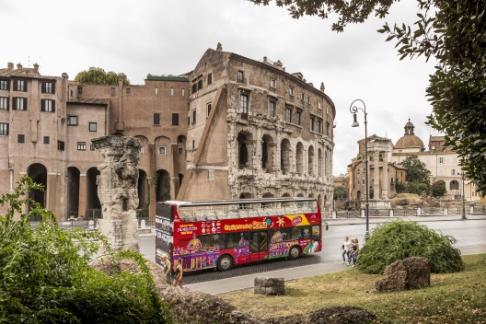
See all the major sights of London in all their glory by night: • Houses of Parliment • Piccadilly Circus • The London Eye • Trafalger Square • St. Paul's Cathedral • Westminster Abbey • Tower Bridge • Tower of London • Big Ben To see the majestic Tower of London and Tower Bridge highlighted together as our open top tour bus approaches is a picture post card in the making. The huge clock face of Big Ben shines brightly like a beacon from a lighthouse letting everyone know that they really are in London. The fountains in Trafalgar Square dance with joy from the light that shines from within them. The neon lights in Piccadilly reminds you of New Years Day and when you see the lights all around Harrods, well, it’s Christmas all over again. When you see the London Eye and the Houses of Parliament, then you realize why we called ourselves ‘See London By Night’
The Queen's Gallery was built in the shell of the former Holyrood Free Church and Duchess of Gordon’s School at the entrance to the Palace of Holyroodhouse. The buildings were constructed in the 1840s with funds from the Duchess of Gordon, but fell into disuse in the late 19th century. Benjamin Tindall Architects were appointed project architects for the new Queen’s Gallery in October 1999. Their central visual theme was a celebration of The Queen’s Golden Jubilee, expressed through a series of arches and screens that lead visitors from the Gallery entrance to the exhibition spaces beyond. Their design complements the original 19th-century architecture, elements of which were incorporated into the new spaces. Unsympathetic later internal alterations were removed, and a new exposed steel and concrete floor inserted to reflect the original ‘gallery’ of the Church. A new stone arched entrance was created at the centre of the Horse Wynd frontage, opposite the new Scottish Parliament building. The use of a stone archway, with a courtyard beyond, is a traditional entrance device in Scottish architecture. The main walling is of Catcastle stone, the dressed work and lettering is of Stainton stone and the base is of Kenmay granite. ‘THE QUEEN’S GALLERY’ lettering above the entrance is the work of John Neilson, a calligrapher and carver. The letters were cut from single pieces of stone. Above sits Scotland’s heraldic lion, designed by Jill Watson. The lion sedant is based on a small red lion that sits at the feet of Mary, Queen of Scots on her tomb in Westminster Abbey. (The Palace of Holyroodhouse was once home to Mary, Queen of Scots.) The monumental entrance doors of oak have gilded bronze hinges by Jill Watson. Continuing the heraldic theme, the main hinges are decorated with the Scottish lion and unicorn. The beasts are set against the adjacent urban scene of Edinburgh’s Royal Mile and the rural scene of Arthur’s Seat and Salisbury Crags. The upper hinges are made as golden boughs of flowering native trees – chestnut and laburnum, oak, rowan and hawthorn. The stone archway is decorated with a carved and gilded garland of Scottish flowers, including daisies and thistles, created by Graciela Ainsworth, an Edinburgh-based sculptor, carver and conservator. Over the old entrance to the former church is a stained-glass window by Christian Shaw. The design shows a perspective drawing of the interior of a gallery. At night, the shape of the archway is reflected by the glass lights by Keiko Mukaide set into the paving. The artist has given the tiles a water flow pattern, mirroring the stream of visitors walking in and out of the Gallery. Inside, the reception desk by Hamid van Koten is made from curved pieces of Scottish elm with kilned glass and patinated copper. The pendant lights were designed and made in Edinburgh by Ingrid Phillips. Dividing the reception from the main Gallery area is a patterned glass screen by Jacqueline Poncelet. The screen’s bronze handles by Jill Watson incorporate figures looking at art in a gallery. The dramatic central stair of native timber leads to the Gallery spaces above. The complex shape was designed by the architects with Charles Taylor Woodwork, who were responsible for the construction. Lights set into the first floor illuminate the curved balustrading.
Stirling Castle is a great symbol of Scottish independence & a source of national pride. The Castle's long, turbulent history is associated with great figures from Scotland’s past such as William Wallace & Mary Queen of Scots. The Royal Palace The Palace at Stirling Castle allows visitors to step into the astonishing richness of royal life in the 1500s. James V’s Palace at Stirling is one of the finest and best-preserved Renaissance buildings in Great Britain. Following a major programme of research and re-presentation, it can now be seen by visitors much as it may have looked on completion around 1545. The decoration of the Palace’s six main rooms is overwhelmingly colourful, rich and elaborate. James and his French wife Mary of Guise aimed to present themselves as wealthy, learned and sophisticated. The decorative style belongs to the Renaissance – a great flowering in arts, literature and philosophy that revolutionised Europe in the 1400s and 1500s. Bright colours, expensive fabics and ornate patterns were essential elements. But this was not flamboyance for its own sake. The decorative scheme was filled with messages about power, prosperity and plenty. It was not limited to the interior chambers but also extended to the exterior walls, embellished with hundreds of statues and other stone-carvings. Why not combine your visit to Stirling Castle with other famous attractions and activities in Central, Tayside & Fife such as Discovery Point & RRS Discovery or Loch Lomond Aquarium
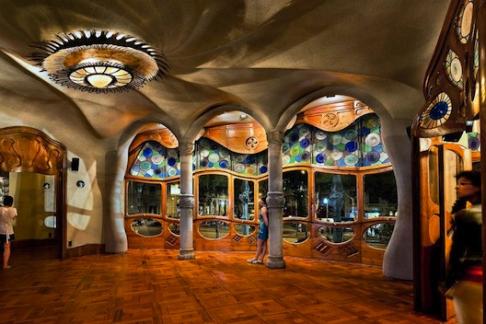
We invite you to visit the Casa Batlló which has transcended the concept of a building to become a legendary icon of art, architecture and art nouveau. Here, light, colour and shapes interact with wood, glass, ceramics and quarried stone in Gaudí's characteristic fantastic and breathtaking style. Pick up your audioguide and begin your tour of 20 different points. You'll discover a whole host of details that are hard to spot at first glance, with metaphors and depictions of nature, particularly the undersea world, which will inspire and stimulate your senses and emotions. And if you prefer, you can hire the innovative augmented reality video guide which will take you to a magical world that is normally hidden from view. Both guides are available in 10 languages. You'll visit the legendary mezzanine, where the Batlló family once lived; the attic, where the storerooms and laundries were located; the rooftop, with its iconic chimneys and the amazing light well which houses the staircase once used by the privileged neighbours. And you can't leave without seeing the magnificent hall and main staircase. You're sure to be impressed!