Libre
Soutien
ACTIVATING THE NEW YORK PASS The smart card records when and where you first use your Pass, as well as how long the Pass will remain valid. This means your Pass is activated the moment that you first use it at an attraction or service. Your New York Pass is then valid for the number of days that you've purchased - be it 1, 2, 3, 5, 7 or 10 days. It is important to note that a ‘day’ is based on a calendar day, not a 24 hour period. VALIDITY OF THE NEW YORK PASS The New York Pass is valid for use on consecutive days only. You can visit each attraction just once with the New York Pass. At the end of your validity period, the pass will expire and will no longer allow access to attractions. If, for example, you used a three day pass for the first time on Monday, your pass will cease working at the end of Wednesday, regardless of how often you have used it in between. SKIPPING THE LINES As well as free entry, the New York Pass allows you to skip long lines at some of the busiest tourist attractions. Simply look for the New York Pass signs and show the attendant your New York Pass - they will swipe your card through the New York Pass machine and you will be allowed entrance - more >> BOOKING TOURS IN ADVANCE The most popular tours often sell out in advance, but once you purchased your New York Pass online, you can secure your place with your online confirmation number. There are 17 Tours you can book in advance with New York Pass FREE GUIDEBOOK Every Adult Pass comes with a 200 page pocket guidebook, which details all attractions and special offers available for Pass holders. If you choose the delivery option it will be delivered with your Passes. Customers collecting their Passes will also receive their free guidebooks at the collection point. It’s possible to download a guidebook pdf here >> THE NEW YORK PASS APP This free app is the perfect travel guide for your trip to New York City. With complete information and photographs of over 80 NYC attractions, as well as practical tips to make the best of your visit, this app will leave you more time to experience all that New York City has to offer. MONEY BACK GUARANTEE Zero risk buying ahead - New York Passes can be purchased up to 12 months before your trip. In case your travel plans change, New York Pass insurance gives you peace of mind offering full refund on non-used Passes. No questions asked.
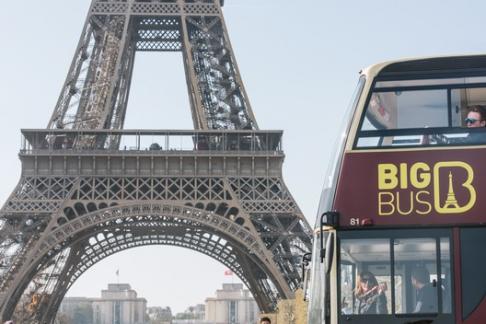
NEW : Half covered Open-top bus to enjoy Paris even if it is raining FREE Paris Map FREE Headsets FREE Ponchos FREE Reward Voucher Booklet
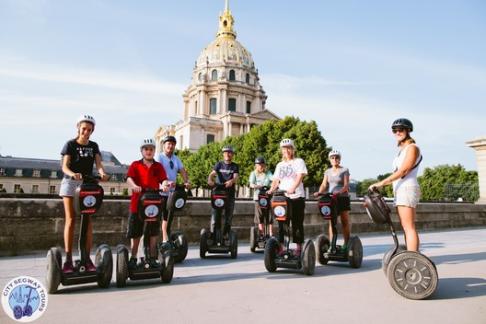
This is the text for the Frequently Asked Questions that applies to this specific to QUESTION: IS THERE AN AGE OR WEIGHT LIMIT? For your riding safety, guests must be at least 12 years of age and weigh at least 100 pounds and not in excess of 260 pounds. All participants must be at least 12 years of age. QUESTION: HOW BIG WILL MY GROUP BE? Our tours operate in groups of 8 guests or less. QUESTION: WHAT TIME DO I NEED TO GET THERE FOR MY TOUR? We ask that the client arrive 10-15 minutes early for the scheduled tour to fill out necessary paperwork. Each member of your party will be required to complete and sign a liability waiver form. QUESTION: WILL I NEED TO PUT DOWN A DEPOSIT? Yes. Insurance requires that City Segway Tours pre-authorize 400€ on a credit card. Please bring your MasterCard, Visa, Amex, or cash with you for this deposit (not Discovery). Your card will not be charged, but we will hold onto the details should your Segway incur any damage while in your possession. QUESTION: IF THIS IS MY FIRST TIME TO RIDE A SEGWAY, WILL I BE ABLE TO PICK IT UP QUICKLY? Your safety is always our highest priority. Therefore, we begin each tour with a very thorough orientation of the Segway and its use before going out to enjoy the city! QUESTION: CAN MINORS COME ON TOUR ALONE? For safety reasons, minors (anyone under the age of 18) must be accompanied by an adult on the tour. QUESTION: IF I AM PREGNANT CAN I JOIN THE TOUR? Unfortunately, due to the risk to both child and mother, pregnant women are not allowed to participate on our Segway tours. QUESTION: ARE THE TOURS CANCELLED IF IT RAINS? Our tours go rain or shine, and we have rain ponchos available in our office for €1 which are fully reimbursed if not used.
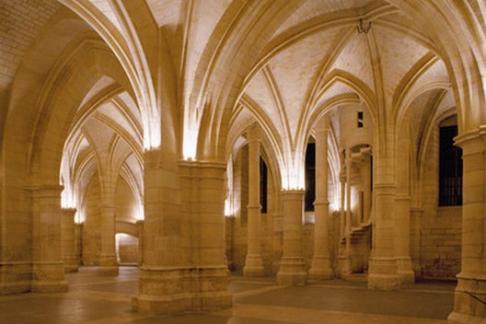
Discover this Medieval royal palace that became a revolutionary tribunal and Marie-Antoinette’s prison. The Conciergerie Discover on the Île de la Cité, the exceptional Gothic rooms of the first royal palace of Paris and the reproduction of the prison cells of the revolutionary tribunal. At the end of the 17th century, numerous people were imprisoned in the prison of the Conciergerie, including Marie-Antoinette. The Conciergerie is also listed as a historical building by the Unesco.
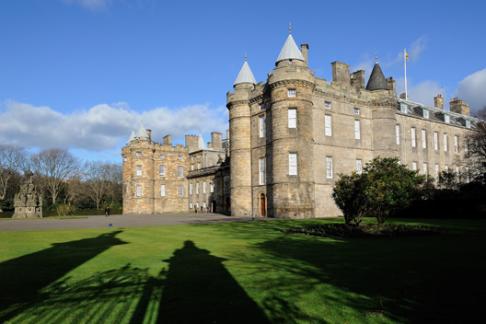
The Queen's Gallery was built in the shell of the former Holyrood Free Church and Duchess of Gordon’s School at the entrance to the Palace of Holyroodhouse. The buildings were constructed in the 1840s with funds from the Duchess of Gordon, but fell into disuse in the late 19th century. Benjamin Tindall Architects were appointed project architects for the new Queen’s Gallery in October 1999. Their central visual theme was a celebration of The Queen’s Golden Jubilee, expressed through a series of arches and screens that lead visitors from the Gallery entrance to the exhibition spaces beyond. Their design complements the original 19th-century architecture, elements of which were incorporated into the new spaces. Unsympathetic later internal alterations were removed, and a new exposed steel and concrete floor inserted to reflect the original ‘gallery’ of the Church. A new stone arched entrance was created at the centre of the Horse Wynd frontage, opposite the new Scottish Parliament building. The use of a stone archway, with a courtyard beyond, is a traditional entrance device in Scottish architecture. The main walling is of Catcastle stone, the dressed work and lettering is of Stainton stone and the base is of Kenmay granite. ‘THE QUEEN’S GALLERY’ lettering above the entrance is the work of John Neilson, a calligrapher and carver. The letters were cut from single pieces of stone. Above sits Scotland’s heraldic lion, designed by Jill Watson. The lion sedant is based on a small red lion that sits at the feet of Mary, Queen of Scots on her tomb in Westminster Abbey. (The Palace of Holyroodhouse was once home to Mary, Queen of Scots.) The monumental entrance doors of oak have gilded bronze hinges by Jill Watson. Continuing the heraldic theme, the main hinges are decorated with the Scottish lion and unicorn. The beasts are set against the adjacent urban scene of Edinburgh’s Royal Mile and the rural scene of Arthur’s Seat and Salisbury Crags. The upper hinges are made as golden boughs of flowering native trees – chestnut and laburnum, oak, rowan and hawthorn. The stone archway is decorated with a carved and gilded garland of Scottish flowers, including daisies and thistles, created by Graciela Ainsworth, an Edinburgh-based sculptor, carver and conservator. Over the old entrance to the former church is a stained-glass window by Christian Shaw. The design shows a perspective drawing of the interior of a gallery. At night, the shape of the archway is reflected by the glass lights by Keiko Mukaide set into the paving. The artist has given the tiles a water flow pattern, mirroring the stream of visitors walking in and out of the Gallery. Inside, the reception desk by Hamid van Koten is made from curved pieces of Scottish elm with kilned glass and patinated copper. The pendant lights were designed and made in Edinburgh by Ingrid Phillips. Dividing the reception from the main Gallery area is a patterned glass screen by Jacqueline Poncelet. The screen’s bronze handles by Jill Watson incorporate figures looking at art in a gallery. The dramatic central stair of native timber leads to the Gallery spaces above. The complex shape was designed by the architects with Charles Taylor Woodwork, who were responsible for the construction. Lights set into the first floor illuminate the curved balustrading. The Queen’s Gallery was opened by Her Majesty The Queen on 29 November 2002, as part of the Golden Jubilee celebrations. It hosts a programme of changing exhibitions from the Royal Collection.
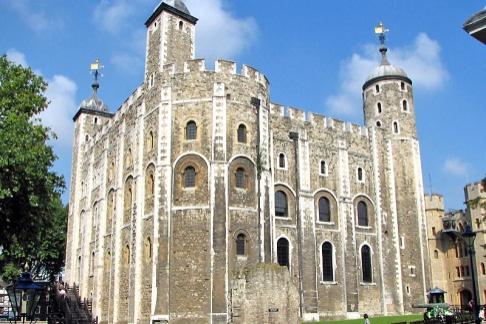
One of the most famous buildings in the world, the Tower of London was constructed in the 11th century - almost a 1,000 years ago and has been witness to countless significant events in the development of Britain's now democratic monarchy. During your tour of the Tower of London you will meet the magnificent Yeoman Warders or 'Beefeaters', clad as they were in Tudor times, hear the legend of the ravens and spine chilling tales from the Tower's long history. See the infamous Bloody Tower where the Princes were murdered, Beauchamp Tower where visitors can read carved inscriptions of past prisoners and Traitors Gate where those unlucky enough not to survive imprisonment had their heads impaled - and much more. We sell at less than the gate price, which gives you access to all the Towers and Attractions, as well as the unique Gift Shops, the historic New Armouries Restaurant, Tower Cafe and Kiosk. Your Tower ticket also includes entry to the Crown Jewels. Westminster Abbey Glorious Architecture This magnificent gothic construct is a sight to behold and the incredible stained glass is some of the most impressive in the UK. Coronation Chair Created for King Edward I in 1296, the chair has been the seat for the crowning of every monarch since 1308, including Queen Victoria and our current reigning Queen, HRH Elizabeth II. It is the oldest piece of furniture in the UK that is still used for its original intention. Poets’ Corner The literary corner of the Abbey is named due to the large amount of poets and writers buried there, including Geoffrey Chaucer, Charles Dickens, Rudyard Kipling and Thomas Hardy, as well as many memorial stones and busts dedicated to the likes of Shakespeare and loved Scottish poet Robert Burns. Kings and Queens Westminster Abbey has been the coronation church since 1066 and seventeen monarchs are buried there. The Abbey was also the place where William and Kate tied the knot in 2011.