Libre
Soutien
HMS Belfast One of the most powerful large light cruisers ever built, HMS Belfast is now the only surviving vessel of her type to have seen active service during the Second World War. HMS Belfast played a leading part in the destruction of the battle cruiser Scharnhorst, and also the Normandy Landings. In service with the Royal Navy until 1965, she was saved for the nation in 1971 as a unique reminder of Britain’s naval heritage. Launch! Shipbuilding Through the Ages This new family-orientated exhibition will use hands-on and computerised interactive displays and engaging film and footage to demonstrate techniques of shipbuilding, from the ‘age of sail’ to modern prefabrication methods. The exhibition will focus on the science, engineering and social history of shipbuilding in Great Britain, and the interactive elements of the exhibition will allow children of all ages to get involved and experience this history. Explore ‘What shall we give in return for so much?’ One of the most powerful large light cruisers ever built, HMS Belfast is now the only surviving vessel of her type to have seen active service during the Second World War. Serving Britain for 32 years, she played an important role in both the Second World War and the Korean War as well as performing peacekeeping duties throughout the 1950s and 1960s. Saved from destruction in 1971, HMS Belfast is now part of the Imperial War Museum and is the first ship to be preserved for the nation since Nelson’s Victory. Through its team of staff and volunteers – many of whom are veteran crew – the Imperial War Museum is dedicated to making sure that HMS Belfast still has a role to play in reminding visitors of her unique place in Britain’s maritime heritage. History of HMS Belfast The term 'cruiser' goes back to the days of sailing ships when large frigates could be detached from the main fleet to cruise independently. The sailing cruiser, like her twentieth-century counterpart, was sufficiently powerful and fast to attack and destroy enemy commerce raiders. During the nineteenth century when sail gave way to steam and wooden ships were replaced by those built of iron, and later of steel, the cruiser evolved into a powerful warship which was used to patrol the Empire trade routes and protect friendly merchant shipping. After the First World War (1914-1918) a single category of cruiser emerged whose size was indicated by the size of its guns; thus, HMS Belfast is a 6-inch cruiser, designed for the protection of trade, for offensive action, and as a powerful support for amphibious operations. Please note: children under 16 must be accompanied by an adult. Please allow 1½ - 2 hours for your visit. Tower Bridge Exhibition Walkways & Exhibition: Visitors enter Tower Bridge Exhibition via the North Tower. They are then transported by lift to the top of the Tower (47 metres above the Thames) where they have a unique opportunity to see the Bridge’s steel skeleton from within. A short film explains the history and provenance of the Bridge and then there is the chance to admire the spectacular views – from both covered Walkways. On Monday 1st December, Tower Bridge’s East Walkway will reopen with its own GLASS FLOOR, joining the West Walkway to complete our new-look exhibition. Together with far-reaching views of East London, the walkway will be bolstered with a further 20 revered bridges in the extended popular display, ‘Great Bridges of the World’. On the east Walkway there are fantastic views of the Docklands and from the west Walkway you can see the new GLA building, the Tower of London, St Paul’s, the city, the Pool of London and Big Ben and the London Eye in the distance. Interactive computerised kiosks and graphic panels explain the significance of the views to visitors, as well as providing more information on the history and building of the Bridge. The interactive material and graphic panels are written in seven languages and an audio loop for the hard of hearing is also in place for the video show. There is another film to view in the South Tower before descending for the short walk to the historical Engine Rooms, included in your ticket price. Victorian Engine Rooms: These provide a fascinating insight into late 19th century engineering. Installed for the completion of Tower Bridge in 1894, these huge, and beautifully maintained, coal-driven engines were used to power the thousands of bascule Bridge lifts performed until 1976. Although lifts are now operated by electricity, the original steam engines are still in place. The Engine Rooms give visitors a chance to experiment with models demonstrating the technology behind the Bridge. There are also some amazing photographs of Tower BridgeTthroughout its lifetime – including a revealing picture of the heavy steel structure of the Bridge as the stone cladding was installed over it.
During the dinner you will be served by the pirates themselves while Captain Hook tells you about his adventures on the Spanish Main. But be careful, while you are eating, another ship is silently approaching in the darkness, preparing to board the galleon. No need to be afraid, Captain Hook discovers the enemy’s ruse and orders his men to take up battle stations, the cannon are ready to fire. Pirates armed to the teeth with cutlasses and pistols jump from the rigging down to the decks where a sword fight ensues between the crew and the enemy pirates with amazing sound and light effects. And all this excitement you’re bound to be feeling hungry so it’s time to sit down at Captain Hook’ s table for a banquet where you can feast on delicious meat and lobster as well as a buffet of salads, steamed vegetables, pirate rice, baked potatoes, grilled chicken and dessert. As well as unlimited Mexican drinks throughout the voyage. Come with us on this adventure on the high seas.
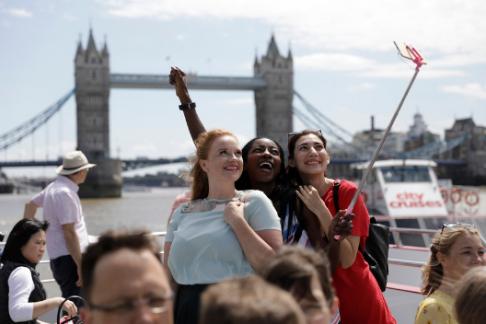
Save 27% Off Tickets with this fantastic combo offer. Use Big Bus London to hop off at both Sea Life London (Stop 7 on the Blue or Red Route) & Tower Bridge (Stop 11 on the Blue or Red Route)! Sea Life London Aquarium Inclusions Priority Entrance to SEA LIFE London Aquarium View Thousands of Marine Creatures in Themed Settings See one of the World’s Biggest Collection of Cownose Rays Walk Through the Glass Tunnel Tropical Walkway and the Nerve Testing Shark Walk Family Friendly Attraction with Interactive Features and Feeding Talks Visit the Monster of Claws - The Japanese Spider Crab Sea Dragon Kingdom Big Bus London Tour - Classic Ticket You can hop on and off the The Big Bus at many places of interest, to explore or visit attractions. Buses run at regular 10-20 minute intervals, so rejoining the tour is easy. Your ticket also includes a boat cruise on the River Thames, the option to join up to four guided walks and Big Bus Tours & exclusive Reward Vouchers, giving you excellent discounts at London attractions, shops and restaurants. Tour Highlights: • Buckingham Palace. • The Tower of London. • Big Ben. • Houses of Parliament. • London Eye. • Tower Bridge. • Westminster Abbey. • St. Paul's Cathedral. • Trafalgar Square. • British Museum. • Harrods. •...and more Languages: The Big Bus tour gives you a choice of either recorded commentary in eight languages on the Blue Route, or live English commentary provided by a professional Big Bus guide on the Red Route. The Blue Route offers recorded commentary in English, French, Spanish, German, Italian, Russian, Chinese and Portuguese. Departure Points and Times: You can start your tour at any tour stop. The most popular start points are Baker Street Station, Green Park Station, Marble Arch, Victoria Station and Trafalgar Square. Tours operate every day of the year except the 25th December. Tower Bridge Exhibition Over 100 years ago, the Victorians built a bridge that has become one of London's most famous landmarks. High level walkways were built to allow people to cross the Thames whilst the Bridge was lifted to let tall ships sail past - Tower Bridge Today these Walkways act as viewing galleries, giving visitors the most spectacular views across an ever changing London skyline. Walkways & Exhibition: Tower Bridge Unveils New GLASS FLOOR Across High-Level Walkways Launched in the West Walkway today, the glass floor offers visitors a never-seen-before view of London life, from 42 metres above the River Thames. Look down to spy road and pedestrian life whizzing over the Bridge while river vessels sail under it – and plan your visit in advance for the truly magical experience of the bascules being raised beneath your feet. The glass floor measures 11 metres long by 1.8 metres wide and comprises of six panels weighing 530 kilograms each. It is made up of five thick layers and can hold the equivalent weight of an elephant and two taxis! The installation took a 20-strong team to construct it over a six week period. The Walkways also offer stunning panoramic views of London while each of the 20 bridges featured in our popular and refreshed 'New Great Bridges of the World' display showcase a breath-taking feat of engineering. After learning about the history of the Bridge through animations and displays in the Towers, continue to the Victorian Engine Rooms for the beautifully maintained steam engines that were once used to power the bridge lifts. Visitors enter Tower Bridge Exhibition via the North Tower. They are then transported by lift to the top of the Tower (47 metres above the Thames) where they have a unique opportunity to see the Bridge’s steel skeleton from within. A short film explains the history and provenance of the Bridge and then there is the chance to admire the spectacular views – from both covered Walkways. On the east Walkway there are fantastic views of the Docklands and from the west Walkway you can see the new GLA building, the Tower of London, St Paul’s, the city, the Pool of London and Big Ben and the London Eye in the distance. Interactive computerised kiosks and graphic panels explain the significance of the views to visitors, as well as providing more information on the history and building of the Bridge. The interactive material and graphic panels are written in seven languages and an audio loop for the hard of hearing is also in place for the video show. There is another film to view in the South Tower before descending for the short walk to the historical Engine Rooms, included in your ticket price. Victorian Engine Rooms: These provide a fascinating insight into late 19th century engineering. Installed for the completion of Tower Bridge in 1894, these huge, and beautifully maintained, coal-driven engines were used to power the thousands of bascule Bridge lifts performed until 1976. Although lifts are now operated by electricity, the original steam engines are still in place. The Engine Rooms give visitors a chance to experiment with models demonstrating the technology behind the Bridge. There are also some amazing photographs of TowerBridgeTthroughout its lifetime – including a revealing picture of the heavy steel structure of the Bridge as the stone cladding was installed over it.
Shakespeare's Globe Exhibition is the world's largest exhibition devoted to Shakespeare and the London in which he lived and worked. Housed beneath the reconstructed Globe Theatre on London's Bankside, the exhibition explores the remarkable story of the Globe, and brings Shakespeare's world to life using a range of interactive displays and live demonstrations. Visitors to the exhibition can discover how shows were produced in the theatres of Shakespeare's time, from writing and rehearsals to music, dance and performance. There are opportunities to learn about the traditional crafts and techniques used during the process of rebuilding the Globe; to find out how special effects were produced in Shakespeare's time, to listen to recordings from some of the most memorable Shakespearean performances ever, or join the cast and add your own voice to a scene recorded by Globe actors; to create your own Shakespearean phrases in the word jungle; to watch a sword-fighting display and browse the costume collection, where you can learn about the extraordinary methods used in creating clothes 400 years ago. A visit to the Exhibition includes a guided tour of the theatre where expert guide-storytellers provide fascinating half hour tours of the auditorium, taking visitors on a journey through time back to Elizabethan London as well as the reconstruction process of the 1980's-90's and how the wooden 'o' works today as an imaginative and experimental theatrical space. An exhibition visit and theatre tour lasts about one and a half hours. Information sheets are available in English, large print, German, French, Dutch, Spanish, Portuguese, Italian, Russian, Polish, Romanian, Chinese and Japanese. NB: There is no access to the theatre during matinee performances. Visitors will be taken to the nearby archaeological site of the Rose Theatre, Bankside's first playhouse. Tower Bridge Exhibition Over 100 years ago, the Victorians built a bridge that has become one of London's most famous landmarks. High level walkways were built to allow people to cross the Thames whilst the Bridge was lifted to let tall ships sail past - Tower Bridge Today these Walkways act as viewing galleries, giving visitors the most spectacular views across an ever changing London skyline. Walkways & Exhibition: Visitors enter Tower Bridge Exhibition via the North Tower. They are then transported by lift to the top of the Tower (47 metres above the Thames) where they have a unique opportunity to see the Bridge’s steel skeleton from within. A short film explains the history and provenance of the Bridge and then there is the chance to admire the spectacular views – from both covered Walkways. Together with far-reaching views of East London, the walkway will be bolstered with a further 20 revered bridges in the extended popular display, ‘Great Bridges of the World’. On the east Walkway there are fantastic views of the Docklands and from the west Walkway you can see the new GLA building, the Tower of London, St Paul’s, the city, the Pool of London and Big Ben and the London Eye in the distance. Interactive computerised kiosks and graphic panels explain the significance of the views to visitors, as well as providing more information on the history and building of the Bridge. The interactive material and graphic panels are written in seven languages and an audio loop for the hard of hearing is also in place for the video show. There is another film to view in the South Tower before descending for the short walk to the historical Engine Rooms, included in your ticket price. Victorian Engine Rooms: These provide a fascinating insight into late 19th century engineering. Installed for the completion of Tower Bridge in 1894, these huge, and beautifully maintained, coal-driven engines were used to power the thousands of bascule Bridge lifts performed until 1976. Although lifts are now operated by electricity, the original steam engines are still in place. The Engine Rooms give visitors a chance to experiment with models demonstrating the technology behind the Bridge. There are also some amazing photographs of Tower BridgeTthroughout its lifetime – including a revealing picture of the heavy steel structure of the Bridge as the stone cladding was installed over it.
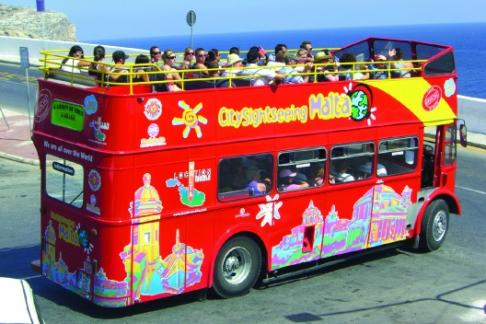
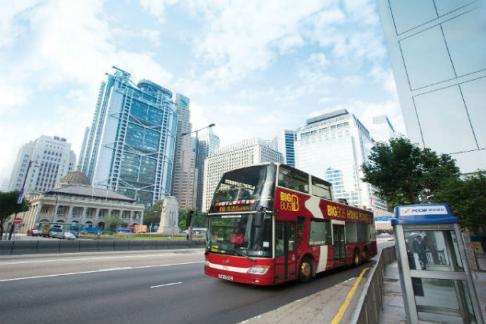
Create a London sightseeing schedule to suit you! This Hop-On Hop-Off open top bus tour includes 91 stops across London that you can jump off at and explore the city. On-board commentary gives you a few details about the attractions you can pass on the route - these include Buckingham Palace, the Tower of London and St Paul's Cathedral!
Please note: On occassion, due to events, some stops might not be guarentueed, updated tour stop information can be found at the bus stops or on the online app Stops Blue Line Bus Terminal Piazza Duomo Galleria Vittorio Emanuele Via Boccetta Sacrario Cristo Re Fontana Nettuno Teatro Vittorio Emanuele Via Garibaldi Statua Don Giovanni Chiesa dei Catalani Red Line Bus Terminal Piazza Duomo Chiesa Ringo Regional Museum Beach Lakes Ganzirri Point Sicily