Libre
Soutien
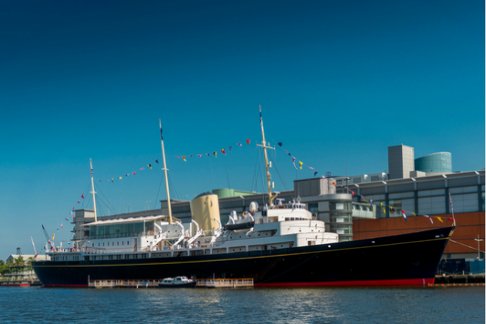
HMS Belfast One of the most powerful large light cruisers ever built, HMS Belfast is now the only surviving vessel of her type to have seen active service during the Second World War. HMS Belfast played a leading part in the destruction of the battle cruiser Scharnhorst, and also the Normandy Landings. In service with the Royal Navy until 1965, she was saved for the nation in 1971 as a unique reminder of Britain’s naval heritage. Launch! Shipbuilding Through the Ages This new family-orientated exhibition will use hands-on and computerised interactive displays and engaging film and footage to demonstrate techniques of shipbuilding, from the ‘age of sail’ to modern prefabrication methods. The exhibition will focus on the science, engineering and social history of shipbuilding in Great Britain, and the interactive elements of the exhibition will allow children of all ages to get involved and experience this history. Explore ‘What shall we give in return for so much?’ One of the most powerful large light cruisers ever built, HMS Belfast is now the only surviving vessel of her type to have seen active service during the Second World War. Serving Britain for 32 years, she played an important role in both the Second World War and the Korean War as well as performing peacekeeping duties throughout the 1950s and 1960s. Saved from destruction in 1971, HMS Belfast is now part of the Imperial War Museum and is the first ship to be preserved for the nation since Nelson’s Victory. Through its team of staff and volunteers – many of whom are veteran crew – the Imperial War Museum is dedicated to making sure that HMS Belfast still has a role to play in reminding visitors of her unique place in Britain’s maritime heritage. History of HMS Belfast The term 'cruiser' goes back to the days of sailing ships when large frigates could be detached from the main fleet to cruise independently. The sailing cruiser, like her twentieth-century counterpart, was sufficiently powerful and fast to attack and destroy enemy commerce raiders. During the nineteenth century when sail gave way to steam and wooden ships were replaced by those built of iron, and later of steel, the cruiser evolved into a powerful warship which was used to patrol the Empire trade routes and protect friendly merchant shipping. After the First World War (1914-1918) a single category of cruiser emerged whose size was indicated by the size of its guns; thus, HMS Belfast is a 6-inch cruiser, designed for the protection of trade, for offensive action, and as a powerful support for amphibious operations. Please note: children under 16 must be accompanied by an adult. Please allow 1½ - 2 hours for your visit. Tower Bridge Exhibition Walkways & Exhibition: Visitors enter Tower Bridge Exhibition via the North Tower. They are then transported by lift to the top of the Tower (47 metres above the Thames) where they have a unique opportunity to see the Bridge’s steel skeleton from within. A short film explains the history and provenance of the Bridge and then there is the chance to admire the spectacular views – from both covered Walkways. On Monday 1st December, Tower Bridge’s East Walkway will reopen with its own GLASS FLOOR, joining the West Walkway to complete our new-look exhibition. Together with far-reaching views of East London, the walkway will be bolstered with a further 20 revered bridges in the extended popular display, ‘Great Bridges of the World’. On the east Walkway there are fantastic views of the Docklands and from the west Walkway you can see the new GLA building, the Tower of London, St Paul’s, the city, the Pool of London and Big Ben and the London Eye in the distance. Interactive computerised kiosks and graphic panels explain the significance of the views to visitors, as well as providing more information on the history and building of the Bridge. The interactive material and graphic panels are written in seven languages and an audio loop for the hard of hearing is also in place for the video show. There is another film to view in the South Tower before descending for the short walk to the historical Engine Rooms, included in your ticket price. Victorian Engine Rooms: These provide a fascinating insight into late 19th century engineering. Installed for the completion of Tower Bridge in 1894, these huge, and beautifully maintained, coal-driven engines were used to power the thousands of bascule Bridge lifts performed until 1976. Although lifts are now operated by electricity, the original steam engines are still in place. The Engine Rooms give visitors a chance to experiment with models demonstrating the technology behind the Bridge. There are also some amazing photographs of Tower BridgeTthroughout its lifetime – including a revealing picture of the heavy steel structure of the Bridge as the stone cladding was installed over it.
Tour Stops 1. Exhibition Square 2. GillyGate 3. Monk Bar 4. Foss Bank 5. Peasholme Green 6. The Stonebow 7. Clifford’s Tower 8. Margaret Street 9. Walmgate Bar 10. Barbican Centre 11. Fishergate 12. Bishopthorpe Road 13. South Bank 14. Campleshon Road 15. Mount Vale 16. The Mount 17. Blossom Street 18. Railway Station 19. Memorial Gardens 20. Museum Gardens Passengers can hop-on and hop-off at any of the 20 tour stops along the route. If you’d prefer, stay on the tour for a full loop: 60 minutes. Additional Information: Vouchers must be printed to be exchanged for a City Sightseeing bus ticket in location. The audio commentary is available in the following languages: English, Spanish, German, Italian, French, Mandarin, Japanese, Russian & Kids Commentary in English Buses are wheelchair accessible.
Recorra el perímetro de la hermosa reserva natural y conozca la fabulosa naturaleza que posee Florida. El tour en hidrodeslizador incluye la entrada gratuita al parque de Wildlife y una demostración de cocodrilos (Fotografías no incluidas). En el Parque Gator and Wildlife hay unos 200 animales en exhibición, incluyendo cebras, perezosos, lémures, linces y otras especies exóticas. Disponible sin cita previa la visita del aviario con patos, loros y otras aves de todo el mundo. Los hidrodeslizadores utilizados durante este tour están diseñados especialmente para no dañar esta reserva ecológica, están aprobados por la Guardia Costera de los Estados Unidos. Los capitanes que forman parte de la flota de Wild Florida tienen una gran experiencia en divisar todos los cambios naturales que sufre el entorno, además tienen la habilidad especial de ver con facilidad los caimanes, las águilas y otros animales salvajes que habitan cerca de las vías navegables. Por eso aseguran que usted podrá disfrutar del tour y ver los animales que habitan el humedal de Everglades. La seguridad es uno de los principales puntos a tener en cuenta, por eso en los hidrodeslizadores proporcionan a los clientes chalecos salvavidas y protección auditiva. ¡No olvides la deliciosa barbacoa con costillas ahumadas, pollo cerdo desmenuzado, cocodrilo frito e incluso patas de rana!
The price can vary according to visit date and time selected. Twilight This climb departs as the day closes. Get the best of both worlds as you soak up the day’s disappearing light while the moon takes its nightshift. 5 Things you need to know before your climb Health & Safety Your health and safety is important: If you are pregnant or have any pre-existing health conditions you may need to provide a doctor’s Certificate of Fitness note before you climb. You must have a blood-alcohol reading below 0.05 to climb (the same as if you are driving). You will be asked to complete a BridgeClimb Declaration Form before your Climb. Please be honest about your health so we can ensure your wellbeing is not at risk. All discussions will be confidential. Preparations How should you prepare for your Climb: Ensure that you have eaten before your Climb and you’re well-hydrated – the experience can last up to 3 ½ hours. Wear comfortable, enclosed rubber-soled shoes such as running, sport or hiking shoes and don’t forget your sunglasses. It is recommend to wear comfortable clothing. You will be equipped with everything else you need for your Climb! Ensure you arrive 15 minutes before your scheduled Climb time to allow enough time to check in. Personal Belongings All your personal belongings can be stored in lockers, including cameras: there are FREE secure lockers for you to keep your personal belongings in, including phones, cameras and GoPros. The Climb Leaders will capture photos of you during your Climb. For safety and security reasons, cameras, video technology and mobile devices are prohibited on the Climb. Restrictions You must be 8 years old and 1.2 metres in height, or taller: Children aged 8 to 15 must be accompanied by and are the responsibility of an adult, with a maximum of three children per adult. Weather Conditions Climbs operate in all weather conditions: You will equipped with all the gear you need to keep you dry, but remember to bring your own shoes, which should be enclosed, like running shoes. In case of extreme weather conditions like electrical storms or during times of extremely high wind, Climbs may be postponed.
Blarney Castle, built by the McCarthy clan over 600 years ago, still retains its old world charm with its towers, battlements and gated entrance built on a rocky outcrop. Kiss the Blarney stone, situated on the parapets of the castle, to gain the gift of eloquence - that is the ability to persuade people and being able to talk yourself out of trouble… Discovery Travel Channel lists kissing the Blarney Stone amongst its 99 things to do before you die! Rock close is a magical garden filled with enchanting druidic rock formations, water features and exotic plants. The grand Scottish baronial style Blarney House is reflects a bygone era of wealth and statesmanship. The Rock of Cashel is a multi-period monastic site, which was a fortress before it became the seat of the bishop of the diocese of Cashel, and venue where the historical Synod of Cashel was held. Visit the Great Cathedral, the Hall of Vicars Choral, Cormack's Chapel (with one of Ireland's best preserved Irish frescoes and Romanesque architecture) and a Round tower, all perched on a solid rock ringed by a curtain wall- most of it dating back from before the Cambro-Norman conquerors came to Ireland in the late 12th Century. Cahair Castle was once the stronghold of the powerful Butler family, the castle retains its impressive keep, tower and much of its original defensive structure. It is one of Ireland's largest and best preserved castles. It is situated on a rocky island on the River Suir. ITINERARY: 06:50 - Depart Dublin from Suffolk Street by the Molly Malone statue 09:00 - The Rock Of Cashel (1hr) 11:30 - Blarney Castle + lunch break (3hrs - lunch not included) 15:30 - Cahair Castle (1hr) 19:00 - Arrive Dublin.