Libre
Soutien
The price can vary according to visit date and time selected. Night This climb departs after the sun has set (after “twilight”), introducing the city alight and sparkling under a blanket of darkness. 5 Things you need to know before your climb Health & Safety Your health and safety is important: If you are pregnant or have any pre-existing health conditions you may need to provide a doctor’s Certificate of Fitness note before you climb. You must have a blood-alcohol reading below 0.05 to climb (the same as if you are driving). You will be asked to complete a BridgeClimb Declaration Form before your Climb. Please be honest about your health so we can ensure your wellbeing is not at risk. All discussions will be confidential. Preparations How should you prepare for your Climb: Ensure that you have eaten before your Climb and you’re well-hydrated – the experience can last up to 3 ½ hours. Wear comfortable, enclosed rubber-soled shoes such as running, sport or hiking shoes and don’t forget your sunglasses. It is recommend to wear comfortable clothing. You will be equipped with everything else you need for your Climb! Ensure you arrive 15 minutes before your scheduled Climb time to allow enough time to check in. Personal Belongings All your personal belongings can be stored in lockers, including cameras: there are FREE secure lockers for you to keep your personal belongings in, including phones, cameras and GoPros. The Climb Leaders will capture photos of you during your Climb. For safety and security reasons, cameras, video technology and mobile devices are prohibited on the Climb. Restrictions You must be 8 years old and 1.2 metres in height, or taller: Children aged 8 to 15 must be accompanied by and are the responsibility of an adult, with a maximum of three children per adult. Weather Conditions Climbs operate in all weather conditions: You will equipped with all the gear you need to keep you dry, but remember to bring your own shoes, which should be enclosed, like running shoes. In case of extreme weather conditions like electrical storms or during times of extremely high wind, Climbs may be postponed.
Amsterdam Day Tour - From Brussels Departure: 09.00 Duration: 11 hours 30 minutes Languages available : English, French, Spanish Holland is only at a stone’s throw away from Brussels. Don’t miss the opportunity to visit bustling Amsterdam! Once you have crossed the border, you will admire pastoral polder landscapes and a multitude of windmills. Upon arrival in Amsterdam the tour will visit a local crafts center where see the production of Holland’s pride: traditional cheeses and clogs. Time for a short photo break near a traditional quaint Dutch windmill. The tour continues to the heart of Amsterdam, passing the Dutch National Bank and the former Heineken brewery museum. You can embark on an optional guided boat tour that takes you along Amsterdam’s picturesque canals. This is an unforgettable way to discover the old city and it is undoubtedly the number one attraction of Holland’s capital. Next stop: the tour now takes you to Amsterdam’s most famous square called the “DAM”. The guide takes you on a brief guided walk to the Royal Palace and other highlights of the city. Then it is time for some free time. Stroll along the shopping streets, visit the flower market. Just enjoy!
MENU DÉGUSTATION
TRIO D'ENTRÉES
ASSORTIMENT DE 4 PLATS
ASSIETTE GOURMANDE
- Gaspacho de tomates
- Feuilleté de chèvre chaud au miel
- Rolls de légumes BIO
- Sushi de luxe
- Merlan pané façon Fish&Chips
- Brochette de poulet caramélisé
- Hachis parmentier reconstitué
- Tarte au chocolat
- Salade de fruits
- Crème brulée
Luncheon - 4 Course Meal A famous fleet of historical trams that have become The Colonial Tramcar Restaurant. These glossy, burgundy restaurants on wheels are the first travelling Tramcar Restaurants in the world and ensure a delightful, innovative approach to dining. As they cruise the city streets of Melbourne, diners can enjoy our seasonal menu, quality Australian wines or make a selection from our fully stocked bar at an all inclusive price. APPETISER House Made Dips Selection of crisp breads ENTRÉE Charcuterie In house duck terrine, chicken liver parfait, Serrano ham, cornichon, grilled sourdough Smoked Atlantic Salmon Grilled gem lettuce, avocado, heirloom tomato gazpacho, basil MAIN Roasted Chicken Breast Mushrooms, bok choy, soy dressing Seared Beef Tenderloin Potato rosti, seasonal greens, red wine jus, beurre maître d’hotel CHEESE Chef’s Selection of Local Cheese Cherry jam, water crackers, spiced fruit loaf * Menu is subject to change at the suppliers discretion. The cost is fully inclusive of all food and beverages from the fully stocked bar. Why not combine your visit to The Colonial Tram with other famous attractions and activities in Melbourne such as The Melbourme Icebar or The Melbourne Star?
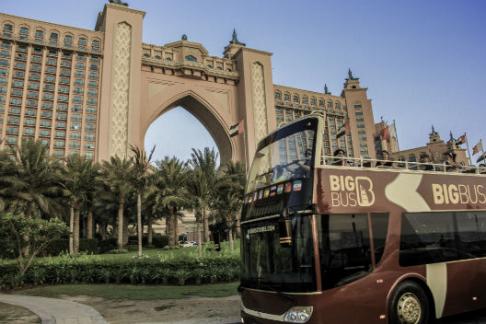
Save 27% Off Tickets with this fantastic combo offer. Use Big Bus London to hop off at both Sea Life London (Stop 7 on the Blue or Red Route) & Tower Bridge (Stop 11 on the Blue or Red Route)! Sea Life London Aquarium Inclusions Priority Entrance to SEA LIFE London Aquarium View Thousands of Marine Creatures in Themed Settings See one of the World’s Biggest Collection of Cownose Rays Walk Through the Glass Tunnel Tropical Walkway and the Nerve Testing Shark Walk Family Friendly Attraction with Interactive Features and Feeding Talks Visit the Monster of Claws - The Japanese Spider Crab Sea Dragon Kingdom Big Bus London Tour - Classic Ticket You can hop on and off the The Big Bus at many places of interest, to explore or visit attractions. Buses run at regular 10-20 minute intervals, so rejoining the tour is easy. Your ticket also includes a boat cruise on the River Thames, the option to join up to four guided walks and Big Bus Tours & exclusive Reward Vouchers, giving you excellent discounts at London attractions, shops and restaurants. Tour Highlights: • Buckingham Palace. • The Tower of London. • Big Ben. • Houses of Parliament. • London Eye. • Tower Bridge. • Westminster Abbey. • St. Paul's Cathedral. • Trafalgar Square. • British Museum. • Harrods. •...and more Languages: The Big Bus tour gives you a choice of either recorded commentary in eight languages on the Blue Route, or live English commentary provided by a professional Big Bus guide on the Red Route. The Blue Route offers recorded commentary in English, French, Spanish, German, Italian, Russian, Chinese and Portuguese. Departure Points and Times: You can start your tour at any tour stop. The most popular start points are Baker Street Station, Green Park Station, Marble Arch, Victoria Station and Trafalgar Square. Tours operate every day of the year except the 25th December. Tower Bridge Exhibition Over 100 years ago, the Victorians built a bridge that has become one of London's most famous landmarks. High level walkways were built to allow people to cross the Thames whilst the Bridge was lifted to let tall ships sail past - Tower Bridge Today these Walkways act as viewing galleries, giving visitors the most spectacular views across an ever changing London skyline. Walkways & Exhibition: Tower Bridge Unveils New GLASS FLOOR Across High-Level Walkways Launched in the West Walkway today, the glass floor offers visitors a never-seen-before view of London life, from 42 metres above the River Thames. Look down to spy road and pedestrian life whizzing over the Bridge while river vessels sail under it – and plan your visit in advance for the truly magical experience of the bascules being raised beneath your feet. The glass floor measures 11 metres long by 1.8 metres wide and comprises of six panels weighing 530 kilograms each. It is made up of five thick layers and can hold the equivalent weight of an elephant and two taxis! The installation took a 20-strong team to construct it over a six week period. The Walkways also offer stunning panoramic views of London while each of the 20 bridges featured in our popular and refreshed 'New Great Bridges of the World' display showcase a breath-taking feat of engineering. After learning about the history of the Bridge through animations and displays in the Towers, continue to the Victorian Engine Rooms for the beautifully maintained steam engines that were once used to power the bridge lifts. Visitors enter Tower Bridge Exhibition via the North Tower. They are then transported by lift to the top of the Tower (47 metres above the Thames) where they have a unique opportunity to see the Bridge’s steel skeleton from within. A short film explains the history and provenance of the Bridge and then there is the chance to admire the spectacular views – from both covered Walkways. On the east Walkway there are fantastic views of the Docklands and from the west Walkway you can see the new GLA building, the Tower of London, St Paul’s, the city, the Pool of London and Big Ben and the London Eye in the distance. Interactive computerised kiosks and graphic panels explain the significance of the views to visitors, as well as providing more information on the history and building of the Bridge. The interactive material and graphic panels are written in seven languages and an audio loop for the hard of hearing is also in place for the video show. There is another film to view in the South Tower before descending for the short walk to the historical Engine Rooms, included in your ticket price. Victorian Engine Rooms: These provide a fascinating insight into late 19th century engineering. Installed for the completion of Tower Bridge in 1894, these huge, and beautifully maintained, coal-driven engines were used to power the thousands of bascule Bridge lifts performed until 1976. Although lifts are now operated by electricity, the original steam engines are still in place. The Engine Rooms give visitors a chance to experiment with models demonstrating the technology behind the Bridge. There are also some amazing photographs of TowerBridgeTthroughout its lifetime – including a revealing picture of the heavy steel structure of the Bridge as the stone cladding was installed over it.

One of the most powerful large light cruisers ever built, HMS Belfast is now the only surviving vessel of her type to have seen active service during the Second World War. HMS Belfast played a leading part in the destruction of the battle cruiser Scharnhorst, and also the Normandy Landings. In service with the Royal Navy until 1965, she was saved for the nation in 1971 as a unique reminder of Britain’s naval heritage. Launch! Shipbuilding Through the Ages This new family-orientated exhibition will use hands-on and computerised interactive displays and engaging film and footage to demonstrate techniques of shipbuilding, from the ‘age of sail’ to modern prefabrication methods. The exhibition will focus on the science, engineering and social history of shipbuilding in Great Britain, and the interactive elements of the exhibition will allow children of all ages to get involved and experience this history. Explore ‘What shall we give in return for so much?’ One of the most powerful large light cruisers ever built, HMS Belfast is now the only surviving vessel of her type to have seen active service during the Second World War. Serving Britain for 32 years, she played an important role in both the Second World War and the Korean War as well as performing peacekeeping duties throughout the 1950s and 1960s. Saved from destruction in 1971, HMS Belfast is now part of the Imperial War Museum and is the first ship to be preserved for the nation since Nelson’s Victory. Through its team of staff and volunteers – many of whom are veteran crew – the Imperial War Museum is dedicated to making sure that HMS Belfast still has a role to play in reminding visitors of her unique place in Britain’s maritime heritage. History of HMS Belfast The term 'cruiser' goes back to the days of sailing ships when large frigates could be detached from the main fleet to cruise independently. The sailing cruiser, like her twentieth-century counterpart, was sufficiently powerful and fast to attack and destroy enemy commerce raiders. During the nineteenth century when sail gave way to steam and wooden ships were replaced by those built of iron, and later of steel, the cruiser evolved into a powerful warship which was used to patrol the Empire trade routes and protect friendly merchant shipping. After the First World War (1914-1918) a single category of cruiser emerged whose size was indicated by the size of its guns; thus, HMS Belfast is a 6-inch cruiser, designed for the protection of trade, for offensive action, and as a powerful support for amphibious operations. Please note: children under 16 must be accompanied by an adult. Please allow 1½ - 2 hours for your visit.