Libre
Soutien

**does not include the USS Arizona Memorial movie/boat tour.
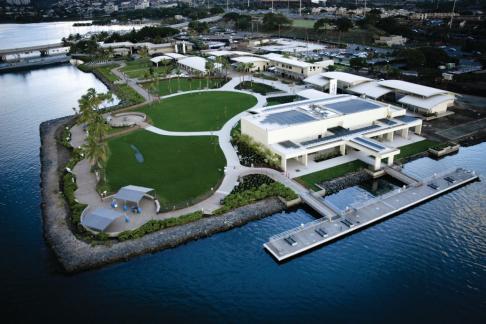
The National Park Service offers over 1,300 free walk-in tickets each day for the USS Arizona Memorial Tour on a first-come, first-served basis. Be sure to come early for these walk up tickets, the Pearl Harbor Visitor Center is open daily from 7am.
Adult lunch - choose of: 2 famous Bowfins, 2 Bowfins Chili Dogs, 2 Soups (includes vegetarian soup) or 1 Hot Dog and One Sorup. Beverages not included but are available in vendor machines.
Child lunch - choose of: 1 famous Bowfin Hot Dog, 1 Bowfin Chili Dogs or 1 Soup (includes vegetarian soup). Beverages not included but are available in vendor machines.
Check In Policy & Maximizing Your Time
Visitors with ticket reservations are required to check in at the National Park Service ticket counter one hour before their tour time. If you check in late, the National Park Service reserves the right to reassign your tour tickets. We highly recommend starting at the Visitors Center’s museum before embarking to the memorial.
No Bag Policy
For security reasons, no purses, backpacks, fanny packs, diaper bags, large camera cases or luggage is allowed at the Pearl Harbor Visitor Center. Valuables should not be left in your vehicle. Bag storage is available at the entrance for a fee of $3 per bag. We recommend that visitors bring in their wallets, ID, water, cameras and cellphones.
Strollers
Strollers are allowed in the Pearl Harbor Visitor Center, but not in the theaters or on shuttle boats to the USS Arizona Memorial. While strollers may be parked at the theaters and picked up once visitors return from the Memorial, the National Park Service is not responsible for monitoring strollers or other personal items left behind.
Restrooms
There are public restroom facilities available at the Visitor Center; visitors are encouraged to use the facilities at the Visitor Center before beginning their Arizona Memorial Program.
Food and Beverage
Other than clear bottled water, no food or drinks are allowed in the theater, on the shuttle boats, or at the USS Arizona Memorial.
Dress Attire
Civilian
Visitors are reminded that they are visiting a site of tremendous loss of life in service to our country. Sandals are permissible, but bathing suits or profane T-shirts are discouraged.
Military
Military visitors to the USS Arizona Memorial are within the boundary of Joint Base Pearl Harbor-Hickam, and military regulations relating to military dress are enforced by Navy personnel. Per the Pacific Commander, military visitors in uniform are required to dress in Class B or better in order to gain access to the shuttle boats to the USS Arizona Memorial. Battle dress uniform is not allowed on the USS Arizona Memorial, though it is allowed throughout the Visitor Center and at sites on Ford Island. Military visitors are welcome to wear civilian clothes when they visit.
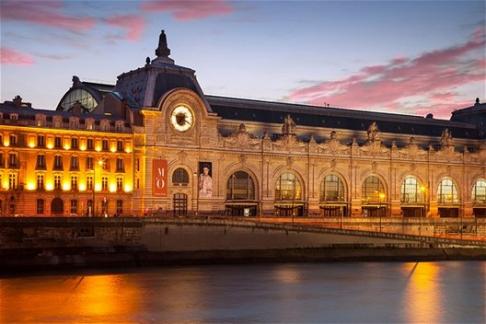
¡Diríjase a la Rive Gauche y disfrute de una visita al Museo Orsay a su propio ritmo!
El Museo Orsay es particularmente famoso por su rica colección de obras pre-impresionistas: "Pequeña bailarina de 14 años" de Degas, "El almuerzo sobre la hierba" de Manet, “Baile en el Moulin de la Galette” de Renoir y muchos más.
¡Con su mapa y los comentarios* de la audio-guía podrá realizar su visita personalizada por el museo sin perderse ninguna obra maestra!
Incluye
Visita al Museo Orsay con audio-guía (solo includa en la entrada de adulto)
Mapa del museo con un intinerario sugerido y guía del visitante
Entradas
Información importante:
Se requerirá un depósito de 32€ para la audio-guía que se devolverá en la agencia al acabar el tour.
Esta es una visita libre con audio-guía.
*Idiomas disponibles: Español, Inglés, Francés y Alemán.
¿Por qué no combinar su visita al Palacio de Versalles con otros lugares de interés turístico y actividades en París, como una comida en Le Bistro Parisien o la Torre Montparnasse?
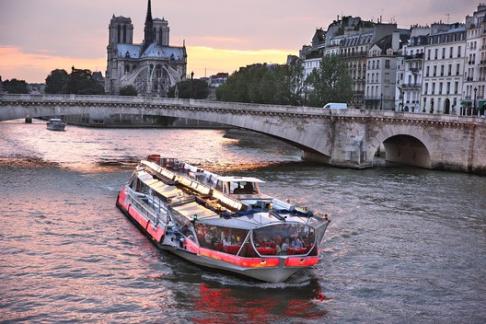
All the tables are situated next to the picture windows to allow everyone to enjoy Paris with all modern conveniences. All their boats have an open deck, which affords a magical, all-round view of the City of Light. Cruise commented in up to 10 languages* Free itinerary translated in 25 languages Boats with an open upper deck 1h10 mns cruise * Languages: French, English, Spanish, Italian, german, russian, chinese, japonese, corean. Bus Tour Pass for 2 consecutive days 4 lines, 50 stops and more than 100 sights Hop-on, hop-off as you wish Audio guide available in 10 languages* Stories and tales of Paris for children (in french, english and espagnol) Free Wifi Click here to view The Map and The Timetable
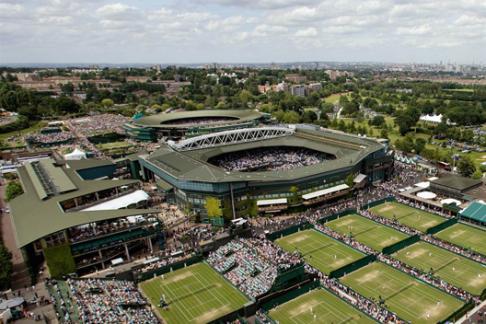
Visits to the tour and museum usually last around two and a half hours, including 90 minutes for the tour and an hour for the museum. Highlights of the new Museum include: Fantastic New Cinema Within the walls of the new Wimbledon Lawn Tennis Museum is a remarkable cinema. The Cinema features a 200° screen that immerses the viewer into the world of The Championships by showing a film about the science of tennis. Filming took place during the 2005 Championships on Centre Court of Russia's Maria Sharapova against Spain's Nuria Llagostera Vives. Graham English Productions used a special panoramic rig that used 5 cameras at the same time, the result of which is a film that can be frozen and rotated around the field of action at any time. Using this technique, the film focuses on 20 different aspects of the match and showed viewers how players' bodies and equipment are affected during the course of a professional tennis match. McEnroe's Ghost Sighted at the New Museum Bringing together an old technique called 'Pepper's Ghost' with new projection and filming technology, the museum is able to create an exciting way to view a scene from Wimbledon's past. In a recreation of the 1980s Gentlemen's Dressing Room, a ghost-like image of John McEnroe appears and takes you through a tour of the normally off-limits area. McEnroe reminisces about his memories about the Dressing Room, including how he first met Jimmy Connors and how he would emotionally prepare himself for matches. The Whites of Wimbledon The fashions of Wimbledon continue to be a point of attention and significance to the story of tennis and the new Museum will house an extensive collection of Wimbledon attire. Everything from outfits worn in the 1880s to Rafeal Nadal's dri-fit 'pirate' trousers are on display. There is also an interactive exhibit where you can feel the weight difference between male and female clothing in 1884. Extraordinary New Technology Interactive touch screen consoles are evenly distributed throughout the Museum hallways. These information access points make up a part of the new and exiting technologies within the Museum. Other features are the 'Get a Grip' rotating wheel of rackets; 'The Reactor' game and an archive of great past Championship matches, all of which can be enjoyed by visitors of any age. Tour Visitors may also take a tour of the grounds, led by specially trained Blue Badge Guides, and gain access to restricted areas normally closed to the public. Included are : • No. 1 Court • The Water Gardens (Henman Hill) • The Millennium Building • The Press Interview Room • The BBC Television Studio (or Centre Court if building work permits) • Entrance to the Museum Tour times: Vary throughout the year.
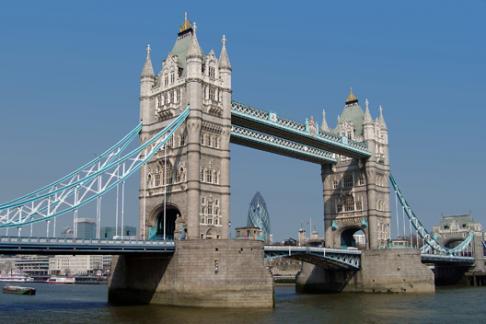
Vor über 120 Jahren bauten die Londoner eine Brücke, die zu einer der berühmtesten Attraktionen Londons wurde. Die Fußgängerstege wurden gebaut, damit Menschen die Themse überqueren können, während die Brücke hochgezogen ist um große Schiffe die Tower Bridge passieren zu lassen. Heute dienen diese Fußgängerstege als Aussichtsgalerie, die den Besuchern die spektakulärsten Blicke auf eine sich stets wandelnde Londoner Skyline ermöglicht. Fußgängerstege & Ausstellung: Besucher betreten die Tower Bridge Ausstellung über den North Tower. Sie werden dann mit dem Aufzug auf die Spitze des Turmes gebracht – 47 Meter über der Themse – Dort können Sie das Stahlgerüst der Brücke von innen bestaunen. Ein kurzer Film erklärt die Geschichte der Brücke und es besteht die Möglichkeit, von den beiden überdachten Fußwegen den Blick über die Dächer Londons wandern zu lassen. Auf dem östlichen Übergang gibt es eine fantastische Sicht auf die Docklands. Vom westlichen Übergang können Sie das neue GLA Gebäude sehen, den Tower of London, St. Paul’s, Big Ben und das London Eye. Interaktive Multimediaangebote (mehrsprachig) und Tafeln geben den Besuchern Informationen zu den jeweiligen Aussichten und zum Bau der Brücke. Im Südturm gibt es einen weiteren Film zu sehen. Besuchen Sie vor dem Abstieg den historischen Maschinenraum. Der Zutritt ist ebenfalls im Ticketpreis inbegriffen. Viktorianische Maschinenräume: Hier erhalten Sie faszinierende Einblicke in das Konstruktionswesen des späten 19. Jahrhunderts. Die großen und guterhaltenen, kohlenbetriebenen Maschinen wurden mit Fertigstellung der Tower Bridge im Jahr 1894 installiert, um bis 1976 Tausende der Brückenhebungen zu ermöglichen. Obwohl die Hebevorrichtungen elektrisch angetrieben werden, sind die originalen Dampfmaschinen immer noch vorhanden. Die Maschinenräume geben Besuchern die Möglichkeit mit Modellen zu experimentieren, welche die Technologie der Brücke veranschaulichen. Es werden sehenswerte Fotografien der Tower Bridge aus den vergangenen Jahrhunderten gezeigt. Ein Highlight ist ein Foto der schweren Stahlstruktur der Brücke, bevor die Steinverkleidung montiert wurde. Klicken Sie hier um die Tower Bridge App herunterzuladen!
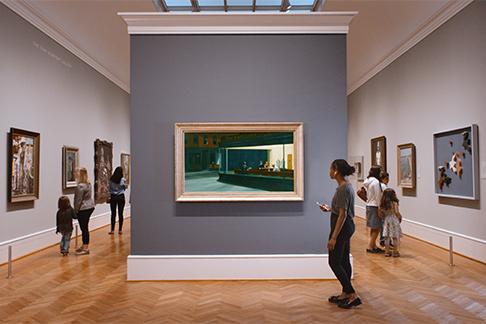
ART INSTITUTE OF CHICAGO One of TripAdvisor's Top Museums in the World—Four Years in a Row - 2013 | 2014 | 2015 | 2016 SHEDD AQUARIUM EXHIBITS UNDERWATER BEAUTY – A SPECIAL EXHIBIT, included with admission. Our living world is full of wonder. Celebrate with us the unbelievable beauty living in our oceans, lakes and rivers in a new special exhibit at Shedd Aquarium: Underwater Beauty. Get a glimpse of the grandeur beneath the waves as 100 species from around the world come together in an evocative new space. What is beauty? Spark your curiosity as you see all the ways beauty moves and coexists. Watch sea jellies pulse, eels ribbon and a rainbow come alive with reef fishes. Feel the rhythms, embrace the colors and savor the patterns found only underwater. Experience a world worth celebrating – and saving. Waters of the World Travel the world in 80 habitats. Dive into Oceans, from coastal kelp forests to the seafloor. Explore the self-contained ecosystems of Islands and Lakes. Visit Rivers—big and small—and learn more about our local waters in the new At Home on the Great Lakes exhibit. Meet hundreds of amazing animals, from tiny mantella frogsto a a giant octopus, from a Grand Cayman blue iguana to Nile knifefish, and from moon jellies to sea stars. We even have map turtles, in case you get lost. Caribbean Reef Take a 360-degree tour of an underwater reef community. Follow a green sea turtle. Peek at a moray eel in a rocky crevice. Watch regal rays glide by. Get eye-to-eye with parrot fish and sharks. Visit Caribbean Reef, Shedd’s award-winning 90,000-gallon circular habitat in the grand rotunda. Amazon Rising Take an exotic journey in the Amazon, home to one-third of all living things. Watch out for anacondas and piranhas, spiders, rays and a camouflaged caiman. In churning river channels, still lakes and even flooded treetops look for tetras, turtles and fruit-eating fish called tambaqui. See how the region’s animals, plants and people adapt to the water’s dramatic annual rise and fall. Abbott Oceanarium The Abbott Oceanarium immerses you in the vibrant coastal ecosystem of beluga whales, Pacific white-sided dolphins, sea otters and sea lions. You’ll also find a host of fishes and invertebrates that make their homes where freshwater flows into the ocean or where tides turn seascapes to landscapes and back again each day. Use our self-guided map to discover how animals are linked to each other, their homes and you. Polar Play Zone Kids have a place at Shedd that they can call their own—Polar Play Zone. It’s cool as ice and twice as nice! The penguins think so, too. Play! Splash! Pretend! What would you like to be? A sleek sliding penguin? A deep-sea explorer? How about both? In Polar Play Zone, you can slip into a penguin suit and try being a bird in the Icy South play area. From there, head to the Icy North to explore the belugas’ Arctic waters in a kid-sized submarine. Don’t forget to shake hands—or is it arms?—with colorful sea stars in the touch pools. In Polar Play Zone, you’ll learn about polar opposites—big and small, fast and slow, shallow and deep, even north and south—while you play. The Oceanarium Aquatic Presentation is included however based on available seating and remaining show times at the time of guest arrival. (2018 Aquatic Presentation Schedule) Stingray Touch (seasonal experience) is included. Open late May through October. 4D Experience is not included however the 4D experience tickets may be purchased at the theatre for $3.00 per -person Pets are not allowed in the aquarium