Libre
Soutien
Winter: Daily Departure time: 10:00, 12:00, 15:00 or 09:00 / 10:00 / 12:00 / 13:00 / 15;00 Departure from Pyramides Agency: 2 rue des Pyramides, 75001 Paris Important Operation Information: In 2018, Eiffel Tower will renovate its lifts. The renovation will last at least 12 months and implies that one lift will be out of service during this period. We will keep you informed of any further notice.
Diana: Her Fashion Story ‘Diana: Her Fashion Story’ will trace the evolution of the Princess’s style, from the demure, romantic outfits of her first public appearances, to the glamour, elegance and confidence of her later life. From her earliest royal engagements, everything Diana wore was closely scrutinised, and the exhibition will explore how she navigated her unique position in the public eye: learning to use her image to engage and inspire people, and to champion the causes she cared about. Discover exquisite and celebrated outfits from throughout the Princess’s public life. The exhibition will bring together an extraordinary collection of garments, ranging from the glamorous evening gowns worn on engagements in the 1980s, to the chic Catherine Walker suits that made up Diana’s ‘working wardrobe’ in the 1990s. The Princess’s relationship with her favourite designers will be explored through a display of some of their original fashion sketches, created for her during the design process. Exhibition highlights will include the pale pink Emanuel blouse worn for Diana’s engagement portrait by Lord Snowdon in 1981, and Victor Edelstein’s iconic ink blue velvet gown, famously worn at the White House when the Princess danced with John Travolta. A blue tartan Emanuel suit, worn for an official visit to Venice in the 1980s, will go on display in public for the first time. The suit, a rare survival of the Princess’s daywear, was only recently rediscovered and acquired by Historic Royal Palaces – the charity responsible for Kensington Palace - at auction. * Please note, this exhibit is due to be very popular, queues are to be expected. The King's State Apartments Explore these sumptuous set of rooms, each grander than the last. Grand chambers of the State Apartments The King's Staircase is the first link to the circuit of rooms making up the King's State Apartments. All the great and good of Georgian London would have climbed up these stairs to visit the king. The Sunken Garden The beautiful Sunken Garden was planted in 1908, transforming part of the gardens previously occupied by potting sheds into a tranquil ornamental garden of classical proportions. Cradle Walk An arched arbour of red-twigged lime, the walk surrounds the sunken garden with arched viewpoints equally spaced along the sides. In the summer this shady tunnel provides the perfect place to view the bright colours in the Sunken Garden to the north or the re-landscaped gardens to the south. Formal gardens Kensington Gardens began life as a King's playground; for over 100 years, the gardens were part of Hyde Park and hosted Henry VIII's huge deer chase. When William and Mary established the palace in 1689, they began to create a separate park. Mary commissioned a palace garden of formal flower beds and box hedges. This style was Dutch and designed to make William, who came from Holland, feel at home. The Queen's State Apartments Explore these intimate, private rooms created for Queen Mary II, who ruled jointly with her husband, King William III, in the 17th century. The Queen’s rooms The Queen's Staircase, little changed since its construction in 1690, is deliberately plainer than the King's. Mary would have glided down its steps to reach her beloved gardens, created in the Dutch style, through the door at its foot.

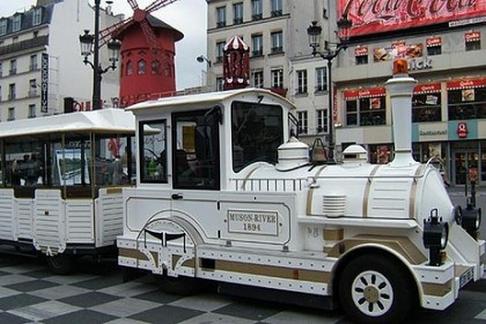
Discover the romantic town of Paris in only 40 minutes !
The Little Train of Paris Montmartre offers a tour in the heart of Montmartre, with a return from la Place du Tertre. It also includes a full commentary with music.
This is a lovely way to go up Montmartre if you get on the train at Place Blanche and use it to go up to Place du Tertre. It is a steep way up to Montmartre and this is a great, and fun, alternative!
The Circuit:
Place Blanche
Place du Tertre
Place Constantin Pecqueur
Moulin Rouge
Espace Dali
La Halle et le Marché Saint-Pierre
Basilique du Sacré Coeur
Musée Montmartre
Anvers
Amphithéâtre / Arènes
Le Lapin Agile
Retour Place Blanche
Église Saint-Pierre
Cimetière Saint-Vincent
The Highlights:
Charming way to discover the famous district of Montmartre
Circuit of 14 stages to make your tour as detailed as possible
Please note that the ticket for the Paris Montmartre Little Train is valid from December 1st 2018 until 12/31/2019
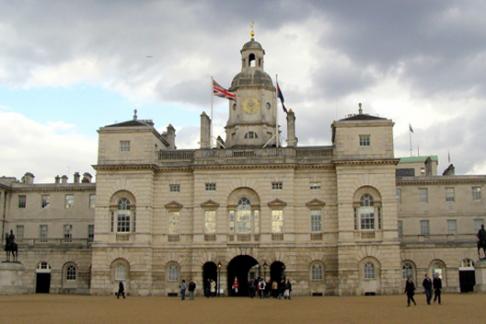
Historic setting: The Household Cavalry Museum sits within Horse Guards in Whitehall, central London, one of the city’s most historic buildings. Dating from 1750, it is still the headquarters of the Household Division, in which the Household Cavalry has performed the Queen’s Life Guard in a daily ceremony that has remained broadly unchanged for over 350 years. The Household Cavalry: The Household Cavalry was formed in 1661 under the direct order of King Charles II and now consists of the two senior regiments of the British Army – The Life Guards and the Blues and Royals. We have two roles: as a mounted regiment (on horseback), we guard Her Majesty The Queen on ceremonial occasions in London and across the UK and are a key part of the Royal pageantry; as an operational regiment we serve around the world in armoured fighting vehicles. We currently have units deployed on active service in Iraq and Afghanistan. Our fighting capacity is matched by our strategic role in international peace keeping and humanitarian operations. Collections: Over the centuries we have amassed an outstanding collection of rare and unique treasures from ceremonial uniforms, royal standards and gallantry awards to musical instruments, horse furniture and silverware by Fabergé. Each exhibit has its own compelling story to tell and many are on display for the very first time. You can see two silver kettledrums given to the regiment in 1831 by William IV; the pistol ball that wounded Sir Robert Hill at Waterloo and the cork leg which belonged to the first Marquess of Anglesy, who, as the Earl of Uxbridge, lost his real one at Waterloo. Modern additions to the collection include Jacky Charlton’s football cap – he did his national service with the regiment and Sefton’s bridle – the horse that was injured in the 1982 Hyde Park bombings. Much of the collection has resulted from the close association that has existed between the Household Cavalry and Royalty. We have, after all, protected successive kings and queens from rebels, rioters and assassins for nearly 350 years. Working Stable Block: Visitors can gain a unique behind-the-scenes look at our working stable block. All the horses here are on duty and at different times of the day you will see something going on - you might see the horses being brought in, groomed, fed and watered, their hooves oiled and shoes checked, their saddles adjusted ready to go on guard or just see the stables themselves being cleaned. Both our horses and riders go through a rigorous and demanding training. In the Museum's many interactive and multimedia presentations, you will hear first hand accounts of what this training is like and the techniques our soldiers use to master their horses and complete the gruelling preparations for regimental inspections.
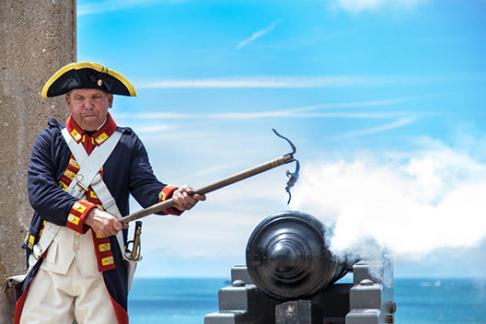
Facilities and Access Entrance and parking: The castle is reached on foot along a causeway from West Park slipway in St Helier. Visitors can either walk at low tide or catch the pirate-themed Castle Ferry (small charge applies) at high or low tide. Public parking is available in Patriotic Street, the Waterfront or in parking bays off Victoria Avenue. Buses and cycle routes: All bus routes terminate at Liberation Station which is a short walk away. Jersey cycle route 1 Refreshments: A coffee shop is on the premises – members receive 10% with their voucher (found in your voucher pack) Gift Shop: Jersey Heritage gift shops, selling gifts, souvenirs, books and toys are located at Elizabeth Castle and in the Castle Ferry kiosk. Access arrangements: Unfortunately the site is not suitable for people with mobility impairment Dogs: No dogs allowed, except guide dogs Hearing loop available at reception and a portable hearing loop is available for groups if requested in advance
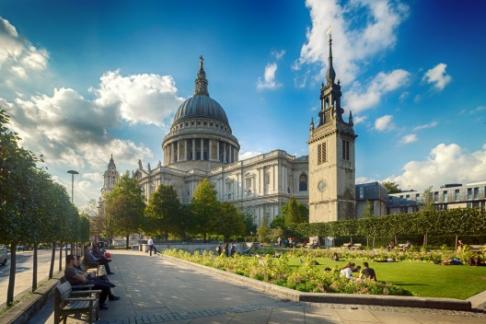
St Paul’s Cathedral, whose dome dominates London’s skyline, is England’s architectural masterpiece and place of national celebration. The cathedral was designed by the famed architect Sir Christopher Wren, after the Great Fire of London in 1666 destroyed its predecessor. The cathedral took 35 years to build from 1675 – 1710, spanning the lives of five monarchs and was the first cathedral to have been built and completed in its architect’s lifetime. St Paul’s Cathedral is where people and events of overwhelming national significance have been celebrated, mourned or commemorated. From state funerals for British heroes such as Sir Winston Churchill, to the Royal Wedding of Prince Charles to Lady Diana Spencer, and National Services of Thanksgiving to celebrate the Silver, Golden and Diamond Jubilee’s of Her Majesty the Queen. Touch-screen multimedia guides in nine languages are included for sightseers, offering up to 90 minutes of audio commentary, videos and imagery for a self guided tour. Tours led by cathedral guides are also offered, usually starting at 10.00, 11.00, 13.00 & 14.00 and last for 90 minutes; visitors should register to join a tour once inside the cathedral. Explore the cathedral floor then visit the Whispering Gallery to test the unique acoustics. Climb further to the Stone and Golden Galleries, which afford breathtaking panoramic views across the city. Descend to the crypt which houses tombs and memorials to famous Britons such as Admiral Lord Nelson, The Duke of Wellington and Wren himself.