Libre
Soutien
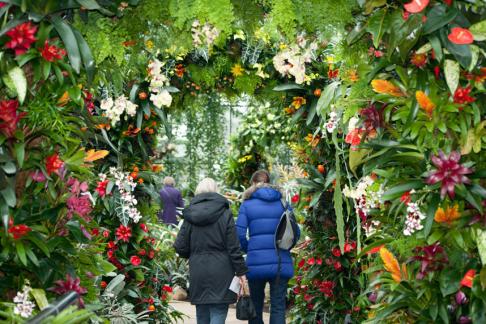
Kew Gardens, is a World Heritage Site located in 121 hectares of stunning vistas with six magnificent glasshouses set in a beautiful landscape beside the River Thames between Richmond and KEW in south-west London. Kew Gardens represents more than 250 years of historical gardens. It is home to a remarkable collection of over 30,000 types of plants from all over the world that range from the decorative to the peculiar. Kew Gardens provide opportunities for public enjoyment and enrichment and the behind-the-scenes scientific work helps ensure a sustainable future for plants and people. In the summer of 2004, Kew's determination to make serious botany great fun for children was demonstrated with the opening of 'Climbers and Creepers'. Bringing a new use to an old cycad house by White Peaks, Climbers and Creepers engages children from around 3-9 years in the pleasures of learning more about plants and their relationships with animals and people. Apart from the sheer beauty and tranquillity of the garden's landscapes Kew offers a wonderful day out for all, whether horticulturally, historically or botanically inclined. Botanical Highlights The dates below are approximate, and flowering can vary by three to four weeks, depending on the weather. Spring: Mid-February - early March: A million-and-a-half crocuses below the Temple of Bellona between Victoria Gate and King William's Temple - one of Kew's most spectacular displays (typically late Feb - early March). Camellias between Victoria Gate and the Shirley Sherwood Gallery of Botanic Art. Spring bedding and spring flowers in the open woodland around the Azalea Garden. Daffodils, forsythia and cherry blossom. Orchids, bromeliads and anthuriums in Kew’s Tropical Extravaganza, an annual display of exotic blooms in the Princess of Wales Conservatory. April - May: Lilacs near Kew Palace and White Peaks. Spring bedding in front of the Palm House. Scillas in the Woodland Garden. Flowering cherries, crab apples, magnolias and tulips throughout the gardens. May - June: Bluebells in the Queen's Cottage Grounds. Lilacs, azaleas, rhododendrons and magnolias, Brentford Gate area. The tiny but beautiful alpine flowers in the Davies Alpine House and the Rock Garden. Himalayan blue poppies and rhododendrons in the Woodland Garden. Native plants in long grass areas. Horse chestnut blossom. Summer: June - July: Summer flowers in the walled Duke's Garden and in the Woodland Garden. Giant water lilies growing rapidly in the Princess of Wales Conservatory and the Waterlily House. The Mediterranean Garden near King William's Temple. The Rose Pergola, the Rose Garden and the Order Beds. The Rock Garden. Tulip trees, opposite the Palm House, Philadelphus near the Pagoda. July - September: Themed summer bedding in front of the Palm House. The Order Beds. Giant water lilies flowering in the Princess of Wales Conservatory. Water lilies flowering in the Aquatic Garden and Waterlily House. The herbasceous borders of the Duke's Garden, fascinating medincinal herbs in the Queen's Garden, Grass Garden, Rose Garden. Hibiscus, hydrangeas and Indian bean trees. Autumn: September - October: Autumn crocus in September in the Woodland Glade - Kew's first burst of autumn colour. Belladonna lilies. Trees in autumn colour. October - November: Last of the autumn colours. Grass Garden. Autumn-flowering crocuses, colchicums and hardy cyclamen. Strawberry trees west of King William's Temple and between the Princess of Wales Conservatory and Rock Garden. Winter: November - December: Fruiting trees and shrubs, winter bark. Winter-flowering cherry. January - February: Snowdrops in the Rock Garden and Conservation Area, crocuses along the Princess Walk. Witch hazels by King William's Temple. Cornelian cherry in the winter border in the Duke's Garden. Duchess border along wall outside the Duke's Garden. Camellias between Victoria Gate and the Shirley Sherwood Gallery of Botanic Art. Clematis cirrhosa on the Rock Garden Wall. Rhododendrons in the Rhododendron Dell and, if the winter is mild, the carmine blooms of Magnolia campbellii might appear early. Shrubs in the Winter Border near the Ice House. The Davies Alpine House. Heathers, hellebores, viburnums and cornelian cherry.
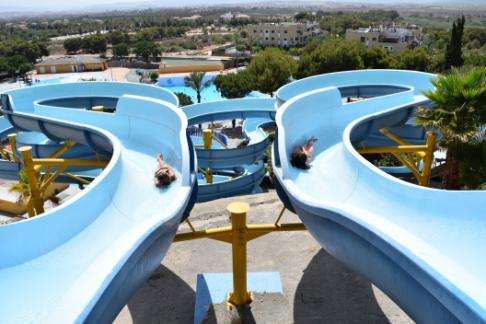
La casa privada de Siam Park le ofrece un lugar para descansar con balcón privado y vistas al parque. Cada casa cuenta con hamacas un jacuzzi en la terraza, una ducha, toallas, un ventilador, sofá y televisión. También encontrará un mini bar lleno de refrescos, cerveza y snacks. La casa privada ofrece una excelente relación calidad-precio y debe reservarse con antelación. ¡La mejor manera de disfrutar de una experiencia VIP!
On the way to Grazalema we will drive through the Natural Park “Sierra de Grazalema”. You will enjoy a range of amazing landscapes and views over the provinces of Cádiz, Málaga and Seville, from “Puerto de las Palomas” which is 1357 metters above sea level. We also get the chance to witness vultures in their natural habitat. These mountains are home to the largest colony of Griffon vultures in Spain. Once in Grazalema, there will be time to have a nice meal, surrounded by the pittoresque white houses decorated with colorful flowers. After lunch we will leave Grazalema and head to Ronda, on the way we will cross a very beautiful mediterranean forest full of cork trees and oaks. Where upto this day locals still work with its cattle (iberian pigs, goats and cows), to extract honey, cork, aromatic spices or wood. After an exciting morning, we will reach Ronda, one of the oldest towns in Spain. Ronda its unique for its surrounding nature and history. It is built on two separate cliffs. The town is connected by the most famous bridge in Spain, known as “The New Bridge” even though it was built in 18th century. In Ronda our tour guide take you around the city and tell you about the rich history city holds. After which you will have free time to explore the town´s beauty. Pueblos Blancos and Ronda On this tour we will travel through the ancient Andalusian kingdoms of Castille and Granada while reveling scenic nature, history and tradition. We will begin our journey by touring through the Sevillian countryside. Here we can stop at The Castle of “Las Aguazaderas”, an interesting medieval building located at the old border line among Catholic kingdom and Moorish kingdom . We will then continue through the mountains stopping at the picturesque white village of Zahara de la Sierra. After exploring the village we will set off for Sierra de Grazalema. On the way to Grazalema we will drive through the Natural Park “Sierra de Grazalema”. You will enjoy a range of amazing landscapes and views over the provinces of Cádiz, Málaga and Seville, from “Puerto de las Palomas” which is 1357 metters above sea level. We also get the chance to witness vultures in their natural habitat. These mountains are home to the largest colony of Griffon vultures in Spain. Once in Grazalema, there will be time to have a nice meal, surrounded by the pittoresque white houses decorated with colorful flowers. After lunch we will leave Grazalema and head to Ronda, on the way we will cross a very beautiful mediterranean forest full of cork trees and oaks. Where upto this day locals still work with its cattle (iberian pigs, goats and cows), to extract honey, cork, aromatic spices or wood. After an exciting morning, we will reach Ronda, one of the oldest towns in Spain. Ronda its unique for its surrounding nature and history. It is built on two separate cliffs. The town is connected by the most famous bridge in Spain, known as “The New Bridge” even though it was built in 18th century. In Ronda our tour guide take you around the city and tell you about the rich history city holds. After which you will have free time to explore the town´s beauty. Price per person for groups of 3 to 8 people Adult price: €72 Price for children from 4 to 18 years and students up to 26 years: €50 Starting point: from Seville at the door of your accommodation or an accessible place nearby. We pick to go to the: 9:00am Private Tour for two people € 250 Approximate duration: 10 hours
Buckingham Palace State Rooms Buckingham Palace serves as both the office and London residence of Her Majesty The Queen, as well as the administrative headquarters of the Royal Household. It is one of the few working royal palaces remaining in the world today. Today the Buckingham Palace State Rooms are used extensively by Her Majesty The Queen and Members of the Royal Family to receive and entertain their guests on State, ceremonial and official occasions. During August and September when The Queen makes her annual visit to Scotland, the Palace's nineteen state rooms are open to visitors. What there is to see? The Buckingham Palace State Rooms form the heart of the working palace and are lavishly furnished with some of the greatest treasures from the Royal Collection - paintings by Rembrandt, Rubens, Poussin and Canaletto; sculpture by Canova; exquisite examples of Sèvres porcelain; and some of the finest English and French furniture. Prince & Patron: To mark the 70th birthday of His Royal Highness The Prince of Wales this year, visitors to the Summer Opening of the State Rooms at Buckingham Palace will enjoy a special display featuring a number of works of art personally selected by His Royal Highness The Garden Described as a 'walled oasis in the middle of London', the Palace's garden is home to thirty different species of bird and more than 350 different wild flowers, some extremely rare. Visitors end their tour with a walk along the south side of the garden, with splendid views of the west front of the Palace and the famous lake. Multimedia Guide An Multimedia guide is included in the ticket price and is available in English, French, German, Spanish, Italian, and Japanese, Russian and Mandarin. There is also a family Multimedia guide (in English only) and accompanying activity trail, suitable for children 7-11 years. Changing of the Guard The Changing of the Guard ceremony takes place at 11:30 daily from April until the end of July and on alternate days for the rest of the year, weather permitting. The new guards arrive at the forecourt of the Palace at 11:30 from Wellington Barracks. The journey takes about 5 minutes and the soldiers are accompanied by a band. The ceremony is conducted on the Palace forecourt and takes approximately forty minutes to complete. [The Army have not yet released the schedule for July, August or September.] Wheelchair Access If you require wheelchair access or the use of the lift, you should not book with 365 Tickets.com and should pre-book tickets directly with Buckingham Palace. Access booking line: 0303 123 7324 www.royalcollection.org.uk or email [email protected] The Royal Mews What there is to see? One of the finest working stables in existence, the Royal Mews at Buckingham Palace provides a unique insight into the department of the Royal Household that provides transport by road for The Queen and other members of the Royal Family. The Carriage Horses During your visit to the Mews, you will see some of The Queen’s horses that draw the coaches and carriages in the Mews. The Cleveland Bays are used to escort newly appointed High Commissioners and Ambassadors to their audience with The Queen, when they present their formal credentials from their country’s Head of State. You may also see the famous Windsor Greys, so called because they were kept at Windsor during the reign of Queen Victoria and drew the private carriages of the royal family. They are at least 16.1 hands (1.65 metres) high and are chosen for their steady temperament and stamina. Coaches & Livery The Royal Mews houses the royal collection of historic carriages and coaches, which you may see in use during your visit. Among the vehicles on display are the Irish State Coach, in which The Queen travels to the State Opening of Parliament, and the Australian State Coach, which combines traditional craftsmanship with 20th-century technology to provide heating and remote-controlled windows. The most dazzling vehicle of all is the Gold State Coach, which was built for George III in 1762. Weighing almost four tonnes and requiring eight horses to pull it, it has carried every monarch to their coronation since 1821. Visitors to the Royal Mews can also see some of the fine livery worn by The Queen’s coachmen. Apart from a few small details, it remains much the same as it was in Victorian times. Remarkably, some of the tailors used for production of liveries today are the same companies employed during the reign of George III in the 18th century. Multimedia guide is included in the admission price and is available in the following languages:English, French, German, Spanish, Italian, Japanese, Chinese, Russian
You'll be treated like royalty from the moment you receive a welcome drink on boarding the Aphrodite. Then lie back and enjoy the breathtaking scenery as you feel the gentle swell of the sea. You'll see hidden treasures of the southwestern coast unfold before your eyes, water cascading down rugged cliffs, dark mysterious caves and the secluded Gui-Gui beach where we will drop anchor so you can go for a swim in the clear blue waters. This is one of the most exciting and beautiful places for you to spend some time at.Then enjoy a sumptuous buffet lunch with unlimited drinks before returning to port where your bus will be waiting to take you back to your resort. Please give details of your hotel or apartment when you make your booking so that we can arrange transport for you. Your on board menu includes: Cheese from the Canary Islands, Nuts, Tomato, onion and tuna salad. Tropical salad. Entrecote steak and grilled chicken. Canarian potatoes with mojo picon sauce and drinks of wine, beer, soft drinks and mineral water. A meal fit for a king on this very regal vessel - Aphrodite. Languages: Spanish, English and German.
Experience an exciting adventure led by Las Vegas ATV Tours with tickets to UTV Tours at ShowTickets.com.