Libre
Soutien
Good to Know : Because of events held in the stadium, the tour is subject to change according to security requirements in force on the day of your visit. For security reasons, your bag will be searched before you enter the stadium. Please aim to arrive 30 minutes before the scheduled time of your visit. You’ll begin your tour by visiting the stands which offer you a breath-taking panorama. Your expert guide will show you around the stadium’s private boxes. You’ll enjoy the special atmosphere of the locker room and will walk through the same tunnel which players use to access the pitch. Close your eyes and imagine the excitement of the 80,000 spectators cheering on their teams at the biggest games, as if you were there. You’ll be told all about the stadium’s history, its unique architecture and the stars who’ve appeared on its manicured pitch. But there’s more to the stadium than just football! The largest sporting and cultural venue in France doesn’t just host high-level competitions; shows and other major events are also held here. The Rolling Stones were the first group to perform at the stadium. The experience continues as you’re left to enjoy the Stade de France’s museum: archives, models, autographed guitars and jerseys... an array of items which are testament to the stadium’s legendary history. It’s a unique visit, following in the footsteps of Zidane and Griezmann, and allows you to find out all there is to know about the mysteries of the Stade de France!
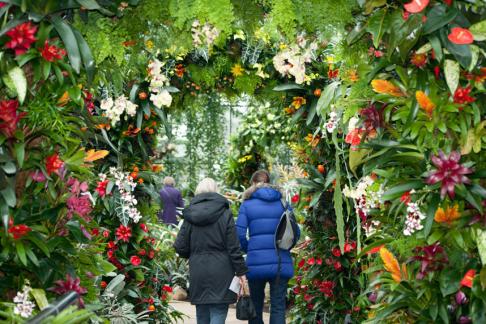
Kew Gardens, is a World Heritage Site located in 121 hectares of stunning vistas with six magnificent glasshouses set in a beautiful landscape beside the River Thames between Richmond and KEW in south-west London. Kew Gardens represents more than 250 years of historical gardens. It is home to a remarkable collection of over 30,000 types of plants from all over the world that range from the decorative to the peculiar. Kew Gardens provide opportunities for public enjoyment and enrichment and the behind-the-scenes scientific work helps ensure a sustainable future for plants and people. In the summer of 2004, Kew's determination to make serious botany great fun for children was demonstrated with the opening of 'Climbers and Creepers'. Bringing a new use to an old cycad house by White Peaks, Climbers and Creepers engages children from around 3-9 years in the pleasures of learning more about plants and their relationships with animals and people. Apart from the sheer beauty and tranquillity of the garden's landscapes Kew offers a wonderful day out for all, whether horticulturally, historically or botanically inclined. Botanical Highlights The dates below are approximate, and flowering can vary by three to four weeks, depending on the weather. Spring: Mid-February - early March: A million-and-a-half crocuses below the Temple of Bellona between Victoria Gate and King William's Temple - one of Kew's most spectacular displays (typically late Feb - early March). Camellias between Victoria Gate and the Shirley Sherwood Gallery of Botanic Art. Spring bedding and spring flowers in the open woodland around the Azalea Garden. Daffodils, forsythia and cherry blossom. Orchids, bromeliads and anthuriums in Kew’s Tropical Extravaganza, an annual display of exotic blooms in the Princess of Wales Conservatory. April - May: Lilacs near Kew Palace and White Peaks. Spring bedding in front of the Palm House. Scillas in the Woodland Garden. Flowering cherries, crab apples, magnolias and tulips throughout the gardens. May - June: Bluebells in the Queen's Cottage Grounds. Lilacs, azaleas, rhododendrons and magnolias, Brentford Gate area. The tiny but beautiful alpine flowers in the Davies Alpine House and the Rock Garden. Himalayan blue poppies and rhododendrons in the Woodland Garden. Native plants in long grass areas. Horse chestnut blossom. Summer: June - July: Summer flowers in the walled Duke's Garden and in the Woodland Garden. Giant water lilies growing rapidly in the Princess of Wales Conservatory and the Waterlily House. The Mediterranean Garden near King William's Temple. The Rose Pergola, the Rose Garden and the Order Beds. The Rock Garden. Tulip trees, opposite the Palm House, Philadelphus near the Pagoda. July - September: Themed summer bedding in front of the Palm House. The Order Beds. Giant water lilies flowering in the Princess of Wales Conservatory. Water lilies flowering in the Aquatic Garden and Waterlily House. The herbasceous borders of the Duke's Garden, fascinating medincinal herbs in the Queen's Garden, Grass Garden, Rose Garden. Hibiscus, hydrangeas and Indian bean trees. Autumn: September - October: Autumn crocus in September in the Woodland Glade - Kew's first burst of autumn colour. Belladonna lilies. Trees in autumn colour. October - November: Last of the autumn colours. Grass Garden. Autumn-flowering crocuses, colchicums and hardy cyclamen. Strawberry trees west of King William's Temple and between the Princess of Wales Conservatory and Rock Garden. Winter: November - December: Fruiting trees and shrubs, winter bark. Winter-flowering cherry. January - February: Snowdrops in the Rock Garden and Conservation Area, crocuses along the Princess Walk. Witch hazels by King William's Temple. Cornelian cherry in the winter border in the Duke's Garden. Duchess border along wall outside the Duke's Garden. Camellias between Victoria Gate and the Shirley Sherwood Gallery of Botanic Art. Clematis cirrhosa on the Rock Garden Wall. Rhododendrons in the Rhododendron Dell and, if the winter is mild, the carmine blooms of Magnolia campbellii might appear early. Shrubs in the Winter Border near the Ice House. The Davies Alpine House. Heathers, hellebores, viburnums and cornelian cherry.

What you can expect? Are you a gourmand? Don’t miss the chance to hit the foodie trail with your expert local guide by starting your tour at Syntagma Square, the beating heart of Athens’ nightlife. Admire the illuminated Greek Parliament followed by a scenic walk until you reach your first food stop; a contemporary deli shop with one-of-a-kind products and recipes, where you will indulge in a variety of Greek traditional flavors. Enjoy velvety fava with smoked sygklino ham from Mani, or hand-made pies with pastrami and graviera cheese. Wash down your tastings with traditional raki and learn the proper way to enjoy this beloved Greek spirit. After warming up a bit, follow your guide to encounter the liveliness of Monastiraki Square, where you will learn why it truly reflects all the different historical eras of Greece. As your tour continues, prepare yourselves to enter a neighborhood of wonders, through a picturesque alley crowned with an assortment of lamps of different shapes, sizes and colors. Welcome to Psirri, the hip and alternative neighborhood of Athens, with sophisticated cafes and small taverns scattered all around its main square. Your second food stop will be at a local taverna to practice the ritual of meze tasting in Greece; small side dishes like tigania (wine-infused bites of pork in the pan), zucchini fritters and tzatziki sauce, are meant to be shared with open hearts and meaningful conversations. Small tip: you'd better be hungry! This culinary & cultural exploration of Greece, would not be complete without wine; follow your foodie guide to a cosy, local wine bar and satisfy your thirst with a wine tasting of 5 different indigenous Greek varieties paired with carefully selected mouthfuls. A unique evening experience which will introduce you to the nightlife, gastronomy, and culture of Greece!
Upon takeoff enjoy full panoramic views of the Sydney skyline, Pacific Ocean and the historic Port Botany. Within 5 minutes your professional pilot will have you over the beautiful Sydney Harbour flying past icons such as the Sydney Harbour Bridge and Sydney Opera House before heading West following the Parramatta River until you reach the Blue Mountains National Park, where your pilot will land at Katoomba Airfield in the heart of the bush. The Rocks to Rainforest 4WD tours offers a unique opportunity to visit some amazing remote wilderness in the Blue Mountains World Heritage area. Guests are taken away from typical tourist destinations in our luxury 4WD vehicles. The ground component of the tour is really up to you, you can choose to stay in the 4WD or if you are more adventurous then get out and about and go for a bushwalk. You will see fantastic panorama escarpments, unique rock formations, deep canyons with ancient rainforest and occasionally kangaroos in the Megalong Valley. You will then enjoy a gourmet sandwich lunch in either a cave or rainforest, depending on the weather on the day.
ROUTE DESCRIPTIONS Red Line (Mon-Sat Afternoon) Termini railway station Piazza Indipendenza Colosseum Circus Maximus Piazza Venezia Vatican/ Castel Sant’Angelo Trevi Fountain Barberini Blue Line (Sat afternoon –Sundays) Termini railway station Piazza Indipendenza Santa Maria Maggiore Colosseum Circus Maximus Piazza Venezia Vatican/Castel Sant’Angelo Barberini Purple Line Termini Railway Station Santa Maria Maggiore (Sat After -Sundays) Colosseum Porta San Sebastiano – Museo delle Mura Catacombe San Sebastiano, Ancient Appia Caffarella Park Domine Quo Vadis Church Terme di Caracalla Circus Maximus Piazza Venezia Bus: Duration 1 Hour 40 Minutes Operates: 09:00-18:00 in Low season 9:00-19:00 in High season Frequency: 10-20 minutes INCLUSIONS Unlimited Hop on Hop Off ticket Recorded Commentary in English, French, German, Italian, Arabic, Mandarin, Portuguese, Spanish, Russian 4 Walking Tours: Spanish Steps, St. Peter’s Basilica, Colosseum and Piazza Venezia Catacombs & Caracalla Tour THEIR COMMITMENT : Great value for money Best bus frequency Hi Resolution digitally audio-system Operates 7 days a week, all year long
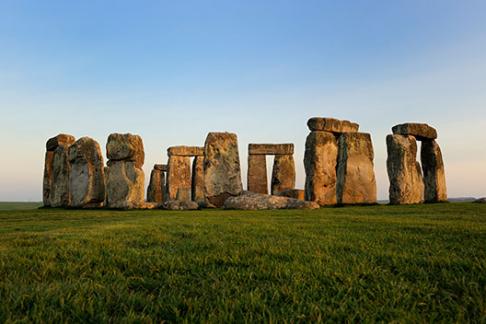
Rätsel umgeben diese 5.000 Jahre alte Welterbestätte. Besuchen Sie dieses prähistorische Monument im Südwest en und entscheiden Sie selbst ob Stonehenge als Ort für Sonnenanbeter, oder als Teil eines riesigen astronomischen Kalenders, oder etwas komplett anderes vorgesehen war! Es wird ein ehrfurchtgebietender Familienbesuch, denn Stonehenge ist eine kraftvolle Erinnerung an die einst große Stein- und Bronzezeit. Jede Phase von Stonehenge war eine kreisförmige Struktur, ausgerichtet auf die aufgehende Sonne zur Sonnenwende. Zwischen 3.000 v.Chr. und 1.600 n.Chr. wurden die Steine errichtet und Hunderte von Kilometern über Land und Meer transportiert. Geweihe und Knochen wurden genutzt, um die Gruben zu graben die die Steine halten. Moderne Techniken der Archäologie und eine Reihe von jüngsten Grabungen halfen dabei neue Theorien über die Steine zu formulieren, aber ihr letztendlicher Zweck bleibt ein faszinierendes und bleibendes Mysterium. Hinweis für Senioren und Studenten: Das Personal in Stonehenge bittet darum dass alle Personen die Voucher mit Studenten- oder Seniorenermäßigung haben, auch einen gültigen Ausweis vorlegen. Dies geschieht um unnötige Verwirrung oder jegliche Missverständnisse zu vermeiden wenn Sie bei Ankunft nach einem Nachweis gefragt werden.