Fun Spot America Orlando Features Fun for All Ages
From high school seniors to senior citizens, Fun Spot America Orlando has the ideal level of excitement for you!
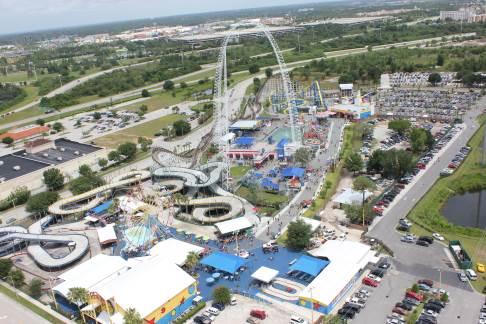
That includes a choice of roller coasters, Thrill rides, go-karts and games, including:
Orlando’s Only Wooden Roller Coaster - White Lightning
4 Go-Kart Tracks - 3 multi-level, 1 speed track
7 Family/Thrill Rides - Including the Paratrooper, Rip Curl and Revolver
World’s Second Tallest SkyCoaster at 250 Feet
Cadet Go-Kart Track Designed for a 4, 5 and 6-year-old. A child’s First Drive
8 Kid Spot Rides for Preschooler Fun
2 Stories of Over 100 of the Hottest New and Classic Arcade Games
Perfect for younger children and adults both! With the “KidSpot,” this park is perfect for parties geared towards younger children. All of the rides in this slower speed section are designed for children between 24 inches and 42 inches tall, so there’s fun for every member of the family. This special section features 8 young child rides, including a mini fun house, Tea Cups, the El Paso Train, the Froghopper and Kiddie Coaster.
For high-speed thrills that keep you on the ground, don’t miss the extreme go-kart racing. Put your driving skills to the test with 4 patented track designs! And when you’re ready for some high-flying fun, take a ride on Orlando’s only wooden roller coaster, the brand new White Lightning! Then take the plunge on the spinning, dipping Paratrooper and watch the rest of the park swirl around you as you pick up more and more speed!
And whether you need to do some shopping before or after stopping in for the thrills and excitement at Fun Spot America Orlando, the location couldn't be better! Located right near the Premium Outlet Mall, this great location lets some play while others shop!
3 New Rides!
Bumper Boats – A great tide for a hot summers day, bump each other and shoot your water guns to see who can get soaked.
HR – 46” or ride with an adult
Space Invader – Giant arms swing you back and forth until all you see is sky. Then you’re swung back so all you see is the ground rocketing past your face. You swing more than 180 degrees, past perpendicular, first on your back and then on your face!
HR – 48”
Cadet Track – Not ready for the big tracks? This is a great track for smaller kids.
HR – 42”
Screamer – What goes up must come down. Or does it? Enjoy this suspense-filled ride where you never
know if you’re heading up or down!
HR – 42”
FUN SPOT AMERICA THEME PARKS POLICIES & FAQS
For specific details on the policies and guidelines of Fun Spot America’s two parks, please see the list below. If you have any questions about park policies, simply contact one of our friendly representatives and we’ll get you the answers you need fast!
Do you offer assistance for guests that have difficulty walking?
Yes, Scooterbug Mobility provides electric scooter rentals on first come/first served basis.
Do you offer strollers?
Yes, Scooterbug Mobility provides stroller rentals for parents of small children or infants.
What are the height requirements?
Height requirements for the rides are located on the park maps, which can be found in the Orlando or Kissimmee sections of the web site.
How much does it cost if I'm not riding anything?
Our Free Admission means that there is NO Cost to come in and watch others enjoying the rides. So if you are not riding, you are not paying. It is FREE!
Do I need an armband if all I am doing is driving my child on the go-karts?
If a child is not tall enough to drive themselves on a ride/go-kart, then someone over 18 may drive them IF the driver has either an Armband (54+) OR a Chauffeur Armband which is only permits you to drive a child and only drive a child on rides they could not do without an adult. The cost of a Chauffeur Armband is only $9.95.
Is the arcade included in the armband?
Because you can win prizes the more you play certain arcade games, we do not have any unlimited arcade.
With our arcade you pay per game with a Fun-E-Card you purchase. Game prices vary from $.25 to $2.00.
Is the SkyCoaster ride included in the armband?
The SkyCoaster is a unique, one of a kind ride. To ride the SkyCoaster by yourself, it costs $40,
BUT if you have already purchased an Armband, you may include the SkyCoaster for only an additional $20.
What happens when it rains?
Fun Spot has lots of options when it rains. First of all we can offer you a rain check, if you have had an Armband for less than 90 minutes. So you can go and come another day. OR keep your Armband and wait until the rain ends and return to the park to continue riding and racing. We are open until Midnight. OR ride in the rain. Many rides stay open in the rain. How heavy the rain is, and whether or not there is lightning will determine which rides remain open. If you choose to stay, get a poncho from us. We value price them to make it attractive for you to stay.
Can I bring in my own food?
We do allow you to bring in your own birthday Cake if you are having a birthday celebration. Other than that we ask for no outside food or drink in our park. We are free admission, it is easy to leave the park and return after eating. Of course, once you see our fun food options, we hope to tempt you into staying and recharging here.
Can I leave and come back?
With Free Admission you may come and go as often as you would like. Your armbands will be good until Midnight. So if you leave at 3 pm and want to return at 9 pm, as long as your Armbands are still on your arms there is no additional charge.
How much is it for my baby?
For anyone who is not doing the rides, we are a FREE admission park. We do not recommend our rides for any child under 24 months. If your two year old only wants to do one carousel ride, it is $3 a ride. Speak with a manager if your child needs you to ride with them on one of our pre-school rides. So your baby is free, but if your toddler chooses to ride then they are a customer.
Where are the restrooms?
This is our most common question. Please check the park maps or ask any employee. We know we need to answer that question often and in person.
Fun Spot America Theme Parks Drone Policy
All drones (Unmanned Aerial Systems) are prohibited at (in) all Fun Spot America Theme Parks. Any unauthorized drone(s) observed over any Fun Spot America Theme Park will be reported to the FAA and local law enforcement, regardless of its point of origin or operation. We promote safe-clean-fun at our parks and drones may pose a potential safety risk to our guests. Drones may also violate Federal Aviation Administration guidelines.