Gratis
Apoyo

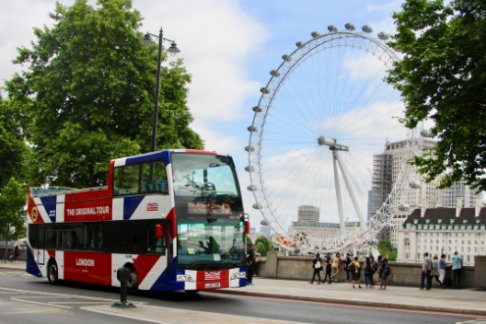
The Original London Sightseeing Tour A spectacular day out for all the family! THE TOURS The Original Tour (Yellow Route) Hop-on and off our tours at your leisure exploring London's sights in safety and comfort. Get the most out of your visit with a fun & informative English guided commentary provided by our professional tour hosts. The route takes in London's most famous sights; including Buckingham Palace, Big Ben & the Houses of Parliament, Downing Street, The London Dungeon, Tower Bridge and The Tower of London. Commentary - English Live Guided Bus Times - The Original Tour (Yellow Route) departs every 20 minutes from Whitcomb Street between 08:30 to 18:00. Tour Duration: 2 hours 15 mins Last full Yellow tour: 16:30 Mon-Thurs, Fri-Sun 17:00 Departure Points - We recommend you join this tour from our Visitor Centre or Piccadilly Circus. The City Sightseeing Tour (Red Route) Our City Sightseeing route takes in all of London's landmark attractions and offers entertaining, multi-lingual commentaries. Children can also enjoy our superb Kids' Channel on the Red Route. The route takes in the capital's most famous sights including Buckingham Palace, Big Ben & the Houses of Parliament, Downing Street, Madame Tussauds, The London Dungeon, Tower Bridge and The Tower of London. Commentary - Digitally Recorded Multi-Lingual in English, French, Spanish, Italian, Russian, German, Japanese, Portuguese & Kids' Channel. Bus Times: First red tour departs at 0830 from Grosvenor Gardens with departures every 10-15 minutes thereafter. Mon–Thurs last tour 16:50 and Fri-Sun last tour from 17:20 Tour Duration: 2 hours 15 mins Departure Points - We recommend you join this tour from Victoria, Visitor Centre or Piccadilly Circus. The Museum Tour (Blue Route) In addition to our two popular main tour routes, customers of The Original Tour can enjoy the delights of London's top museum districts relayed to them through the superb digital commentary. Enjoy the many attractions, shops and museums along the Blue route which runs from the British Museum down to Kensington and Knightsbridge for Kensington Palace, Harrods, the V&A, Natural History and Science Museums, whilst listening to an informative and entertaining commentary. Commentary - Digitally Recorded Multi-Lingual in English, French, Spanish, Italian, Russian, German, Japanese, Portuguese & Kids' Channel. Bus Times - First Blue Tour from Woburn Place 08:30, from Kensington Palace Gardens 08:15 daily, every 15-20 minutes thereafter daily. Last Full Blue Tour 17:15 from Kensington Palace Gardens to Woburn Place daily. Last Full Blue Tour 17:30 from Woburn Place to Kensington Palace Gardens daily. Tour Duration: 2 hours 15 mins Departure Points - We recommend you join this tour from Piccadilly Circus. Purple Route - Capital Connector (T6) The Purple Route is useful if you are staying in a hotel located in Bayswater, Notting Hill, Holland Park or Lancaster Gate or wish to go shopping at Westfield Shepherds Bush. Operating in both eastbound and westbound directions, the Purple Route operates more frequently in an eastbound direction, enabling you to join our Yellow sightseeing route at Marble Arch. Frequency: Every 20-30 minutes. EXPLORE LONDON FREE WALKING TOURS Get up close to London's incredible history. Included FREE with every bus tour ticket! Three fabulous walks put you at the heart of the world's most exciting city: Changing the Guard Walk: See Buckingham Palace, St James's Palace and the regiments that guard them in this exciting walk as you march alongside the guards at Buckingham Palace.* Departs daily 10:00am from The Original London Visitor Centre Rock ‘n’ Roll Walk: Take a 90 minute walk through the heart of London’s rocking heritage: The Beatles, The Rolling Stones, David Bowie and The Sex Pistols – it’s only rock ‘n’ Roll, but I like it! Departs daily 13:00 from The Original London Visitor Centre Jack the Ripper Walk: Walk in the footsteps of the world's most infamous serial killer as we reveal his murderous tale from the dark street of Whitechapel in 1888. Departs daily 16:00 from The Original Tour bus stop 11 at the Tower of London on Tower Hill * On non-guard change days (Tuesday, Thursday and Saturday) the walking tour will take you to see the Changing of the Horse Guard (at horse guards parade) and will then visit Buckingham Palace. The guard change does not take place if it is raining. ** All tours take approximately 90 minutes. Please note that the Jack the Ripper walk will finish at Aldgate East tube station and not at one of our bus stops. *** Walking tours are included FREE with an Original Tour ticket but can be purchased separately at £9 GBP each. MAIN DEPARTURE POINTS: The Original London Visitor Centre The newly opened London Visitor Centre is your one-stop-shop to the Capital and beyond. Visit us at our Trafalgar Square address for expert help from our excellent travel advisers. You can also purchase tickets for a range of exciting activities. Opening Hours: Monday-Saturday 08:30 to 18:00 Sunday & Bank Holidays 09:00 to 17:30 Address: 17-19 Cockspur Street, Trafalgar Square Nearest Tube: Charing Cross or Piccadilly Circus Start Point 1 - PICCADILLY CIRCUS Directions: Yellow Route From Whitcomb Street: The stop is by the McDonald's between Piccadilly Circus and Leicester Square. Red Route From Haymarket: The stop is outside the Theatre Royal. Green & Blue Routes From Rupert Street: The stop is outside 'Yo Sushi' restaurant on Rupert Street No.19. Timetable - Frequency approx. 10 mins Yellow Route: First Bus 08:30, Last Full Tour 18:00 Red Route: First Bus 09:15, Last Full Tour 16:20 Green Route: First Bus 09:52, Last Full Tour 14:10 Blue Route: First Bus 08:45, Last Full Tour 17:15 Start Point 2 - TRAFALGAR SQUARE Directions: Yellow & Red Routes From Trafalgar Square (North Side): The stop is located opposite The Original London Visitor Centre at Stop 'Z', by the Sainsbury Wing of the National Gallery. Green Route From Northumberland Avenue: The stop is opposite 'Garfunkel's' restaurant at Stop 'W'. Timetable - Frequency approx. 15 mins Yellow Route: First Bus 08:35, Last Full Tour 15:50 Red Route: First Bus 09:20, Last Full Tour 15:04 Green Route: First Bus 09:18, Last Full Tour 14:35 Start Point 3 - RUSSELL SQUARE & WOBURN PLACE Directions: Blue Routes From Woburn Place: The stop is located just off Russell Square on Woburn Place outside the Royal National Hotel. Timetable - Frequency approx. 15 mins Blue Route: First Bus 08:30, Last Full Tour 16:30 Start Point 4 - VICTORIA & GROSVENOR GARDENS Directions: Yellow Route From Buckingham Palace Road: The stop is located outside the Thistle Victoria Hotel on Buckingham Palace Road. Red Route From Grosvenor Gardens: The stop is located beside Grosvenor Gardens outside STA Travel. Timetable - Frequency approx. 10 mins Yellow Route: First Bus 09:05, Last Full Tour 16:15 Red Route: First Bus 08:30, Last Full Tour 17:20 Start Point 5 - MARBLE ARCH Directions: Yellow & Red Routes From Speakers' Corner: The stop is located at Speakers' Corner at Marble Arch on Park Lane. Take subway exit number '3', turn right at street level and go over pedestrian crossing. Our bus stop is the last on the right hand side Kensington Palace unveils a palace of secret stories and public lives following a £12m major project to create a palace for everyone. Visitors to Kensington Palace arrive through newly landscaped gardens and entrance hall to journey through the magnificent Kings and Queen’s State Apartments as a courtier. Filled with stories of two royal courts; the House of Stuart and the House of Hanover 1698 -1714, your success will depend on who you know, how you behave and how you dress. The rewards are great, but there are pitfalls along the way! Victoria Revealed, an exciting new permanent exhibition set within the rooms Victoria grew up in as a child, explores her life and reign through her own words. Imagine how she felt at just 17 years old on her first day as Queen at Kensington Palace, discover her romantic side through letters and gifts exchanged with Prince Albert and take a peep at moments of family life with her children.
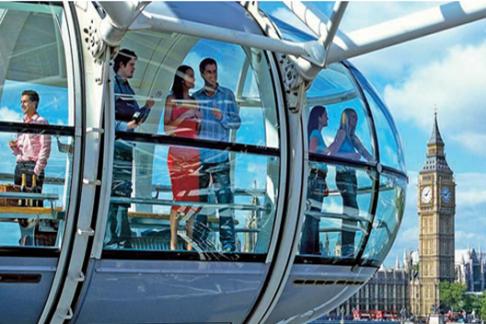
London Eye - Standard Experience Please remember that the boarding procedure for the London Eye takes around 30 minutes Our price is the same as you would pay buying on the London Eye website or telephone booking lines and there are no constraints on last minute bookings. For a different perspective visit at sunset and see the city lights come on and the skyline awash with vibrant colours. Unaccompanied children are not permitted to board the London Eye. Any booking made for an unaccompanied child will be taken as confirmation that the child will be joining a party under the supervision of an adult aged 18 years or older. 365 Tickets will not be held responsible if a child is turned away at the London Eye, nor will the ticket be refundable! Safety and security is our number one priority. For your safety and convenience, please read the following information on what items can and can not be taken on to the London Eye. Please be aware that all guests are subject to a security search when boarding the London Eye. Please note that the following items CAN be taken on board the London Eye: • briefcases • laptops • small day size rucksacks and bags (maximum size 18" x 13" x 8" or 46cm x 33cm x 20cm) • baby bags The following items CANNOT be taken on board the London Eye; • large bags/suitcases or rucksacks • motorcycle helmets • skateboards and rollerblades • tripods (unless agreed in advance with the London Eye) • baby buggies* • prohibited items** If you are unsure . * Baby buggies can be left at our 'Buggy' area facility in the ticket hall, although only for the duration of the experience. ** Prohibited items include sharp objects or anything which may be considered a security risk including penknives, scissors, metal nail files, toy or replica guns. If such objects are found or declared they will be checked in and returned to you after your experience providing the item is legal in the UK. Terms and Conditions 1. Confiscated objects are left entirely at the owner's risk at all times. 2. London Eye Company (LEC) accepts no responsibility for the loss of or damage to any objects left with LEC. 3. LEC is entitled to refuse to store any visitor's objects at its sole discretion whether for public safety reasons or any other reason.
HISTORIC BUILDINGS Tower Bridge Exhibition - £9.00 Royal Mews - £9.00 Royal Albert Hall - guided tour - £12.25 Royal Observatory - £7.70 Monument - £4.00 Banqueting House - £6.00 Jewel Tower - £4.20 Wellington Arch - £4.30 Apsley House - £8.30 Benjamin Franklin House - £7.00 Eltham Palace - £13.00 The Wernher Collection at Ranger's house - £7.20 MUSEUMS Imperial War Museum - £5.00 The London Transport Museum - £16.00 Household Cavalry Museum - £7.00 Charles Dickens Museum - £8.00 London Motor Museum - £30.00 Guards Museum - £6.00 Cartoon Museum - £7.00 Foundling Museum - £7.50 Science Museum - IMAX Theatre - £11.00 Handel House Museum - £6.50 London Canal Museum - £4.00 Royal Air Force Museum - £3.00 Museum of Brands, Packaging and Advertising - £7.50 Old Operating Theatre, Museum and Herb Garret - £6.50 Fan Museum - £4.00 Firepower Royal Artillery Museum - £5.30 Florence Nightingale Museum - £7.00 The Garden Museum - £6.75 The Jewish Museum - £6.50 Pollock's Toy Museum - £6.00 Design Museum - £12.40 V & A Museum - Cream tea package - £6.65 Keats Museum - £5.00 Museum of Comedy - £5.50 PLACES OF INTEREST HMS Belfast - £14.50 Kew Gardens - £15.00 Cutty Sark - £12.15 ArcelorMittal Orbit - £15.00 Chelsea Physic Garden - £9.00 London Wetland Centre - £11.23 Chislehurst Caves - £6.00 GALLERIES The Queen's Gallery at Buckingham Palace - £10.00 Courtauld Gallery - £6.00 Estorick Collection of Modern Italian Art - £5.00 TOURS AND CRUISES Wembley Stadium Tour - £19.00 Beefeater Gin Distillery Tour - £12.00 Arsenal Stadium Tour - £20.00 Chelsea FC Stadium Tour - £20.00 Wimbledon Tour Experience & Museum - £24.00 Twickenham Stadium Tours & Museum of Rugby - £20.00 Lord's Cricket Ground Tour - £18.00 The Sherlock Holmes Tour - £10.00 London Bicycle Tour Company Bicycle Tour - £23.95 Jason's Canal Boat Trip - £9.00 Rock 'n' Roll Walk - £9.00 Royal London Walking Tour - £10.00 National Theatre Backstage Tours - £8.50 LEISURE Curzon Cinemas (Chelsea, Mayfair, Soho and Bloomsbury) - £14.00 - £15.00 The London Brass Rubbing Centre - £4.50 Namco Funscape - £3.00 Queens Ice and Bowl - £7.50 - £13.50 Save on up to £420 worth of entrance fees that's the aggregate price of all Adult entrances to Attractions contained within the 6 day Pass. Other Special Offers along with the Guidebook, we will provide you with access to other great offers available to visitors to London, including discounted prices on West End theatre tickets, restaurant discounts and much more! You can visit as many attractions as you want - even more with the time saved with fast track entry. You don't need to carry too much cash and the London Pass keeps control on your spending. How Does The London Pass Work? The London Pass is a smart card - like a credit card with a computer chip inside - which allows you completely cash free entry to your choice of 56 London tourist attractions. It's a bit like an all you can eat buffet - once you've bought your London Pass you don't have to pay to get into any of the attractions covered by the pass and the more sights you see, the more money you save. Simply show the attendant at a London Pass attraction your card, they will swipe it through a special machine and you will be allowed entry. For the full list of London attractions where you can get in free with the London Pass. Activating The London Pass: The smart card records when and where you first use your London Pass, as well as how long the pass will remain valid for. This means that regardless of what start date you give when you buy the pass, your London Pass is activated the moment that you first use it at an attraction or service. Your London Pass is then valid for the number of days that you purchased - be it 1, 2, 3 or 6 days and is subject to the purse value of maximum gate prices related to the number of days. It is important to note that the day is based on a calendar day, so should you first use your pass at 4pm on Monday, Monday is counted as day one of your pass usage. You will need to present your voucher at the exchange point to receive your London Sightseeing Pass(es) as well as comprehensive details concerning all the attractions that may be visited. Your London Sightseeing Pass(es) will be activated at the first time of use. 6 day pass Save on up to a pound on £420 worth of entrance fees that's the aggregate price of all Adult entrances to Attractions contained within the 6 day Pass. All customers collecting Passes must provide the following documentation to the house security staff: - Photo Identification (Passport or Driving License). - Credit Card used to purchase the Pass(es). Under no circumstances will any Passes be issued without the above documentation. *Exchange point: 11a Charing Cross Road, London, WC2H 0EP. Please note that the Centre is a redemption point only and any queries regarding your purchase must be referred to 365 Tickets on 0203 540 7707. London Eye At 450ft high, the London Eye is the world's highest observation wheel. 32 Capsules, each carrying 25 guests, take you on a 30 minute journey through the most spectacular views of, over and around London spanning 25 miles in all directions. Combine your experience with the London Eye River Cruise Experience, a 40-minute sightseeing circular cruise on the River Thames, passing the Houses of Parliament, Tower of London and St Paul's Cathedral. London Eye 4D Experience The London Eye 4D Experience is a groundbreaking 3D film with in theatre effects, such as wind, bubbles and mist, to make the 4D. The film itself is a touching story of a little girl in London with her father. Her view of famous London landmarks is obscured by people and traffic, but a seagull draws her attention to the London Eye and her father takes her for an experience; finally she has an amazing view of the city. Colourful parties inside the capsule, time lapse of the London Eye day and night and a spectacular firework display all add up to an emotional and entertaining experience; the perfect prelude to an experience on he London Eye itself. Please remember that the boarding procedure for the London Eye takes around 30 minutes Our price is the same as you would pay buying on the London Eye website or telephone booking lines and there are no constraints on last minute bookings. For a different perspective visit at sunset and see the city lights come on and the skyline awash with vibrant colours. Unaccompanied children are not permitted to board the London Eye. Any booking made for an unaccompanied child will be taken as confirmation that the child will be joining a party under the supervision of an adult aged 18 years or older. 365 Tickets will not be held responsible if a child is turned away at the London Eye, nor will the ticket be refundable! Safety and security is our number one priority. For your safety and convenience, please read the following information on what items can and can not be taken on to the London Eye. Please be aware that all guests are subject to a security search when boarding the London Eye. Please note that the following items CAN be taken on board the London Eye: • briefcases • laptops • small day size rucksacks and bags (maximum size 18" x 13" x 8" or 46cm x 33cm x 20cm) • baby bags The following items CANNOT be taken on board the London Eye; • large bags/suitcases or rucksacks • motorcycle helmets • skateboards and rollerblades • tripods (unless agreed in advance with the London Eye) • baby buggies* • prohibited items** If you are unsure . * Baby buggies can be left at our 'Buggy' area facility in the ticket hall, although only for the duration of the experience. ** Prohibited items include sharp objects or anything which may be considered a security risk including penknives, scissors, metal nail files, toy or replica guns. If such objects are found or declared they will be checked in and returned to you after your experience providing the item is legal in the UK. Terms and conditions 1. Confiscated objects are left entirely at the owner's risk at all times. 2. London Eye Company (LEC) accepts no responsibility for the loss of or damage to any objects left with LEC. 3. LEC is entitled to refuse to store any visitor's objects at its sole discretion whether for public safety reasons or any other reason.
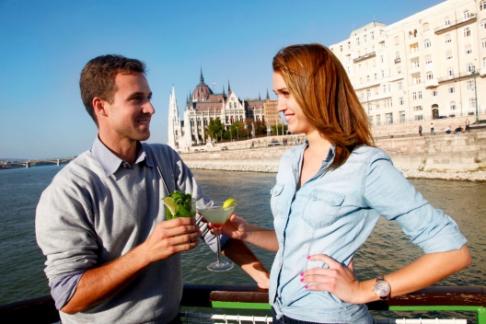
Included Free hotel pick up at 09.30 or 14.00 Professional tour guide (during the city tour) Air-conditioned vehicle 1 drink of your choice (during the boat tour) Audio guide in 30 languages (on the boat) Not included Hotel drop-off Transfer to the pier Entrance fees Tips
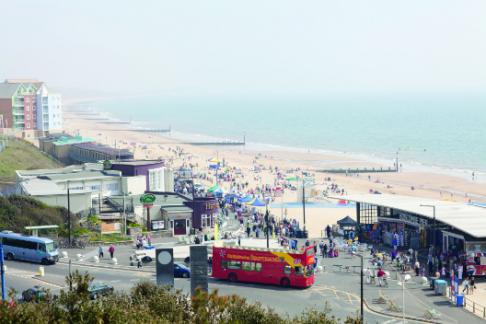
The route starts at the Bournemouth Pier. The Oceanarium is located here, and it is one of the town’s top attractions. Pop in to see their great new penguin beach! Hop-off at Bus Stop 2 to do your shopping at The Bournemouth Square, the actual very centre of the town. The three main shopping roads, Westover Road, Commercial Road, and Old Christchurch Road converge there. And right next to that, do not miss the local Balloon, an extravagant local attraction. Take a stroll around Branksome Chine, and enjoy the view of the sea at Bus Stop 5. Enjoy the sight of the prettiest village as you pass on the double-deckers by Canford Cliffs, or hop off to get to Compton Acres, a sub-tropical garden offering astonishing views. City Sightseeing Bournemouth also takes you to Sandsbank, the upper-end area teaming with the most expensive houses in England and surrounded by the most popular naturist beaches. Hop on and off at Bus Stops 7-8 & 9 to get to see it all! And if you feel curious about the name of the area, hop-off at Lilliput, but do not be disappointed when you fail to find little people around. Get some tranquillity by strolling around the city hall at Bus Stops 7 through 15, while you check-out Poole Old Town and Quay. Before you go, hop-off at The Triangle, well known as the focal point for the local LGBT community, the area has a number or quirky shops and venues appealing and very welcoming to broad-minded visitors. The exclusive red buses are always around the corner waiting to take you to amazing places! Book your ticket online and start planning your itinerary today.
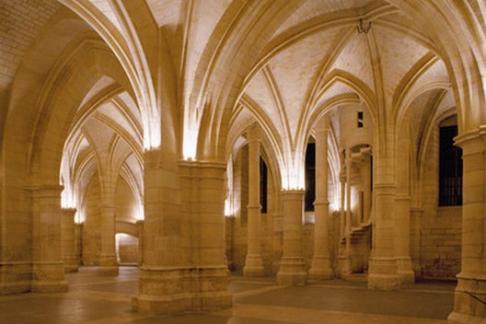
Discover this Medieval royal palace that became a revolutionary tribunal and Marie-Antoinette’s prison. The Conciergerie Discover on the Île de la Cité, the exceptional Gothic rooms of the first royal palace of Paris and the reproduction of the prison cells of the revolutionary tribunal. At the end of the 17th century, numerous people were imprisoned in the prison of the Conciergerie, including Marie-Antoinette. The Conciergerie is also listed as a historical building by the Unesco.