Gratis
Apoyo
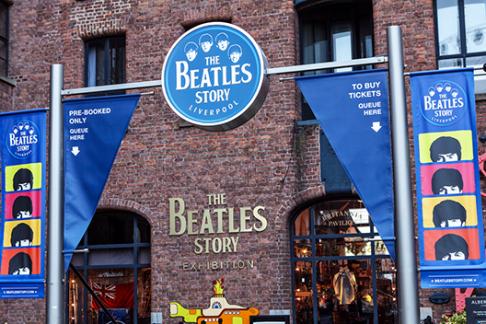
Edge Zones Edge Zone 1 - 1945 - 1962 The Anglo-American special relationship of the Second World War triggered an evolution of musical trends in Britain. Big band music became popular through visiting GIs and the revived sounds of Dixieland and New Orleans trad jazz were introduced into the London scene. The do-it-yourself creed of 1950s skiffle encouraged young musicians to pick up cheap guitars and start their own groups. British pop was transformed by the rock'n'roll craze in the mid 1950s. Edge Zone 2 - 1962 - 1966 In the 1960s, British music went global with the irresistible tide of the 'British Invasion'. The original look and sound of beat groups like The Beatles, R&B bands like The Rolling Stones and female singers like Petula Clark took America by storm and Britain became known as a pop powehouse. Edge Zone 3 - 1966 - 1970 British pop became increasingly involved in cultural exchanges with underground political activity, fashion, art and drugs. Inspired by the 1967 'Summer of Love' in San Francisco, Britain began to stage their own 'love-ins' and 'happenings', with themes of peace and love becoming the inspiration for music in this period. The 12" album toook centre stage and pop evolved into rock as music broke out of the small clubs onto the arena circuit and emerging festival scene. Edge Zone 4 - 1970 - 1975 In contrast to the tough social and economic crisis of 1970s Britain, the charts began to fill with performers singing of escapism, glamour and excitement. A darker vision of 1970s Britain soon appeared through albums like the post-apocalyptic Diamond Dogs by David Bowie and progressive rock flourished. The music industry expanded and audiences sought entertainment, making sell-out arena tours the pinnacle for any successful artist. Edge Zone 5 - 1975 - 1985 This was a period of economic recession in Britain. Pop music reflected this with tougher, more outspoken styles. Punk dramatised Britain's social divisions, while the grassroots Rock Against Racism movement popularised reggae and brought a return to political involvement. Edge Zone 6 - 1985 - 1993 The mid-to-late 1980s was a time of accelerated social, economic, technical and political change. Videos, CDs and satellite broadcasting meant that music was more accessible to the masses. The late 1980s were also a time of regional and musical diversity. Heavy metal was reborn, imported house music reached ecstatic heights with the 'Second Summer of Love' and the 'Madchester' scene was blossoming in the North. Edge Zone 7 - 1993 - 2004 In the mid-1990s, 'Cool Britannia' swept through all areas of British identity. Britpop revived the traditional pop values of the 60s and 70s. The period also saw the rise of manufactured boy bands and The Spice Girls unleashed 'Girl Power' on the world. The rise of Youtube and streaming gave audiences new ways to access music. It presented artists with unchartered waters in the form of new channels emerging to promote their music. Edge Zone 8 - 2004 - Present 2004 saw the launch of X Factor. The manufacturing of pop stars by UK audiences is balanced by the diversity of artists rising to the top of the charts. Rap and R&B stars, indie bands and singer-songwriters take the download chart by storm. The Future It is impossible to predict the future of British music. Who will be the next superstar? how will we listen to music in 2025? Whatever the future, one thing we can be sure of is that the intimate relationship between music and the fan will always continue to transcend any technological, cultural or social barriers. No photography is allowed in the the exhibition.
PUENTE DE LA TORRE Hace más de 100 años, los victorianos construyeron un puente que se ha convertido en uno de los monumentos más famosos de Londres. pasarelas de alto nivel se construyeron para permitir a la gente a cruzar el Támesis mientras que el puente fue levantado para que navegan los barcos de altura pasado. Hoy en día estas pasarelas actúan como la visualización de galerías, dando a los visitantes las vistas más espectaculares de un horizonte siempre cambiante Londres. Los visitantes entran exposición del Puente de la Torre a través de la torre norte. Luego son transportados por ascensor hasta la cima de la torre (47 metros sobre el Támesis) donde tienen una oportunidad única de ver el esqueleto de acero del puente desde dentro. Una película corta explica la historia y procedencia del puente y luego está la oportunidad de admirar las espectaculares vistas - de ambas pasarelas cubiertas. En la pasarela al este hay unas vistas fantásticas de la zona portuaria y del occidente Calzada se puede ver el nuevo edificio de GLA, la Torre de Londres, San Pablo, la ciudad, la piscina de Londres y el Big Ben y el London Eye en la distancia. quioscos computarizados interactivos y paneles gráficos explican la importancia de los puntos de vista a los visitantes, además de proporcionar más información sobre la historia y la construcción del puente. El material interactivo y paneles gráficos están escritos en siete lenguas y un bucle de audio para personas con problemas de audición también está en su lugar para el espectáculo de vídeo. Hay otra película para ver en la torre sur, antes de descender para el paseo a las salas de máquinas históricas, incluido en el precio del billete. Salas de Máquinas Victorianas Estos proporcionan una visión fascinante de la ingeniería finales del siglo 19. Instalado para la realización del puente de la torre en 1894, estos enormes, y muy bien cuidados, se utilizaron motores de carbón impulsada para alimentar a los miles de ascensores puente levadizo realizadas hasta 1976. A pesar de que los ascensores están operados por electricidad, las máquinas de vapor originales todavía están en lugar. Las salas de máquinas dan a los visitantes la oportunidad de experimentar con modelos de demostración de la tecnología detrás del puente. También hay algunas fotografías asombrosas del puente a lo largo de su ciclo de vida - incluyendo una imagen reveladora de la estructura de acero pesado del puente como el revestimiento de piedra se instaló sobre ella.
Explore what's inside Madame Tussauds Sydney? History Zone Meet historical greats and discover interesting facts in our History zone. Leaders Zone The Leaders area provides the opportunity to meet and interact with some of the most influential spiritual and political leaders in recent history. Sports Zone Meet and interact with famous sporting heros in the Sport zone of Madame Tussauds Sydney. Music Zone Hop on stage with your favourite rock and pop stars and show off your singing skills. Do you have what it takes to make it? Culture Zone Test your knowledge with Albert Einstein in the Culture zone of Madame Tussauds Sydney TV Zone Ever wanted to get up close and personal to your favourite TV stars? You can in the TV zone at Madame Tussauds Sydney. Film Zone In the Film zone of Madame Tussauds Sydney you can meet and interact with both Australian and International film stars. A-List Zone Discover glamorous and gorgeous A-Listers in our A-List zone at Madame Tussauds Sydney.
Te invitamos a visitar más que un edificio, un mito del arte, de la arquitectura y del modernismo, la Casa Batlló, donde la luz, el color y la forma se conjugan con la madera, el hierro, el cristal, la cerámica y la piedra gres a la manera fantástica y sorprendente que caracteriza la obra de Gaudí. Recoge tu audioguía y comienza el recorrido por veinte puntos explicativos, descubriendo múltiples detalles difíciles de percibir a primera vista, con metáforas y representaciones de la naturaleza, especialmente del mundo marino, que te inspirarán y estimularán tus sentidos y emociones. Y si lo prefieres puedes alquilar la innovadora videoguía con realidad aumentada, con la cual te transportarás a un mundo mágico normalmente oculto a los ojos. Ambas guías las encontrarás en diferentes idiomas. Visitarás la legendaria planta noble, antigua residencia de la familia Batlló, las golfas que servían de antiguos trasteros y lavaderos, el tejado, las míticas chimeneas y el fantástico patio de luces, antigua escalera de vecinos privilegiados. Y no podéis marchar sin disfrutar del espléndido vestíbulo y escalinata principal, ¡estamos seguros de que os impresionarán!
The Queen’s Gallery en el Palacio de Buckingham es una galería permanente dedicada a exposiciones temporales de objetos de la Colección Real, la gran colección de arte que la reina mantiene en fideicomiso para la nación. En octubre de 1875, el Príncipe de Gales inició un recorrido de cuatro meses por el Subcontinente Indio, visitando más de 21 localidades, como Sri Lanka, Pakistán y Nepal que hoy en día forman parte de la India. Esta exposición cuenta la historia del gran tour a través de algunos de los mejores tesoros de la India que el Príncipe de Gales presenció. La entrada incluye Acceso a The Queen's Gallery Tour multimedia gratuito Exposición actual* * Fechas Exposiciones Especiales: 9 de nov. 2018 - 28 abr. 2019: 'Rusia, Realeza y los Romanov' y 'Fotografías de Roger Fenton de la guerra de Crimea, 1855' 24 de may. - 13 de oct. 2019: 'Leonardo da Vinci: Una vida en el dibujo'. Para conmemorar el 500 aniversario de la muerte de Da Vinci, esta exposición incluirá 200 de sus dibujos 15 de nov. 2019 - 4 de may. 2020: 'Jorge IV: Arte y espectáculo' Tenga en cuenta: The Queen's Gallery estará cerrada entre estas exposiciones especiales. ¿Por qué no combinar sus entradas con una visita al London Eye, The Original Tour o Palacio de Hampton Court?
Please present the printed voucher at the beginning of the tour. Please make sure to show up on time. Being late might prevent you from taking part in the tour