Gratis
Apoyo
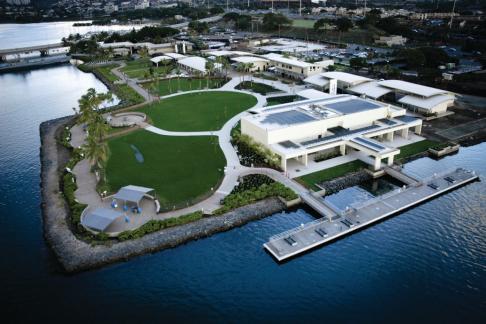
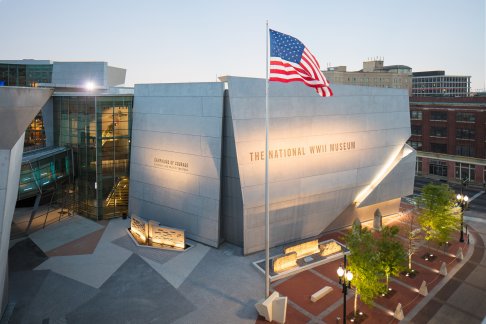
El Museo Nacional de la Segunda Guerra Mundial presenta una rica colección de artefactos que consiguen dar vida a la historia durante el período de la II Guerra Mundial en los EE.UU. Explore la experiencia estadounidense en la guerra que cambió el mundo. Desde las galerías del Día D hasta el altísimo pabellón US Freedom: The Boeing Center a las revolucionarias Campaign of Courage, este museo de historia conocido mundialmente fue creado para inspirar a visitantes de todas las edades, educarlos sobre el heroísmo, la tragedia y la liberación de la II Guerra Mundial. Exhibiciones únicas y sorprendentes: The Arsenal of Democracy – el objetivo del Museo Nacional de la Segunda Guerra Mundial es contar la historia de cómo se ganó la guerra. La Exhibición The Arsenal of Democracy: The Herman and George R. Brown Salute to the Home Front (la exhibición permanente más nueva de museo, ubicada en la segunda planta del Pabellón Lousiana Memorial) literalmente trae la historia a casa. A través de exhibiciones multimedia e interactivas, y basándose en artefactos e historias orales, The Arsenal of Democracy crea innumerables oportunidades para que los visitantes puedan establecer una conexión más directa con la población que vivió la guerra Road to Tokyo – Fundación Richard C. Adkerson y FreeportMcMoRan. La galería del escenario del Pacífico recorre el trágico sendero que conduce desde Pearl Harbor a la bahía de Tokio a través de Nueva Guinea y el sudeste de Asia el Himalaya, Birmania, las islas del Pacífico, China, India y Alaska. Road to Berlin – The Duchossois Family. La galería del escenario europeo da vida al drama, los sacrificios, las historias personales y las estrategias de la campaña de los Estados Unidos para derrotar los poderes del Eje y preservar la libertad. Beyond All Boundaries – muestra exclusivamente la Guerra que cambió el mundo en 4D, en el teatro Solomon Victory del Museo Nacional de la Seguda Guerra Mundial. No incluida con la entrada. The D-Day Invasion Of Normandy – esta original exhibición, que se encuentra en la tercera planta del Pabellón Louisiana Memorial, ayuda a entender a qué se enfrentaron los Aliados en Normandía, desde los preparativos exhaustivos hasta los enormes desafíos una vez que las tropas aterrizaron en las playas de Normandía. Galería US Merchant Marine – esta galería rinde homenaje a los marineros mercantes civiles que arriesgaron sus vidas transportando armas, hombres y material para las tropas estadounidenses en el extranjero. Final Mission: USS Tang Submarine Experience – esta exhibición sitúa a los visitantes bordo del submarino más exitoso en la Segunda Guerra Mundial para la última patrulla de guerra el 25 de octubre de 1944. No incluida con la entrada. Manufacturing Victory – Siga el trayecto industrial que llevó a los Estados Unidos de una nación peligrosamente preparada para la guerra a una superpotencia global que condujo a los Aliados a la victoria en la II Guerra Mundial. Galería Special Exhibit – Fundación Joe W. and Dorothy D. Brown. Esta galería presenta exhibiciones rotativas a partir de colecciones propias del Museo, así como exhibiciones itinerantes relevantes de instituciones líderes de todo el mundo.
Besuchen Sie das königliche Observatorium in Greenwich, London. Heimat des Nullmeridians der Erde, der Greenwich Mean Time (GMT) und des Londoner Planetariums. Stellen Sie sich auf die Nullmeridianlinie Stellen Sie sich vor den historischen Nullmeridian der Welt und springen Sie von östlichen in die westliche Hemisphäre Machen Sie ein einmaliges Selfie von sich und Ihrer Begleitung Entdecken Sie die bemerkenswerte Geschichte hinter der Referenzlinie für die Greenwich Mean Time (GMT) Entdecken Sie den grünen Laserstrahl, der die Meridian Line am Abendhimmel von der Spitze des Hügels im Greenwich Park in Richtung London Skyline markiert. Die Heimat der Zeit Erfahren Sie, wie das Königliche Observatorium das Zuhause der Greenwich Mean Time (GMT) und der ersten staatlich finanzierten wissenschaftlichen Einrichtung seiner Zeit wurde. Bewundern Sie John Harrisons wegweisende Zeitmesser aus nächster Nähe und erkunden Sie den Arbeitsplatz der königlichen Astronomen. Der leuchtend rote Zeitball auf dem Flamsteed-Haus ist eines der frühesten öffentlichen Zeitsignale der Welt und wurde erstmals 1833 aktiviert und funktioniert noch heute. Schon vor über 100 Jahren gab das Great Equatorial Telescope den Astronomen neue Einblicke in das Universum. Es befindet sich in der riesigen Zwiebelkuppel des Observatoriums. Das National Maritime Museum und das Queen's House befinden sind Teil des UNESCO-Weltkulturerbes Maritime Greenwich und sind nur einen kurzen Fußweg von der Sternwarte entfernt. Beide Attraktionen können kostenlos besichtigt werden. Cutty Sark, der weltweit einzige Tee-Klipper (Segelschiff), ist heute ein preisgekröntes Museum und Besuchererlebnis und ein weiteres Muss bei einem Besuch in Greenwich.
Highlights of the new Museum include: Fantastic New Cinema Within the walls of the new Wimbledon Lawn Tennis Museum is a remarkable cinema. The Cinema features a 200° screen that immerses the viewer into the world of The Championships by showing a film about the science of tennis. Filming took place during the 2005 Championships on Centre Court of Russia's Maria Sharapova against Spain's Nuria Llagostera Vives. Graham English Productions used a special panoramic rig that used 5 cameras at the same time, the result of which is a film that can be frozen and rotated around the field of action at any time. Using this technique, the film focuses on 20 different aspects of the match and showed viewers how players' bodies and equipment are affected during the course of a professional tennis match. McEnroe's Ghost Sighted at the New Museum Bringing together an old technique called 'Pepper's Ghost' with new projection and filming technology, the museum is able to create an exciting way to view a scene from Wimbledon's past. In a recreation of the 1980s Gentlemen's Dressing Room, a ghost-like image of John McEnroe appears and takes you through a tour of the normally off-limits area. McEnroe reminisces about his memories about the Dressing Room, including how he first met Jimmy Connors and how he would emotionally prepare himself for matches. The Whites of Wimbledon The fashions of Wimbledon continue to be a point of attention and significance to the story of tennis and the new Museum will house an extensive collection of Wimbledon attire. Everything from outfits worn in the 1880s to Rafeal Nadal's dri-fit 'pirate' trousers are on display. There is also an interactive exhibit where you can feel the weight difference between male and female clothing in 1884. Extraordinary New Technology Interactive touch screen consoles are evenly distributed throughout the Museum hallways. These information access points make up a part of the new and exiting technologies within the Museum. Other features are the 'Get a Grip' rotating wheel of rackets; 'The Reactor' game and an archive of great past Championship matches, all of which can be enjoyed by visitors of any age.
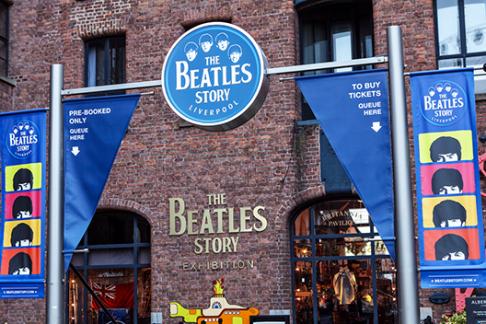
Edge Zones Edge Zone 1 - 1945 - 1962 The Anglo-American special relationship of the Second World War triggered an evolution of musical trends in Britain. Big band music became popular through visiting GIs and the revived sounds of Dixieland and New Orleans trad jazz were introduced into the London scene. The do-it-yourself creed of 1950s skiffle encouraged young musicians to pick up cheap guitars and start their own groups. British pop was transformed by the rock'n'roll craze in the mid 1950s. Edge Zone 2 - 1962 - 1966 In the 1960s, British music went global with the irresistible tide of the 'British Invasion'. The original look and sound of beat groups like The Beatles, R&B bands like The Rolling Stones and female singers like Petula Clark took America by storm and Britain became known as a pop powehouse. Edge Zone 3 - 1966 - 1970 British pop became increasingly involved in cultural exchanges with underground political activity, fashion, art and drugs. Inspired by the 1967 'Summer of Love' in San Francisco, Britain began to stage their own 'love-ins' and 'happenings', with themes of peace and love becoming the inspiration for music in this period. The 12" album toook centre stage and pop evolved into rock as music broke out of the small clubs onto the arena circuit and emerging festival scene. Edge Zone 4 - 1970 - 1975 In contrast to the tough social and economic crisis of 1970s Britain, the charts began to fill with performers singing of escapism, glamour and excitement. A darker vision of 1970s Britain soon appeared through albums like the post-apocalyptic Diamond Dogs by David Bowie and progressive rock flourished. The music industry expanded and audiences sought entertainment, making sell-out arena tours the pinnacle for any successful artist. Edge Zone 5 - 1975 - 1985 This was a period of economic recession in Britain. Pop music reflected this with tougher, more outspoken styles. Punk dramatised Britain's social divisions, while the grassroots Rock Against Racism movement popularised reggae and brought a return to political involvement. Edge Zone 6 - 1985 - 1993 The mid-to-late 1980s was a time of accelerated social, economic, technical and political change. Videos, CDs and satellite broadcasting meant that music was more accessible to the masses. The late 1980s were also a time of regional and musical diversity. Heavy metal was reborn, imported house music reached ecstatic heights with the 'Second Summer of Love' and the 'Madchester' scene was blossoming in the North. Edge Zone 7 - 1993 - 2004 In the mid-1990s, 'Cool Britannia' swept through all areas of British identity. Britpop revived the traditional pop values of the 60s and 70s. The period also saw the rise of manufactured boy bands and The Spice Girls unleashed 'Girl Power' on the world. The rise of Youtube and streaming gave audiences new ways to access music. It presented artists with unchartered waters in the form of new channels emerging to promote their music. Edge Zone 8 - 2004 - Present 2004 saw the launch of X Factor. The manufacturing of pop stars by UK audiences is balanced by the diversity of artists rising to the top of the charts. Rap and R&B stars, indie bands and singer-songwriters take the download chart by storm. The Future It is impossible to predict the future of British music. Who will be the next superstar? how will we listen to music in 2025? Whatever the future, one thing we can be sure of is that the intimate relationship between music and the fan will always continue to transcend any technological, cultural or social barriers. No photography is allowed in the the exhibition.
HMS Caroline Duración de la visita: 90 minutos aproximadamente. Dirección: Muelle Alexandra, Queens Rd, Belfast BT3 9DT. Debe canjear los vales en la misma dirección Tenga en cuenta: los tacones más altos que 5 cm no se pueden usar a bordo. Titanic Belfast y SS Nomadic Descubra cómo fue abordar el RMS Titanic en el fatídico viaje inaugural con la visita al Titanic Belfast y al SS Nomadic. El edificio del museo marítimo, Titanic Belfast, fue construido a la misma escala gigantesca que el RMS Titanic. La exhibición del museo es informativa e interactiva, además de divertida, atractiva y accesible para todos. La aventura empieza al entrar en el vestíbulo gigante del edificio, rodeado por las cuatro secciones, en forma de casco naval, que albergan la experiencia. Mientras pasea por el Titanic Belfast, aprenderá aspectos interesantes sobre el Belfast de finales de siglo. Además experimentará un emocionante paseo a través de la reconstrucción de los astilleros y la construcción del Titanic. Descubra las historias de los pasajeros, la tripulación y los héroes del día; reviva el trágico final del viaje inaugural del Titanic y visite el fondo del Atlántico, lugar del naufragio. Disfrute de las impresionantes vistas de las gradas desde donde zarpó el Titanic y relájese en uno de los excelentes restaurantes. El SS Nomadic se encuentra en el muelle seco de Hamilton, adyacente al Titanic Belfast. No solo es famoso por ser el transbordador del RMS Titanic, también sirvió en la Primera y Segunda Guerra Mundial. Los visitantes pueden seguir los pasos de los pasajeros y soldados del Titanic y de celebridades como Charles Chaplin, Elizabeth Taylor, Richard Burton y Marie Curie. Tras una temporada como restaurante y club nocturno, el SS Nomadic recuperó su esplendor original y regresó a su lugar de procedencia, Belfast. Los visitantes ahora pueden experimentar una pieza auténtica y tangible del patrimonio industrial y marítimo de Belfast. Tenga en cuenta que los niños y niñas deben ir acompañados por un adulto durante toda la visita.
Galardonada como Atracción del año por los visitantes El centro de visitantes de Jameson acoge a más de 360.000 visitantes cada año y proporciona una experiencia de talla mundial dedicada al whisky irlandés. La destilería fue fundada en 1780 cuando John Jameson estableció la destilería en Bow Street (Dublín). El whisky Jameson ahora se destila en Cork, aunque aún se embotella en Dublín. Con unas ventas anuales de más de 31 millones de botellas, Jameson es el whisky irlandés más vendido en el mundo. En la destilería Jameson de Bow St. no solo hay un bar, hay tres para homenajear al gran hombre que fue John Jameson. Cuando esté en el bar Jameson ¿por qué no prueba algunos de los néctares que se ofrecen? Disfrute de una degustación de whisky, donde esta marca insigne se compara con otras marcas internacionales. Aquellos que ya estén familiarizados con el whisky Jameson pueden optar por una cata de whisky reserva Jameson. Jueves - domingo por la tarde puede estar muy concurrido, así que puede haber largas colas