Gratis
Apoyo
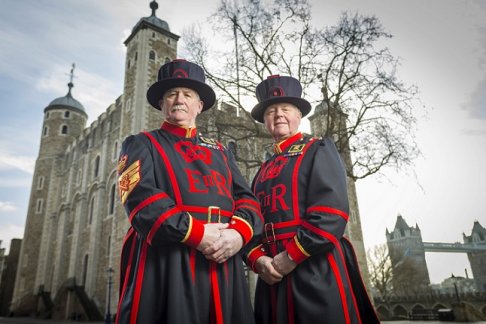
Your river cruise on London's oldest thoroughfare - the Royal Thames - is an opportunity to take a truly different view of London, passing some its best of historical landmarks the Thames offers including: Cleopatra's Needle — It is known as Cleopatra's Needle as it was brought to London from Alexandria, the royal city of Cleopatra. The Needle arrived in England after a horrendous journey by sea in 1878 South Bank — The South Bank is the cultural heart of London, home to the South Bank Centre, Old Vic, Young Vic, National Theatre, BFI IMAX, BFI Southbank as well as art galleries, such as the.gallery@oxo and Bargehouse. St Paul's Cathedral — designed by the court architect Sir Christopher Wren and built between 1675 and 1710 after its predecessor was destroyed in the Great Fire of London Millennium Bridge — London's Millennium Bridge is the first pedestrian river crossing over the Thames in central London for more than a century Tate Modern — the Tate Collection comprises the national collection of British art from the year 1500 to the present day and international modern art The Globe Theatre — Shakespeare's Globe is a unique international resource dedicated to the exploration of Shakespeare's work HMS Belfast — HMS Belfast is the largest surviving example of Britain's twentieth century naval power and is now a museum moored on the Thames between Tower and London Bridge Tower of London — the Tower of London is one of the world's most famous and spectacular fortresses Tower Bridge — Tower Bridge was completed in 1894, after 8 years of construction. Originally, London Bridge was the only crossing over the Thames. You can then visit the Victorian Engine Rooms, home to the original steam engines that used to power the Bridge lifts Docklands — Walk alongside the Tower walls and suddenly you are thrust into the most modern area of London. From Tower Bridge to the Royal Docks and the Isle of Dogs is one of the oldest areas of London, containing the wharfs, warehouses and ports along the River Thames. Canary Wharf — Canary Wharf is planned on a grand scale, yet with meticulous attention to detail. The estate extends to over 97 acres and is so called because when in use as a dock, many of the imports were from the Canary Islands. Approximately 14.1 million square feet of office and retail space has been constructed to date. Greenwich — Greenwich is recognised for its cultural heritage: the grandeur and sheer beauty of its buildings; the magnificent vistas and views across London;-its royal history, as the birthplace of both Henry VIII and Elizabeth I, among others;
One of the most powerful large light cruisers ever built, HMS Belfast is now the only surviving vessel of her type to have seen active service during the Second World War. HMS Belfast played a leading part in the destruction of the battle cruiser Scharnhorst, and also the Normandy Landings. In service with the Royal Navy until 1965, she was saved for the nation in 1971 as a unique reminder of Britain’s naval heritage. Launch! Shipbuilding Through the Ages This new family-orientated exhibition will use hands-on and computerised interactive displays and engaging film and footage to demonstrate techniques of shipbuilding, from the ‘age of sail’ to modern prefabrication methods. The exhibition will focus on the science, engineering and social history of shipbuilding in Great Britain, and the interactive elements of the exhibition will allow children of all ages to get involved and experience this history. Explore ‘What shall we give in return for so much?’ One of the most powerful large light cruisers ever built, HMS Belfast is now the only surviving vessel of her type to have seen active service during the Second World War. Serving Britain for 32 years, she played an important role in both the Second World War and the Korean War as well as performing peacekeeping duties throughout the 1950s and 1960s. Saved from destruction in 1971, HMS Belfast is now part of the Imperial War Museum and is the first ship to be preserved for the nation since Nelson’s Victory. Through its team of staff and volunteers – many of whom are veteran crew – the Imperial War Museum is dedicated to making sure that HMS Belfast still has a role to play in reminding visitors of her unique place in Britain’s maritime heritage. History of HMS Belfast The term 'cruiser' goes back to the days of sailing ships when large frigates could be detached from the main fleet to cruise independently. The sailing cruiser, like her twentieth-century counterpart, was sufficiently powerful and fast to attack and destroy enemy commerce raiders. During the nineteenth century when sail gave way to steam and wooden ships were replaced by those built of iron, and later of steel, the cruiser evolved into a powerful warship which was used to patrol the Empire trade routes and protect friendly merchant shipping. After the First World War (1914-1918) a single category of cruiser emerged whose size was indicated by the size of its guns; thus, HMS Belfast is a 6-inch cruiser, designed for the protection of trade, for offensive action, and as a powerful support for amphibious operations. Please note: children under 16 must be accompanied by an adult. Please allow 1½ - 2 hours for your visit.
Start your NYC adventure off with a relaxing and scenic sightseeing cruise. Your Hop-on Hop-off CitySightseeing Ferry tour of the New York Harbor features unobstructed views of the Manhattan skyline, the Statue of Liberty, the Brooklyn Bridge and much more. A professional narrator will offer commentary along the way, so you’ll become acquainted with the city. Hop off at any of 4 stops along the way to explore the city at your own pace. Make sure you hop-off near Times Square (Pier 78 stop) to discover two unique New York attractions: Ripley’s Believe It Or Not and the all-new Gulliver’s Gate. When you enter Gulliver’s Gate, a whole new world awaits. Discover a universe of miniature replicas of sights ranging from the Parthenon to the Great Wall of China, displayed in detailed geographically themed exhibits, including an elaborate homage to New York City. But don’t expect everything to be exactly as it is on a map – Gulliver’s Gate is all about imagination. You’ll even see visions of the past, like Chinatown at the turn of the century. Back in the real world, things are only getting more interesting! Step inside Ripley’s Believe It or Not to see some of the most extraordinary real artifacts from around the world. Two-headed animals, shrunken heads and massive scrap metal sculptures will amaze and delight you as you roam through 2 full floors of odd exhibits. And finally, you can’t leave New York without fully experiencing the city’s most iconic attraction: the Empire State Building. Inside the skyscraper, check out the newly renovated Art Deco lobby, the sustainability and historical exhibits, and free self-guided multimedia tour. Then, ascend 1,050 feet above the streets to the 86th floor observatory deck, where you’ll have 360-degree views of the city skyline and beyond. It’s every bit as romantic as you’ve imagined! ** Does NOT include Bus Tour**
08:00 Your one day Tour begins from the Suffolk Street Tourist office (outside the old stone church). Your guide will do a quick introduction of the Tour and off you go! As you pass through the northern suburbs of Dublin, your friendly guide will tell you about the interesting sites on the way, Croke Park- Home of Gaelic Games, Dublin Airport's controversial 2nd terminal and the Dublin Port tunnel that was built too small for the larger trucks to use! 10:15 As you arrive in Belfast you Tour West Belfast home to the famous 'The Peace Wall' which divides the republican and loyalist communities, the wall murals tell a own story from both sides of the fence. Visit the Republican Museum, with a large collection of artefacts and prison handicrafts, representing various phases of the struggle for Irish Freedom. (Please note that this is closed on Sunday and Monday). 11:00 You have some time to explore the City Centre, have something to eat and look around on your own. Some suggestions maybe: Afternoon Tea with views of Belfast City Centre in the Europa Hotel. Book Here! The Crown Liquor Saloon with its wooden partitions and ornate Victorian exterior, where you can show your political preference by walking either over the crown at the front entrance, or walk around it. The Grand Opera house Belfast City Hall Linen Hall Library - the oldest library in Belfast with exhibition space and a gift shop. St. Anne's cathedral (also known as Belfast Cathedral). If culture is your thing, find out more about its "Black Santa" or listen to its pipe organ play- the largest in Northern Ireland. The Cathedral Quarter - this area is home to many small art galleries and intriguing works of public art. It is also a hub of traditional pubs and arty bars if you want to enjoy a pint. It is a very pretty area to get lost in while you are in Belfast. There is also many different acclaimed restaurants to choose from for every taste. The Merchant Hotel - have a peak at this beautiful hotel, home to the most expensive cocktail in Europe. Victoria Square - want to go shopping in Belfast? Victoria Square is Belfast's newest shopping centre with high street and designer shops to choose from and plenty of places to eat and drink. The Albert Memorial Clock, Belfast's own leaning clock tower! 13:30 Your Tour continues with an introduction to East Belfast, home of the Harland & Wolff shipyard and birthplace of the Titanic, before heading south to the resting place of the Patron Saint of Ireland: Saint Patrick. 14:45 Arriving at Downpatrick, first visit the St Patrick Centre with a walk through exhibition and film of Saint Patrick’s life. After a short walk to the Down Cathedral you will see the last resting place of the great man who it is said, brought Christianity to Ireland. 16:00 As you head southwards the next stop is at the small seaside village of Dundrum and the Norman castle, built by John De Courcy in the 12th century. It is a ruin today but you can climb to the top of the fort walls and see the amazing views for miles. 17:00 From Dundrum your Tour takes in Northern Ireland’s largest mountain range, the Mourne Mountains. An area of outstanding beauty, gaze up at the highest peak called Slieve Donard and before you leave ask your guide to show you 'gravity hill' where you'll see your bus roll 'up' a hill all by itself!! 17:20 Sadly it is then time to depart the beautiful Mourne Mountains and start to make the journey back down to Dublin. You'll enjoy chatting and reminiscing about your days adventure to Northern Ireland while you listen to some traditional music along the way! 19.30 You should arrive back in Dublin.
Depart Edinburgh 09.15 and travel northwest through the historic area of Linlithgowshire, close to the historic palace. The tragic Mary Queen of Scots was born at Linlithgow palace, and became Queen when she was only 6 days old. According to legend her father James V died of a broken heart when he discovered his wife had given birth to a daughter and not the son he was hoping for! Your route along the Forth Valley is one which has been used for thousands of years by invading armies, it was the northernmost frontier of the Roman empire and was later used by the English King Edward I as he marched proudly towards Stirling (only to be sent homewards to think again!). Nowadays it’s at the centre of one of Scotland’s most important industries with huge oil refineries dominating the area. As you approach Stirling the magnificent castle dominates your view and you make your way up towards the high volcanic rock where it imposes itself upon the surrounding land. Known as the ‘Key to Scotland’, for centuries this was the most important castle in Scotland and the views from the top make it easy to see why. To the north is the 220ft high tower of the National Wallace Monument commemorating Scotland’s great hero William Wallace, played by Mel Gibson in the Oscar-winning movie Braveheart. From the castle you can look down over the scene of Wallace’s greatest triumph, the battle of Stirling Bridge, where he defeated the English army in 1297. To the south is Bannockburn where, in 1314, the great Scottish warrior-king Robert the Bruce defeated the English army of Edward II. The battle was fought for possession of Stirling Castle but eventually led to a far greater prize for Scotland – the restoration of independence. It’s an area alive with history and you stop at the castle to give you time to soak up the history and heritage of this great site. From Stirling you head into the Highlands and an area known as the Trossachs. Known as ‘The Highlands in Miniature’, it marks the point where the Lowlands meet the Highlands and entering this beautifully picturesque area feels like going into a different country. With its shimmering lochs, rugged mountain tops and forest-filled glens it’s easy to forget that this was once thought of as a dangerous frontier fought over by the fiercely territorial Highland clans. You stop here for lunch in the village of Aberfoyle, made popular in Victorian times due to its great location. After lunch you ‘take the high road’ or back-road to Loch Lomond, Scotland’s largest lochs at over 22 miles long, passing Lochs Ard, Chon and Arklet along the way as you travel through the protected lands of Scotland’s first National Park. The route you take was described by the famous Scots comedian Billy Connolly as his favourite road in Scotland, and you can discover why – it’s stunning!! You stop at Inversnaid on the secluded north-east of the loch, making it the perfect place to enjoy a walk along the ‘bonny banks’, up to a viewpoint for a fantastic view of the loch and the mountain it’s named after, Ben Lomond. This tranquil setting was once the home of Scotland’s famous highland folk hero, Rob Roy MacGregor. Made popular by many books and films Rob Roy lived an incredible life as a soldier, businessman, cattle-rustler and outlaw. By spending time on the trails by the loch you will undoubtedly be walking in the footsteps of one of Scotland’s great legends. There is also an alternative option to take a boat cruise around the north of the loch (Summer only) or merely enjoy a drink at the local hotel and sample the views. Leaving Loch Lomond you return to Edinburgh passing Scotland’s only lake – the Lake of Mentieth (although we have around 3000 freshwater lochs!). The legend states that after William Wallace was betrayed by his great friend the Earl of Mentieth and executed in London the name was changed from the Loch of Mentieth to the Lake of Mentieth so that nobody would ever forget the traitorous part the Earl played in his death.
BOOK THIS TOUR IF YOU'D LIKE TO... Discover the history of the Old Town and its whisky connections Hear of Scotland’s past and the changing role of Scottish whisky Relish fine malt whiskies and learn how your dram was created Learn more about Scotland's finest 'water of life'