Kostenlos
Unterstützung

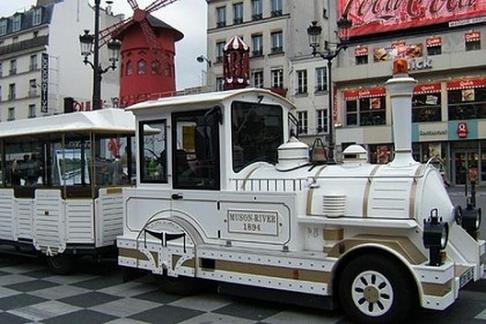
The Paris Pass offers FREE ENTRY to over 60 attractions: TOP ATTRACTIONS Musée du Louvre – (Normal gate price € 12.00) Musee d'Orsay– (Normal gate price € 11.00) Centre Pompidou - Musée national d'Art modern – (Normal gate price € 14.00) Espace Dali – (Normal gate price € 11.50) Big Bus - Hop on Hop off bus tour – (Normal gate price € 30.00) Bateaux Parisiens River Cruise – (Normal gate price € 14.00) Wine Tasting - O Chateau – (Normal gate price € 30.00) Tour Montparnasse – (Normal gate price € 15.00) Musee Grevin - wax museum – (Normal gate price € 24.50) Paris Story – (Normal gate price € 11.00) Châteaux de Versailles – (Normal gate price € 18.00) Opera Garnier - Guided Tour – (Normal gate price € 14.50) Tours de Notre-Dame – (Normal gate price € 8.50) Galleries Musée Rodin - € 7.00 Musée National de l'Orangerie - € 9.00 Musée national des Arts asiatiques - € 7.50 Places of Interest Zoo de Vincennes - € 22.00 Petit Train de Montmartre - € 6.50 Etoiles du Rex - € 11.00 Set in Paris movie tour - € 20.00 Le Musée Gourmand du Chocolat - Choco- Story - € 9.50 Musée des Égouts de Paris - € 4.40 Cité des Sciences et de l'Industrie - La Villette. - € 9.00 Historic Buildings Conciergerie - € 8.50 Chapelle expiatoire - € 5.50 Château de Rambouillet - € 8.50 Château de Vincennes - € 8.50 Chateaux de Champs-sur- Marne - € 7.50 Château de Pierrefonds - € 7.50 Crypte archéologique du Parvis de Notre-Dame - € 4.00 Maison d'Auguste Rodin à Meudon - € 5.00 Musée Condé - Château de Chantilly - € 14.50 Musée et domaine nationaux du Château de Compiègne - € 7.50 Musée national des Châteaux de Malmaison et Bois Préau - € 6.50 Basilique cathedrale de Saint-Denis - € 8.50 Abbaye Royale de Chaalis- Musée Jacquemart André - € 7.00 Sainte Chapelle - € 8.50 Château de Maisons-Laffitte - € 7.00 Villa Savoye - € 7.50 Château de Fontainebleau - € 11.00 Monuments Arc de Triomphe - € 8.00 Panthéon - € 7.00 Museums Musée de l'Armée, Tombeau de Napoléon 1er - € 9.50 La Cinémathèque française - Musée du Cinéma - € 7.00 Cite de l'Architecture et du Patrimoine - Musée des Monuments françois - € 8.00 Musée d'art et d'histoire du Judaïsme - € 8.00 Musée de la Mode et du Textile - € 11.00 Musée de la Musique - La Villette - € 7.00 Musee de l'Ordre de la Liberation - € 9.50 Musée de la Publicité - € 11.00 Musée de l'Air et de l'Espace - € 8.00 Musée d'Archéologie nationale de Saint-Germain- en-Laye € 7.00 Musée de l'Institut du Monde arabe - € 8.00 Musée départemental Maurice Denis - € 4.50 Musée des Arts décoratifs - € 11.00 Musée des Arts et Métiers - € 6.50 Musée des Plans-reliefs - € 9.50 Musee du quai Branly - € 9.00 Musée Gustave Moreau - € 5.00 Musée national de Céramique de Sèvres - € 6.00 Musée national de la Marine - € 8.50 Musée national de la Renaissance - Château d'Ecouen - € 5.00 Musée national de Port-Royal des Champs - € 4.50 Musée national du Moyen Age - Themes de Cluny - € 8.00 Musée national Eugène Delacroix - € 6.00 Musée Nissim de Camondo - € 9.00 Paris is one of the most spectacular and beautiful cities in the world containing a wealth of history and culture. With countless art galleries, scores of top museums and stunning historical monuments sightseeing in Paris can be a real adventure. The Paris Pass has been specially designed for sightseeing in Paris and includes everything you will need for a great trip whilst saving you both time and money. Collecting Your Paris Pass If you are collecting your order in Paris, you will need to take your voucher and a form of photo ID to: Paris Pass Desk 74 Rue de Cléry, 75002, Paris Visit Top Attractions for Free with The Paris Attractions Pass The Paris Pass gives you free entry to an additional 8 attractions and experiences that no visitor to the city should miss. These top attractions are: • Bateaux River Cruise – Relax and discover Paris’ famous landmarks from a boat cruising the River Seine. • Wine Tasting Experience – Enjoy some fine French wine at this fun and educational experience, this is highly recommended! • Paris Opera House – Take a tour of this wonderful 17th Century building and marvel at its stunning interior. • Grande Arch – This bold piece of modern architecture highlights modern at its best and the views from the top are spectacular. • Paris Story – An interactive attractions that takes you back in time to tell the story of this historic city. • The Grevin Wax Museum – Features over 300 wax figures of world famous people posed in dramatic settings. • Montparnasse Tower – Views of Paris from the 56th floor of this tower are simply breath-taking! • Dali Museum – A fine collection of paintings, drawings and sculptures from this intriguing artist. Visiting all of these extra attractions will save you over €100! Make Huge Savings with The Paris Museum Pass Paris is notorious for its vast array of museums. The depth of the cities history and culture is highlighted in the many museums waiting to be discovered. This part of the package gives you free entry to over 55 museums and monuments in and around Paris. There is a museum for almost every subject including fashion, money, music, cinema and even the cities century old sewage system. On top of getting free entry to these must-see sights, you also get to skip the queue which is a fantastic privilege, especially in the busy summer months. Free Paris Guidebook with every Pass To help you plan the perfect sightseeing adventure every pass comes with a free 120+ page guidebook which is available in 3 languages English, Spanish and German. This comprehensive guide is packed with handy tips, street maps and a map of the public transport system. It is an excellent tool to help you before and during your trip as it conveniently fits it your pocket and won’t weigh you down. Each attraction has its own feature in the guidebook with useful visitor information including: • A map of the area around the attractions • Exact address details • How to get there, which bus or metro line you should take • Attraction contact number • Opening times • Attraction website details if you are looking for any additional info This information will help you find each fantastic sight easily and quickly so no time is wasted. Whether you’re at home or already in Paris the guidebook helps you identify attractions that suit your tastes and their location so you can plan the perfect itinerary. Stress Free Travel around the city with a Paris Visite Pass Organising your transport around Paris between attractions can be stressful and time consuming. That’s why every Paris Pass includes a Travelcard called the Paris Visite Pass. The Visite Pass gives you unlimited access to the cities public transport network including: • Paris Metro trains • Paris RER over ground trains • Bus network • Trams • SNCF Overland Suburban Trains • The Montmartre Funicular This Travelcard is another useful tool to help you make the most of your sightseeing experience. With access to all of the transport systems above you won’t need worry about how you are going to get to the next attraction and back to the hotel afterwards. Also, with this in hand you won’t have a queue up for travel tickets anywhere in Paris, saving you time and the hassle of carrying cash. There is a detailed map of Paris’ transport system in the back of every guidebook. Activation of your Paris Pass Your Paris Pass is activated the first time that you use it, but to begin using it you must first sign and date the Paris Pass, Paris Museums and Monuments Pass and the Paris Visite Travelcard. In addition you must write the serial number of the Paris Visite Travelcard on the ticket that is passed through the ticket machine. The card and ticket must be kept together at all times and both must be shown in the case of inspection. Validity of your Paris Pass After activation your Paris Pass remains valid for the duration that you have purchased. It is valid on consecutive days and at the end of the validity period, will no longer entitle you to free entry at attractions or transport. If for example, you used a four day pass for the first time on Monday, your pass will cease working at the end of Thursday, regardless of how often you have used it in between. It is important to note that a ‘day’ is based on a calendar day, so should you use your pass at 4pm on Monday, Monday is counted as day one of your pass usage. Help With Using The Paris Pass Should you have any problems using the Paris Pass, please call our customer help centre on +44 (0) 1664 485 020 if you are calling from outside the UK or 0870 242 9988 from within the UK.
Historic setting: The Household Cavalry Museum sits within Horse Guards in Whitehall, central London, one of the city’s most historic buildings. Dating from 1750, it is still the headquarters of the Household Division, in which the Household Cavalry has performed the Queen’s Life Guard in a daily ceremony that has remained broadly unchanged for over 350 years. The Household Cavalry: The Household Cavalry was formed in 1661 under the direct order of King Charles II and now consists of the two senior regiments of the British Army – The Life Guards and the Blues and Royals. We have two roles: as a mounted regiment (on horseback), we guard Her Majesty The Queen on ceremonial occasions in London and across the UK and are a key part of the Royal pageantry; as an operational regiment we serve around the world in armoured fighting vehicles. We currently have units deployed on active service in Iraq and Afghanistan. Our fighting capacity is matched by our strategic role in international peace keeping and humanitarian operations. Collections: Over the centuries we have amassed an outstanding collection of rare and unique treasures from ceremonial uniforms, royal standards and gallantry awards to musical instruments, horse furniture and silverware by Fabergé. Each exhibit has its own compelling story to tell and many are on display for the very first time. You can see two silver kettledrums given to the regiment in 1831 by William IV; the pistol ball that wounded Sir Robert Hill at Waterloo and the cork leg which belonged to the first Marquess of Anglesy, who, as the Earl of Uxbridge, lost his real one at Waterloo. Modern additions to the collection include Jacky Charlton’s football cap – he did his national service with the regiment and Sefton’s bridle – the horse that was injured in the 1982 Hyde Park bombings. Much of the collection has resulted from the close association that has existed between the Household Cavalry and Royalty. We have, after all, protected successive kings and queens from rebels, rioters and assassins for nearly 350 years. Working Stable Block: Visitors can gain a unique behind-the-scenes look at our working stable block. All the horses here are on duty and at different times of the day you will see something going on - you might see the horses being brought in, groomed, fed and watered, their hooves oiled and shoes checked, their saddles adjusted ready to go on guard or just see the stables themselves being cleaned. Both our horses and riders go through a rigorous and demanding training. In the Museum's many interactive and multimedia presentations, you will hear first hand accounts of what this training is like and the techniques our soldiers use to master their horses and complete the gruelling preparations for regimental inspections.
The Queen's Gallery was built in the shell of the former Holyrood Free Church and Duchess of Gordon’s School at the entrance to the Palace of Holyroodhouse. The buildings were constructed in the 1840s with funds from the Duchess of Gordon, but fell into disuse in the late 19th century. Benjamin Tindall Architects were appointed project architects for the new Queen’s Gallery in October 1999. Their central visual theme was a celebration of The Queen’s Golden Jubilee, expressed through a series of arches and screens that lead visitors from the Gallery entrance to the exhibition spaces beyond. Their design complements the original 19th-century architecture, elements of which were incorporated into the new spaces. Unsympathetic later internal alterations were removed, and a new exposed steel and concrete floor inserted to reflect the original ‘gallery’ of the Church. A new stone arched entrance was created at the centre of the Horse Wynd frontage, opposite the new Scottish Parliament building. The use of a stone archway, with a courtyard beyond, is a traditional entrance device in Scottish architecture. The main walling is of Catcastle stone, the dressed work and lettering is of Stainton stone and the base is of Kenmay granite. ‘THE QUEEN’S GALLERY’ lettering above the entrance is the work of John Neilson, a calligrapher and carver. The letters were cut from single pieces of stone. Above sits Scotland’s heraldic lion, designed by Jill Watson. The lion sedant is based on a small red lion that sits at the feet of Mary, Queen of Scots on her tomb in Westminster Abbey. (The Palace of Holyroodhouse was once home to Mary, Queen of Scots.) The monumental entrance doors of oak have gilded bronze hinges by Jill Watson. Continuing the heraldic theme, the main hinges are decorated with the Scottish lion and unicorn. The beasts are set against the adjacent urban scene of Edinburgh’s Royal Mile and the rural scene of Arthur’s Seat and Salisbury Crags. The upper hinges are made as golden boughs of flowering native trees – chestnut and laburnum, oak, rowan and hawthorn. The stone archway is decorated with a carved and gilded garland of Scottish flowers, including daisies and thistles, created by Graciela Ainsworth, an Edinburgh-based sculptor, carver and conservator. Over the old entrance to the former church is a stained-glass window by Christian Shaw. The design shows a perspective drawing of the interior of a gallery. At night, the shape of the archway is reflected by the glass lights by Keiko Mukaide set into the paving. The artist has given the tiles a water flow pattern, mirroring the stream of visitors walking in and out of the Gallery. Inside, the reception desk by Hamid van Koten is made from curved pieces of Scottish elm with kilned glass and patinated copper. The pendant lights were designed and made in Edinburgh by Ingrid Phillips. Dividing the reception from the main Gallery area is a patterned glass screen by Jacqueline Poncelet. The screen’s bronze handles by Jill Watson incorporate figures looking at art in a gallery. The dramatic central stair of native timber leads to the Gallery spaces above. The complex shape was designed by the architects with Charles Taylor Woodwork, who were responsible for the construction. Lights set into the first floor illuminate the curved balustrading. The Queen’s Gallery was opened by Her Majesty The Queen on 29 November 2002, as part of the Golden Jubilee celebrations. It hosts a programme of changing exhibitions from the Royal Collection.
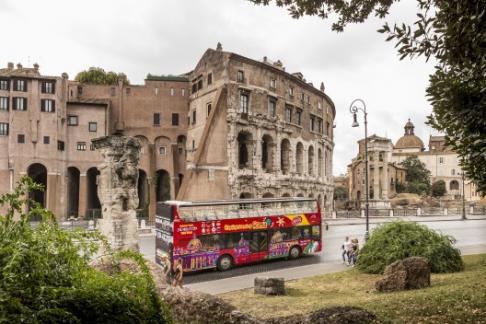
This tour involves a fair amount of walking. Comfortable shoes are recommended. Free tickets for disabled visitors and for accompanying persons may not be booked online. The free tickets are issued at the "Special Permits" desk or "Reception", situated in the entrance hall to the Vatican Museums. Entrance into the Vatican is subject to a strict dress code. Shoulders and knees must be covered. No low-cut or sleeveless tops or shorts will be not permitted for men and women. Clients that do not adhere to the dress code will not be permitted to enter the Vatican. The local tour provider cannot be held responsible for entry denied due to improper dress. Large handbags, haversacks etc. are not permitted inside the museum. Wardrobe services are available inside the Vatican Museums Certain sites or sections of sites included in the tour may occasionally be subject to last minute changes, for example unscheduled closures. In such cases the tour operator shall be pleased to offer an alternative tour. How to redeem your voucher: You can redeem your voucher on board of the Open Bus or City Sightseeing Visitor Centre before 15:00
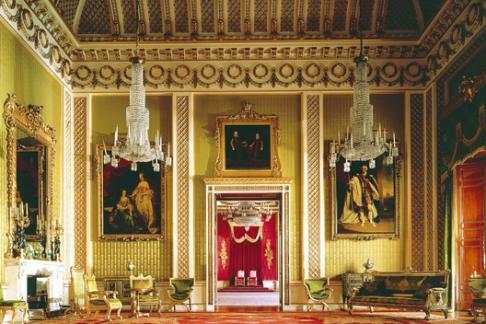
The State Rooms Buckingham Palace serves as both the office and London residence of Her Majesty The Queen, as well as the administrative headquarters of the Royal Household. It is one of the few working royal palaces remaining in the world today. Today the Buckingham Palace State Rooms are used extensively by Her Majesty The Queen and Members of the Royal Family to receive and entertain their guests on State, ceremonial and official occasions. During August and September when The Queen makes her annual visit to Scotland, the Palace's nineteen state rooms are open to visitors. What there is to see? The Buckingham Palace State Rooms form the heart of the working palace and are lavishly furnished with some of the greatest treasures from the Royal Collection - paintings by Rembrandt, Rubens, Poussin and Canaletto; sculpture by Canova; exquisite examples of Sèvres porcelain; and some of the finest English and French furniture. In celebration of The Queen's 90th birthday, a special exhibition will be staged across each of Her Majesty's official residences during 2016. Fashioning a Reign: 90 Years of Style from The Queen's Wardrobe (30 July – 25 September 2016) The Garden Described as a 'walled oasis in the middle of London', the Palace's garden is home to thirty different species of bird and more than 350 different wild flowers, some extremely rare. Visitors end their tour with a walk along the south side of the garden, with splendid views of the west front of the Palace and the famous lake. Audio Guide An audio guide is included in the ticket price and is available in English, French, German, Spanish, Italian, and Japanese, Russian and Mandarin. There is also a family audio guide (in English only) and accompanying activity trail, suitable for children 7-11 years. Changing of the Guard The Changing of the Guard ceremony takes place at 11:30 daily from April until the end of July and on alternate days for the rest of the year, weather permitting. The new guards arrive at the forecourt of the Palace at 11:30 from Wellington Barracks. The journey takes about 5 minutes and the soldiers are accompanied by a band. The ceremony is conducted on the Palace forecourt and takes approximately forty minutes to complete. [The Army have not yet released the schedule for July, August or September.] Wheelchair Access If you require wheelchair access or the use of the lift, you should not book with 365 Tickets.com and should pre-book tickets directly with Buckingham Palace. Access booking line: 020 7766 7324 www.royalcollection.org.uk or email [email protected]
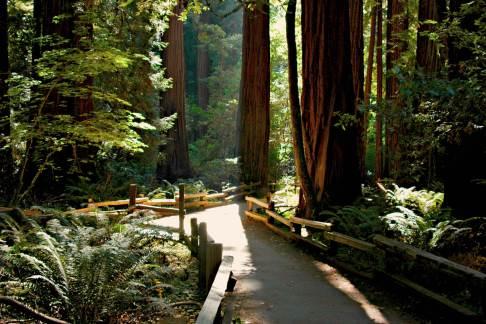
The day begins with a hotel pick-up between 06:15 and 07:00. Heading east across the San Francisco-Oakland Bay Bridge offers great views of the San Francisco skyline, Alcatraz Island, Fisherman's Wharf, and the Golden Gate Bridge. En Route to the park we cross through the Central Valley, where we will stop at a fruit stand for some local produce. Famous for its rich volcanic soil, the Central Valley is the largest agricultural region in the United States. The section we drive through is best known for specialty fruits and nuts such as almonds, walnuts, cherries, and strawberries. After this quick rest stop, we enter the rolling foothills of the Sierra Nevada. Continuing into the mountains brings us to California gold country and the gold rush town of Groveland before we wind our way into Yosemite National Park. Maps in hand, we begin with a one and a half hour in-coach narrated tour of Yosemite's glaciated valley. You will see famous waterfalls and rock formations including Yosemite Falls - the tallest waterfall in North America - El Capitan, Half Dome, Bridalveil Falls, Sentinel Dome, and much more. During the tour you will see Yosemite Valley from a number of great vantage points, the best of which is perhaps Inspiration Point. At 4,500 feet above sea level, this viewpoint gives you a commanding view east up the valley. Yosemite is a mecca for rock climbers, and the sight of people climbing El Capitan's 3,200 ft. (1000m) sheer rock face is quite amazing. Because of our small group size, we can incorporate multiple photo stops into our tour so you can better enjoy your time in the park. After the tour, we stop for the afternoon near the base of Yosemite Falls, where there are a variety of options for lunch (not included). After eating, you will have 3-4 hours of free time to explore the valley as you choose. You can walk to the base of Yosemite Falls, check out the visitor center, visit the Ansel Adams Gallery, stop in at the Ahwahnee Hotel, rent a cruiser bike, or hike some of the trails that originate from the valley. Although you could spend three weeks in Yosemite, the three hours you get on your own is enough time to understand why Yosemite is one of America's most popular national parks. Regrouping again in the late afternoon, we head for San Francisco, stopping for a short break before arriving back in the city and dropping you at your lodging between 8:30 and 9:00pm. Highlights: See El Capitan, Half Dome, Yosemite Falls, Bridalveil Falls, Inspiration Point (aka Tunnel View), and Yosemite Village Free time in Yosemite Valley to explore/hike Eco-friendly transport in biodiesel mini-coaches Inclusions: Complimentary pickup/dropoff from your San Francisco hotel Full-time professional, knowledgeable guide Narrated in-coach tour of Yosemite (1.5 hrs) 3 hours of free time in the Valley Yosemite Park entrance fee Transportation to/from Yosemite in biofuel mini-coach Not Included: Meals (stops will be made to purchase food) Guide gratuity (optional) Gear List: May-Oct: Camera & charger Small bag that can fit under seat Spending money for incidentals and lunch Sneakers or hiking boots Swimwear, towel, sandals (optional) Bug spray Sun protection Water bottle Nov-Apr** - Additional items recommended are: Warm clothing, coat Knit hat, gloves **Winter temperatures in Yosemite are on average 50 F/10 C, but can be as low as 28 F/-2 C.