Kostenlos
Unterstützung
Depart Edinburgh 09.15 and travel northwest through the historic area of Linlithgowshire, close to the historic palace. The tragic Mary Queen of Scots was born at Linlithgow palace, and became Queen when she was only 6 days old. According to legend her father James V died of a broken heart when he discovered his wife had given birth to a daughter and not the son he was hoping for! Your route along the Forth Valley is one which has been used for thousands of years by invading armies, it was the northernmost frontier of the Roman empire and was later used by the English King Edward I as he marched proudly towards Stirling (only to be sent homewards to think again!). Nowadays it’s at the centre of one of Scotland’s most important industries with huge oil refineries dominating the area. As you approach Stirling the magnificent castle dominates your view and you make your way up towards the high volcanic rock where it imposes itself upon the surrounding land. Known as the ‘Key to Scotland’, for centuries this was the most important castle in Scotland and the views from the top make it easy to see why. To the north is the 220ft high tower of the National Wallace Monument commemorating Scotland’s great hero William Wallace, played by Mel Gibson in the Oscar-winning movie Braveheart. From the castle you can look down over the scene of Wallace’s greatest triumph, the battle of Stirling Bridge, where he defeated the English army in 1297. To the south is Bannockburn where, in 1314, the great Scottish warrior-king Robert the Bruce defeated the English army of Edward II. The battle was fought for possession of Stirling Castle but eventually led to a far greater prize for Scotland – the restoration of independence. It’s an area alive with history and you stop at the castle to give you time to soak up the history and heritage of this great site. From Stirling you head into the Highlands and an area known as the Trossachs. Known as ‘The Highlands in Miniature’, it marks the point where the Lowlands meet the Highlands and entering this beautifully picturesque area feels like going into a different country. With its shimmering lochs, rugged mountain tops and forest-filled glens it’s easy to forget that this was once thought of as a dangerous frontier fought over by the fiercely territorial Highland clans. You stop here for lunch in the village of Aberfoyle, made popular in Victorian times due to its great location. After lunch you ‘take the high road’ or back-road to Loch Lomond, Scotland’s largest lochs at over 22 miles long, passing Lochs Ard, Chon and Arklet along the way as you travel through the protected lands of Scotland’s first National Park. The route you take was described by the famous Scots comedian Billy Connolly as his favourite road in Scotland, and you can discover why – it’s stunning!! You stop at Inversnaid on the secluded north-east of the loch, making it the perfect place to enjoy a walk along the ‘bonny banks’, up to a viewpoint for a fantastic view of the loch and the mountain it’s named after, Ben Lomond. This tranquil setting was once the home of Scotland’s famous highland folk hero, Rob Roy MacGregor. Made popular by many books and films Rob Roy lived an incredible life as a soldier, businessman, cattle-rustler and outlaw. By spending time on the trails by the loch you will undoubtedly be walking in the footsteps of one of Scotland’s great legends. There is also an alternative option to take a boat cruise around the north of the loch (Summer only) or merely enjoy a drink at the local hotel and sample the views. Leaving Loch Lomond you return to Edinburgh passing Scotland’s only lake – the Lake of Mentieth (although we have around 3000 freshwater lochs!). The legend states that after William Wallace was betrayed by his great friend the Earl of Mentieth and executed in London the name was changed from the Loch of Mentieth to the Lake of Mentieth so that nobody would ever forget the traitorous part the Earl played in his death.
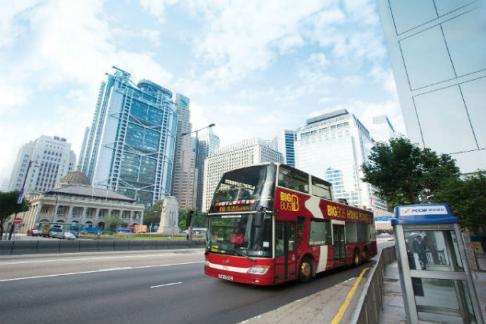
Highlights Soak up the history and culture of this incredible medieval city See the famous City Walls, the Cathedral, and the Roman Amphitheatre Ticket Includes Create your itinerary. Stay as much as you want in each stop. Make as many full loops as you wish! Audio guide with pre-recorded commentaries in English. English Live Guide on some departures. 48hr Unlimited Hop-on Hop-off bus tour with 360º panoramic views of Chester and surroundings. Free Booklet with deals and discounts at museums, restaurants, and other Tours. 3-month flexible ticket.
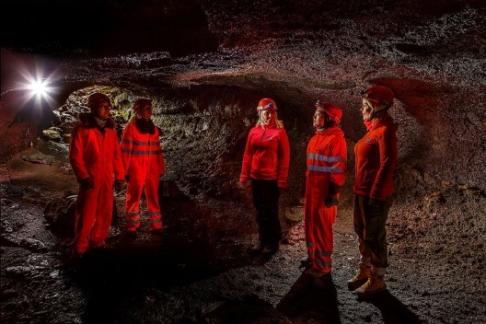
What is Included: 2 x breakfast, 3 x lunch and 2 x dinner Accommodation (either camping, shared or double as booked) Park entrance fees Friendly and informative tour guide YOU SHOULD BRING (ADVISABLE) Good shoes / boots for walking Appropriate clothing for warm and cold conditions Towel & toiletries Sunscreen, hat, bathers
Green Tour stops: 1. Saint Isaac's Cathedral 2. The Sphinxes 3. Strelka of Vasillevsky Island 4. Peter and Paul Fortress 5. The Cruiser Aurora 6. Palace Embankment 7. Admiral Embankment
Included: All park entrance fees inc. 3 Parks Pass BBQ Lunch Tea / coffee / biscuits Friendly & informative tour guide
Shakespeare's Globe Exhibition is the world's largest exhibition devoted to Shakespeare and the London in which he lived and worked. Housed beneath the reconstructed Globe Theatre on London's Bankside, the exhibition explores the remarkable story of the Globe, and brings Shakespeare's world to life using a range of interactive displays and live demonstrations. Visitors to the exhibition can discover how shows were produced in the theatres of Shakespeare's time, from writing and rehearsals to music, dance and performance. There are opportunities to learn about the traditional crafts and techniques used during the process of rebuilding the Globe; to find out how special effects were produced in Shakespeare's time, to listen to recordings from some of the most memorable Shakespearean performances ever, or join the cast and add your own voice to a scene recorded by Globe actors; to create your own Shakespearean phrases in the word jungle; to watch a sword-fighting display and browse the costume collection, where you can learn about the extraordinary methods used in creating clothes 400 years ago. A visit to the Exhibition includes a guided tour of the theatre where expert guide-storytellers provide fascinating half hour tours of the auditorium, taking visitors on a journey through time back to Elizabethan London as well as the reconstruction process of the 1980's-90's and how the wooden 'o' works today as an imaginative and experimental theatrical space. An exhibition visit and theatre tour lasts about one and a half hours. Information sheets are available in English, large print, German, French, Dutch, Spanish, Portuguese, Italian, Russian, Polish, Romanian, Chinese and Japanese. NB: There is no access to the theatre during matinee performances. Visitors will be taken to the nearby archaeological site of the Rose Theatre, Bankside's first playhouse. Tower Bridge Exhibition Over 100 years ago, the Victorians built a bridge that has become one of London's most famous landmarks. High level walkways were built to allow people to cross the Thames whilst the Bridge was lifted to let tall ships sail past - Tower Bridge Today these Walkways act as viewing galleries, giving visitors the most spectacular views across an ever changing London skyline. Walkways & Exhibition: Visitors enter Tower Bridge Exhibition via the North Tower. They are then transported by lift to the top of the Tower (47 metres above the Thames) where they have a unique opportunity to see the Bridge’s steel skeleton from within. A short film explains the history and provenance of the Bridge and then there is the chance to admire the spectacular views – from both covered Walkways. Together with far-reaching views of East London, the walkway will be bolstered with a further 20 revered bridges in the extended popular display, ‘Great Bridges of the World’. On the east Walkway there are fantastic views of the Docklands and from the west Walkway you can see the new GLA building, the Tower of London, St Paul’s, the city, the Pool of London and Big Ben and the London Eye in the distance. Interactive computerised kiosks and graphic panels explain the significance of the views to visitors, as well as providing more information on the history and building of the Bridge. The interactive material and graphic panels are written in seven languages and an audio loop for the hard of hearing is also in place for the video show. There is another film to view in the South Tower before descending for the short walk to the historical Engine Rooms, included in your ticket price. Victorian Engine Rooms: These provide a fascinating insight into late 19th century engineering. Installed for the completion of Tower Bridge in 1894, these huge, and beautifully maintained, coal-driven engines were used to power the thousands of bascule Bridge lifts performed until 1976. Although lifts are now operated by electricity, the original steam engines are still in place. The Engine Rooms give visitors a chance to experiment with models demonstrating the technology behind the Bridge. There are also some amazing photographs of Tower BridgeTthroughout its lifetime – including a revealing picture of the heavy steel structure of the Bridge as the stone cladding was installed over it.