Madame Tussauds London
Millions and millions of people have flocked through the doors of Madame Tussauds since they first opened over 200 years ago and it remains just as popular as it ever was. There are many reasons for this enduring success, but at the heart of it all is good, old-fashioned curiosity. Today’s visitors are sent on a unique, emotionally-charged journey through the realms of the powerful and famous. The museum-style ropes and poles have gone so guests can truly get up, close and personal with A-list celebrities, sporting legends, political heavyweights and historical icons, reliving the times, events and moments that made the world talk about them….
Filled with 14 exciting, interactive zones and the amazing Marvel Super Heroes 4D movie experience, Madame Tussauds London combines glitz and glamour with incredible history.
Walk down the red carpet and strike a pose with Kate Winslet, before challenging your favourite sportstars like David Beckham or Lewis Hamilton. Start your royal experience with an audience with the Queen, before standing alongside The Duke and Duchess of Cambridge.
For the brave, get face-to-face with scary serial killers in our live fear experience SCREAM. After a sneaky behind-the-scenes look at how our World-renowned sculptors create the figures, relax in our taxis and relive the rich history of London.
Then step up to your favourite Marvel Super Heroes before getting ready to experience the spectacular and exclusive Marvel Super Heroes 4D movie, where our Marvel Super Heroes battle it out to save London from impending doom.
So, who do you want to meet?
The SEA LIFE London Aqaurium
The SEA LIFE London Aquarium is home to one of Europe’s largest collections of global marine life and the jewel in the crown of the 28 SEA LIFE attractions in the UK and Europe. Situated in the heart of London, the experience takes visitors on an immersive and interactive journey along the Great Oceanic Conveyor.
The mysterious experience, spread over three floors, starts by taking a submarine style lift to the depths of the Atlantic Ocean. Along the journey, a stunning glass tunnel walkway offers guests an unforgettable experience by strolling underneath a Tropical Ocean. There is plenty of interaction along the way, from feeding the stingrays and watching diving displays to touch pools and discovery zones. Other stars of the show include green turtles, seahorses, octopus, zebra sharks and the ever popular clown fish. The true highlight however, commences as guests complete their journey in the deeper darker zone of the Pacific Ocean - take a walk on the wild side and watch 10 species of shark swim beneath your feet from a suspended glass platform.
As well as allowing millions of people to discover the marvels of the marine world, the SEA LIFE network has an important role to play in helping safeguard our seas and their inhabitants for the future. The SEA LIFE London Aquarium provides the UK with a leading centre of excellence on marine management, conservation, preservation and education in the heart of the capital.
Penguin Point - an expanded state-of-the-art viewing and learning experience complete with a colony of Gentoo penguins.
The new Antarctic-themed experience will give visitors a fascinating insight into the habitat and behaviourof penguins. It aims to explain how we can all play our part in conserving their environment whilst providing the opportunity for close range viewing of a delightful colony of resident Gentoo penguins.
Ten Gentoo penguins will be resident in the bespoke new enclosure which has been carefully designed to reflect the needs of the species. The significantly enlarged area features two pools, a waterfall, underwater jets, rocks and landing areas and ice flakes. The indoor location of the enclosure will enable SEA LIFE’s expert Penguin Keepers to carefully control temperature, lighting and humidity in line with the Species.
Tower Bridge Exhibition
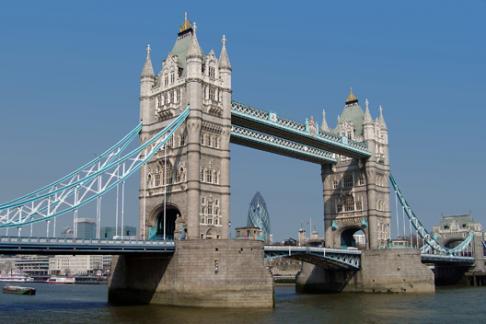
Over 100 years ago, the Victorians built a bridge that has become one of London's most famous landmarks. High level walkways were built to allow people to cross the Thames whilst the Bridge was lifted to let tall ships sail past - Tower Bridge
Today these Walkways act as viewing galleries, giving visitors the most spectacular views across an ever changing London skyline.
Walkways & Exhibition:
Tower Bridge Unveils New GLASS FLOOR Across High-Level Walkways
Launched in the West Walkway today, the glass floor offers visitors a never-seen-before view of London life, from 42 metres above the River Thames. Look down to spy road and pedestrian life whizzing over the Bridge while river vessels sail under it – and plan your visit in advance for the truly magical experience of the bascules being raised beneath your feet.
The glass floor measures 11 metres long by 1.8 metres wide and comprises of six panels weighing 530 kilograms each. It is made up of five thick layers and can hold the equivalent weight of an elephant and two taxis! The installation took a 20-strong team to construct it over a six week period.
The Walkways also offer stunning panoramic views of London while each of the 20 bridges featured in our popular and refreshed 'New Great Bridges of the World' display showcase a breath-taking feat of engineering. After learning about the history of the Bridge through animations and displays in the Towers, continue to the Victorian Engine Rooms for the beautifully maintained steam engines that were once used to power the bridge lifts.
Visitors enter Tower Bridge Exhibition via the North Tower. They are then transported by lift to the top of the Tower (47 metres above the Thames) where they have a unique opportunity to see the Bridge’s steel skeleton from within. A short film explains the history and provenance of the Bridge and then there is the chance to admire the spectacular views – from both covered Walkways.
On the east Walkway there are fantastic views of the Docklands and from the west Walkway you can see the new GLA building, the Tower of London, St Paul’s, the city, the Pool of London and Big Ben and the London Eye in the distance.
Interactive computerised kiosks and graphic panels explain the significance of the views to visitors, as well as providing more information on the history and building of the Bridge. The interactive material and graphic panels are written in seven languages and an audio loop for the hard of hearing is also in place for the video show. There is another film to view in the South Tower before descending for the short walk to the historical Engine Rooms, included in your ticket price.
Victorian Engine Rooms:
These provide a fascinating insight into late 19th century engineering. Installed for the completion of Tower Bridge in 1894, these huge, and beautifully maintained, coal-driven engines were used to power the thousands of bascule Bridge lifts performed until 1976. Although lifts are now operated by electricity, the original steam engines are still in place. The Engine Rooms give visitors a chance to experiment with models demonstrating the technology behind the Bridge. There are also some amazing photographs of Tower BridgeTthroughout its lifetime – including a revealing picture of the heavy steel structure of the Bridge as the stone cladding was installed over it.