Kostenlos
Unterstützung
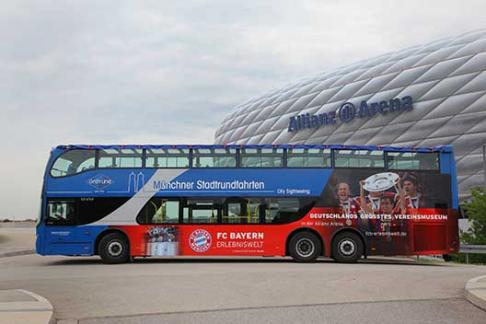
After Munich's most important sights, this tour takes you directly to the Allianz Arena, the most modern stadium in Europe and also the venue of the 2006 Football World Cup. You will also visit the training grounds of FC Bayern, the historically great German football champion. The tour takes about 3.5 hours.
The View From The Shard The Shard is an iconic, landmark building on the London skyline, designed by Master Architect Renzo Piano. At a height of 1,016ft (310 m), the tallest building in Western Europe, the Shard redefines London's skyline and will be a dynamic symbol of London, recognisable throughout the world. The View is situated at the top of The Shard, on floors 68, 69 and 72, and almost twice the height of any other viewing platform in London. Prepare to embark on a multi-sensory journey to 244 m (800ft) above of one of the greatest cities on earth. On arrival at Level 00, you will be drawn into the tapestry of London with glimpses of the city laid out before you. Travelling skyward in two high-speed ‘kaleidoscopic' lifts, you'll swiftly reach Level 68 - a cloudscape above the world. Then journey to Level 69 where the view is revealed and London opens out before you. Here, in the sky above London, you'll experience an astonishing 360 degree, 64 km (40 mile) view over the city and beyond where the past, present and future of London will be unfurled beneath you, brought to life in multimedia displays. For the best view in town, ascend to Level 72, at 244 m, the highest public level of The Shard. You'll be exposed to the elements with sounds of the city around you. Looking up, you'll see the shards of glass that form the top of this skyscraper as they disappear upwards into the sky. Click here to view the sunset times in London PLEASE NOTE: Failure to present the voucher at The Shard will result in you being denied entry. Thames River Rover Pass With the River Red Rover ticket you travel in luxury on a fleet of river liners and may hop on or off at any of the piers as often as you like throughout the day. As the River Thames weaves its way through the heart of London there is history around every bend and there is no better way to see and experience the sights and splendour of this great city than from one of City Cruises modern, wheelchair-friendly RiverLiners™. Enjoy unsurpassed views of some of London's most famous landmarks from the vantage point of our open upper decks and spacious lower saloons with panoramic windows. Take advantage of two bars providing light refreshments and snacks . Cruises depart frequently from Westminster Pier, Waterloo (London Eye) Pier, Tower Pier and Greenwich Pier every day of the year except Christmas Day (25th December). Our shortest trips between piers last about 20-30 minutes while the full round trip takes about two-and-a-half leisurely hours.
Enjoy an insider’s walking tour through the back streets of London to discover three of the oldest pubs in London. These incredible icons of the city are steeped in history and have been the scene of many a rousing debate between famous literary figures of the day including Samuel Johnson and Charles Dickens. Historic Pub Walking Tour Includes: afternoon walking tour of historic Bankside (starts 3pm) a visit to three London pubs with an incredible history Professional English-speaking tour guide personal audio headset – never miss a word of your live-guided commentary a beer 'flight' (3 tasters of British Beer) Tour Excludes: food Highlights: Visit one of the most historic parts of the city on this fascinating walk: see the Clink Prison, the Palace of Winchester and walk across the Millennium Bridge with it's stunning views up and down the River Thames. There are a few more quintessentially English experiences than enjoying a pint of ale in a centuries old public house. This walking tour takes you on a unique experience to some of the oldest and most famous pubs in London. Practical Information: Tour Starts: 3pm, at iconic St Paul’s Cathedral Tour Finishes: 6pm, Bankside
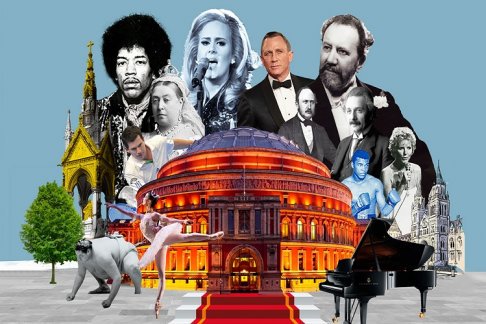
Royal Albert Hall - Grand Tour Did you know? There are 13,000 “A”s for Albert around Hall The Hall is home to the world's largest single woven carpet design, made of 326,666 sheep fleeces and 49 million tufts getting it into the Guinness World Records The world’s biggest Christmas pudding was made at the Hall and weighed ten tonnes The first ever body-building contest and Sumo wrestling tournament outside Japan took place in the main auditorium The Elgar Room used to be home to the Central School of Speech & Drama, giving a stage to names including Sir Lawrence Olivier and Dame Judy Dench 5,500 bottles of champagne and 1,800 bottles of gin are drunk at the Hall every year Afternoon Tea was introduced to Britain by Queen Victoria. The first tea party was held at the Hall in 1912. The tradition continues today in the Hall's Verdi Restaurant The Royal Albert Hall Grand Tour is fully accessible. Some time slots and/or dates are unavailable due to events taking place in the auditorium. The Royal Albert Hall was built to fulfil the vision of Prince Albert (Queen Victoria's consort) of a 'Central Hall' that would be used to promote understanding and appreciation of the Arts and Sciences and would stand at the heart of the South Kensington estate, surrounded by museums and places of learning. The Hall is a Grade I Listed building; and has been in continuous use since it was opened in March 1871. It was always conceived as a multipurpose building to host not only concerts of music but exhibitions, public meetings, scientific conversations and award ceremonies. It is a registered charity held in trust for the nation and is financially self sufficient, receiving no funding from central or local government. Kensington Palace and the Diana Exhibition Kensington Palace unveils a palace of secret stories and public lives. Visitors arrive through beautiful landscaped gardens evoking a past when Kensington was countryside. From the entrance hall start your journey through the magnificent Kings and Queen’s State Apartments. Filled with stories of two royal courts; the Stuarts and the Hanoverians, learn what you would have worn, how you should behave and how to succeed in the heady atmosphere of the palace state apartments. The Queen's State Apartments Explore these intimate, private rooms created for Queen Mary II, who ruled jointly with her husband, King William III, in the 17th century. The Queen’s rooms The Queen's Staircase, little changed since its construction in 1690, is deliberately plainer than the King's. Mary would have glided down its steps to reach her beloved gardens, created in the Dutch style, through the door at its foot. Diana: Her Fashion Story ‘Diana: Her Fashion Story’ will trace the evolution of the Princess’s style, from the demure, romantic outfits of her first public appearances, to the glamour, elegance and confidence of her later life. From her earliest royal engagements, everything Diana wore was closely scrutinised, and the exhibition will explore how she navigated her unique position in the public eye: learning to use her image to engage and inspire people, and to champion the causes she cared about. Discover exquisite and celebrated outfits from throughout the Princess’s public life. The exhibition will bring together an extraordinary collection of garments, ranging from the glamorous evening gowns worn on engagements in the 1980s, to the chic Catherine Walker suits that made up Diana’s ‘working wardrobe’ in the 1990s. The Princess’s relationship with her favourite designers will be explored through a display of some of their original fashion sketches, created for her during the design process. Exhibition highlights will include the pale pink Emanuel blouse worn for Diana’s engagement portrait by Lord Snowdon in 1981, and Victor Edelstein’s iconic ink blue velvet gown, famously worn at the White House when the Princess danced with John Travolta. A blue tartan Emanuel suit, worn for an official visit to Venice in the 1980s, will go on display in public for the first time. The suit, a rare survival of the Princess’s daywear, was only recently rediscovered and acquired by Historic Royal Palaces – the charity responsible for Kensington Palace - at auction. * Please note, this exhibit is due to be very popular, queues are to be expected.

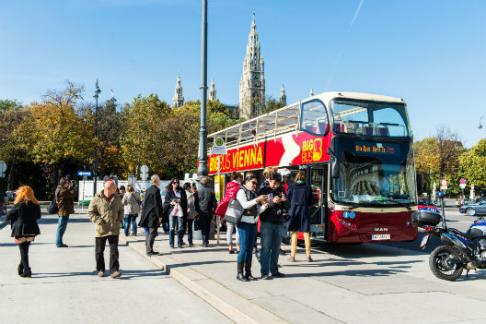
RED ROUTE Big Bus Red Tour leads you to the most important buildings along the Ring Street followed by Prater with its famous ferry wheel, the Augarten where you find the residence of the Vienna’s boys choir, the Blue Danube where you can start the River Cruise and the famous Danube tower with it rotating café. Duration: 1.40 hour / Operates: 9:30am – 04:30pm / Frequency: 20-30 minutes BLUE ROUTE The second route, blue route guides you the Schönbrunn Palace which is not located in the city center of Vienna. Passing by the Aqua terra Zoo, Arsenal and Belvedere Palace you finally reach the Schönbrunn Palace with its beautiful gardens and the Gloriette. Duration: 1.25 hour / Operates: 10:00 – 17:00 / Frequency: 20 - 30 minutes CITY WALK Join the city walk and step back in time to experience the life of the Habsburgs. You will visit the Hofburg Palace, the world - renowned Spanish Riding School, Heldenplatz and the Capuchin’s Crypt, where members of the house of Habsburg are entombed. The guided tour also covers the history of music in the city, including the legendary composers Mozart , Haydn and Beethoven. The tour starts from stop 1 “ Opera” and ends at St . Stephens Cathedral - the most important Gothic church of Austria and lasts around 1 – 1,5h. THEIR COMMITMENT : Great value for money Best bus frequency Hi Resolution digitally audio-system Operates 7 days a week, all year long
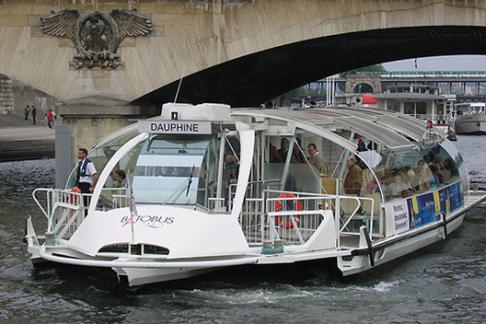
Batobus takes you to the heart of Paris, to reach the various quarters of the capital. With 8 stops on the route, Batobus shows you a different view of Paris and is an original way of getting about in Paris. Hop-on hop-off points • Tour Eiffel: Port de la Bourdonnais.At the foot of the 1,710 steps of a great Parisian landmark. • Musée d'Orsay: Quai de Solférino. Next to the museum, a stop leading to the world of the Impressionists. • St-Germain-des-Prés: Quai Malaquais. Near the Institut de France, the Paris of artists and intellectuals. • Notre-Dame: Quai de Montebello. The architectural harmony of the cathedral and the carefree student atmosphere of the Latin Quarter. • Jardin des Plantes / Cité de la Mode: station was moved to the foot of the Cité de la Mode, just 10 minutes walk from its original location. • Hotel de Ville: Close to Pont d'Arcole. The City Hall stop leads to the richness and contrasts of the Marais district and the Pompidou Centre. • Louvre: Between Pont Royal and Pont du Carrousel. Reveals a quarter where history and history of art are one. • Champs-Elysées: Close to Pont Alexandre III. Mythical Paris-the Grand Palais, the Petit Palais and Avenue Montaigne.