JORVIK Viking Centre
Take hold of the past and explore the excavations which first unearthed the Viking-age city in our brand new exhibitions.
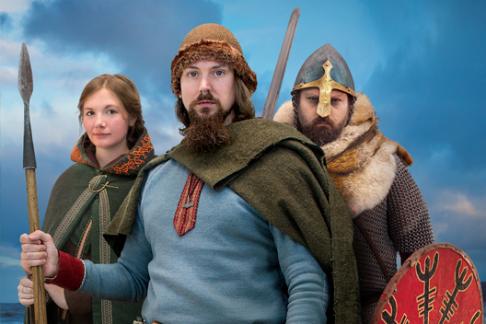
As you travel around Viking-Age Jorvik aboard our state of the art ride experience - which now includes commentary in sixteen languages, from all major Scandinavian dialects to Mandarin Chinese – you will encounter Old Norse speaking citizens on the streets of the city and in their homes. Discover the Arabic trader bringing his wares to trade, and the Viking storyteller recounting the apocalyptic Ragnarok myth.
At the end of an unforgettable journey, visitors disembark to the JORVIK galleries where they can see some of the fascinating Viking artefacts. Cutting edge displays help you to investigate all of the information gathered from the 5-year-long dig at Coppergate and piece together the jigsaw of where the Vikings came from, why they came here, how they lived and died, and where they travelled to.
At JORVIK Viking Centre you are standing on the site of one of the most famous and astounding discoveries of modern archaeology. Between the years 1976-81, archaeologists from York Archaeological Trust revealed the houses, workshops and backyards of the Viking-Age city of Jorvik, as it stood 1,000 years ago.
Ticket Details
Please Note: JORVIK tickets purchased through this channel do not entitle the holder to jump the queue – you must join the queue as normal and will be able to exchange your 365 Vouchers for tickets at the admissions desk.
Vouchers must be printed off before visiting JORVIK, entry won't be granted without your 365tickets Voucher.
York Dungeon
The York Dungeon invites you to a unique feast of fun with history’s horrible bits. Live actors, shows and special effects transport you back to those black, bleak times. Are you brave enough to delve into the darkest chapters of history? Herded into the forest by murderous Vikings, don’t look back as they obliterate everything and everyone in their path. Will you escape the most brutal fighters in York’s history…..??? Travel to the dark depths of the dungeons of York Prison, where murderer, thief and torturer Dick Turpin the infamous highwayman waits for his death at the gallows.
In the most haunted city in England, come and experience the presence of ghosts which will chill your very bones as you stand in the silent yet chilling air. It’s the 16th century and the terrible plague has struck York again. Thousands are dying, appallingly disfigured and in unspeakable agony. Will you escape the deadly disease?
Our 17th century judge knows exactly what you have been up to….and you could be left to languish in the rat infested dungeon for it…or be given a gruesomely fun task to perform… but who knows who the judge will on? The York Dungeon brings York’s horrible history to life with 11 live shows, actors and special effects.
Torture Chamber
York’s torturer always finds a way to get you talking, whether with the hook, the castrator, the jaw breaker, or the creeping agony of the rack. Maybe he’ll loosen your tongue the hard way, with the tongue-tearer!
The Great Plague
It’s the 16th century and the terrible plague has struck York again. Thousands are dying, appallingly disfigured and in unspeakable agony. Will you escape the deadly disease or run out screaming?
Labyrinth of the Lost
Who dares enter the Labyrinth of the Lost? Here lies the ancient Roman fortress of Emperor Constantine, buried beneath York Minster. Every treacherous turn takes you closer to the grim ghosts of a Lost Roman Legion.
Judgement of Sinners
It is the middle of the 18th Century and England’s justice system is harsh, unpredictable and frequently lethal. Some 220 offences are punishable by death. Pray the judge has pity on your soul. Your sentencing and fate await you!
Witches: Burned Alive
The witch hunt is on! Hear the screams and feel the heat as the accused are burnt alive before your eyes. Will you escape the persecution or will you meet your end at the stake?
Bloody Viking
A shattered monastery lies around you, ransacked and despoiled. Even this house of God isn’t safe from the violent greed of Eric Bloodaxe and his heathen warriors. In fact, what’s that noise outside..? You run into the forest, murderous Vikings on your tail, obliterating everything and everyone in their path. Don’t look back! Run! Will you escape the most brutal fighters in York’s history?
Guy Fawkes
Remember, remember the 5th of November; gunpowder, treason and plot! Follow the explosive story of Guy Fawkes as he and his treasonous accomplices plot the downfall of the English King and Parliament in the most spectacular way possible: a massive, underground explosion that will destroy them and the symbol of their rule! But the plot is foiled, and Guy Fawkes is arrested. He has sworn not to give up the names of his co-conspirators, but let’s see if a little brutal torture can loosen his tongue…
Ghosts of York
A creepy whistle rides on the cold air. A feeling of resentment and anger surrounds you. Your senses tell you that you are not alone. Through the dark silence comes a haunting wail… and then suddenly a pale figure appears before you, a vengeful, ghostly presence that leaves you paralysed by fear! Will you hold your nerve in the depths of the most haunted city in England? Or will you run for your life?!
Dick Turpin
Travel to the dark depths of York Prison where murderer, thief, and infamous highwayman Dick Turpin awaits his death at the gallows. After years of stealing livestock, robbing stage-coaches and murdering those who came after him, he’s about to meet his well-deserved fate at the end of a rope! But suddenly you enter your worst nightmare: a pitch-dark cell, a waiting hangman and Turpin… who wants his revenge in blood!
Warning:
The York Dungeon is not recommended for those of a nervous disposition or young children. Children under 16 must be accompanied by an adult.
York City Cruise
Please note: The River Ouse in York can occasionally rise to levels that can have an impact on this cruise's daily operations after periods of heavy rainfall in the catchment area upstream. The local operators will always attempt to sail for as long as it is safe to do so. There can come a point where their smallest boat can no longer fit underneath the bridges. Depending on the height of the river, they may not be able to sail at all. In this instance, you will either be eligible for a full refund or your ticket(s) will happily accepted on another date during your stay if sailing is possible.