This is the ultimate Hollywood movie experience!
Our on-line prices vary by time of year and not all dates are always available, select date above for specific pricing.
Skip the regular lines with the Universal Express™ Ticket:
It includes One-Day General Admission, one-time express access to each ride and attraction and priority seating at select shows.*
This ticket is very popular with guests, so pre-purchase to guarantee Universal Express™ privileges.
*Does not apply to food and retail locations or non-seated shows.
The Park
Go behind the scenes on a real working movie studio
Explore where Hollywood movies are made on the legendary Studio Tour
Come face to face with King Kong 360 3-D created by Peter Jackson. It’s the world’s largest, most intense 3-D experience
Experience our Special Effects Stage where you’ll learn the secrets behind the making of your favorite blockbuster movies
Get into the Movies!
Face the action head on in heart-pounding rides, shows and attractions that put you inside some of the world’s biggest movies.
Attractions Overview
Only Universal Studios lets you ride the movies and go behind the scenes of a real working movie studio.
The Wizarding World of Harry Potter™
Now Open! Explore the mysteries of Hogwarts™ castle, visit the shops of Hogsmeade™, and sample fare from some of the wizarding world's best-known establishments. Plus experience Harry Potter and the Forbidden Journey™ and Flight of the Hippogriff™ that transport you into a world of magical thrills and excitement.
The Walking Dead Attraction
Coming to life July 4, enter the post-apocalyptic world of AMC’s “The Walking Dead” in an all-new year-round attraction.
Studio Tour
Go behind-the-scenes on the legendary Studio Tour to explore Hollywood’s most famous backlot in the world’s largest working movie studio.
Fast & Furious – Supercharged
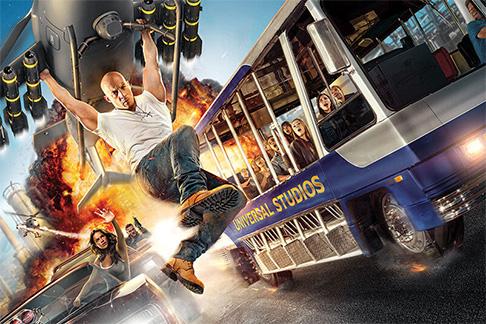
Celebrate the 50th Anniversary of the world-famous Studio Tour and hold on tight for the all-new grand finale, Fast & Furious – Supercharged!
King Kong 360 3-D
Don’t miss the award-winning King Kong 360 3-D created by Peter Jackson – The world’s largest 3-D experience, only on the Universal Studios Hollywood Studio Tour.
Nighttime Studio Tour
Experience Hollywood’s most famous Backlot like never before as you explore the magic of filmmaking by moonlight aboard the new Nighttime Studio Tour.
Despicable Me Minion Mayhem
Join Gru, his daughters and the mischievous Minions on a heartwarming and hilarious 3-D ride.
Super Silly Fun Land
Super Silly Fun Land is an all-new elaborate play zone adjacent to Despicable Me Minion Mayhem.
Transformers™: The Ride-3D
Transformers™: The Ride 3D is an immersive, next generation thrill ride that blurs the line between fiction and reality.
The Simpsons Ride™
The Simpsons™ are visiting Krustyland and you are there right alongside Homer, Marge, Bart…
Jurassic Park® — The Ride
Come face-to-face with ‘living’ dinosaurs, a 50-foot T-Rex, and a treacherous drop straight down an 84-foot death-defying raft plunge.
Revenge of the Mummy℠ – The Ride
If you dare, face heart-pounding special effects and unexpected twists at every turn as you escape the Mummy’s revenge in life-like horror.
WaterWorld®
A Tidal Wave of Explosive Action
Shrek 4-D™
Take adventure to the next dimension in Shrek 4-D™ — the attraction that puts you in the action with hair-raising, eye-popping, butt-busting effects so real, all your senses will be on ogre-time.
Special Effects Show
Don’t miss our enhanced Special Effects Show, where real Hollywood stuntmen and cutting-edge technology come together to recreate scenes from your favorite blockbuster movies!
Universal’s Animal Actors
Witness Tinseltown-trained critters putting pet tricks to shame with their animal antics!
Characters in the Park
Kids of all ages love meeting our characters.
CityWalk Overview
Universal CityWalk Hollywood is a Three-Block Entertainment, Dining and Shopping Promenade
Where is LA’s best place for unexpected excitement? Universal CityWalk. Live music, movies, clubs, great food and always something new to discover. More than 30 places to eat, 3 hot nightclubs, 19 screen theater with state of the art IMAX® and more than 30 unique shops. It’s LA’s favorite place to play.
Check out 5 Towers on Universal CityWalk, state-of-the-art concert venue. Experience a jaw-dropping explosion of over 5,000 LED lights and a sound system that will blow you away.
CityWalk. Always Unexpected. CityWalk is located directly next to Universal Studios Hollywood.
Buy On-line to Save Time & Money - Universal Studio tickets are $115.00 when purchased at the gate.
Our on-line price is $174.99 - $233.99 (prices vary by day of the week, select date above for specific pricing)
Terms and Conditions
Ticket valid on your selected date only
Ticket is non-transferable and non-refundable
Ticket may not be copied, transferred or resold.
Ticket is only valid for the person named on it
Ticket cannot be combined with other offers, separately ticketed events, discounts, Halloween Horror Nights or sightseeing tours
All or parts of Park subject to change or closure without notice.
Parking not included
Early Park Admission begins one hour before the Theme Park opens and is subject to availability, cancellation, and change.